Historical Context and the 1920 Prohibition
To understand the stakes of the events depicted in the film, one must examine the legal landscape of early 1970s France. Since 1920, French law had strictly prohibited abortion under any circumstances, classifying it as a "crime against the security of the state" and the "integrity of the French race." This legislation was a reaction to the massive population loss during World War I, and it remained largely unchanged for over half a century. By 1972, while the social mores of France were shifting following the protests of May 1968, the judicial system remained tethered to these conservative statutes.
During this era, it is estimated that between 300,000 and 800,000 clandestine abortions were performed annually in France. The risks were immense; women faced severe health complications or death from "back-alley" procedures, and those caught—along with anyone who assisted them—faced heavy fines and imprisonment. The 1971 publication of the "Manifesto of the 343," a petition signed by 343 women who admitted to having had abortions, including prominent figures like Simone de Beauvoir and Catherine Deneuve, had begun to crack the wall of silence. However, it was the case of a young girl from a working-class background in Bobigny that finally brought the system to a breaking point.
The Bobigny Trial: A Chronology of Events
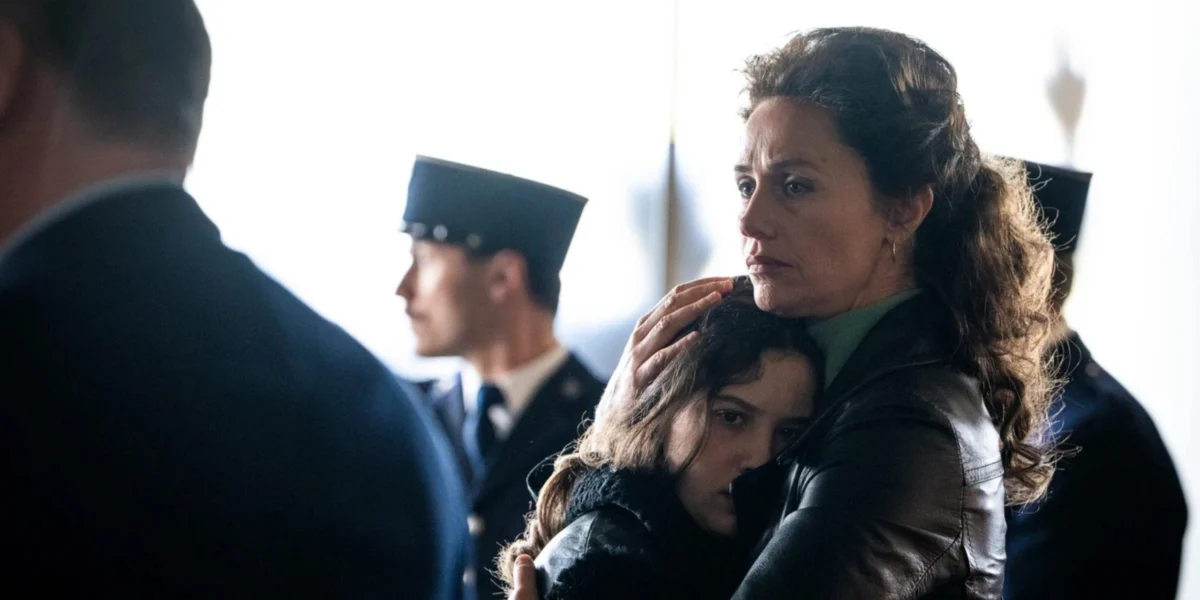
The film’s narrative structure adheres closely to the historical timeline of the "Affaire Marie-Claire." The sequence of events began in 1971 when Marie-Claire Chevalier was raped by a schoolmate. Upon discovering the pregnancy, her mother, Michèle Chevalier (played by Cécile de France), a transit worker and single parent, sought a way to help her daughter. Lacking the financial means to travel to countries where abortion was legal, such as the United Kingdom or the Netherlands, Michèle arranged for a clandestine procedure performed by a local woman, Micheline.
The legal proceedings were triggered when the rapist, having been arrested for an unrelated theft, informed the police of the abortion to use as leverage. This led to the arrest of four women: Marie-Claire, her mother Michèle, and two of Michèle’s colleagues, Lucette and Renée, who had provided information or financial assistance.
The trial was divided into two parts. The first, held in October 1972, focused on Marie-Claire in a juvenile court. Under the guidance of Gisèle Halimi, the defense argued that the law itself was illegitimate. Marie-Claire was eventually acquitted on the grounds that she had acted under "moral constraint." The second part of the trial, depicted with intense focus in the film, took place in November 1972 and involved the adult defendants. It was here that Halimi employed her "political defense" strategy, turning the courtroom into a stage for societal debate.
The Legal Strategy of Gisèle Halimi
Charlotte Gainsbourg’s portrayal of Gisèle Halimi captures the lawyer’s reputation as a "fearless challenger of the patriarchy." Halimi’s strategy was unconventional for the time; rather than seeking leniency or denying the facts, she admitted the "guilt" of her clients while arguing that the law they broke was archaic and unjust. This method, known as the "rupture defense," aimed to put the state on trial rather than the individual.
Halimi leveraged her connections within the intellectual and feminist circles of Paris to bolster the defense. The film highlights the inclusion of high-profile witnesses, including Nobel Prize-winning scientists and renowned actors, who testified not about the specifics of the Bobigny case, but about the absurdity of the 1920 law. By doing so, Halimi ensured that the trial received unprecedented media coverage. The film illustrates how the phrase "L’Affaire Marie-Claire" was coined by the press, signaling a shift in public perception from a criminal case to a human rights issue.
Performance and Character Analysis
The strength of the film lies in its ensemble cast, which balances the high-stakes legal maneuvering with intimate domestic drama. Charlotte Gainsbourg provides a performance characterized by "righteous anger," portraying Halimi as a woman who balances her professional ferocity with the complexities of her personal life. A significant subplot involves Halimi’s relationship with her mother, Fritna, which provides a generational perspective on the changing roles of women. This dynamic illustrates the internal conflicts within families as traditional values clashed with the burgeoning feminist movement.
Cécile de France delivers a grounded performance as Michèle Chevalier. Her character represents the millions of working-class women who were disproportionately affected by the abortion ban. While wealthy women could afford to travel abroad for safe procedures, those like Michèle were forced into dangerous and illegal situations. The film emphasizes this class disparity, making the argument that the 1920 law was not only sexist but also deeply discriminatory against the poor.
Saül Benchetrit, as Marie-Claire, brings a necessary vulnerability to the film. Her performance serves as the emotional core, reminding the audience that at the center of this political firestorm was a traumatized teenager. The supporting cast, including Grégory Gadebois as a supportive husband and Sarah Suco as a loyal friend, rounds out a narrative that feels lived-in and authentic to the period.
Production Design and Directorial Vision
Directors Lauriane Escaffre and Yvo Muller utilize a naturalistic aesthetic to evoke the 1970s. The production design by Stéphane Taillasson and costumes by Emmanuelle Youchnovski avoid the "retro-chic" clichés often found in period pieces, opting instead for a muted, utilitarian look that reflects the working-class setting of Bobigny. The film’s focus on Michèle’s colorful, high-neck jumpers—a detail even scrutinized by the judges in the film—serves as a subtle commentary on how women’s appearances are often used to judge their moral character in legal settings.
The directors also make the choice to appear in supporting roles, with Muller playing a researcher and Escaffre playing Colette, a member of the support group Choisir. This involvement highlights the personal nature of the project for the filmmakers. The film concludes with a poignant transition from the actors on the courthouse steps to historical photographs of the real Gisèle Halimi, Michèle, and Marie-Claire, grounding the drama in its factual reality.
Broader Impact and the Veil Act of 1975
The Bobigny trial was a resounding victory for the feminist movement. Although Michèle Chevalier was found guilty, she received only a suspended fine of 500 francs—a symbolic sentence that signaled the judiciary’s reluctance to enforce the 1920 law. The other adult defendants were acquitted.
The trial’s impact was immediate. It proved that the law was no longer enforceable in the face of public opposition. This legal stalemate paved the way for Simone Veil, then the Minister of Health, to introduce a bill to legalize abortion two years later. Despite fierce opposition from conservative and religious groups, the "Veil Act" was passed by the French National Assembly in 1975, officially granting women the right to voluntary termination of pregnancy.
Analysis of Contemporary Relevance
Women On Trial arrives at a time when reproductive rights are once again a central topic of global political discourse. The film’s exploration of the intersection between law, media, and social activism provides a blueprint for how systemic change is achieved. By focusing on a trial that took place over fifty years ago, the film offers a perspective on the long-term struggle for bodily autonomy.
The film suggests that legal victories are rarely the result of a single courtroom argument, but rather the culmination of sustained social pressure and the courage of individuals to tell their stories. The "Affaire Marie-Claire" remains a cornerstone of French civic education, and the film serves as a reminder of the human cost associated with restrictive reproductive laws.
Conclusion
As a work of historical reconstruction, Women On Trial succeeds in making a complex legal battle accessible and emotionally resonant. It avoids the pitfalls of over-sentimentalization by focusing on the strategic and political realities of the time. Through its strong performances and meticulous attention to historical detail, the film honors the legacy of Gisèle Halimi and the Chevalier family, while providing an informative account of a pivotal moment in the evolution of modern France. The production stands as a testament to the power of the legal system when challenged by those determined to align the law with the principles of justice and human dignity.