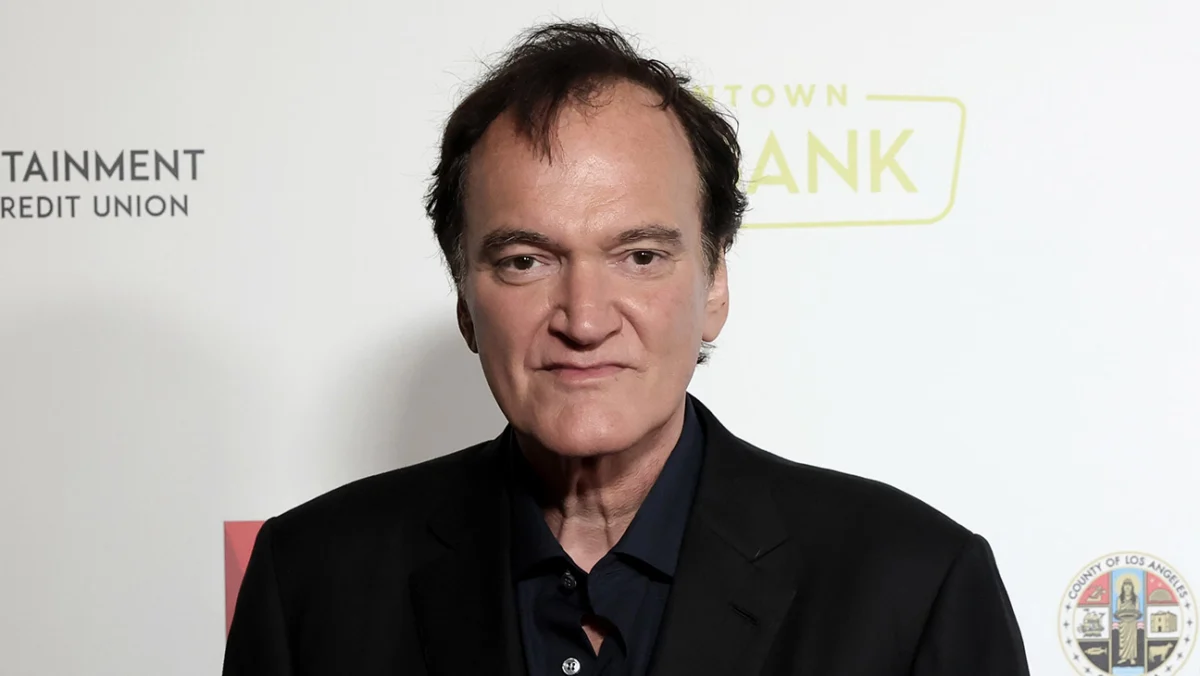
Acclaimed filmmaker Quentin Tarantino has unleashed a potent critique of contemporary cinema, asserting that the vast majority of new releases constitute "just plain stupid shit" emanating from a "flavorless sausage factory" that Hollywood has become. In a provocative op-ed penned for the prestigious Sight and Sound magazine, the visionary director behind classics like Pulp Fiction and Once Upon a Time in Hollywood articulated a profound disillusionment with the state of filmmaking since the onset of the global pandemic, declaring an inability to encounter a new film without meticulously dissecting its perceived flaws.
Tarantino’s Indictment of Post-Pandemic Cinema
Tarantino, known for his encyclopedic knowledge of film history and his unapologetically candid opinions, did not mince words in his assessment. "Since the pandemic, for me anyway, it seems almost impossible for a new movie to come out that I don’t pick to death," he wrote, detailing a litany of perceived shortcomings. These included "flaws, implausibilities, audience pandering, miscast performers or just plain stupid shit," all of which, he claimed, consistently "torpedoes every new movie coming out of the flavorless sausage factory that used to call itself Hollywood." This stark declaration highlights a stark contrast to his earlier career, where he was often seen championing various films and directors, even obscure ones, with fervent enthusiasm.
The director’s sentiment extends beyond mere nitpicking, reaching a deeper philosophical disappointment. "These days, the entire concept of what is a movie is more inclined to inspire contempt in me than generosity," Tarantino continued, offering a historical comparison that underscored his profound dissatisfaction. He concluded that "by comparison the movies of the last six years make the 80s seem like the 30s," a statement that, for a filmmaker who has often celebrated the cinematic output of the 1980s, signifies a significant downturn in his estimation of modern output. This comparison is particularly poignant given that the 1930s are often regarded as a golden age of Hollywood storytelling, while the 1980s, though producing many beloved films, are sometimes retrospectively viewed as a period of evolving commercialism and spectacle. Tarantino’s assertion implies that current cinema has regressed even further than what he might have considered a less artistically profound era.
A History of Candid Criticism and Cinematic Standards
Quentin Tarantino’s recent remarks are not an isolated incident but rather a continuation of a long-standing pattern of outspoken criticism regarding industry trends and artistic integrity. Throughout his illustrious career, marked by a distinctive style, razor-sharp dialogue, and a deep reverence for cinematic history, Tarantino has consistently positioned himself as both a celebrated auteur and a passionate cinephile. His public commentary has often served as a barometer for the health of Hollywood, reflecting a purist’s perspective on storytelling and filmmaking craft.
For decades, Tarantino has been an ardent champion of original storytelling and character-driven narratives, often expressing disdain for the increasing reliance on established intellectual properties, sequels, and cinematic universes that have come to dominate mainstream production. His comments frequently echo concerns about the diminishing space for mid-budget, original adult dramas and thrillers, a genre he himself has excelled in. He famously stated his intention to retire from directing after his tenth film, a decision he has attributed, in part, to his desire to maintain a pristine filmography and avoid what he perceives as a potential decline in creative output or quality in later years. This self-imposed limitation underscores his commitment to a high standard, making his current critique of industry output even more impactful.
Prior to the pandemic, Tarantino had, on various occasions, lauded specific contemporary films, directors, and performances, demonstrating that his discerning eye was not impervious to quality. However, his latest op-ed marks a palpable shift, suggesting that the post-2020 landscape has presented a unique challenge to even his most open-minded cinematic appreciation. The "flavorless sausage factory" metaphor isn’t just a critique of content; it suggests a systemic issue of mass production, homogenization, and a lack of distinct artistic vision, where films are churned out with a predictable formula rather than inspired originality. This sentiment resonates with broader industry concerns about risk aversion, driven by increasingly high production costs and the pressure to deliver guaranteed box office returns, often leading to a preference for familiar franchises over innovative narratives.
The Industry’s "Flavorless Sausage Factory": An Examination of Trends
Tarantino’s vivid metaphor of a "flavorless sausage factory" encapsulates a sentiment shared by many critics and even some industry insiders regarding the current state of Hollywood. The period since the pandemic has indeed seen significant shifts in film production, distribution, and audience consumption habits, exacerbating pre-existing trends.
Box Office Performance and Content Strategy:
Post-pandemic box office recovery has been uneven. While tentpole blockbusters like Avatar: The Way of Water and Top Gun: Maverick have performed exceptionally well, demonstrating audiences’ willingness to return for spectacle, mid-budget films and original IPs have struggled significantly. According to data compiled by Comscore and other industry trackers, the share of box office revenue generated by franchise films (sequels, prequels, reboots, superhero movies) has continued to grow, often exceeding 80-90% of total revenue in any given year. This trend has led studios to prioritize recognizable brands, reducing investment in potentially riskier, original projects. For example, in 2023, the top ten grossing films globally were almost exclusively sequels, adaptations, or part of established cinematic universes, with very few original concepts breaking through to significant commercial success.
The Rise of Streaming and Audience Fragmentation:
The pandemic accelerated the pivot to streaming platforms, fundamentally altering how many viewers consume content. While streaming offers convenience and a vast library, it has also led to audience fragmentation. The "event" nature of theatrical releases has diminished for all but the biggest spectacles. Studios, in their pursuit of subscriber growth, have produced a massive volume of content for their proprietary streaming services, sometimes at the expense of theatrical quality or distinctiveness. This high-volume, often algorithm-driven content creation might contribute to Tarantino’s "flavorless" assessment, as originality can be sacrificed for consistent, broadly appealing (and therefore often generic) output.
Risk Aversion and Creative Constraints:
The financial pressures of modern filmmaking, combined with the volatile box office, have fostered an environment of extreme risk aversion. Studios are less willing to greenlight projects without a built-in audience or a clear path to profitability, leading to a proliferation of films designed by committee rather than driven by singular artistic visions. This can result in "audience pandering" and "implausibilities" as filmmakers try to hit demographic targets or adhere to formulaic expectations. The creative freedom once enjoyed by directors, particularly in the studio system of earlier decades, is often constrained by extensive market research, focus groups, and executive oversight.
Filmmaker Voices Echoing Concerns:
Tarantino is not alone in his concerns. Directors like Martin Scorsese have famously decried superhero movies as "theme park rides" rather than cinema, while others like Francis Ford Coppola have voiced worries about the financial dominance of franchise filmmaking stifling artistic expression. These sentiments suggest a growing chasm between the artistic aspirations of some veteran filmmakers and the commercial realities driving the majority of Hollywood production today. The "miscast performers" critique could also stem from a perception that casting decisions are increasingly influenced by marketability or social media following rather than pure acting talent or suitability for a role.
The Elusive Search for Cinematic Grip: Films That Almost Made It
Despite his overarching disappointment, Tarantino did acknowledge a handful of films released since the pandemic that he "liked," though none truly captivated him in the way cinema once did. He cited Steven Spielberg’s West Side Story (2021) and Kevin Costner’s ambitious two-part Western saga, Horizon: An American Saga – Chapter 1 & 2 (both 2024).
West Side Story, a visually stunning and critically praised adaptation of the iconic musical, represents a meticulous revisiting of a classic. Spielberg’s direction brought renewed vigor to the beloved material, earning widespread acclaim. For Tarantino, a director deeply rooted in film history and the art of homage, appreciating a well-executed remake of such a foundational work is logical. However, its status as an adaptation of a pre-existing, universally known property might explain why it didn’t completely "grip" him in the way an original, groundbreaking film might have. Its excellence lies in its masterful execution of established material, rather than radical innovation.
Similarly, Kevin Costner’s Horizon: An American Saga offers a compelling case. As an epic Western, it taps into a genre that Tarantino himself has explored and revered (e.g., Django Unchained, The Hateful Eight). Costner’s personal commitment, having reportedly self-funded a significant portion of the production, speaks to a passion project driven by artistic vision rather than purely commercial motives. The sheer ambition of a multi-chapter Western saga in an era dominated by superhero films is noteworthy. While Tarantino "liked" these films, they seemingly did not transport him to the "magical land of enjoyment" that he once frequented. This highlights a deeper yearning for a specific kind of cinematic experience – one that transcends appreciation for craft and delves into profound emotional and intellectual immersion. His concluding lament, "These days I’d rather read a book," underscores the extent of his current cinematic ennui.
The One That Gripped Him: Joe Carnahan’s ‘The Rip’
Amidst his sweeping condemnation, one film managed to break through Tarantino’s critical barrier: Joe Carnahan’s "suspenseful new movie," The Rip, produced for Netflix. This particular film, starring Hollywood heavyweights Matt Damon and Ben Affleck, apparently grabbed the Oscar winner "and held me for its entire duration."
Tarantino’s praise for The Rip was effusive. He described it as "an exciting cop thriller with a novel premise that manages to deliver the goods in really clever ways." He lauded the entire package, highlighting Carnahan’s direction, the "splendid cast," and the visual aesthetic crafted by cinematographer Juan Miguel Azpiroz. However, it was the screenplay, co-written by Carnahan and Michael McGrale, that Tarantino singled out as the "real powerhouse component of this splendid collection." This emphasis on screenwriting aligns perfectly with Tarantino’s own background and his renowned skill as a writer, suggesting that The Rip delivered a narrative ingenuity that he found sorely lacking elsewhere.
Joe Carnahan, known for his gritty, character-driven action thrillers such as Narc, Smokin’ Aces, and The Grey, brings a distinct stylistic sensibility that often blends intense action with complex moral dilemmas. His filmography frequently explores themes of law enforcement, crime, and survival, making The Rip a natural fit within his wheelhouse. The involvement of Matt Damon and Ben Affleck, not just as stars but through their production company Artists Equity, further underscores the film’s potential for quality storytelling, given their shared commitment to backing projects with strong narratives and directorial vision. For Tarantino, The Rip seemingly delivered a rare combination of clever plotting, strong performances, and effective direction that culminated in a truly immersive cinematic experience, a stark contrast to the "flavorless" offerings he generally encounters.
‘The Rip’ and its Real-World Entanglements: A Defamation Lawsuit
Ironically, the one film that captivated Tarantino has also found itself embroiled in real-world controversy. The Rip recently made headlines due to a defamation lawsuit filed against Damon and Affleck’s production company. Two Miami-Dade police officers claimed that the movie caused them significant reputational damage because its content allegedly blends fictionalized details with facts from their real-life experiences.
This lawsuit brings to the forefront a persistent tension in narrative filmmaking: the balance between artistic license and factual accuracy, especially when depicting real-world individuals or events. While filmmakers often draw inspiration from reality, the degree to which they fictionalize or embellish can lead to legal challenges, particularly concerning defamation, invasion of privacy, or false light. The case against The Rip highlights the increasing scrutiny on content creators to navigate these complex ethical and legal landscapes. The implications for filmmakers are considerable, potentially requiring more rigorous fact-checking, disclaimers, or even seeking consent from individuals whose lives might serve as inspiration, particularly in sensitive contexts like law enforcement. This legal battle adds another layer of complexity to the film, potentially elevating its profile in the public discourse beyond its artistic merits.
Tarantino’s Next Act: From Cinema to Stage
As Quentin Tarantino articulates his growing disillusionment with modern cinema, his own creative path is undergoing a significant transition. Having long maintained his intention to direct only ten films before retiring from the medium, he recently confirmed the shelving of what was widely believed to be his tenth and final directorial effort, The Movie Critic. This development suggests a deeper re-evaluation of his relationship with filmmaking.
Instead of another feature film, Tarantino is now channeling his creative energies into his first stage play, The Popinjay Cavalier, which is slated to open on London’s West End in 2027. The play is described as "a rambunctious comedy of deception and disguise inspired by the grand swashbuckling epics of stage and screen." This shift from cinema to live theater is a fascinating development for a director so intimately associated with the moving image.
The move to the stage could be interpreted as a strategic artistic pivot, allowing Tarantino to explore storytelling in a medium that perhaps offers more creative freedom or a different kind of artistic satisfaction, potentially free from the commercial pressures and "sausage factory" mentality he criticizes in Hollywood. Theater, with its emphasis on dialogue, character, and immediate audience engagement, aligns well with Tarantino’s strengths as a writer. The "grand swashbuckling epics of stage and screen" inspiration suggests he will continue to draw upon classic storytelling archetypes, much as he has done in his films, but within a new framework. This transition underscores his unwavering commitment to storytelling, even if his chosen medium for that storytelling is evolving.
Broader Implications and the Future of Cinema
Quentin Tarantino’s recent, biting critique carries significant weight within the film industry. As one of the most influential and recognizable directors of his generation, his words resonate far beyond a casual observation. His lament about the "flavorless sausage factory" is likely to spark further debate among filmmakers, critics, and audiences about the trajectory of cinematic art and commerce.
His comments underscore a growing sentiment among a segment of the audience and artistic community that the pursuit of commercial viability, often through established franchises and formulaic narratives, has come at the expense of originality, artistic risk, and profound cinematic experiences. The challenge for Hollywood, moving forward, will be to find a balance between delivering the spectacles that draw large audiences and fostering an environment where unique, gripping stories, like the one Tarantino found in The Rip, can not only be made but also thrive.
As Tarantino himself embarks on a new chapter in his artistic career, his voice remains a powerful, if at times provocative, force in shaping the ongoing conversation about what cinema is, what it should be, and where it is headed in an ever-evolving media landscape. His shift to the stage may signal a personal search for artistic purity, but his public pronouncements serve as a clarion call for a return to the kind of imaginative, uncompromising storytelling that once defined Hollywood and continues to define his own legendary career. The industry now faces the task of reflecting on these criticisms and charting a course that can recapture the "magical land of enjoyment" that once captivated one of its most celebrated maestros.