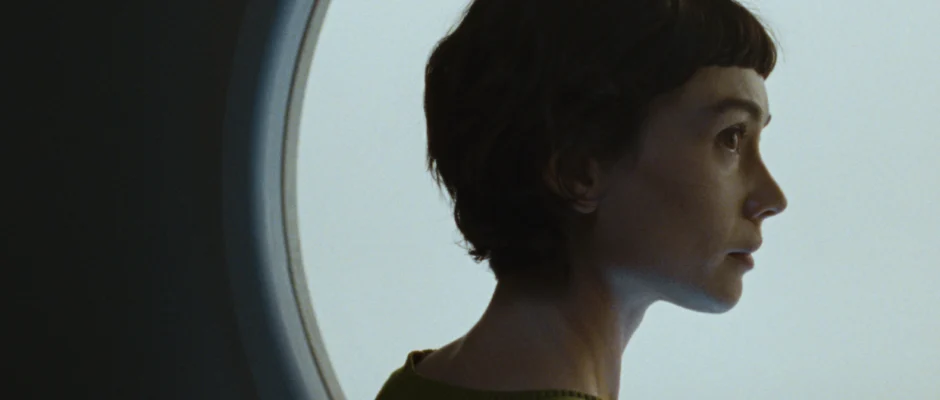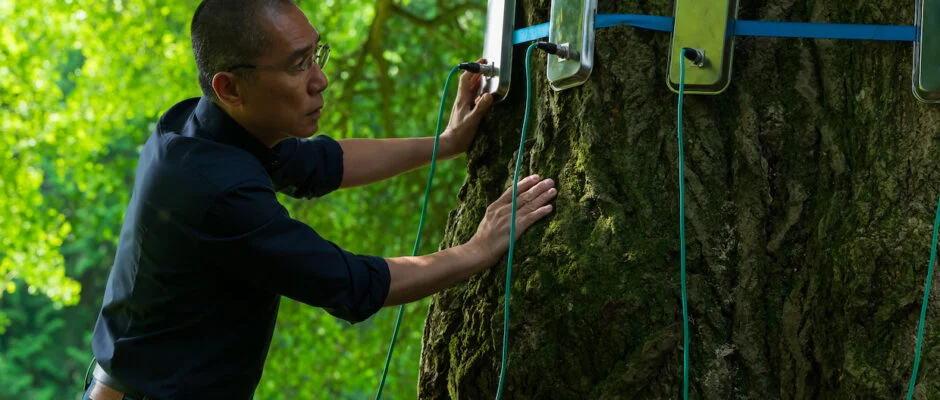
Hong Kong cinema icon Tony Leung Chiu-wai, celebrated for his profound collaborations with visionary directors such as Wong Kar-wai and John Woo, recently captivated audiences in Hungarian filmmaker Ildikó Enyedi’s latest feature, Silent Friend. The film, which premiered on May 8 via 1-2 Special, embarks on a unique narrative journey, exploring the interactions of various characters with a singular German ginkgo tree across three distinct historical periods: 1908, 1972, and 2020. Leung takes on the role of a neuroscientist in the film’s contemporary segment, a character whose groundbreaking research into newborn brain activity is abruptly halted by the global COVID-19 pandemic. During this unexpected professional hiatus, his character develops a profound connection with the nearly 200-year-old ginkgo, embarking on a quest to establish a neurological link between his own consciousness and that of the ancient tree.
Silent Friend: A Journey into Botanical Consciousness
Enyedi, an acclaimed director known for her poetic and often surreal storytelling, exemplified by her Golden Bear-winning On Body and Soul, brings a distinctive artistic vision to Silent Friend. The film positions the ginkgo tree not merely as a backdrop but as a silent, enduring protagonist, a witness to human history and emotion. Leung’s portrayal of the neuroscientist is central to the film’s philosophical inquiry into plant intelligence and the nature of consciousness itself. His character, initially grounded in empirical scientific research, finds himself drawn to the mystical resilience of nature amidst a global crisis that forces introspection and re-evaluation of human priorities. The ginkgo tree, a species renowned for its extraordinary longevity and resistance to disease, becomes a potent symbol of enduring life and silent wisdom, contrasting sharply with the transient struggles of humanity.
Leung’s journey into the role was a testament to his renowned dedication. He spent approximately six months immersed in preparatory studies, delving into complex subjects such as early cognitive development, plant intelligence, and the philosophy of consciousness. This extensive research involved consultations with real neuroscientists from various universities, a deep dive into academic literature, and even an attempt to experience EEG studies on children, though practical limitations prevented the latter. His goal was not merely to memorize lines but to "unconsciously" inhabit the persona of a neuroscientist, building a deep-seated confidence, particularly for a crucial lecture scene. He even engaged a British accent coach, envisioning his character as an alumnus of prestigious institutions like Oxford or Cambridge, adding a subtle layer of authenticity to his performance.
During promotional events for Silent Friend, including a retrospective of his work at Film at Lincoln Center in New York—his first film promotion in the city in nearly 25 years—and the Busan International Film Festival, Leung shared insights into his personal beliefs that resonate with the film’s themes. He revealed that his extensive research for the role profoundly altered his perspective on plants. "I do [believe plants have consciousness], especially after studying books about plant intelligence for this movie," Leung stated. "I’ve really changed my entire perspective towards plants. I think they’re just like humans. They are sentient beings. So to some degree they have consciousness." He acknowledged that his Buddhist perspective, which posits that all beings possess consciousness, aligns with this evolving understanding, but emphasized that the scientific inquiry itself was the primary catalyst for his changed view.
The film’s depiction of a life upended by the COVID-19 pandemic also mirrored Leung’s real-life experience. He recounted being isolated in Tokyo, a city where he knew few people, witnessing the closure of hotels and stores, and cycling through eerily empty streets. This personal resonance undoubtedly informed his portrayal of the neuroscientist’s isolation and search for meaning amidst global upheaval.
A Career Defined by Collaboration and Depth
Tony Leung’s illustrious career spans over four decades, commencing in 1982 as a co-host of a children’s television show before his swift ascent to leading roles in both television and film. His filmography is a tapestry of diverse genres, encompassing romance, comedy, horror, sci-fi, crime, thriller, fantasy, and some of the most critically acclaimed dramas of the last forty years. His roles in Hou Hsiao-hsien’s A City of Sadness (1989), Wong Kar-wai’s In the Mood for Love (2000), and Andrew Lau and Alan Mak’s Infernal Affairs (2002) are particularly celebrated as iconic benchmarks of his profound artistry.
Leung’s ability to imbue characters—from reporters and policemen to smugglers, informers, real-estate tycoons, photographers, gamblers, bounty hunters, and now neuroscientists—with unwavering commitment and deep empathy has cemented his status as a cinematic legend. His signature "penetrating gaze" is often cited as the most distinctive aspect of his performing style. Director Ildikó Enyedi echoed this sentiment, noting, "People talk about his eyes. He said it may be due to his childhood, which was painful, difficult. He had to learn to hide his feelings, to isolate himself." This insight suggests a profound connection between his personal history and the emotional depth he brings to the screen, allowing him to convey complex internal worlds with often minimal dialogue.
His long-standing collaboration with Wong Kar-wai, which includes masterpieces like Chungking Express (1994), Happy Together (1997), In the Mood for Love (2000), and 2046 (2004), is arguably the most significant creative partnership in contemporary Asian cinema. These films, characterized by their exquisite visual style, evocative soundtracks, and exploration of longing and memory, provided Leung with a canvas to craft some of his most nuanced and melancholic performances, earning him international acclaim, including the Best Actor award at the Cannes Film Festival for In the Mood for Love. Beyond Wong Kar-wai, Leung has consistently sought out challenging roles under the guidance of acclaimed directors globally, working with John Woo on action epics like Hard Boiled (1992) and Red Cliff (2008), Ang Lee on the controversial spy thriller Lust, Caution (2007), and Zhang Yimou on the wuxia epic Hero (2002).
The Craft of an Icon: Preparation and Philosophy
Leung’s approach to acting is characterized by a deep-seated instinct and a director-centric philosophy. Unlike many actors who primarily evaluate projects based on the script or the role, Leung prioritizes the human connection with the director. "I believe my instinct. I love being with someone I think I can work with. I don’t pick a project because of the script, but because of the director, the person," he explained. "I need to talk with them, have a meeting to feel them out. If it’s good, then I will work with them." This philosophy underpins his ability to forge lasting and creatively fertile partnerships, as evidenced by his collaborations with Wong Kar-wai, Johnnie To, and now Ildikó Enyedi.

His dedication to embodying a character extends beyond mere script analysis. For Tran Anh Hung’s Cyclo (1995), set in Vietnam, Leung’s collaboration with the director and co-star Tran Nu Yên Khê was intensely immersive. Despite the challenging production conditions, including censorship that prevented the crew from reviewing dailies until after leaving the country, Leung felt secure in his performance due to his intimate understanding of the script and the strong bond formed with the creative team. He and the director lived next door to each other for a month prior to shooting, engaging in constant discussions, listening to music, and visiting art collectors to deeply internalize the film’s world and vision. This level of engagement highlights his profound commitment to the collaborative process.
Leung also demonstrates remarkable adaptability across varying production scales and styles. He noted the stark contrast between the rigid structure of Hollywood productions, where "you can’t change a word," and the greater flexibility offered by independent films like Cyclo and Silent Friend, which allow for improvisation and a more fluid creative process. This adaptability allows him to navigate different cinematic landscapes, from the expansive Marvel Cinematic Universe to intimate European art-house features, always delivering performances of compelling authenticity.
Embracing the Shadows: Tony Leung’s Antagonistic Turns
In recent years, Tony Leung has embraced a series of villainous roles, a departure from his more conventional portrayals of romantic leads or conflicted heroes. His turn as Xu Wenwu, the enigmatic and powerful antagonist in Marvel’s Shang-Chi and the Legend of the Ten Rings (2021), marked his impactful entry into Hollywood blockbusters. This was followed by the portrayal of the ruthless real estate mogul Henry Ching Yat-yin in The Goldfinger (2023) and a corrupt Hong Kong policeman in Where the Wind Blows (2022).
Leung expresses a keen interest in exploring these darker facets of human nature. "It’s something I seldom have a chance to do. I just want to explore that mindset, experience how it feels to be that," he articulated. This fascination with the complex psychology of antagonists allows him to stretch his formidable acting range, bringing unexpected depth and even a degree of tragic humanity to characters who might otherwise be unidimensional. His portrayal of Xu Wenwu, for instance, garnered widespread critical acclaim for imbuing the character with gravitas and emotional resonance, making him one of the MCU’s most compelling villains.
His performance as Sam, the morally ambiguous policeman in Johnnie To’s The Longest Nite (1998), remains a fan favorite and a benchmark for his exploration of morally gray characters. Leung fondly recalled the experience, despite the film’s modest box office. He also highlighted Johnnie To’s unconventional working method, which often involved shooting without a complete script. "You know he wasn’t working with a script, right? I asked him, ‘How come you don’t have a script?’ He said, ‘That’s the way I’m working now.’ It was really enjoyable. I thought, why not explore that kind of character? Because I wouldn’t get that chance in real life." This improvisational environment clearly appealed to Leung’s desire for creative exploration.
For The Goldfinger, Leung delved into the enigmatic persona of George Tan, the real-life figure behind the notorious Carrian Group scandal of the 1980s, a financial fraud that rocked Hong Kong’s economy and involved murder. Leung recounted hearing about Tan in his youth but having no real understanding of the man’s identity. Writer and director Felix Chong provided him with the book The Joker’s Downfall (also known as Carrian: a True Story of Murder, Mystery and Mayhem by Ian Robinson), which detailed the scandal. "I thought, ‘Wow, how can something like this happen in Hong Kong?’ Someone was even murdered, but there was no follow up," Leung reflected. Given Tan’s reclusive nature, Leung’s research focused on the bankers and associates who worked with him, as Tan himself rarely appeared publicly. This challenge of portraying a figure shrouded in mystery allowed Leung to construct a character based on historical context and inferred psychology, rather than direct imitation.
Personal Insights and Universal Themes
Leung’s journey into the philosophical questions posed by Silent Friend offers a glimpse into his personal evolution. His belief in plant consciousness, cultivated through diligent research, aligns with a growing global discourse on environmental ethics and the interconnectedness of all life forms. This perspective, further informed by his Buddhist background, transcends mere scientific inquiry, touching upon broader spiritual and ecological implications. The film, and Leung’s role within it, serves as a poignant commentary on humanity’s relationship with the natural world, particularly in an era marked by climate crisis and ecological fragility.
The profound impact of the COVID-19 pandemic, both on his character in Silent Friend and on Leung’s personal life, underscores the film’s contemporary relevance. The shared experience of isolation, uncertainty, and the re-evaluation of priorities resonated deeply with audiences worldwide. Leung’s portrayal, informed by his own solitude in Tokyo, brings an authentic vulnerability to the neuroscientist’s retreat into nature and his search for deeper meaning beyond human constructs.
Looking Ahead
The cinematic landscape continues to be enriched by Tony Leung’s presence. Fans eagerly anticipate his rumored reunion with acclaimed director Johnnie To, with whom he has previously created memorable works. Leung confirmed that a new project with To is indeed in development, with the script currently being finalized. However, due to his commitment to two other upcoming projects, the Johnnie To film is tentatively slated for late 2027. This news signals a continued exploration of diverse roles and collaborations for an actor who consistently seeks out new challenges and artistic expressions. As Tony Leung Chiu-wai continues to redefine the boundaries of his craft, his influence on global cinema remains profound, solidifying his legacy as one of the most compelling and versatile actors of his generation.