The 25th anniversary of Rob Cohen’s seminal action film, The Fast and The Furious, was celebrated with a special midnight screening at the 2026 Cannes Film Festival, marking a significant moment for the enduring franchise and its devoted fanbase. The event, held in the prestigious Grand Théâtre Lumière, saw an emotional return for star Vin Diesel, who was joined by co-stars Michelle Rodriguez and Jordana Brewster, as well as Meadow Walker, daughter of the late Paul Walker. The screening underscored the film’s unexpected journey from a summer sleeper hit to a global cinematic phenomenon, prompting discussions on its cultural impact and the evolving definition of a "classic" within the festival circuit.
The Cannes Premiere: A Midnight Celebration
On a Wednesday night during a festival edition notably devoid of major Hollywood premieres, the inclusion of The Fast and The Furious in the Official Selection served as a strategic nod to commercial cinema, a move often interpreted as the festival’s attempt to bridge the gap between arthouse fare and mainstream blockbusters. This curatorial decision resonated with the spirit of previous Cannes events, such as the high-profile launches of Top Gun: Maverick in 2022 and Mission Impossible – The Final Reckoning just the previous year, both featuring Hollywood titan Tom Cruise. The atmosphere surrounding the Fast and Furious screening was electric, with 2,300 attendees eagerly anticipating the nostalgic journey back to the franchise’s origins.
The red carpet leading to the Grand Théâtre Lumière buzzed with anticipation. Michelle Rodriguez and Jordana Brewster, integral to the film’s original ensemble, walked alongside Meadow Walker, whose presence underscored the lasting family bond forged by the series. Festival General Delegate Thierry Frémaux and President Iris Knobloch were also present, awaiting the arrival of the franchise’s patriarch, Vin Diesel. Diesel, known for his commanding presence and deep connection to the series, lingered amidst photographers and fans, making a grand entrance that culminated in a triumphant group photo. His attire, a blazer encrusted with the declaration "FAST FOREVER," was a visible testament to his commitment to the saga, a promise that seems to hold true given the numerous spin-off television series reportedly in development at Peacock.
Inside the theater, the emotional core of the evening truly took hold. Addressing the revved-up audience, Vin Diesel delivered a heartfelt speech. Despite the film not being formally categorized within the festival’s "Classics" sidebar, Diesel repeatedly referred to its Cannes-minted "classic" status, reflecting his deep personal conviction regarding the film’s enduring legacy. With his characteristic slow, sonorous delivery, reminiscent of a Zen benediction, the New York-born actor reminisced about his first visit to Cannes in 1995. Then, at 28, he was an unknown writer, producer, director, and star of the 20-minute short film Multi-Facial. Frémaux himself had reportedly told Diesel earlier that day, "You, Vin, were born in Cannes," a sentiment that seemed to profoundly move the star, bringing him to tears during his address.
His emotional state was inextricably linked to the memory of Paul Walker, who tragically died in a high-speed single-car collision in 2013 during the production of Furious 7. Diesel spoke of Walker as "my brother Pablo," proclaiming, "This is the film where brotherhood was introduced to our millennium by myself and my brother Pablo." The late hour, nearing 1:00 AM, lent an almost dreamlike quality to the proceedings, where the boundaries between film and profound personal connection blurred, making such declarations resonate deeply with the receptive audience.
A Legacy Forged: The Fast and The Furious at 25
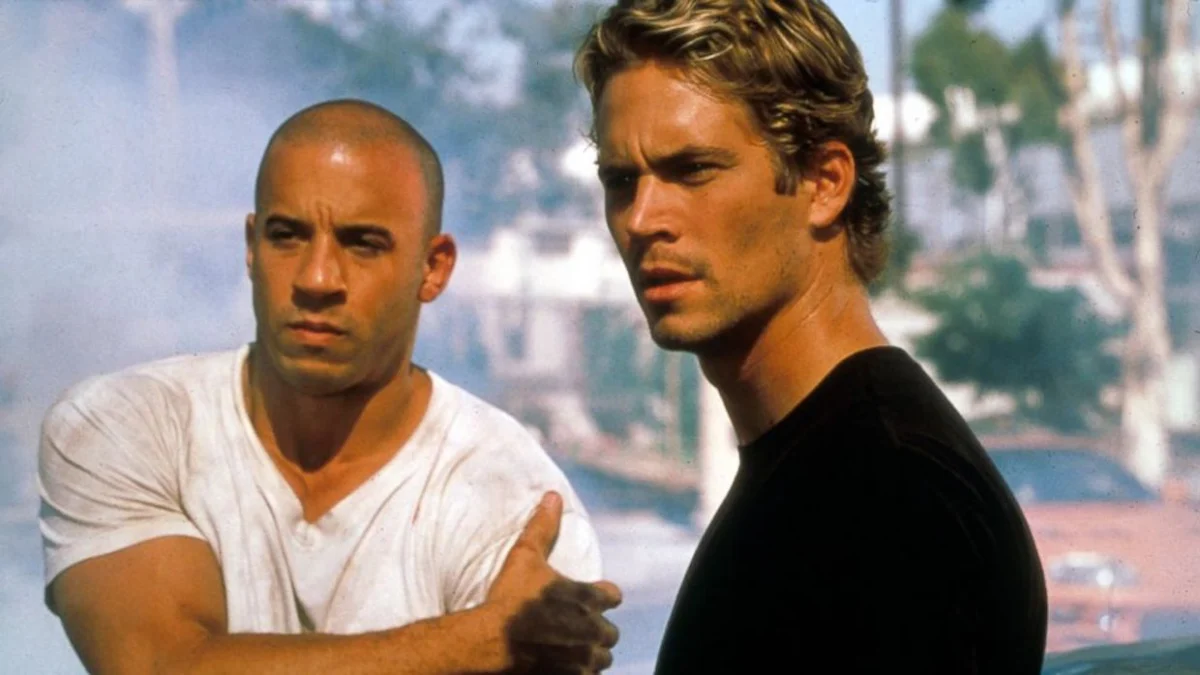
Released in 2001, The Fast and The Furious emerged as a cultural touchstone, tapping into the burgeoning street racing subculture and an appetite for high-octane action. Directed by Rob Cohen, the film introduced audiences to Dominic Toretto (Vin Diesel), a charismatic street racer and ex-convict, and Brian O’Conner (Paul Walker), an undercover LAPD officer tasked with infiltrating Toretto’s crew, suspected of grand larceny involving electronics. The narrative, a blend of adrenaline-fueled races, intricate heists, and burgeoning loyalty, laid the groundwork for one of the most successful film franchises in cinematic history.
The film’s initial critical reception was mixed, with some critics dismissing it as B-movie fare, while others praised its energy and star performances. However, its commercial success was undeniable. Produced on an estimated budget of $38 million, it grossed over $207 million worldwide, far exceeding expectations. This strong box office performance signaled the arrival of a new cinematic force, one that would redefine the action genre for a generation. Beyond its financial triumphs, The Fast and The Furious profoundly influenced car culture, popularizing tuner cars, aftermarket modifications, and the street racing lifestyle globally. It gave a mainstream voice to a subculture previously existing on the fringes, establishing a visual and thematic template that would be emulated for years.
From Street Races to Global Phenomenon
Over the past quarter-century, The Fast and The Furious franchise has evolved dramatically, expanding from street-level crime dramas to globe-trotting espionage thrillers featuring increasingly fantastical stunts. The initial film’s relatively grounded plot, revolving around stolen VCRs and DVD players, stands in stark contrast to later installments that have involved submarines, tanks, and even ventures into space in Fast 9 (2021). This escalation, while thrilling for some, has also led to a significant shift in its aesthetic, moving from practical effects and raw, visceral action to heavily digitized sequences. Yet, the core themes of "family" and loyalty, introduced in the first film, have remained the bedrock of the series, anchoring its labyrinthine plotlines and ever-expanding ensemble cast.
The franchise’s commercial trajectory has been astronomical. Collectively, the main Fast & Furious saga films have grossed over $7 billion worldwide, making it one of the highest-grossing film series of all time. This immense success is a testament to its broad appeal across diverse demographics and its ability to continually reinvent itself while maintaining its foundational ethos. The first film, in retrospect, exudes a unique charm—a "Michael Mann for meatheads," as one observer playfully described it—with its highly calibrated action and nascent character dynamics. The rewatch at Cannes allowed audiences to appreciate the foundational elements that propelled this saga into cinematic legend before the stakes became literally astronomical.
Vin Diesel’s Emotional Return to Cannes
Diesel’s speech at Cannes was a poignant reminder of his long and complex relationship with the festival and his career. His 1995 short film, Multi-Facial, a semi-autobiographical exploration of identity and struggle for an aspiring actor, was screened at Cannes, marking a pivotal moment in his early career. That brief exposure provided him with critical recognition that eventually led to his breakout role in Steven Spielberg’s Saving Private Ryan (1998) and subsequently, The Fast and The Furious. His emotional recounting of this history underscored a profound sense of coming full circle, returning to the very place where his cinematic aspirations first gained traction, now as the patriarch of a multi-billion-dollar franchise.

The Enduring Bond: Remembering Paul Walker
The tribute to Paul Walker was perhaps the most moving aspect of Diesel’s address. Walker’s untimely death in 2013 sent shockwaves through Hollywood and deeply affected the Fast & Furious cast and crew. His character, Brian O’Conner, became a fan favorite, embodying a blend of determination, anger, and a certain earnestness. Diesel’s consistent public remembrance of Walker, often referring to him as "Pablo," has become a hallmark of the franchise’s public persona, emphasizing the real-life bonds that mirrored the on-screen "family." This narrative of brotherhood, as Diesel put it, was indeed a defining characteristic of the first film and has been lovingly preserved as a cornerstone of the entire series.
Walker’s performance as Brian, marked by his intense, furrowed-brow glare and distinctive blue eyes, showcased a raw talent that could be traced back to his early roles, including his stint on the long-running soap opera The Young and the Restless in 1993. His portrayal of an officer torn between duty and loyalty to a chosen family resonated deeply, laying the emotional groundwork for the entire saga. The remembrance at Cannes served not just as a eulogy but as a celebration of his indelible contribution to a film that has touched millions.
Cannes’ Evolving Curatorial Vision
The decision to feature The Fast and The Furious at Cannes reflects a broader trend within prestigious film festivals to embrace a wider spectrum of cinematic output. Historically, Cannes has been synonymous with auteur cinema, groundbreaking art films, and intellectual discourse. However, in an increasingly fragmented media landscape, festivals are recognizing the need to engage with popular culture and the economic realities of the global film industry.
The inclusion of blockbusters like Top Gun: Maverick and now The Fast and The Furious signifies a strategic move to attract larger audiences, generate media buzz, and demonstrate the festival’s relevance across the entire cinematic ecosystem. Thierry Frémaux, in particular, has been instrumental in this shift, understanding that a vibrant festival can celebrate both the esoteric and the widely accessible. This approach challenges traditional notions of what constitutes "festival-worthy" cinema, prompting a reevaluation of critical and cultural merit.
Balancing Artistry and Commercial Appeal
The debate over whether The Fast and The Furious qualifies as a "classic" in the traditional sense is inherent to this evolving curatorial vision. While it may not possess the formal artistic ambitions of some Cannes selections, its immense cultural impact, unprecedented longevity, and the deep emotional connection it fosters with its audience certainly make a case for its significance. The film’s 25th-anniversary screening at Cannes elevates it beyond mere commercial success, placing it within a context that encourages scholarly and celebratory reappraisal. It highlights that a film’s "classic" status can be earned not just through critical acclaim or artistic innovation, but also through its enduring cultural resonance and its ability to shape cinematic trends and public imagination.
The festival’s embrace of such a popular film can also be seen as a conciliatory gesture towards Hollywood, acknowledging the vital role mainstream productions play in the global film economy. In an era where streaming services challenge traditional theatrical models, these high-profile festival screenings serve as powerful reminders of the communal magic of cinema and the enduring appeal of the big screen experience.
The Future of the Fast Saga: "FAST FOREVER"
The message emblazoned on Vin Diesel’s blazer, "FAST FOREVER," is more than just a tagline; it reflects the robust future planned for the Fast & Furious universe. While the main saga is slated for its "final" installment in 2028, the franchise is far from over. Reports indicate that at least four spin-off television series are currently in development at Peacock, signaling a strategic expansion into episodic storytelling. This move is indicative of Hollywood’s broader trend towards building cinematic universes, extending the life of beloved intellectual properties beyond traditional film sequels.
The longevity of the Fast & Furious franchise, now entering its third decade, is a remarkable feat in an industry constantly seeking the next big hit. Its ability to reinvent itself, incorporate new characters, and explore diverse genres while retaining its core themes speaks volumes about its adaptability and the enduring appeal of its central premise. The Cannes celebration served as both a retrospective and a reaffirmation of this commitment to "family" and speed, ensuring that the legacy of Dominic Toretto and his crew will continue for years to come.
Cultural Resonance and Cinematic Legacy
The 25th-anniversary screening of The Fast and The Furious at the Cannes Film Festival transcends a simple commemorative event. It is a powerful affirmation of the film’s profound cultural resonance and its solidified place in cinematic history. What began as a relatively modest action film about street racing and petty crime has blossomed into a global phenomenon, influencing car culture, redefining action sequences, and creating a multi-generational fanbase.
The film’s exploration of chosen family, loyalty, and redemption, set against a backdrop of high-stakes thrills, has resonated deeply with audiences worldwide. The emotional tribute to Paul Walker further cemented the franchise’s unique blend of entertainment and heartfelt human connection. As the credits rolled in the Grand Théâtre Lumière, nearly at 3 AM, the attendees, having endured a long day of queuing and cinematic immersion, were left not just with the memory of a film, but with the profound experience of witnessing a cultural touchstone being celebrated on one of the world’s most prestigious stages. The event served as a potent reminder that a "classic" can emerge from unexpected corners, its enduring power lying not just in critical consensus, but in its unwavering ability to captivate, entertain, and connect with the human spirit, one quarter-mile at a time.