The annual Emmy Awards race is officially in full throttle, with May serving as the television industry’s equivalent of Hollywood’s frantic December Oscar push. As the May 31 eligibility deadline looms, streaming platforms in particular are unleashing a torrent of prestige programming, vying for the attention of Academy voters in a landscape more saturated than ever before. This strategic outpouring of content is designed to leverage "recency bias," a well-documented phenomenon where recent exposure to a show can significantly influence voting decisions, mirroring the established wisdom of fall film releases for Oscar consideration.
The Perennial Pursuit of Prestige: An Overview of Emmy Season
For industry insiders and dedicated television aficionados, the pursuit of awards is a year-round endeavor. While the Emmy Awards ceremony itself typically takes place in September, the groundwork for campaigns begins many months prior, often overlapping with the tail end of the cinematic awards season. Even as the Academy Awards conclude in March, and the Cannes Film Festival commands global attention in May, the strategic machinery for the Emmys is already in motion. Publicists, marketing teams, and network executives meticulously plan luncheons, erect billboards, host exclusive screenings, and orchestrate Q&A sessions with talent, all designed to elevate their projects above the cacophony of competing content. This intricate dance of promotion and persuasion represents a significant financial investment, with major studios and streamers reportedly allocating millions to secure nominations and eventual wins. A single, high-profile For Your Consideration (FYC) billboard in Los Angeles can cost upwards of $100,000 per month, and a full-fledged campaign for a major contender can easily exceed $5 million, underscoring the high stakes involved in capturing Emmy gold.
Navigating the Awards Calendar: A Tale of Two Seasons
The Emmy calendar operates on a distinct rhythm compared to its cinematic counterpart, the Oscars. While the Academy Awards primarily focus on films released within a single calendar year, the Emmys encompass a broader window. The current eligibility period, for instance, covers shows that premiered or aired new episodes between June 1 of the previous year and May 31 of the current year. This extended timeframe introduces a unique dynamic, pitting brand-new debut series against established shows returning for subsequent seasons.
Broadcast and cable networks, with their traditional fall-to-spring weekly release schedules, typically have a more staggered approach to their Emmy campaigns. Their consistent presence over months allows for sustained audience engagement and critical build-up. In contrast, streamers often employ a "drop-all-episodes" model, necessitating a concentrated marketing blitz closer to the eligibility deadline to maximize impact. This creates the intense "May rush" that characterizes the current awards cycle, as platforms like Netflix, Apple TV+, Prime Video, and HBO Max unleash their most ambitious and critically acclaimed series within a compressed timeframe.
The disparity in awards timelines extends to precursor events as well. Unlike the Oscars, which benefit from a robust ecosystem of guild awards (SAG, DGA, WGA, PGA) that often predict eventual winners, the television awards landscape is notably different. Most major professional guilds present their television accolades months after the Emmys, often alongside their film counterparts. This absence of direct, pre-Emmy precursors means that new shows, regardless of their critical acclaim or audience reception, enter the Emmy race without the imprimatur of prior industry recognition, making prognostication a far more challenging and less precise endeavor than for the Oscars. "It’s like trying to predict the weather without a barometer," notes an awards strategist from a major studio, highlighting the reliance on critical buzz and strategic campaigning in the absence of traditional indicators.
The Streaming Wars’ Lingering Shadow: A Consolidated Yet Crowded Field
The era often dubbed the "Streaming Wars" may not have produced a clear victor, but its legacy is undeniably etched into the current television landscape through significant corporate consolidation. The Emmy race, in essence, has become a high-stakes arena where a handful of powerful media conglomerates vie for supremacy. Disney, with its sprawling portfolio encompassing ABC, Fox, FX, and Hulu, stands as a formidable player. Paramount Global commands CBS, Paramount+, and Showtime. Warner Bros. Discovery leverages the prestige of HBO and the expansive reach of HBO Max. Universal owns Bravo, NBC, and Peacock. Alongside these legacy giants, pure-play streaming services like Apple TV+, Netflix, and Prime Video continue to invest heavily in original content, ensuring a robust, if highly competitive, field.
This consolidation means that while the number of independent production entities may have dwindled, the sheer volume of content produced by these mega-companies has exploded. In 2023, the number of original scripted series airing across broadcast, cable, and streaming platforms reached an estimated 600, a staggering figure that underscores the challenge for both awards voters and casual viewers alike. This "peak TV" environment means that even with fewer major players, the competition for eyeballs and accolades has intensified exponentially. "The challenge isn’t just making a great show anymore; it’s making sure anyone even knows it exists," remarked a veteran publicist, highlighting the escalating marketing efforts required to cut through the noise.
A Crowded Field and Shifting Nomination Dynamics
One of the most fundamental distinctions between the Emmys and the Oscars lies in their nomination structures. While the Academy Awards typically nominate five films per category (with Best Picture being an exception at ten), the Emmys employ a more flexible system, where the number of nominees is directly influenced by the number of submitted entries. This often results in significantly larger nominee pools.
For instance, the marquee categories of Outstanding Drama Series and Outstanding Comedy Series typically feature eight nominated shows, reflecting the vast number of submissions. Outstanding Limited or Anthology Series, a more curated category, usually sees five nominees. In the acting categories, the numbers fluctuate annually but consistently feature more supporting nominees than lead, sometimes reaching eight or even ten individuals in a single category. This mathematical reality, while providing broader recognition across the industry, also dilutes the impact of a nomination. As one veteran publicist often quips, "The nomination is the win," acknowledging the difficulty of cutting through such a dense field. This sentiment reflects the immense value placed on simply being recognized among the top tier, given the sheer volume of eligible content.

This expansive nomination system has led to remarkable records. The fictional series The Bear and The Studio recently tied for the most comedy series nominations in a single year, each garnering an impressive 23 nods. In the drama realm, the iconic Game of Thrones still holds the record, having amassed an astonishing 32 nominations in a single season. These figures highlight the immense scale of television production and the academy’s efforts to acknowledge a wide array of talent and craftsmanship, while simultaneously presenting a daunting task for voters to thoroughly evaluate every contender.
Predicting the Frontrunners: Navigating the Unpredictable
Despite the crowded field and the absence of reliable precursors, certain patterns and frontrunners emerge each Emmy season, driven by critical acclaim, audience buzz, and historical performance.
Outstanding Drama Series:
The current consensus points to HBO Max’s The Pitt as a dominant force. Having just concluded its wildly popular second season, the medical drama has captivated audiences and critics alike, generating fervent social media discourse and establishing itself as a quintessential "water cooler" show. Its strong narrative, compelling characters, and consistent critical praise position it as a likely contender for a second consecutive Emmy for Best Drama Series. The Pitt‘s success is a testament to HBO’s continued prowess in crafting appointment viewing, leveraging weekly releases to build anticipation and engagement in an increasingly on-demand world. Its unique blend of high-stakes medical scenarios and intricate character development has resonated deeply with viewers, evidenced by its consistently high viewership figures and a critical Metascore averaging 92 across two seasons.
However, the category is far from a one-horse race. Previous nominees like Prime Video’s sci-fi hit Fallout, Apple TV+’s topical The Morning Show, Hulu’s dystopian Paradise, and Netflix’s global phenomenon Stranger Things are all expected to return to the nominee list, each boasting dedicated fan bases and critical appreciation. New series such as Apple TV+’s Pluribus, a philosophical exploration of artificial intelligence, and HBO’s gritty crime drama Task are also making strong bids for recognition, aiming to break into the established hierarchy. For these contenders, simply securing one of the seven remaining nomination slots alongside a juggernaut like The Pitt is itself a significant achievement, validating their artistic merit and industry impact.
Outstanding Comedy Series:
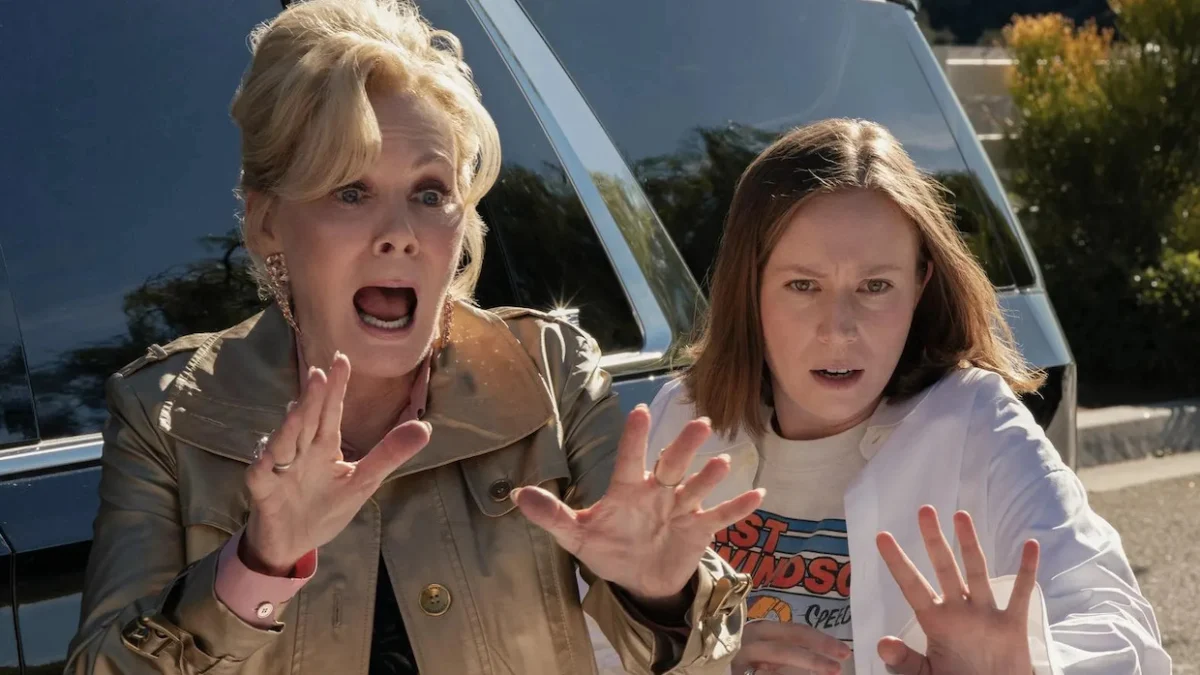
In the comedy landscape, HBO Max’s beloved Hacks appears poised for a strong showing. With its final season, the backstage comedy about a legendary comedian and her young writer has consistently charmed voters with its sharp writing, emotional depth, and stellar performances. A second series win for Hacks is highly plausible, especially given that last year’s winner, The Studio, is currently between seasons. Lead actress Jean Smart, a perennial favorite, is also expected to contend for a remarkable fifth consecutive Emmy, a testament to her enduring appeal and the show’s consistent quality. The show’s nuanced portrayal of generational dynamics and the struggles of women in entertainment has garnered it a loyal following and widespread critical acclaim, with its final season enjoying a 98% Rotten Tomatoes score.
FX’s The Bear, a previous winner that famously broke Hacks‘s Emmy-winning streak in 2024, is likely to be among the nominees, though some industry observers wonder if its intense, high-octane style might be perceived as having "worn out its welcome" for some voters, potentially leading to a slight dip in enthusiasm. ABC’s Abbott Elementary continues to enjoy widespread affection, representing a rare and celebrated success for the network sitcom, a genre increasingly challenged in the streaming era. Its consistent viewership (averaging 4 million live viewers weekly) and heartwarming approach resonate strongly. Netflix’s Nobody Wants This and Apple TV+’s Shrinking, both having earned nominations in previous seasons, are also strong contenders. Among the debut series, Apple TV+’s Margot’s Got Money Troubles is gaining significant traction for its sharp wit and relatable premise, while HBO’s cult classic The Comeback, despite previous acting nominations in 2006 and 2015 for star Lisa Kudrow, could finally break through for a long-sought series nomination, a nod to its enduring influence as a Hollywood satire that was arguably ahead of its time.
Outstanding Limited or Anthology Series:
Often considered the most intriguing and unpredictable category, Limited or Anthology Series mirrors the Oscars’ focus on new narratives, with subsequent seasons of anthology series serving as the television world’s equivalent of sequels. This year’s field is particularly rich with buzzy titles exploring relationship woes and psychological dramas.
Netflix’s critically acclaimed Beef explores the aftermath of a road rage incident with dark humor and profound insight, earning praise for its unique narrative structure and powerhouse performances. HBO’s DTF St. Louis delves into complex romantic entanglements within a Midwestern setting, garnering strong reviews for its authenticity. FX’s Love Story: John F. Kennedy Jr. & Carolyn Bessette offers a compelling historical drama, drawing significant interest for its portrayal of a beloved American couple. Richard Gadd, fresh off his Emmy-winning 2024 series Baby Reindeer, returns with HBO’s Half Man, a new project rumored to be even more harrowing and emotionally resonant, delving into themes of mental health and societal neglect. Netflix’s fresh adaptation of Lord of the Flies aims to replicate the streamer’s success with last year’s Adolescence, another critically lauded tale of "fucked-up British boys" exploring dark adolescent psychology. Finally, Prime Video’s Bait, a half-hour dark comedy starring Riz Ahmed as an actor in London vying for the role of James Bond, offers a satirical look at ambition and identity within the film industry, playing on Ahmed’s distinctive persona and offering a fresh take on the spy genre. The diversity of themes and tones within this category underscores its appeal and its capacity to surprise, making it a particularly difficult, yet rewarding, category to predict.
The Economic Engine and Broader Implications of Awards Season
Beyond the glitz and glamour, the Emmy Awards represent a significant economic engine for the television industry. A win or even a nomination can translate into increased viewership, critical validation, and enhanced leverage for creators and talent in future negotiations. For streamers, awards prestige is a crucial differentiator in a crowded subscription market, signaling quality and attracting new subscribers. For traditional networks, it reinforces brand identity and validates their creative output. Research by Nielsen indicates that Emmy-nominated shows often see a 20-30% bump in viewership immediately following the nominations, with winners experiencing even greater spikes, underscoring the tangible value of awards recognition.
The sheer volume of content, while exciting for viewers, presents considerable challenges for Emmy voters, who are often working professionals with limited time to consume hundreds of eligible programs. This necessitates a reliance on buzz, critical consensus, and highly visible campaigns, further emphasizing the importance of strategic marketing. "We’re not just selling a show; we’re selling a narrative around its cultural significance," explains a marketing executive, pointing to the elaborate storytelling involved in awards campaigns.
Looking ahead, the trends emerging from this Emmy season offer a glimpse into the evolving landscape of television. The increasing blend of comedy and genre elements, exemplified by shows that defy easy categorization, suggests a growing creative freedom. The nuanced exploration of artificial intelligence’s existential threats, reflecting contemporary anxieties, and the pervasive influence of contemporary political chaos on narrative themes are all indicative of how creators are responding to and reflecting the complexities of our current world. The ongoing dialogue around these trends, alongside the spotlight on the unsung heroes behind the camera, will be central to understanding the future trajectory of television.
As the industry hurtles towards nomination announcements in July and the eventual ceremony in September, the task of sifting through this "organized chaos" remains paramount. The Emmy Awards, more than just a celebration of excellence, serve as a vital barometer of the television industry’s creative vitality, its commercial imperatives, and its ever-evolving relationship with global audiences. The ultimate victors will not only be crowned for their artistic achievements but will also emerge as key indicators of where the medium is headed next, shaping critical discourse and audience expectations for years to come.