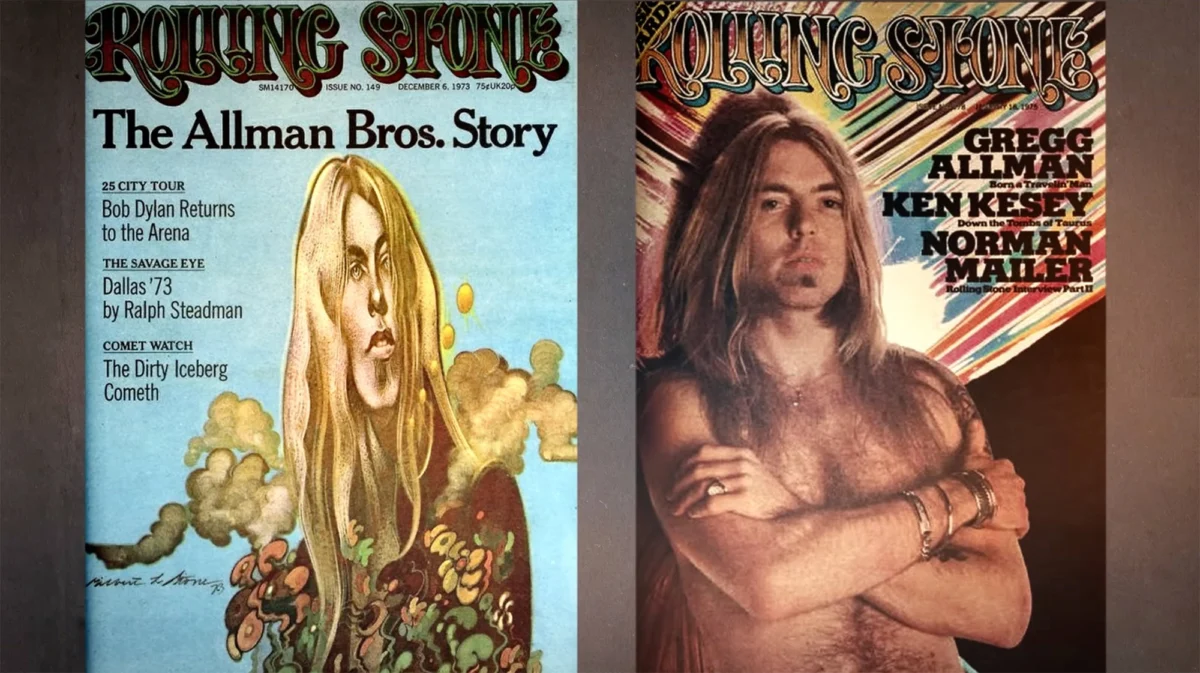
A Narrative of Trauma and Transcendence
The documentary begins by grounding Gregg Allman’s musical journey in the formative trauma of his childhood. In 1949, when Gregg was only two years old and his brother Duane was three, their father, Willis Turner Allman, was murdered by a hitchhiker he had offered a ride to in Norfolk, Virginia. This event cast a long shadow over the Allman household, eventually leading their mother, Geraldine "Honey" Allman, to move the family to Daytona Beach, Florida.
The film utilizes archival recordings and family testimony to illustrate how this early loss forged an unbreakable bond between the two brothers and drove them toward the sanctuary of the blues. While Duane became a guitar prodigy, Gregg found his identity in the gritty, emotive vocals and the B3 organ. The documentary traces their early ventures in bands like The Escorts and The Allman Joys, leading up to the 1969 formation of the Allman Brothers Band in Jacksonville, Florida.
The Architect of Southern Rock
A significant portion of the film is dedicated to the technical and cultural innovation of the Allman Brothers Band. By blending elements of jazz, blues, country, and rock, the group created a sound that was entirely unique to the American South. The documentary features interviews with original drummer Jaimoe and longtime keyboardist Chuck Leavell, who provide insights into the band’s legendary improvisational style.

Central to this era was the band’s commitment to racial integration. During a period when the American South remained deeply divided by Jim Crow-era tensions, the Allman Brothers Band was a rare integrated ensemble, featuring Black drummer Jai Johanny "Jaimoe" Johanson alongside white members. The film explores how the band’s presence in Macon, Georgia, challenged local social norms and how their music served as a bridge across racial divides.
The narrative reaches a pivotal peak with the recording of At Fillmore East in 1971, widely regarded as one of the greatest live albums in rock history. However, the triumph was short-lived. Only months after the album’s release, Duane Allman was killed in a motorcycle accident at the age of 24. The documentary poignantly captures Gregg’s struggle to maintain the band’s momentum while mourning the loss of his brother and musical North Star.
Public Life and Private Struggles
Gregg Allman: The Music of My Soul does not shy away from the more turbulent chapters of its subject’s life. The film examines Allman’s high-profile marriage to pop icon Cher in 1975, a union that captivated the tabloid press and symbolized a collision of disparate worlds: the gritty reality of Southern Rock and the polished glamour of Hollywood. The documentary includes reflections from Cher herself, providing a rare look at their relationship and the pressures that ultimately led to their divorce.
Parallel to his celebrity status was Allman’s lifelong battle with substance abuse. The film details how the pressures of fame, combined with the unresolved grief of his father’s and brother’s deaths, led to decades of addiction to heroin and alcohol. Through interviews with his children, Devon and Galadrielle Allman, the documentary portrays the human cost of these struggles on his family life.

The narrative shifts toward a more hopeful tone as it explores Allman’s later years. The film documents his journey toward sobriety and his 2010 liver transplant, portraying his final decade as a period of artistic and personal reckoning. During this time, Allman released some of his most critically acclaimed solo work, including the T Bone Burnett-produced Low Country Blues (2011) and his posthumously released final album, Southern Blood (2017).
Production Context and Directorial Vision
The choice of James Keach as director brings a specific pedigree to the project. Keach is well-regarded for his sensitive handling of musical legacies, most notably with the award-winning documentary Glen Campbell: I’ll Be Me, which chronicled the country star’s battle with Alzheimer’s. Keach’s approach in The Music of My Soul is described as "visionary," utilizing never-before-seen interviews and electrifying performance footage that has been meticulously restored for the big screen.
The involvement of Amblin Entertainment suggests a high production value and a narrative structure designed to appeal to both die-hard fans and general audiences. Producers Michael Lehman, who served as Allman’s longtime manager, and Alex Komisaruk have ensured that the film maintains an authentic voice by including those who were closest to Gregg during his final years.
Chronology of Key Events Featured in the Film
- 1947: Gregory LeNoir Allman is born in Nashville, Tennessee.
- 1949: The murder of Willis Turner Allman.
- 1969: The Allman Brothers Band is formed in Jacksonville, Florida.
- 1971: Release of At Fillmore East; Death of Duane Allman.
- 1972: Death of bassist Berry Oakley.
- 1975–1979: Marriage to Cher and the release of their collaborative album, Two the Hard Way.
- 1987: Release of "I’m No Angel," marking a solo commercial peak.
- 1995: The Allman Brothers Band is inducted into the Rock and Roll Hall of Fame.
- 2012: Publication of Allman’s memoir, My Cross to Bear.
- 2017: Death of Gregg Allman due to complications from liver cancer.
Industry and Cultural Implications
The release of Gregg Allman: The Music of My Soul comes at a time when the music documentary genre is experiencing a renaissance. As streaming platforms and theatrical distributors seek out "pre-sold" intellectual property with deep cultural roots, the life of Gregg Allman offers a rich tapestry of American history.

Industry analysts suggest that the film’s focus on the "wider American psyche"—specifically issues of race, loss, and reinvention—positions it as more than just a standard biopic. By examining how an integrated band operated in the segregated South, the film contributes to a broader conversation about the role of the arts in social change. Furthermore, the documentary’s exploration of addiction and recovery serves as a cautionary yet redemptive tale that resonates with contemporary discussions regarding mental health and substance abuse in the entertainment industry.
Official Expectations and Reactions
While the film has not yet made the rounds on the festival circuit, the trailer has already generated significant buzz among classic rock enthusiasts and film critics alike. Early reactions highlight the "gritty, emotive" quality of the archival footage and the profound nature of the new interviews.
The official site for the documentary emphasizes that the film is intended to be the "definitive portrait" of Allman. Family members involved in the production have expressed that the film captures the "restless pursuit of authenticity" that defined Gregg’s career. For many, the documentary represents a final opportunity to witness the "salvific power" of Allman’s music—a sound that, as the film suggests, allowed him to survive his own life.
Subtext and Amblin have confirmed that the film will receive a limited theatrical release in select cities across the United States starting June 17, 2026, followed by a wider rollout. This strategy is designed to build critical momentum and word-of-mouth interest, particularly in regions where the Allman Brothers Band maintains a legendary status.

Conclusion
Gregg Allman: The Music of My Soul appears poised to be a landmark release in the field of music cinematography. By balancing the "headline-making" aspects of Allman’s life with a deep, respectful analysis of his musical contributions, James Keach has crafted a film that is both a tribute and a historical document. As audiences return to the theaters this June, they will be invited to look past the "rock legend" persona to discover the man who, despite a life of unimaginable loss, found his salvation in the blues. For the fans who lived through the era of Southern Rock and the new generation discovering his "luminous" vocals, the film promises to be a powerful reminder of why Gregg Allman remains a lasting cultural force.