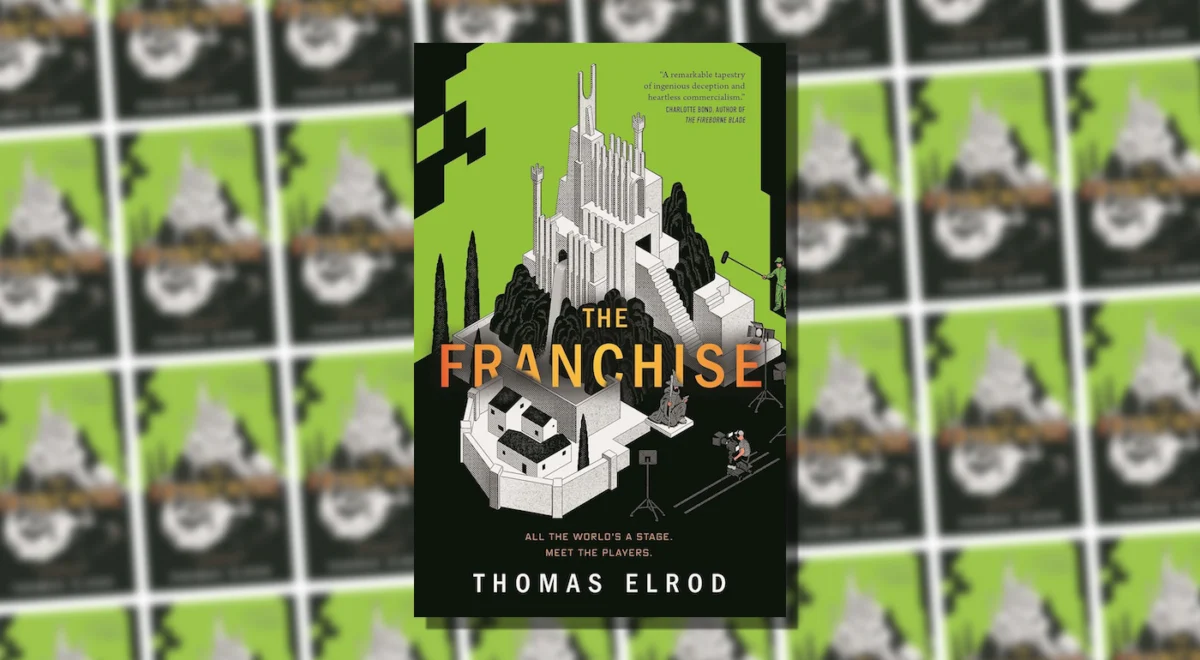
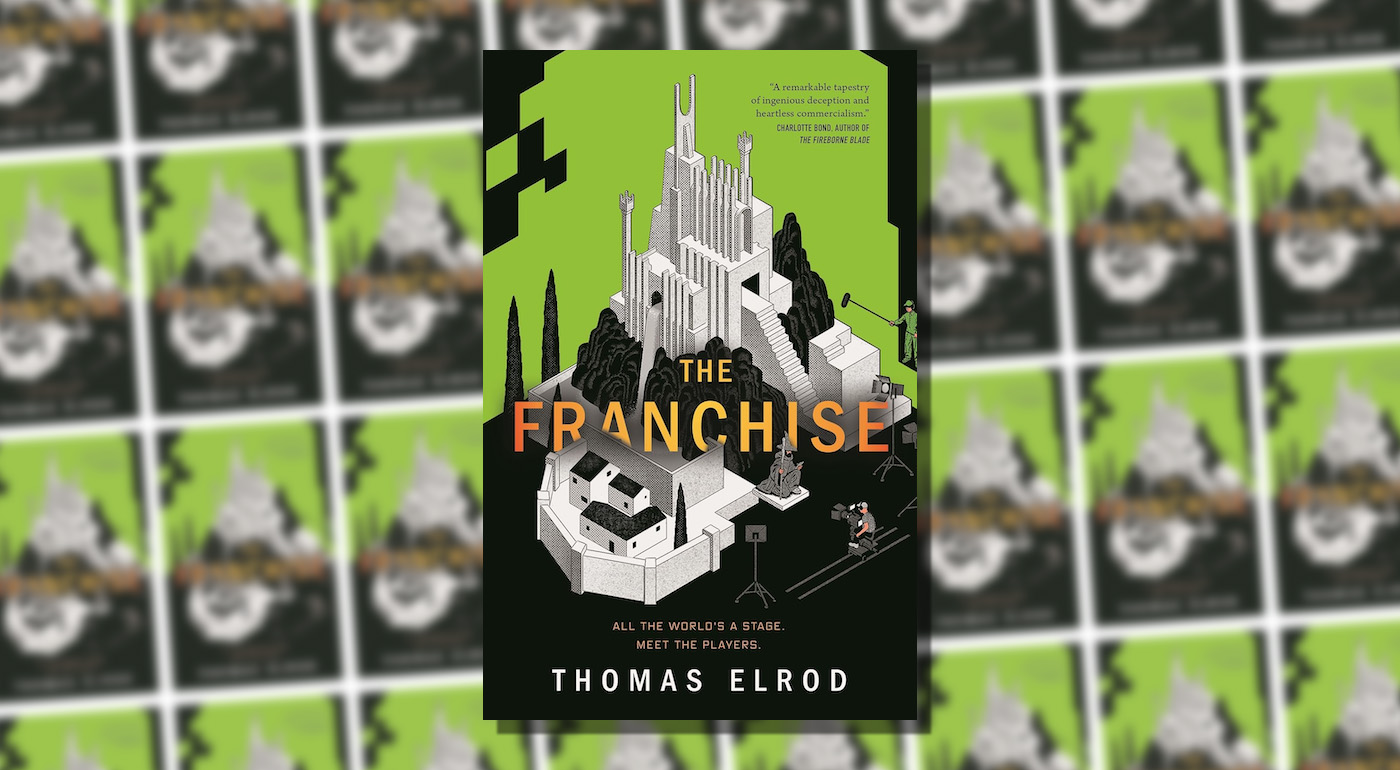
In a world where the lines between fiction and reality blur with alarming precision, Thomas Elrod’s latest novel, The Franchise, delves into a chillingly plausible future where beloved fictional universes become literal, lived experiences. The narrative plunges readers into the world of Malicarn, a fantastical realm originally conceived in the 1960s by French writer Jean-Danton Souard. What began as a critically acclaimed, best-selling novel, lauded for its lyrical prose and vibrant world-building, has, over decades, transformed into a colossal entertainment empire. Malicarn’s journey from the page to the screen, and eventually into a tangible, immersive reality, serves as the central, cautionary tale of Elrod’s ambitious work.
The genesis of Malicarn’s fictional success is rooted in a serendipitous moment during the Cuban Missile Crisis. The prevailing atmosphere of fatalism, as Elrod recounts, made the editor of World Science Fiction & Fantasy receptive to Souard’s unique creation. The novel, depicting a society grappling with the re-emergence of magic, resonated deeply with readers, propelling it to bestseller status. Souard, fiercely protective of his intellectual property, successfully fended off early attempts by Hollywood studios and toy manufacturers to exploit his creation. However, upon his death, his son Daniel proved more amenable to commercialization. This pivot led to a cascade of adaptations: a blockbuster movie franchise, a sprawling cinematic universe, video games, merchandise, and eventually, starting in 2040, the ultimate expansion – Malicarn became real.
Elrod’s novel meticulously details the infrastructure and technological advancements that facilitated this transition. The physical sets for Malicarn are no longer temporary backdrops but permanent, year-round constructions. Half of the Portuguese island of Madeira has been leased to the film studio, transformed into a living, breathing replica of the fictional world. The ambitious plan, spearheaded by the charismatic visionary Jules Walker and the laconic scientist Lilly Kaminsky, extended beyond mere set design. Their goal was to make the characters permanent as well.
This was achieved through proprietary neuroscanner technology, capable of uploading entire personalities into actors. This allowed individuals to embody characters for months at a time, experiencing genuine emotions—love, hope, terror, and guilt—as if they were their own. Walker, in Elrod’s portrayal, hailed this as the "grandest and most immersive form of storytelling." However, as The Franchise illustrates, this groundbreaking achievement was not without its profound and unsettling consequences.
Elrod navigates the unfolding narrative through the perspectives of over a dozen distinct characters, weaving a complex tapestry that jumps across timelines and layers of Malicarn’s fictional existence. Among these are Buck Douglas, a struggling mason harboring revolutionary sentiments, and Queen Hannah I, a seventeen-year-old monarch constrained by overbearing regents. By the novel’s present day of 2060, these individuals represent the first generation born into the Malicarn reality, knowing no other world.
The cast also includes Glenn Mackey and Brian Doyle, known within Malicarn as the wizard Gregorian and Captain of the Guard Kreek, respectively. These are professional actors whose own minds remain intact, recruited to subtly "guide" the Malicarn narrative towards more entertaining storylines. On the technical side, readers witness the ethically ambiguous work of Lilly Kaminsky and Jules Walker as they meticulously dissect individuals’ minds, introducing elements of trauma or grief to shape character arcs, and then observing the subsequent fallout. Further removed from the immediate action, but integral to the overarching narrative, are the fans, directors, and even intelligence agents who monitor Malicarn’s unfolding events.
A recurring and significant theme throughout The Franchise is the disconnect between the fabricated reality and its original source material. Crucially, none of the characters who inhabit Malicarn have ever read Jean-Danton Souard’s original novels. Their excuses range from claims of the books being too long, a lack of interest, or the incapacitation of ADHD. The consequence, however, is consistent: the elaborate sets constructed by Jules, the mythology disseminated to the inhabitants, and the personalities meticulously grafted onto actors and extras by Lilly, all stem from a foundation of half-remembered dreams and secondhand interpretations. As Malicarn gains physical reality and expands in scope, it paradoxically loses its authenticity, becoming a hollow echo of its creator’s vision.
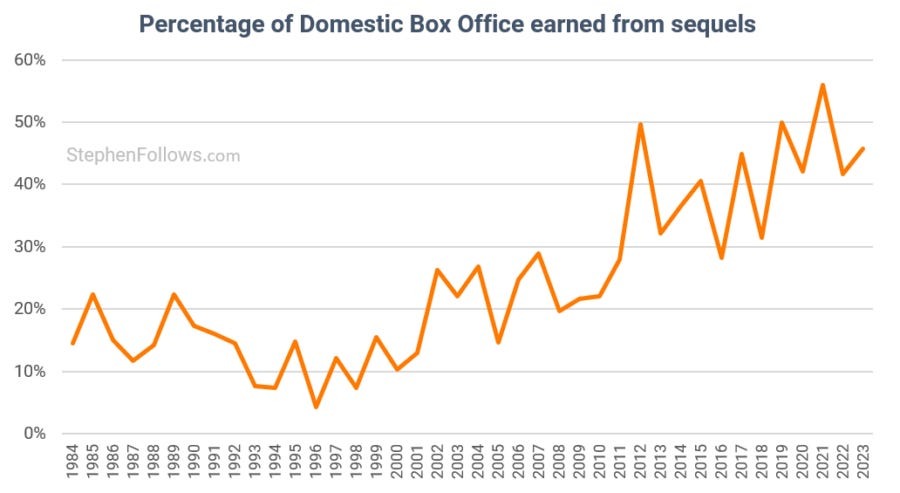
This phenomenon is not entirely alien to contemporary media consumption. We are currently living in an era dominated by sequels, prequels, and expansive intellectual property (IP) franchises. Data from sources like Stephen Follows and The-Numbers reveal a significant trend: sequels have consistently captured a larger share of the film market over the years. For instance, box office data indicates that sequels have been increasingly prevalent in film releases, reflecting a broader industry trend toward leveraging established brands. This trend is not limited to film; the proliferation of interconnected television series and spin-offs further exemplifies this.
The Erosion of Originality in Modern Franchises
A common critique leveled against late entries into established IPs, such as Marvel’s Thunderbolts which follows over thirty-five films and fourteen television shows within its shared universe, is their tendency towards self-referentiality. The original Star Wars films drew inspiration from a rich tapestry of sources, including Akira Kurosawa’s Seven Samurai, Flash Gordon, and the works of Edgar Rice Burroughs. In contrast, later installments, like The Mandalorian and Grogu, often appear to draw their narrative sustenance almost exclusively from within the existing Star Wars canon. While consumers can choose to engage with or disengage from these meta-fictional properties, the characters in Elrod’s Malicarn are not afforded such agency; they are trapped within the ever-expanding, self-referential loop of their manufactured existence.
Elrod’s exploration of the "rich inner life of a character who wasn’t written to have one" is a central, compelling aspect of The Franchise. He meticulously probes how an individual’s mind and memories develop when their foundational programming consists of a single sentence of background information—"farmer’s son," "bricklayer’s daughter," "apprentice alchemist washout"—and a single, specific memory for flavor. Elrod masterfully depicts the construction of these Malicarnian characters, revealing their interiority as it is pieced together, often with fragmented or imposed memories.
Case Study: The Evolution of "Frank"
One poignant example is the character of Frank Douglas, Buck Douglas’s father. Introduced and swiftly killed off in the novel’s opening chapter, Frank is depicted as a bitter, alcoholic war veteran. His most potent memory is of searching a village for rogue mages during wartime and witnessing a child shoot his commander with an arrow from a hiding place. Later, readers encounter "Frank" not within Malicarn, but at a Comic-Con event, prior to his immersion. This "Frank" is revealed to be Terry, a broke and aimless fan, whose eyes light up at the prospect of being paid to participate in his favorite show.
The narrative then shifts to Lilly Kaminsky, who, while grumbling about a writer’s room request, uploads one of her father’s Iraq War stories—involving a child in a storage closet shooting a captain with a gun—into the extras. The final, and perhaps most haunting, perspective on Frank’s creation comes from his own imagined consciousness. Elrod dedicates ten pages to a second-person narrative, conveying an overwhelming sense of being trapped in the wrong body, the wrong role, a profound, childlike despair that resonates with the tragic realization: "You thought you’d be a different person."
Broader Implications and the Future of Reality
The implications of Elrod’s fictional world extend far beyond the narrative of Malicarn. The Franchise serves as a potent commentary on our society’s increasing reliance on IP and the blurring lines between authentic experience and curated entertainment. The novel raises critical questions about the ethics of memory manipulation, the definition of identity in an age of advanced technology, and the potential for exploitation when entertainment becomes indistinguishable from life itself.
As sequels and continuations increasingly dominate the media landscape, Elrod’s work suggests a future where the hunger for more content could lead to the literal construction of fictional worlds, populated by individuals whose very existence is a product of narrative design. The novel’s exploration of how fabricated memories and imposed personalities can shape human consciousness offers a stark warning about the potential for manufactured realities to supplant genuine lived experience. The ultimate success of The Franchise lies in its ability to provoke thought on these profound issues, leaving readers to ponder the very nature of reality and the enduring power of storytelling, both the kind that entertains and the kind that constructs.
Thomas Elrod’s The Franchise is a clever, intricate, and thought-provoking novel that masterfully blends elements of epic fantasy with a sharp critique of creatively incestuous IP. It is also a profound exploration of memory and identity, prompting readers to consider the ultimate meaning of existence when the boundaries of reality are so deliberately and technologically re-engineered.