The 79th Cannes Film Festival, a formidable gauntlet for attendees, requires immense stamina to navigate its demanding schedule of screenings, industry engagements, and social events, yet it remains an unparalleled opportunity for cinematic discovery and cultural exchange. For delegates like those representing the Asia Society—a global network dedicated to fostering deeper understanding between Asia and the world—the festival serves as a vital platform for curating exceptional film programming. With a 258-seat theater at its New York museum building, the Asia Society’s mission at Cannes is to identify new releases and repertory films that resonate with its mandate, enriching its offerings for an international audience.
Ryusuke Hamaguchi’s "All of a Sudden": A Deep Dive into Human Connection
Among the most highly anticipated films at this year’s festival was Ryusuke Hamaguchi’s latest offering, All of a Sudden, a Franco-Japanese co-production that has been met with significant critical acclaim. Hamaguchi, whose recent works like Drive My Car (2021) garnered international accolades including an Academy Award for Best International Feature Film, and Wheel of Fortune and Fantasy (2021) won the Silver Bear Grand Jury Prize at Berlin, has established himself as a master of nuanced human relationships and profound dialogue. His distinct narrative style, often characterized by extended conversations that unearth the complexities of human emotion and societal structures, made All of a Sudden a focal point for many cinephiles and industry professionals.
The film introduces audiences to Marie-Louise, portrayed by the formidable Virginie Efira, who directs a senior care facility in the Parisian suburbs. Efira, celebrated for her roles in films like Sibyl (2019) and Benedetta (2021), brings a compelling gravitas to the character of a workaholic striving to implement the "Humanitude" care protocol. This real-life program, originating in France, advocates for a human-centered approach to elder care, emphasizing direct communication, empathy, and respect for individual dignity, moving beyond purely medical interventions. Parallel to Marie-Louise’s institutional efforts is the story of Mari, a Japanese theater director played by Tao Okamoto, known for her roles in The Wolverine (2013) and Batman v Superman: Dawn of Justice (2016). Mari is engaged in staging an experimental production centered on Franco Basaglia, the revolutionary Italian psychiatrist who spearheaded the radical abolition of psychiatric asylums, or "manicomio," in Italy.
The intertwining narratives of these two women, nearly sharing a name, explore the intricate philosophies of care, chance, and the pervasive impact of capitalism on their respective fields. Their intimate friendship, marked by a profoundly earnest dialogue that spans personal histories, philosophical musings, and critical examinations of their professional environments, forms the emotional core of the film. Hamaguchi masterfully crafts a narrative where the personal and the political converge, demonstrating how individual efforts can contribute to broader societal change. Marie-Louise’s struggle to reform a for-profit care facility within the constraints of a capitalist system mirrors Basaglia’s own paradoxical position when he initially took a job as an asylum director before ultimately dismantling the institution. This dual thesis on care, amplified by the undeniable chemistry between Efira and Okamoto, results in an extraordinarily life-affirming cinematic experience, extending over three and a half hours, yet captivating throughout. The film suggests a collaborative forging of ideals, where institutional reform and individual artistic expression collectively advance a more humane world.
The Philosophical Underpinnings: Humanitude and Basaglia’s Enduring Legacy
The themes explored in All of a Sudden are deeply rooted in significant real-world movements and philosophies of care. The "Humanitude" care method, developed by Yves Gineste and Rosette Marescotti in France in the 1970s, represents a paradigm shift in how elderly and dependent individuals are approached. Its four core pillars—gaze, speech, touch, and verticality—aim to restore dignity and autonomy to patients, particularly those with dementia. This methodology contrasts sharply with traditional institutional care that often prioritizes efficiency over personalized interaction, leading to feelings of isolation and dehumanization among residents. By showcasing Marie-Louise’s dedication to implementing Humanitude, the film highlights a global movement towards more compassionate and effective elder care practices, emphasizing the human element in a sector often challenged by resource limitations and systemic pressures.
Complementing this is the radical legacy of Franco Basaglia (1924-1980), whose work revolutionized mental health care. Basaglia, a key figure in the anti-psychiatry movement, argued that mental illness was not merely a biological phenomenon but profoundly influenced by social, economic, and institutional factors. His pioneering efforts in Gorizia and Trieste led to the closure of traditional asylums in Italy and the passing of Law 180 in 1978, which mandated the dismantling of psychiatric hospitals and the establishment of community-based mental health services. This legislative act, known as the Basaglia Law, was groundbreaking, making Italy the first country to formally abolish institutional psychiatric care. The film’s engagement with Basaglia’s philosophy, particularly his critique of institutions that manage and deny illness simultaneously, underscores the inherent contradictions faced by those striving for humane care within established systems. As Basaglia famously articulated, the challenge lies in "managing an institution which we deny," a sentiment powerfully echoed in Marie-Louise’s quest to create "possibility from impossibility" within a for-profit framework. This historical context enriches the viewer’s understanding of the profound societal and ethical questions posed by All of a Sudden.
Cannes: A Global Crossroads for Cinematic Discovery and Commerce
The Cannes Film Festival, founded in 1946, stands as one of the world’s most prestigious and influential film events, a true barometer of global cinema trends. Beyond its glamour, the festival is a crucial marketplace, with its "Marché du Film" (Film Market) attracting thousands of industry professionals annually. The Village International, where national film institutions and pavilions are gathered in waterside tents, exemplifies this commercial and cultural nexus. It’s within this bustling environment that organizations like the Asia Society meticulously scout for films that align with their cultural and educational objectives. The festival’s robust selection process, featuring various competitive sections like the Official Selection (In Competition, Un Certain Regard), Directors’ Fortnight, and Critics’ Week, ensures a diverse array of cinematic voices from around the globe. For an institution like the Asia Society, identifying films that foster cross-cultural understanding and artistic merit is paramount, making their presence at Cannes indispensable for their year-round programming in New York. The sheer volume of screenings—often exceeding 200 films across all sections—demands rigorous selection and keen discernment from delegates.

Revisiting Controversy: Ken Russell’s "The Devils" in its Restored Glory
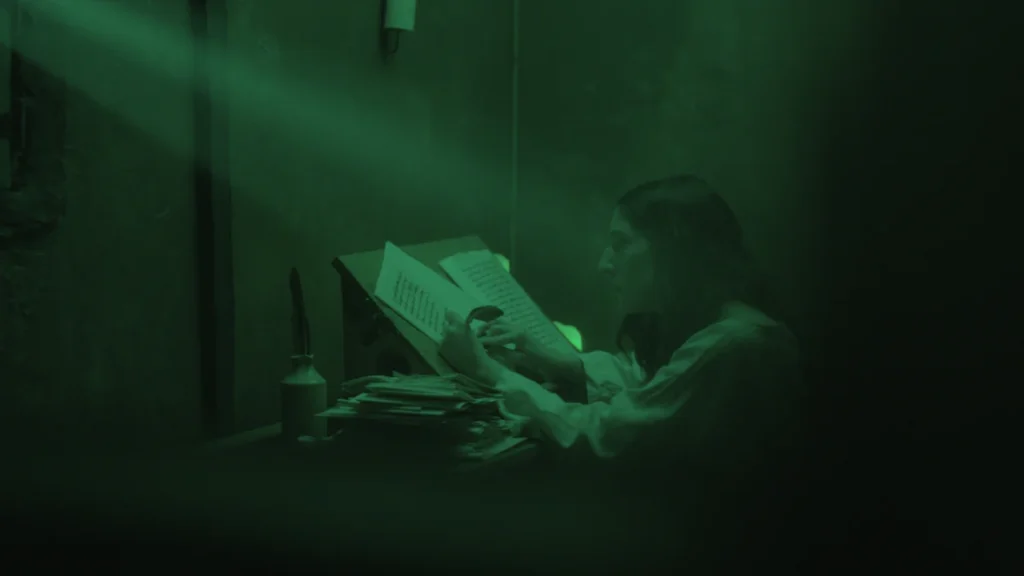
Beyond the contemporary selections, the festival also celebrated cinematic history with the newly restored and lengthened original cut of Ken Russell’s The Devils. Russell (1927-2011), an iconic British director known for his flamboyant and often provocative style, left an indelible mark on cinema with films like Women in Love (1969), Tommy (1975), and Altered States (1980). The Devils (1971), based on Aldous Huxley’s historical novel The Devils of Loudun, remains one of his most controversial works. The film depicts the true story of mass hysteria, religious fanaticism, and political intrigue in 17th-century France, where a group of Ursuline nuns claim to be possessed by devils, ostensibly at the behest of the charismatic but morally ambiguous priest Urbain Grandier, played with virile intensity by Oliver Reed.
Upon its initial release, The Devils faced widespread censorship and critical backlash due to its explicit depictions of sex, violence, and religious sacrilege. Both British and American censors demanded significant cuts, excising approximately six minutes of footage deemed too obscene for public viewing. The film’s uncut version became a legendary "holy grail" for cinephiles. This new restoration, spearheaded by Warner Bros.’s "Clockwork" label—an initiative dedicated to preserving and re-releasing controversial or previously censored films in their intended forms—is a landmark event. British film critic and ardent Russell champion Mark Kermode, who discovered the missing footage two decades prior while making a documentary on the film, introduced the restored version, affirming the late filmmaker’s lifelong desire to see his complete vision realized.
The re-insertion of the previously censored scenes undoubtedly intensifies the film’s already harrowing portrayal of institutional hypocrisy and corruption within the Catholic Church. Vanessa Redgrave’s electrifying performance as the writhing Mother Superior, Sister Jeanne des Anges, powerfully matches Reed’s magnetic portrayal of Grandier. The film’s exploration of institutional power, mass hysteria, and the abuse of authority resonates deeply, making its reintroduction in 2026 particularly pertinent. Its themes of manipulation, dogma, and the suppression of individual liberty transcend its period setting, offering a stark commentary on enduring societal frailties. Russell’s ability to transform historical events into thrillingly alive cinematic spectacles, challenging the notion that period pieces must be staid, remains a testament to his visionary filmmaking.
Beyond the Screen: Cultural Interludes and Emerging Talents
Amidst the intense schedule of screenings and industry meetings, cultural interludes provide essential moments of rejuvenation and perspective. A performance by Sol Band at the Palestine Pavilion, situated within the vibrant Village International, offered one such "joyous musical interlude." These national pavilions not only serve as business hubs for film funding and distribution but also as cultural embassies, showcasing the artistic vibrancy and unique narratives of their respective regions. The presence of such a performance underscores Cannes’ broader role as a platform for cultural diplomacy and exchange, extending beyond the purely cinematic to embrace diverse artistic expressions.
The festival also provides a crucial platform for discovering emerging talents and anticipating future cinematic landmarks. Several other films caught the attention of delegates, signaling their potential impact on global cinema. These include 9 Temples to Heaven, the moving feature debut by Sompot Chidgasornpongse, long-time assistant director to the acclaimed Thai filmmaker Apichatpong Weerasethakul. Chidgasornpongse’s work is anticipated to carry some of the meditative, dreamlike qualities and unique narrative structures that characterize Weerasethakul’s oeuvre, which includes Palme d’Or winner Uncle Boonmee Who Can Recall His Past Lives.
Kiyoshi Kurosawa, the prolific Japanese director known for his horror films (Pulse, Cure) and more recently for historical dramas like Wife of a Spy (Silver Lion at Venice), presented his "eye-popping samurai epic" The Samurai and the Prisoner. Kurosawa’s distinctive blend of psychological depth and genre mastery promises a visually stunning and intellectually engaging take on the samurai genre.
From South Korea, Na Hong-jin, acclaimed for his intense thrillers The Chaser and The Wailing, unveiled his "outrageous monster movie" Hope. Na’s films are typically characterized by their relentless suspense, visceral action, and exploration of moral ambiguity, making Hope a highly anticipated entry in the genre.
Finally, Clarissa, a "clever and sumptuous" adaptation of Virginia Woolf’s Mrs. Dalloway by Nigerian-British filmmaking duo Arie and Chuko Esiri, garnered significant buzz. The Esiri brothers, whose previous film Eyimofe (This Is My Desire) received critical acclaim, are known for their sensitive portrayal of human experience. Their take on a literary classic suggests a sophisticated and visually rich exploration of its enduring themes, potentially introducing Woolf’s work to a new generation through a fresh cinematic lens.
The Cannes Film Festival, in its multifaceted role as a competitive showcase, a bustling market, and a cultural exchange hub, continues to be an indispensable event for the global film community. For institutions like the Asia Society, the intense effort of navigating this cinematic marathon is ultimately rewarded by the discovery of films that not only entertain but also enlighten, provoke, and foster a deeper understanding of the diverse human experience. The blend of established masters, rediscovered classics, and promising new voices ensures that the cinematic dialogue remains vibrant and ever-evolving.