The highly anticipated live-action adaptation of Disney’s beloved animated hit, Moana, has arrived in theaters, marking a significant departure from the studio’s traditional timeline for reimagining its classic animated features. Just ten years after the original Moana captivated global audiences with its vibrant storytelling and empowering themes, this flesh-and-blood rendition underscores a newfound urgency in Disney’s strategy, moving at an unprecedented pace compared to previous remakes. This swift turnaround also places the live-action film in close proximity to the recently released animated sequel, Moana 2, which debuted less than two years prior, presenting a unique dual-franchise approach for the popular Polynesian saga.
A New Era for Disney Adaptations: Breaking from Tradition
Historically, The Walt Disney Company has exercised considerable patience in bringing its animated masterpieces to live-action. Adaptations such as Lilo & Stitch and Mulan saw gaps of over two decades between their original animated releases and live-action counterparts. More enduring classics like Snow White and Pinocchio faced waits of nearly nine decades before receiving their modern live-action treatments, reflecting a long-held belief that a substantial passage of time was necessary to foster nostalgia and cultivate a fresh audience perspective. The Moana live-action project, however, shatters this conventional waiting period, compressing decades into a mere ten years. This accelerated timeline suggests a strategic pivot within the studio, potentially driven by a desire to capitalize on contemporary cultural relevance, harness ongoing fan enthusiasm, and leverage the immense star power associated with the franchise.
The decision to fast-track the Moana live-action film was reportedly an "easy conversation," according to Dwayne Johnson, who not only voiced the demigod Maui in the animated films but now reprises the role in live-action. Johnson revealed that Disney approached him with the idea in 2019, just three years after the original film’s release. Speaking at the film’s Los Angeles premiere, Johnson expressed his long-standing skepticism regarding the industry’s unwritten rule of extensive waiting periods for adaptations. "To be honest with you, I never bought into this idea that ‘you have to wait 20 years, you have you wait 30 years, it’s too soon’," Johnson told The Hollywood Reporter. He elaborated on his conviction, stating, "I honestly never did, and not because I’m biased and I made the film, but because there’s themes and values in this, in animated Moana, that could translate really well if you saw a real human being going through it, and a real young girl going through it." His perspective highlights a belief in the story’s inherent timelessness and its capacity to resonate powerfully across different mediums, regardless of the temporal gap.
The Enduring Appeal of the Original Phenomenon
The original Moana, released in 2016, was a critical and commercial triumph for Disney. Directed by Ron Clements and John Musker, the film garnered widespread acclaim for its stunning animation, compelling narrative, and groundbreaking representation of Polynesian culture. It earned an impressive 95% approval rating on Rotten Tomatoes and grossed over $643 million worldwide, cementing its status as a modern Disney classic. Beyond its box office success, Moana was praised for its empowering protagonist, its exploration of identity and heritage, and its infectious soundtrack, featuring original songs by Lin-Manuel Miranda, Opetaia Foa’i, and Mark Mancina. Hits like "How Far I’ll Go" and "You’re Welcome" became cultural touchstones, further embedding the film into the collective consciousness of a generation.
The film’s success was not merely commercial; it held profound cultural significance. It introduced millions globally to the rich mythology, navigational prowess, and spiritual connection to the ocean central to Pacific Islander cultures. This foundational success laid the groundwork for the rapid development of the live-action version, demonstrating a pre-existing, robust demand for the Moana narrative and its characters.
Cultural Authenticity at the Forefront
A cornerstone of the Moana franchise’s appeal and critical reception has been its commitment to cultural authenticity. This dedication extends emphatically to the live-action adaptation. Lin-Manuel Miranda, who returns to produce and write original songs for the franchise, emphasized the dual benefits of a live-action approach. "One, it’s one thing to represent Pacific Islander culture in an animated movie; it’s another to give Pacific Islanders jobs and opportunities and really represent their culture in a flesh and blood way on screen. That was exciting to us," Miranda stated. This focus on providing tangible economic and representational opportunities underscores a deeper commitment beyond mere visual adaptation.
The casting process for the titular role exemplifies this dedication. From a pool of 32,000 submissions, newcomer Catherine Laga’aia, a 17-year-old Australian actress of Samoan and Australian descent, was chosen to portray Moana. Her selection was celebrated for bringing genuine Pacific Islander heritage to the character, reinforcing the film’s authenticity. Miranda further noted, "Two, we have a window in which the perfect guy for the job can play the part, Dwayne ‘The Rock’ Johnson, for whom we wrote it. And three, I don’t think it would exist if we hadn’t found the perfect Moana." Johnson’s own Samoan heritage and deep connection to the character of Maui, a figure revered across Polynesian mythology, adds another layer of authenticity and personal investment to the project.
Crucially, the production of both the animated and live-action Moana films has relied heavily on the guidance of the Oceanic Cultural Trust, a group of Pacific Islander consultants. This advisory body has been instrumental in ensuring that the storytelling, visuals, and character portrayals remain respectful and accurate to the diverse cultures they represent. Their influence extended to even minute details, such as the appearance of Maui. Director Thomas Kail recounted that during the development of the animated film, the creative team initially conceived Maui as bald. However, the Oceanic Cultural Trust emphatically corrected this, stating, "’Maui’s hair is his power, there is no Maui without hair.’ So there was never a question — so that’s why Maui had hair there and that’s why Maui has hair now." This anecdote highlights the profound impact of cultural consultation on the narrative and visual choices, ensuring that the film honors its source material and the communities it depicts.
From Stage to Screen: Thomas Kail’s Vision

The live-action Moana is helmed by director Thomas Kail, best known for directing the original Broadway production of the groundbreaking musical Hamilton. Kail brings a unique perspective shaped by his extensive experience in theater. He echoed Johnson’s sentiment regarding the timeliness of the adaptation, suggesting that a decade is ample time for a story to be revisited. "All those 7-year-olds who saw it that are 17, all those 10-year-olds who are 20 — those are seismic changes in our lives," Kail observed, highlighting how a new generation, or the same generation grown older, can experience the story with fresh eyes and renewed appreciation. He added, "I think all people’s affection for this film, which was shown when Moana 2 came out, I think people want to be with their friends up on screen and they want to be with this score."
Kail’s theatrical background also informs his approach to cinematic "revivals." He noted, "We do revivals all the time" in theater, constantly seeking to "breathe new life into beloved stories." This philosophy suggests that a successful narrative, much like a classic play, possesses an inherent resilience and capacity for reinvention, allowing it to resonate with new audiences while honoring its original spirit. His expertise in bringing large-scale musical productions to life, characterized by dynamic performances and intricate storytelling, positions him well to translate Moana‘s epic scope and musicality to the live-action format.
The Digital Buzz: Maui’s Transformation and the Iconic Hair
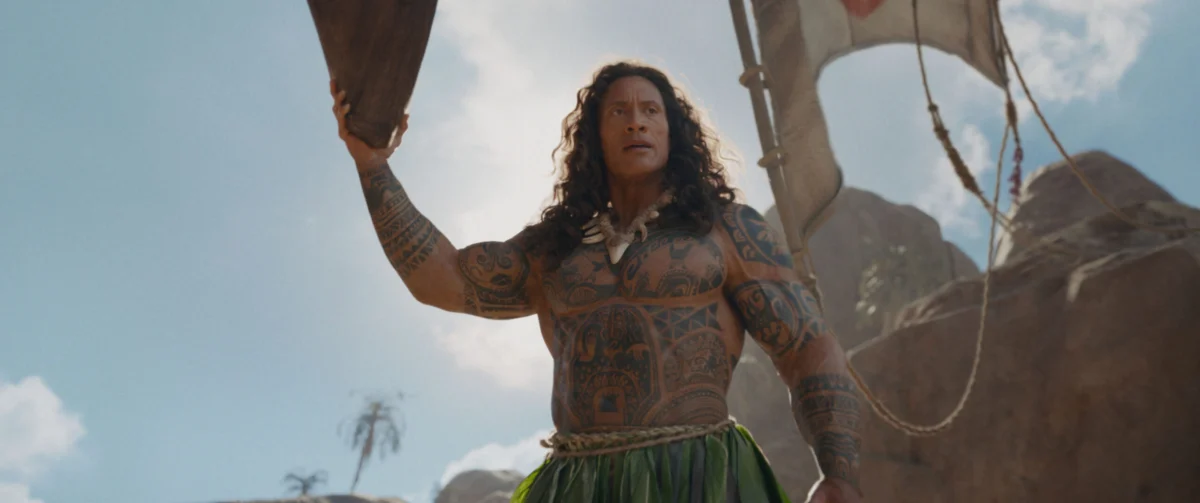
One aspect of the live-action Moana that garnered significant attention and discussion across online platforms was Dwayne Johnson’s portrayal of Maui, particularly his distinctive, long flowing wig. The visual, a stark contrast to Johnson’s typically bald appearance, sparked a wave of internet reactions and memes. Johnson acknowledged the online buzz with good humor. "The internet’s reaction was so funny," he remarked, adding that he "spent 48 hours laughing at it, because the internet can be very funny at times, and I appreciate it."
Johnson understood the initial surprise. "Anytime you see a first look at something, you’re looking at it through a keyhole. I knew; I was like ‘You’re not seeing the vast ocean of it all.’ It’s OK, give it time, I know we made a pretty good movie. And I get it, I’m a pretty well-known bald actor and you see me all of a sudden with long flowing locks and curls," he explained. His comments underscore the difference between a static promotional image and the immersive experience of the film itself, where the wig is integrated into Maui’s character and the broader narrative.
As director Kail further explained, the decision regarding Maui’s hair was not merely an aesthetic one but deeply rooted in cultural significance, as advised by the Oceanic Cultural Trust. The consensus was clear: "Maui’s hair is his power, there is no Maui without hair." This guidance solidified the creative team’s decision, ensuring fidelity to Polynesian mythology. Kail light-heartedly concluded, "I think when you see it in the body of the film, you get used to it pretty quick. It’s not the strangest thing in the world!" This commitment to culturally informed details, even those that might initially surprise audiences, highlights the production’s dedication to authenticity.
"Moana 2" and the Concurrent Franchise Expansion
The simultaneous development and release of both the live-action Moana and the animated Moana 2 represents an unusual and potentially groundbreaking strategy for Disney. Moana 2, initially conceived as a Disney+ series, was upgraded to a theatrical release and debuted less than two years before its live-action counterpart. This dual-pronged approach suggests Disney’s aggressive ambition to maximize the Moana intellectual property, extending its reach across different formats and timelines. It allows the studio to cater to various audience preferences – those who prefer traditional animation and those curious about the live-action interpretation – while keeping the franchise prominently in the public eye.
This strategy could set a precedent for future Disney franchises, indicating a move towards more rapid and diversified IP exploitation. Instead of waiting for animated sequels or live-action remakes to follow a linear path, Disney appears to be exploring parallel developments, potentially aiming to create a continuous content stream that maintains audience engagement over shorter intervals. The success of this model with Moana will undoubtedly inform future decisions regarding other beloved animated properties.
Implications for Disney’s Future Strategy
The rapid release of the live-action Moana signals a potential paradigm shift in Disney’s approach to its animated classics. The move away from decades-long waits could be a response to several factors: the accelerating pace of content consumption, the competitive landscape of streaming services, and the desire to capitalize on current cultural moments. By bringing popular stories to live-action more quickly, Disney can tap into existing fanbases while simultaneously attracting new audiences who may prefer the live-action format.
This strategy also carries inherent risks. A shorter gap between versions might lead to audience fatigue or direct comparisons that could diminish the perceived uniqueness of the remake. However, the strong thematic elements of Moana, its cultural resonance, and the returning star power of Dwayne Johnson are likely seen by Disney as mitigating factors. The live-action Moana is not just another remake; it’s a test case for an accelerated, multi-platform franchise expansion model. Its box office performance and critical reception will be closely watched, as they could dictate the future trajectory of Disney’s vast catalog of animated treasures.
As Moana splashes into theaters this Friday, it represents more than just a new film; it embodies a bold strategic move by Disney. It’s a testament to the enduring power of its storytelling, the global appeal of its characters, and a clear indication that the studio is willing to break from tradition to navigate the evolving currents of the entertainment industry. This rapid revival, driven by star power, cultural commitment, and a keen understanding of audience connection, positions Moana as a pivotal release in Disney’s ongoing legacy of cinematic reinvention.