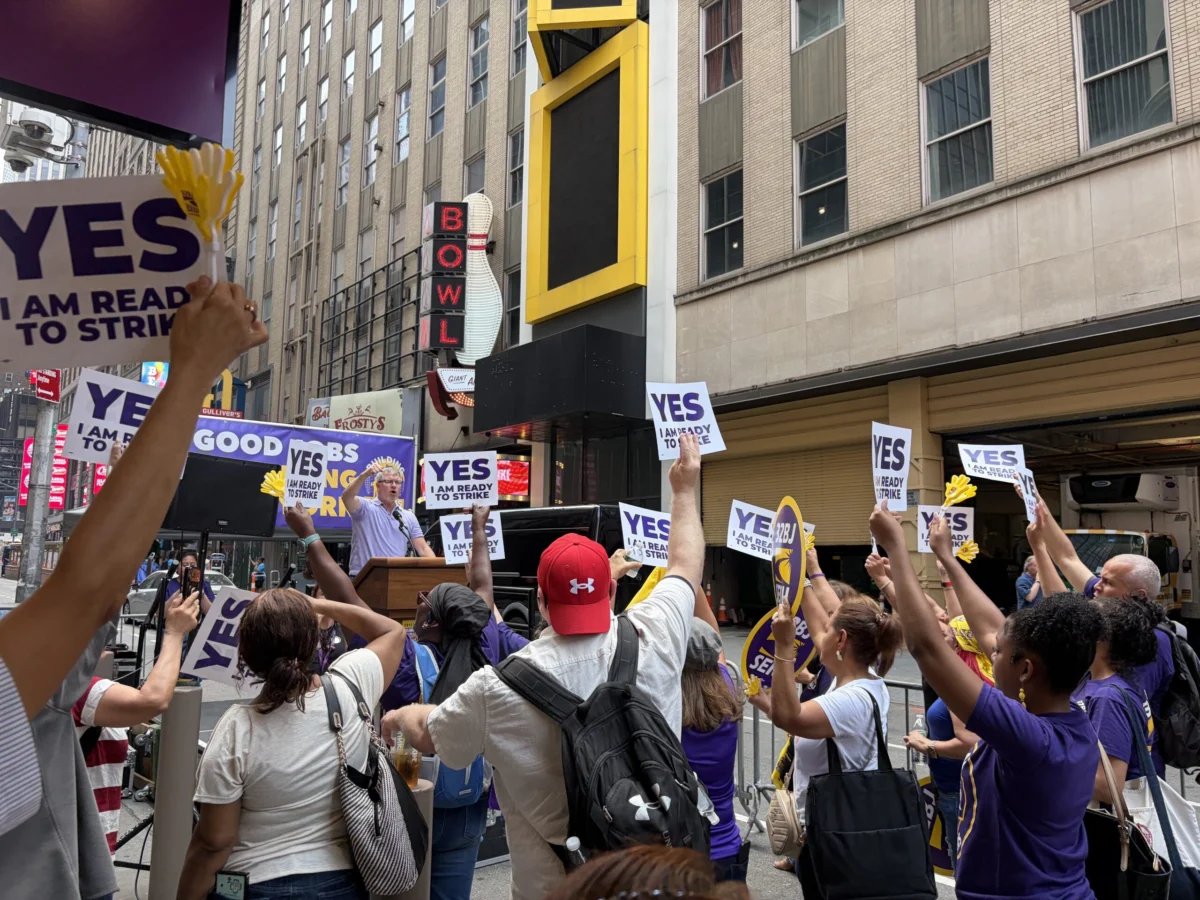
The Broadway League and the union representing more than 250 cleaners, porters, and maintenance workers have reached a tentative contract agreement, effectively averting a strike that threatened to disrupt the gears of New York City’s iconic theater industry. The deal, announced late Wednesday, comes just one week after the workers, represented by 32BJ of the Service Employees International Union (SEIU), held a high-profile rally and voted to authorize a strike for the first time in nearly two decades. The settlement marks a significant victory for the service workers who maintain the city’s historic theaters, securing substantial wage increases, protected healthcare benefits, and improved working conditions over the course of a new four-year contract.
Under the terms of the tentative agreement, workers will see a $5 per hour wage increase by the end of the four-year term. This represents a roughly 21 percent increase from current pay scales, a figure union leadership describes as a necessary correction to keep pace with the soaring cost of living in the New York metropolitan area. Beyond the base pay, the deal ensures the continuation of employer-paid family health insurance—a critical sticking point during negotiations—and includes enhancements to pension benefits and paid leave policies. Furthermore, the agreement officially recognizes Juneteenth as a paid holiday and strengthens anti-discrimination protections within the workplace.
The Path to the Agreement: A Timeline of Negotiations
The road to the current settlement began in early June, when representatives from 32BJ SEIU and the Broadway League first sat down to negotiate a successor to the previous labor agreement. While Broadway has seen various labor disputes involving actors, musicians, and stagehands over the years, the cleaners and porters have historically maintained a stable relationship with theater owners. However, the economic landscape of 2024 presented new challenges that shifted the tone of this year’s bargaining sessions.
By mid-July, negotiations had reached an impasse, primarily centered on wage growth and the rising cost of healthcare premiums. On July 17, the union escalated its tactics by organizing a massive rally in the heart of the Theater District. It was during this demonstration that the membership took the monumental step of voting to authorize a strike. This was the first time in 18 years that the cleaners had moved toward a work stoppage, signaling a heightened level of resolve among the rank-and-file members.
Following the strike authorization, pressure mounted on the Broadway League, which represents the owners and operators of 41 Broadway theaters as well as producers and general managers. A strike would have had an immediate and visible impact on the industry, as these 250 workers are responsible for the sanitization and maintenance of venues hosting global hits such as "Chicago," "Aladdin," and "The Lion King." With the threat of a picket line looming over the lucrative summer tourist season, the two sides returned to the bargaining table for intense sessions that culminated in the Wednesday night breakthrough.
Economic Pressures and the High Cost of Living
The central driver of the union’s demands was the stark economic reality facing service workers in New York City. During the rally held prior to the agreement, 32BJ SEIU Executive Vice President Denis Johnston emphasized that the fight was as much about "respect" as it was about dollars and cents. Johnston noted that the high cost of inflation, coupled with the city’s notoriously expensive housing market, had left many members struggling to make ends meet despite working in one of the most profitable sectors of the entertainment world.
According to data from the Bureau of Labor Statistics, the Consumer Price Index for the New York-Newark-Jersey City area has seen persistent fluctuations that often outpace national averages, particularly in categories like rent and groceries. For a theater cleaner earning a modest hourly wage, a 21 percent increase over four years is not merely a bonus but a lifeline. The $5 hourly raise is designed to front-load some of the gains to provide immediate relief while ensuring that by the end of the contract in 2028, the workers’ purchasing power remains protected against future inflationary spikes.
The preservation of employer-paid family healthcare was another non-negotiable pillar for the union. In an era where many industries are shifting the burden of rising insurance premiums onto employees, 32BJ has historically prioritized the "Gold Standard" of benefits to ensure that service workers have access to quality medical care without out-of-pocket premiums. Retaining this benefit in the new contract is seen as a major win for the union’s long-term strategy of maintaining a robust middle-class standard for service occupations.
The "Unsung Heroes" of the Broadway Stage
While the actors and musicians receive the applause, the cleaners and porters are the essential backbone that allows the "show to go on." The labor of these 250 individuals is often performed in the late-night hours or the early morning, long after the final curtain has fallen. Their responsibilities include everything from deep-cleaning thousands of seats to maintaining the intricate architectural details of century-old theaters and ensuring that backstage areas meet rigorous health and safety standards.
Martha Aristizabal, a porter at the Ambassador Theater and a 32BJ SEIU member for 17 years, highlighted the sacrifices made by the workforce, particularly during the global pandemic. "We risked our lives during COVID to make sure Broadway could safely reopen," Aristizabal stated. "We work long nights and weekends, often missing major milestones with family and loved ones, to do the hard work it takes to put on each and every performance."
For workers like Aristizabal, the new contract is a validation of their essential status. The addition of Juneteenth as a paid holiday and the strengthening of anti-discrimination language reflect a modernizing of the contract to align with broader social values and the diverse makeup of the 32BJ membership. The union represents a wide demographic of workers, many of whom are immigrants or people of color, for whom these protections carry significant weight.
Broader Implications for the Theater Industry and Labor Movements
The resolution of this dispute is a relief for the Broadway League and theater producers, who are still navigating the post-pandemic recovery of the industry. While tourism has returned to New York City, attendance figures and box office grosses have been inconsistent across various productions. A strike by cleaners would have created a logistical nightmare, potentially forcing theater owners to hire outside contractors—a move that would have likely drawn the ire of other powerful Broadway unions, such as IATSE (International Alliance of Theatrical Stage Employees) and Actors’ Equity, who often refuse to cross picket lines in a show of labor solidarity.
This agreement also fits into a larger trend of labor militancy seen across the United States over the last two years. From the "Hot Labor Summer" of 2023, which saw Hollywood writers and actors on strike simultaneously, to the recent successes of hotel workers and auto workers, there is a clear shift in the power dynamic between labor and management. Service workers, in particular, are leveraging their "essential" status—a label cemented during the pandemic—to demand a larger share of the economic pie.
The 21 percent wage increase won by the Broadway cleaners sets a high bar for future negotiations in the service sector. It demonstrates that even relatively small bargaining units can achieve significant gains when they are part of a larger, well-organized union like 32BJ SEIU, which represents 175,000 property service workers across the East Coast.
Next Steps and Ratification
While the tentative agreement is a definitive step toward labor peace, the process is not yet complete. The deal must now be presented to the full membership of the 32BJ Broadway unit for a ratification vote. Union leaders are expected to hold informational meetings in the coming days to walk members through the specifics of the wage scales, pension adjustments, and benefit protections.
Given the substantial nature of the gains, industry analysts expect the contract to be ratified without significant opposition. Once ratified, the contract will retroactively cover the period from the expiration of the previous agreement, ensuring that workers receive back pay for the hours worked during the negotiation period.
The Broadway League has not issued a lengthy public statement following the late-night agreement, but the successful conclusion of talks suggests a mutual desire to avoid the reputational and financial damage of a strike. By reaching a deal that addresses the core economic anxieties of the workforce, the League has secured four years of labor stability for its cleaning and maintenance operations.
As the lights stay bright on 42nd Street and beyond, the cleaners and porters will continue their work, now backed by a contract that reflects their role in the cultural and economic engine of New York City. The victory for 32BJ SEIU serves as a reminder that the glamour of the theater depends entirely on the diligent, often invisible work of those who keep the house clean and the doors open.