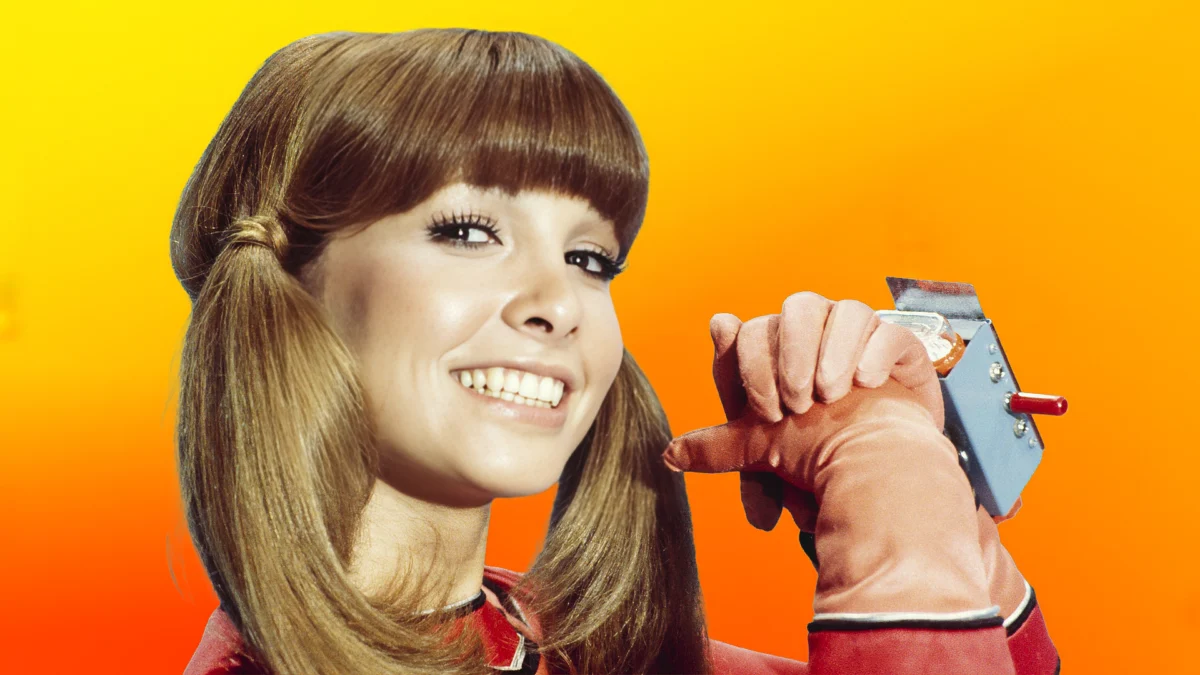
The landscape of Saturday morning television in the mid-1970s was a vibrant, often surreal tapestry of live-action fantasy and animated adventures, but few programs captured the campy, heroic spirit of the era quite like Sid and Marty Krofft’s Electra Woman and Dyna Girl. Debuting in 1976 as a cornerstone segment of The Krofft Supershow, the series introduced audiences to a formidable female duo that served as a stylish, gender-flipped homage to the 1966 Batman television series. While Deidre Hall portrayed the poised and capable Electra Woman, it was Judy Strangis who brought a youthful, energetic charm to the role of Dyna Girl. However, by the time Strangis donned the iconic spandex and utilized her "Electra-Com" wrist device, she was already a seasoned veteran of the entertainment industry with a career spanning nearly two decades.
The Early Genesis of a Hollywood Career
Judy Strangis was born into a family with deep roots in the entertainment world, providing her with a unique vantage point on the industry from a very young age. Her uncle was the legendary Spike Jones, a bandleader and comedian world-renowned for his satirical arrangements of popular songs and his "City Slickers" ensemble. Jones’s influence on mid-century American entertainment was profound, characterized by a chaotic, propulsive energy that blended high-level musicianship with slapstick comedy.
Strangis’s professional journey began in the late 1950s, long before she became a household name for children of the 1970s. Her connection to Spike Jones afforded her early opportunities, including several appearances on The Spike Jones Show in the early 1960s. These early forays into television were not merely nepotistic cameos; they served as a rigorous training ground where Strangis learned the nuances of timing and screen presence. By the age of six, she was already guest-starring in various television programs and had made her film debut. This early exposure to the mechanics of production—lighting, blocking, and the repetitive nature of filming—prepared her for the demanding schedules of later television hits.
Breakthrough and the Room 222 Years
Before reaching the pinnacle of her Saturday morning fame, Strangis secured a recurring role that cemented her status as a reliable and talented young actress. From 1969 to 1974, she portrayed Helen Loomis on the critically acclaimed ABC comedy-drama Room 222. The show was groundbreaking for its time, tackling social issues such as racial integration, student rights, and the evolving cultural landscape of the American high school system.
As Helen Loomis, Strangis represented a segment of the student body that was often overlooked in more sensationalized depictions of youth: the earnest, somewhat shy student navigating the complexities of adolescence. Her five-year tenure on the show allowed her to mature on-screen, transitioning from a child performer to a young adult actress capable of handling both comedic and dramatic material. The success of Room 222, which won multiple Emmy Awards, provided Strangis with a level of professional stability that was rare for young performers in the late 1960s.
The Krofft Era: Electra Woman and Dyna Girl
In 1976, the Krofft brothers, Sid and Marty, were the undisputed kings of Saturday morning television. Known for their psychedelic aesthetic and high-concept live-action shows like H.R. Pufnstuf and Land of the Lost, the Kroffts sought to create a superhero parody that would appeal to the same audience that had embraced the campy 1960s Batman. The result was Electra Woman and Dyna Girl.
The show followed the adventures of Lori (Deidre Hall) and Judy (Judy Strangis), two reporters for Newsmaker Magazine who maintained secret identities as superheroes. Whenever trouble arose—usually at the hands of flamboyant villains like the Sorcerer, the Pharaoh, or Glitricia—they would retreat to their "Electra-Base" and transform into their alter egos.
Strangis’s Dyna Girl was designed as the "female Boy Wonder," a sidekick who provided both technical assistance and enthusiastic support. The chemistry between Hall and Strangis was central to the show’s success. Unlike many other programs of the era that featured women in secondary or "damsel in distress" roles, Electra Woman and Dyna Girl placed two women at the forefront of the action. They possessed their own gadgets—the "Electra-Vibe," the "Electra-Degravitator," and the "Electra-Change"—and relied on their intelligence and teamwork to defeat villains.
Technical Production and the Krofft Aesthetic
The production of Electra Woman and Dyna Girl was a marvel of 1970s television economics. Working with limited budgets and tight filming schedules, the Krofft team utilized innovative practical effects and vibrant, primary-colored sets to create a comic-book atmosphere. The "Electra-Car," a modified Kelmark GT, became an iconic piece of television history, embodying the futuristic, albeit low-budget, optimism of the series.
Strangis and Hall often performed their own stunts, or at least the physical maneuvers required by the show’s choreography. The dialogue was intentionally stilted and filled with "Electra-puns," a direct nod to the Adam West Batman era. For Strangis, the role required a balance of sincerity and self-awareness; the character of Dyna Girl had to be played straight for the heroics to work, even as the scenarios grew increasingly absurd.
A Timeline of Judy Strangis’s Professional Milestones
To understand the breadth of Strangis’s impact, it is necessary to view her career through a chronological lens:
- 1950s: Initial forays into television as a child actress, including uncredited and minor roles in early anthology series.
- 1960–1964: Frequent appearances on The Spike Jones Show, gaining experience in a variety-show format.
- 1969–1974: Portrays Helen Loomis on Room 222, appearing in over 100 episodes and establishing herself as a mainstay of network television.
- 1976: Debuts as Dyna Girl in Electra Woman and Dyna Girl as part of The Krofft Supershow. The show runs for 16 episodes in its initial season but remains in heavy syndication for years.
- 1970s–1980s: Extensive voice-over work for Hanna-Barbera and other animation studios. Strangis provided voices for characters in The Roman Holidays and Butch Cassidy and the Sundance Kids.
- 1984: A notable guest appearance on The Love Boat, showcasing her transition into more mature roles.
- Post-1990s: Strangis becomes a beloved figure on the fan convention circuit, participating in retrospectives regarding the Krofft era and the history of female superheroes.
Cultural Implications and the Evolution of Female Superheroes
The significance of Electra Woman and Dyna Girl extends beyond simple nostalgia. When the show aired in 1976, it was one of the few programs featuring a female-led superhero team. This was the same era that saw the debut of Lynda Carter’s Wonder Woman (1975) and Lindsay Wagner’s The Bionic Woman (1976). Together, these shows marked a pivotal shift in how female characters were utilized in action and science fiction genres.
While Electra Woman and Dyna Girl was framed as a comedy/adventure for children, it provided a template for female partnership. There was no male lead to rescue them; they were the primary agents of their own stories. Analysis of the show’s legacy often highlights how it paved the way for future "girl power" dynamics seen in later decades, such as Buffy the Vampire Slayer or Xena: Warrior Princess.
Industry experts often point to the Krofft brothers’ willingness to experiment as a catalyst for the diversity of 1970s television. "The Kroffts weren’t afraid to be weird, and they weren’t afraid to put women in the driver’s seat—literally, in the case of the Electra-Car," noted television historian Arlen Schumer in a retrospective on Saturday morning classics. "Judy Strangis brought a relatability to Dyna Girl that made the character more than just a sidekick; she was the audience’s surrogate in that fantastic world."
The Enduring Legacy of Dyna Girl
Despite the relatively short original run of Electra Woman and Dyna Girl, the series has maintained a persistent presence in pop culture. It was reimagined as a pilot for the WB in 2001 (starring Markie Post and Anne Stedman) and later as a feature-length film/web series in 2016 starring Grace Helbig and Hannah Hart. The 2016 reboot specifically leaned into the "indie" spirit of the original while modernizing the social media aspects of the characters’ reporter identities.
For Judy Strangis, the role of Dyna Girl remains a career-defining highlight. In various interviews and public appearances, she has expressed a deep fondness for the character and the "Electra-fans" who continue to celebrate the show. Her career serves as a testament to the longevity of actors who transitioned from the "Golden Age" of variety television into the specialized world of Saturday morning programming.
The impact of Strangis’s work is also felt in the voice-acting community. Her transition into animation allowed her to contribute to the foundational years of Saturday morning cartoons, a period when the industry was shifting toward the massive syndication blocks of the 1980s. Her ability to adapt her voice and persona to different mediums—from the live-action drama of Room 222 to the high-energy heroics of Dyna Girl and the stylized world of animation—demonstrates a versatile professional range.
Conclusion: A Factual Retrospective
Judy Strangis’s contribution to television history is characterized by a unique blend of lineage and labor. As the niece of Spike Jones, she inherited a legacy of entertainment excellence, but she built her own reputation through decades of consistent work in some of television’s most experimental and beloved formats. Electra Woman and Dyna Girl remains a vibrant artifact of 1970s culture, representing a moment when television was beginning to realize the potential of female-centric action narratives.
Today, as the media landscape continues to reboot and reimagine the superhero genre, the foundational work of performers like Judy Strangis provides a necessary context. She helped define an era of "pure fun" television that managed, perhaps inadvertently, to break glass ceilings and inspire a generation of viewers to imagine themselves as the heroes of their own adventures. Whether through the lens of a 1970s Saturday morning or the critical eye of a modern historian, the work of Judy Strangis stands as a significant chapter in the evolution of American broadcast media.