Eight years after his last cinematic endeavor, "It Comes," acclaimed director Tetsuya Nakashima has unveiled his eagerly anticipated new feature, "The Brightest Sun." An adaptation of Bunzo Uchiumi’s 1994 mystery novel "Toki ni wa Zange wo," the 129-minute film marks a significant return for the director, whose project has reportedly been in development for over 18 years. Its world premiere took place as one of the opening movies of the 49th Hong Kong International Film Festival (HKIFF), setting the stage for its North American premiere at the 2026 New York Asian Film Festival (NYAFF) with scheduled screenings on July 17 and 21. However, the film’s rollout has been notably complicated by a protracted controversy surrounding Nakashima’s past working practices, casting a long shadow over its initial reception and distribution.
A Director’s Comeback Marred by Allegations: The Nakashima Controversy
The excitement surrounding "The Brightest Sun" was significantly tempered by renewed public scrutiny of Tetsuya Nakashima’s conduct on previous productions. This particular controversy reignited when a former actress from his 2014 film, "The World of Kanako," came forward with serious allegations. She claimed that footage exposing her breasts had been filmed without explicit consent or a clear agreement regarding its use. Furthermore, she alleged that this sensitive footage was retained despite a prior promise from the production team that it would be removed.
In response to the escalating public outcry, Nakashima issued a public apology. However, the actress subsequently disputed aspects of his account, stating that the director had not contacted her directly. This public disagreement further fueled the debate about accountability within the Japanese film industry. The immediate consequence for "The Brightest Sun" was a postponement of its originally scheduled Japanese theatrical release in June 2025. The film’s production committee announced an internal investigation into the reports concerning the earlier production, signaling a serious commitment to addressing the allegations.
Timeline of Events Leading to Rescheduled Release:
- 1994: Bunzo Uchiumi’s mystery novel "Toki ni wa Zange wo" is published.
- 2014: Tetsuya Nakashima releases "The World of Kanako."
- Late 2010s – Early 2020s: Allegations concerning Nakashima’s working practices on "The World of Kanako" surface, gaining traction.
- Reported 18 years prior to 2026: Development begins on "The Brightest Sun."
- Late 2024 – Early 2025: Public scrutiny intensifies, leading to the former actress’s allegations and Nakashima’s public apology.
- June 2025 (Original Date): "The Brightest Sun" is initially scheduled for its Japanese theatrical release.
- June 2025: The production committee for "The Brightest Sun" announces an investigation into the allegations and postpones the film’s release.
- February 2026: The production committee reports that Nakashima and the former actress have reached a settlement, bringing an end to the formal investigation.
- March 2026: "The Brightest Sun" has its world premiere as an opening film at the 49th Hong Kong International Film Festival.
- July 17 & 21, 2026: North American premiere at the 2026 New York Asian Film Festival.
- August 28, 2026: The Japanese theatrical release is rescheduled.
The resolution, announced in February 2026 by the production committee, stated that Nakashima and the former actress had reached a settlement. This development paved the way for the film’s rescheduled Japanese theatrical release on August 28, 2026. This incident highlights the growing awareness and demand for ethical working conditions and accountability within the global film industry, echoing broader movements for workplace safety and respect that have gained prominence in recent years. While the details of the settlement remain confidential, its occurrence suggests a step towards resolution and acknowledging the impact of such controversies on all parties involved.
"The Brightest Sun": A Deep Dive into Guilt and Familial Trauma
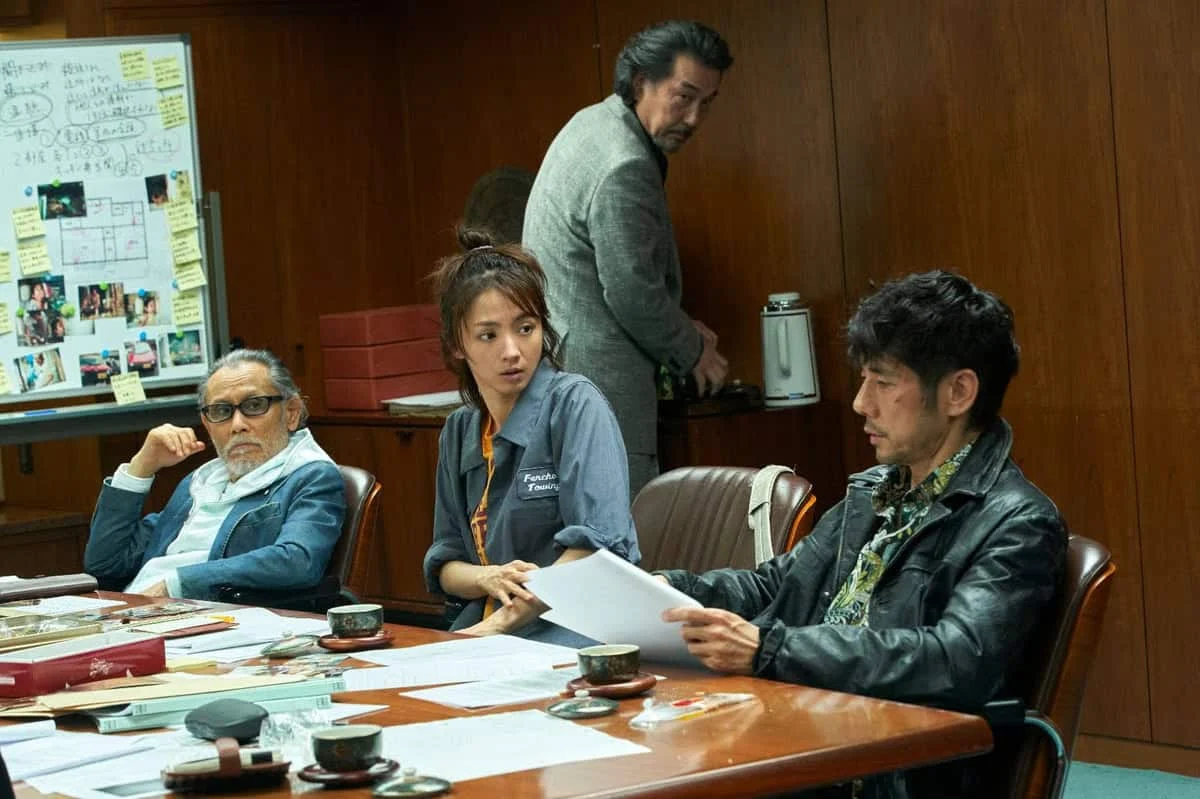
Beyond the controversy, "The Brightest Sun" itself is a complex and emotionally charged mystery, characteristic of Nakashima’s unique directorial vision. The narrative commences with the murder of private detective Yonemoto, portrayed by the versatile Jiro Sato. Yonemoto is depicted as a man whose unpleasant demeanor had earned him a multitude of potential adversaries. His former colleague, Satake (Hidetoshi Nishijima), and Satoko (Hikari Mitsushima), an astute assistant in training, are assigned the formidable task of unraveling the perplexing case.
Their investigation gradually unearths a startling connection between Yonemoto’s death and a chilling nine-year-old cold case: the kidnapping of a newborn. Central to this past incident is Arata, a boy living with severe disabilities, now under the care of Akeno (Kankuro Kudo). As Satake and Satoko delve deeper into the increasingly convoluted web of clues, they encounter a diverse array of parents, children, and caregivers, all burdened by deep-seated guilt that has profoundly shaped nearly every aspect of their lives. This intricate plot, adapted from Uchiumi’s novel, promises a narrative rich with psychological depth and moral ambiguity.
Nakashima’s Signature Style: Pacing, Ensemble, and Emotional Intensity
Nakashima’s directorial fingerprint is immediately evident from the opening frames of "The Brightest Sun." The film launches at a blistering, almost relentless pace. The editing is hyperactive, characterized by a rapid succession of cuts that shift between characters, time periods, and fragmented pieces of information. This kinetic approach often leaves the viewer scrambling to fully process each revelation before the next one arrives, creating an urgent and disorienting atmosphere perfectly suited to a complex mystery.
While the initial tempo is thunderous, the film eventually modulates its rhythm, allowing for moments of introspection. However, the expansive ensemble cast and the labyrinthine narrative structure consistently demand unwavering attention from the audience. Nakashima consciously eschews a conventional procedural rhythm, opting instead to use the murder investigation not merely as a puzzle to be solved, but as a gateway into a vast and interconnected network of profoundly damaged families. This artistic choice elevates the film beyond a simple whodunit, transforming it into a poignant exploration of human suffering and the enduring consequences of past actions.
Portraits of Brokenness: Character Studies in "The Brightest Sun"
A defining characteristic of "The Brightest Sun" is its unflinching portrayal of broken individuals. Nearly every central character is depicted as grappling with profound personal trauma and moral compromises. Satoko, for instance, is a woman haunted by her past. She attacked her violent ex-husband in an act of desperation to protect their daughter, an action that paradoxically resulted in her separation from the very child she sought to safeguard. Hikari Mitsushima delivers a compelling performance, capturing Satoko’s volatile nature, her deep compassion, and her complex identity as simultaneously a victim, an aggressor, and a rejected mother.
Satake, her investigative partner, is equally burdened. He has never fully recovered from the tragic death of his son, who suffered from cerebral palsy. Overwhelmed by the realities of his child’s condition and the subsequent grief, he pushed away the rest of his family. His strained relationship with his teenage daughter is particularly indicative of his emotional detachment, as is the physical and emotional distance maintained by his wife, Yuki, played by Ko Shibasaki. Hidetoshi Nishijima masterfully embodies Satake as a man whose apparent stoicism thinly veils profound self-loathing and unresolved sorrow.
As the layers of the central mystery are peeled back, more characters emerge, each trapped in extreme situations and bearing their own emotional scars. Nakashima’s critique of parental shortcomings is palpable. Many adult characters are depicted as having neglected, rejected, exploited, or attempted to mold their children to fit their own emotional needs. Yet, the director offers a nuanced perspective, partially absolving them by acknowledging the immense pressures and exhaustion inherent in caregiving. Crucially, he refrains from presenting children as simplistic symbols of innocence. Some are portrayed as angry, defiant, or challenging themselves, creating a cyclical world where pain is not a one-way street but circulates complexly between generations.
The Ethical Core: Disability and Societal Burden
One of the most distinctive and impactful elements of "The Brightest Sun" is its deliberate focus on children with cerebral palsy and other severe disabilities. The character of Arata is not merely a plot device designed to facilitate the able-bodied characters’ journey of self-discovery or moral awakening. Instead, his existence serves as a potent catalyst, exposing the fear, selfishness, unwavering devotion, and profound exhaustion that permeate his immediate environment. Arata’s presence compels the adult characters, and by extension the audience, to confront difficult questions about which lives society deems "burdensome" and the ethical responsibilities inherent in caregiving.
While Nakashima’s approach to these themes is not always subtle, its directness imbues the narrative with a powerful emotional and ethical foundation that transcends the mere mechanics of its mystery plot. It transforms the film into a significant commentary on societal attitudes towards disability, challenging viewers to consider empathy, sacrifice, and the often-unseen struggles faced by families navigating such profound challenges.
A Stellar Ensemble Cast Delivering Powerful Performances
The uniformly excellent cast is a major strength of "The Brightest Sun." Hikari Mitsushima and Hidetoshi Nishijima provide a compelling anchor for the film’s numerous narrative branches, delivering performances that are both raw and deeply nuanced. Haru Kuroki brings a palpable intensity to her role as another mother caught in the agonizing nexus of guilt and self-preservation. Kankuro Kudo is equally impressive in a role that initially appears suspicious before evolving into something profoundly tragic and empathetic. Jiro Sato, despite his limited screen time, makes Yonemoto’s unpleasant yet memorable presence felt throughout the film.
Adding considerable authority and depth to smaller but crucial parts are veteran actors Tsurutaro Kataoka, Shinya Tsukamoto, and Koji Yakusho. Their collective contributions elevate the film’s dramatic weight and ensure that even the briefest appearances resonate with the audience, contributing to the intricate tapestry of human experience that Nakashima weaves.
Artistic Ambition and Narrative Challenges
The hyperactive editing, a hallmark of Nakashima’s style, functions exceptionally well during the initial stages of the investigation. It effectively conveys both the urgency of the unfolding events and the inherent confusion arising from so many intersecting histories and fragmented timelines. This stylistic choice immerses the viewer in the chaos and complexity of the detectives’ task.
However, the film’s ambitious 129-minute duration eventually begins to test its own structural limits. The final stretch of the movie noticeably lags, and the relentless accumulation of revelations, emotionally charged confrontations, and dramatic crescendos eventually risks becoming excessive. Nakashima appears determined to leave no narrative strand unresolved, which, while thorough, results in a conclusion that tends to underscore ideas and themes that the preceding drama has already communicated with considerable force and clarity. This desire for comprehensive resolution, while commendable in intent, can occasionally lead to a feeling of narrative exhaustion.
Conclusion: A Forceful Return with Lingering Questions
"The Brightest Sun" may not be counted among Tetsuya Nakashima’s most disciplined works in terms of pacing and narrative economy, but it undeniably stands as an ambitious and emotionally forceful return for the director. Its relentless construction can be exhausting, and its final act, while aiming for comprehensive closure, arguably overextends the material. Nevertheless, its powerful portrait of fractured parents and children, grappling with guilt, grief, and complex ethical dilemmas, remains profoundly impactful.
Crucially, the film refuses to offer easy distinctions between the guilty and the innocent. Instead, it posits that while confession alone cannot erase wrongdoing, it may represent the arduous yet essential first step towards learning to live with one’s past transgressions. This nuanced exploration of human morality, coupled with its unflinching gaze at societal burdens and personal accountability, makes "The Brightest Sun" a compelling, albeit challenging, cinematic experience. Its release, navigating both critical acclaim and the shadow of past controversies, symbolizes a broader moment of reckoning and evolution within the Japanese and global film industries, where artistic vision is increasingly intertwined with ethical responsibility.