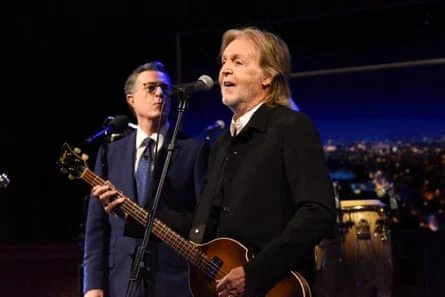
The Sala Grande, the primary screening hall of the Venice Film Festival nestled within the historic Palazzo del Cinema, recently played host to a moment of profound and stunned silence, which swiftly dissolved into an overwhelming wave of validation. As the house lights rose following eighty harrowing minutes of cinematic exposure, the audience stood nearly as one, turning to face the creators of the film and offering a sustained twenty-five-minute ovation. The subject of this intense scrutiny was NAZA, a groundbreaking feature-length documentary focusing on the ongoing conflict in Gaza, produced by the Guardian.
The title of the film itself carries a heavy psychological and linguistic burden, drawn directly from an Israeli military acronym used euphemistically to designate the civilian casualties anticipated and accepted during military engagements. Set against the nocturnal backdrop of Tel Aviv, NAZA relies exclusively on testimonies delivered in Hebrew by twenty-four anonymised Israeli military insiders, many of whom served within elite units. These intelligence officers and soldiers detail the operational mechanics of advanced military systems, including automated AI-driven technologies, designed to select thousands of targets for lethal strikes. These operations frequently take place under the cover of night, targeting individuals while they are surrounded by their families.
The documentary presents a complex mosaic of viewpoints that ultimately converge on a singular reality: active participation in a widespread military campaign where the boundaries between combatants and non-combatants frequently blurred. Against the backdrop of a conflict that has claimed the lives of more than 73,000 Palestinians, the documentary subjects articulate a broad spectrum of emotional responses. While some express deep-seated shame regarding their experiences, others maintain a detached neutrality, and a subset describes a chilling sense of excitement and entertainment while justifying their lethal actions. Following its explosive European premiere, NAZA is scheduled to open in United States cinemas on September 30, with broader international distribution plans slated for imminent release.
A Chronology of Polarization and Escalation
The trajectory of NAZA from an anticipated festival entry to an international geopolitical lightning rod underscores the deep societal divisions surrounding the Gaza conflict. The preliminary ripples of critical acclaim gathered momentum among industry insiders and journalists who attended early private screenings ahead of its planned New York premiere. However, the domestic reaction within Israel followed a starkly divergent path, characterized by rapid political condemnation and escalating hostility toward the production team.
Within days of the Venice premiere, right-wing political figures launched a coordinated campaign against the film’s directors, Oscar-winning Israeli filmmakers Yuval Abraham and Rachel Szor, publicly accusing them of treason. The backlash intensified rapidly as public figures and media commentators weighed in:
- September 10: Early investigative reports and promotional materials begin detailing the secret systems utilized by the Israeli military in mass targeting operations, setting the stage for the film’s thematic core.
- Mid-September: The Venice Film Festival screening yields a twenty-five-minute standing ovation, drawing international praise from human rights groups and film industry coalitions.
- Wednesday (Mid-September): Prime Minister Benjamin Netanyahu announces plans to introduce legislation aimed at stripping citizenship from individuals who "smear" Israel Defense Forces (IDF) soldiers. Concurrently, right-wing activists breach the Tel Aviv offices of independent media outlets associated with the project’s early reporting.
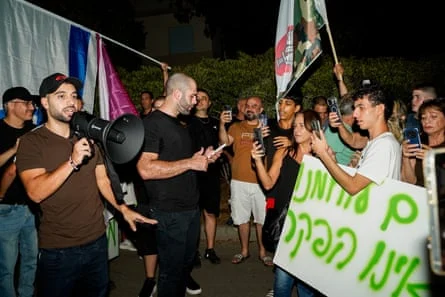
- Late September: Protests erupt outside the private residences of the filmmakers’ families in central Israel, accompanied by extremist chants and demands for severe legal repercussions.
Political Backlash and Legislative Threats
The reaction from Israel’s political establishment was swift and severe. Prime Minister Benjamin Netanyahu, long known for his adversarial relationship with critical media outlets, capitalized on the public outcry to announce legislative initiatives targeting domestic dissent. Speaking to supporters, Netanyahu declared his intention to promote two distinct bills designed to penalize the defamation of Israeli soldiers and the state apparatus. "We will revoke citizenship for anyone who defames IDF soldiers around the world—he will be deeply hurt in his pocket," Netanyahu stated.
This political rhetoric filtered down into aggressive public demonstrations. Outside the central Israel residence of co-director Rachel Szor’s parents, protesters gathered with placards and megaphones, shouting slogans that included calls for the "death penalty for traitors." Prominent political figures echoed these sentiments at campaign rallies ahead of the country’s upcoming October elections. Ofer Winter, a former high-ranking military officer turned politician representing the People of Israel party, launched a vitriolic attack during a rally in Rishon LeZion. Taunting the directors directly, Winter remarked, "An Israeli citizen, a Jew, receives thunderous applause for going out and smearing and defaming his own people… You have nothing to return to. It is a disgrace and a shame to return after you spat in the faces of your own people."
Media figures aligned with the ruling coalition further inflamed the discourse. Yehuda Schlesinger, a journalist for Channel 14—a station frequently characterized as a political mouthpiece for the administration—asserted on air that Abraham and Szor should be actively "pursued" and "hunted," while dismissing the Venice ovation as "twenty-five minutes of antisemitic applause."

Civil Society and Media Responses
The severity of the threats prompted widespread alarm among human rights organizations, legal experts, and independent journalists both within Israel and internationally. Editorial boards and press freedom advocates argued that the safety of the filmmakers had been compromised by irresponsible rhetoric from high-ranking officials.
An urgent editorial published by the left-leaning Israeli newspaper Haaretz warned that the lives of Abraham and Szor were in clear and present danger. This sentiment was echoed by the Committee to Protect Journalists (CPJ) and dozens of domestic human rights coalitions, which issued joint statements calling upon the Israeli government to protect the fundamental rights and physical safety of the filmmakers.
Physical manifestations of the hostile climate materialized mid-week when Haggai Matar, a director at the independent +972 Magazine and Local Call—platforms that previously collaborated with the Guardian on early investigative reports regarding the documentary’s subject matter—reported that their offices had been forcibly broken into by right-wing activists documenting the intrusion on camera.
Dahlia Scheindlin, a prominent Israeli political analyst and polling expert, noted that the intense focus on NAZA overshadowed other critical international developments, such as recent United Kingdom sanctions announcements. Scheindlin observed that the right wing successfully weaponized a film that the vast majority of the Israeli public had not yet viewed. "While it is unseen, it can be turned into something electorally potent that at present Israelis aren’t able to demystify," she explained.
Broader Implications and International Context
The controversy surrounding NAZA occurs against the backdrop of an increasingly restrictive environment for freedom of expression inside Israel, a trend that has accelerated significantly since the attacks led by Hamas on October 7, 2023. Historically, Israeli media and cultural institutions operated under an unwritten code of self-censorship during periods of active national security crises. The release of a Hebrew-language documentary featuring testimony from elite military personnel directly challenges this paradigm, breaking traditional taboos surrounding internal military critique.
Furthermore, the film arrives at a time of heightened international diplomatic isolation for Israel. Beyond the ongoing military operations in the Gaza Strip—where an independent United Nations inquiry alleged systemic violations and intentional targeting of civilian infrastructure—growing international concern over expanding settler violence in the occupied West Bank has placed unprecedented pressure on the Israeli government.
Domestic critics of the government’s approach have argued that the aggressive reaction to the documentary ultimately projects weakness rather than strength. Nahum Barnea, a columnist for Yedioth Ahronoth, characterized the threats to strip citizenship as "delusional." Similarly, Yaakov Katz, the former editor-in-chief of The Jerusalem Post, wrote that such heavy-handed legislative proposals "do not make Israel look stronger, but create the impression that we have something to hide and are afraid of criticism."
Etan Nechin, writing in Haaretz following a press screening in New York, encapsulated the systemic implications of the controversy: "In a healthy democracy, NAZA would be shown on the evening news, its allegations would cause a public outrage and the state would promise a thorough investigation. Instead, following the film’s Venice premiere, Abraham and Szor have effectively been pushed into exile."
As the October elections approach and the release date in the United States draws near, NAZA remains a focal point for intense debate regarding free speech, state accountability, and the moral complexities of modern asymmetric warfare.