Adrian Chiarella’s feature-length directorial debut, Leviticus (2026), arrives at a critical juncture in contemporary cinema, offering a chilling and metaphorical deep dive into the psychological realities of conversion therapy, religious dogmatism, and the enduring resonance of queer horror. Set against the desolate, industrial-pastoral backdrop of the Australian boondocks, the film uses genre conventions not merely for cheap thrills, but to externalize the harrowing psychological tolls exacted by institutionalized homophobia. By combining high-concept supernatural terror with stark, localized realism, Leviticus positions itself as both a modern biblical parable and a visceral confrontation with bigotry in an era that often assumes such prejudices are relics of the past.
Main Facts and Premise
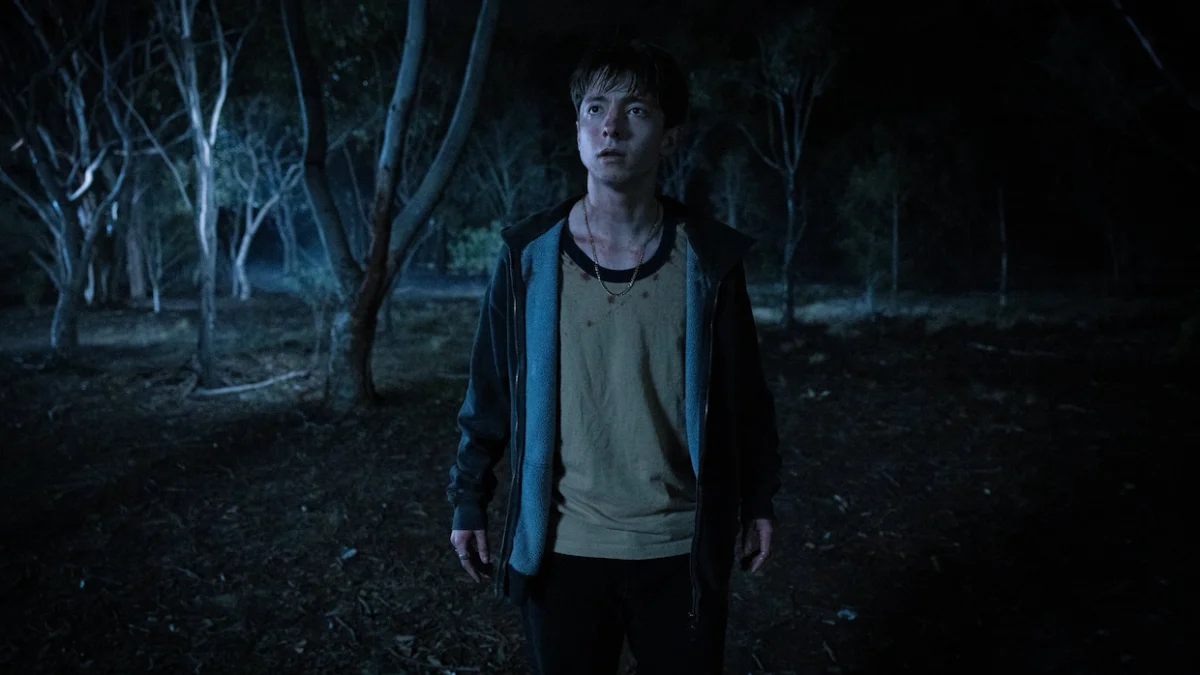
At its core, Leviticus builds its narrative around a lethal supernatural entity born from a local church-sanctioned hex intended as a form of conversion therapy for gay teenagers. This malevolent spirit preys upon vulnerability and isolation, hunting its victims by manifesting as the person they desire most. The plot follows Naim, played by Joe Bird, a shy newcomer navigating the oppressive confines of a cult-like industrial town. Naim finds himself drawn to Ryan, portrayed by Stacey Clausen, a brash and charismatic classmate whose outward bravado masks underlying fears.
The narrative escalates when Hunter, the preacher’s closeted son played by Jeremy Blewitt, inserts himself into the dynamic through a volatile and violent encounter with Ryan. Driven by a mixture of teenage jealousy and internalized panic, Naim commits a catastrophic transgression by reporting the tryst to church authorities, expecting a minor reprimand rather than an inescapable spiritual and physical ordeal. From there, the film spirals into a high-stakes survival narrative where Naim and Ryan must navigate not only the shape-shifting monster stalking their isolation, but also the pervasive betrayal of adults and peers who weaponize fear under the guise of protection.
Background Context and Genre Heritage
To fully understand the artistic motivations behind Leviticus, one must examine the rich history of queer subtext within the horror genre. For decades, horror has served as a sanctuary for marginalized audiences who recognize the monsters on screen as externalized manifestations of societal rejection and bodily alienation. Chiarella has frequently cited foundational genre classics as pivotal inspirations for his debut, noting how films like Wes Craven’s A Nightmare on Elm Street Part 2: Freddy’s Revenge (1985) and John Carpenter’s The Thing (1982) trafficked in themes of closeted identity, paranoia, and the terror of the unrecognizable "other."
These historical touchstones informed Chiarella’s approach to creating a narrative that speaks directly to a recent global rise in sociopolitical bigotry. In recent years, public discourse surrounding LGBTQ+ rights has experienced significant friction, with legislative pushbacks, debates over educational curricula, and an uptick in anti-queer rhetoric across Western democracies. Leviticus responds to this regression by rejecting sanitized narratives of resilience, opting instead to confront the raw, unvarnished fear of living in a society where safety is perpetually conditional.
Chronology and Narrative Progression
The structural rhythm of Leviticus is defined by a slow-burning descent into paranoia, meticulously paced to mirror the claustrophobia of its characters.
In the film’s chilling cold open, a lesbian lifeguard falls victim to the supernatural entity after succumbing to an illicit poolside encounter, establishing the foundational rule of the universe: institutionalized dogma dictates that queer desire equates to self-destruction.
Following this prologue, the narrative introduces Naim and Ryan as they tentatively bridge the gap between cautious friendship and romantic attraction. Their interactions, punctuated by aggressive displays of adolescent masculinity in abandoned industrial ruins, highlight the pervasive self-loathing instilled by their environment.
The inciting incident occurs midway through the runtime when Naim betrays Ryan and Hunter, triggering the wrath of the religious community and inviting the full force of the supernatural curse upon the boys. Stripped of safe harbors, Naim and Ryan seek out the surviving partner of the lifeguard from the opening scene, now a reclusive figure trapped in a local hospital. This encounter reinforces the film’s central thesis regarding the necessity of genuine camaraderie versus the false allyship offered by figures like Hunter’s sister and Naim’s mother, played by Mia Wasikowska, whose chilling refrain—"We need fear"—blurs the boundaries between maternal protection and psychological oppression.
The chronology culminates in a tense, ambiguous climax that subverts traditional horror resolutions. Rather than offering a definitive triumph over evil or a punishing descent into total despair, the narrative closes on a note of complex realism, acknowledging that systemic trauma leaves scars that may never fully heal.
Supporting Data and Visual Aesthetics
Visually and atmospherically, Leviticus distinguishes itself through a deliberate synthesis of industrial decay and natural isolation. Working alongside his production design and cinematography teams, Chiarella utilized the stark geographical contrasts of regional Australia to evoke the psychological state of his protagonists. The locations are deliberately anonymous, preventing the film from feeling tied to a single hyper-specific municipal jurisdiction, thereby elevating the story into a timeless, universal fable.
Cinematographically, the film relies heavily on framing mechanisms—windows, mirrors, and security lenses—to emphasize the themes of surveillance and compromised perception. The monster’s mechanics are tied directly to visibility: characters unaffected by the curse cannot perceive the entity, mirroring the willful blindness of communities that dismiss queer identity as a fleeting phase or an external imposition. Furthermore, Naim’s recurring inability to distinguish between Ryan and the demonic double serves as a constant reminder that in a world structured by paranoia, seeing cannot always be equated with believing.
Statements and Reactions from Related Parties
In interviews surrounding the film’s release, director Adrian Chiarella elaborated on the personal genesis of the project and the thematic weight of its central metaphor. Discussing his upbringing and the formative impact of horror cinema, Chiarella noted that the genre offered a vital language for processing feelings of alienation that polite society refused to name.
"I started thinking about what would be personal for me, and horror movies were something that I turned to as a young queer teenager," Chiarella explained. "I don’t think I was alone in that. The genre has been important to the community for a very, very long time."
Addressing the film’s nuanced approach to trauma and its refusal to offer a neat, Hollywood resolution, Chiarella highlighted the subversion of standard genre tropes in the final moments. "We took that idea of how, in the final frame of a lot of horror movies, the monster comes crawling back, and you realize it may not actually be dead," he stated. "I thought about what that would mean in this film—that whatever trauma these boys have been through may not go away for a very long time. It may never go away."
Cast members have similarly emphasized the emotional stakes underpinning the supernatural elements. Joe Bird and Stacey Clausen drew heavily on the physical and psychological intimacy required to portray teenagers grappling with high-stakes vulnerability in a hostile environment, grounding the film’s fantastical terror in authentic human stakes.
Broader Impact and Implications
As contemporary cinema continues to expand the boundaries of LGBTQ+ representation, Leviticus marks a notable departure from the prevailing trend of sanitizing queer narratives for mainstream palates. In recent years, much of the industry has shifted toward celebratory stories of coming-out triumphs and historical victories, occasionally leaving a gap for narratives that interrogate ongoing systemic violence and institutionalized trauma.
By choosing to utilize horror as a vehicle for political and emotional commentary, Leviticus bridges the gap between commercial genre entertainment and arthouse social critique. The film’s analysis of religious indoctrination and the weaponization of fear strikes a chord far beyond its cinematic universe, offering a stark reminder of the psychological toll inflicted by conversion therapy and social ostracization.
Ultimately, Leviticus succeeds not only as a masterclass in atmospheric tension and genre subversion, but as a cultural artifact that demands accountability from the institutions that continue to marginalize vulnerable youth. By refusing to offer easy answers or comforting resolutions, Chiarella’s debut ensures that the questions raised by the film will linger long after the credits roll, cementing its place as a significant milestone in modern queer cinema.