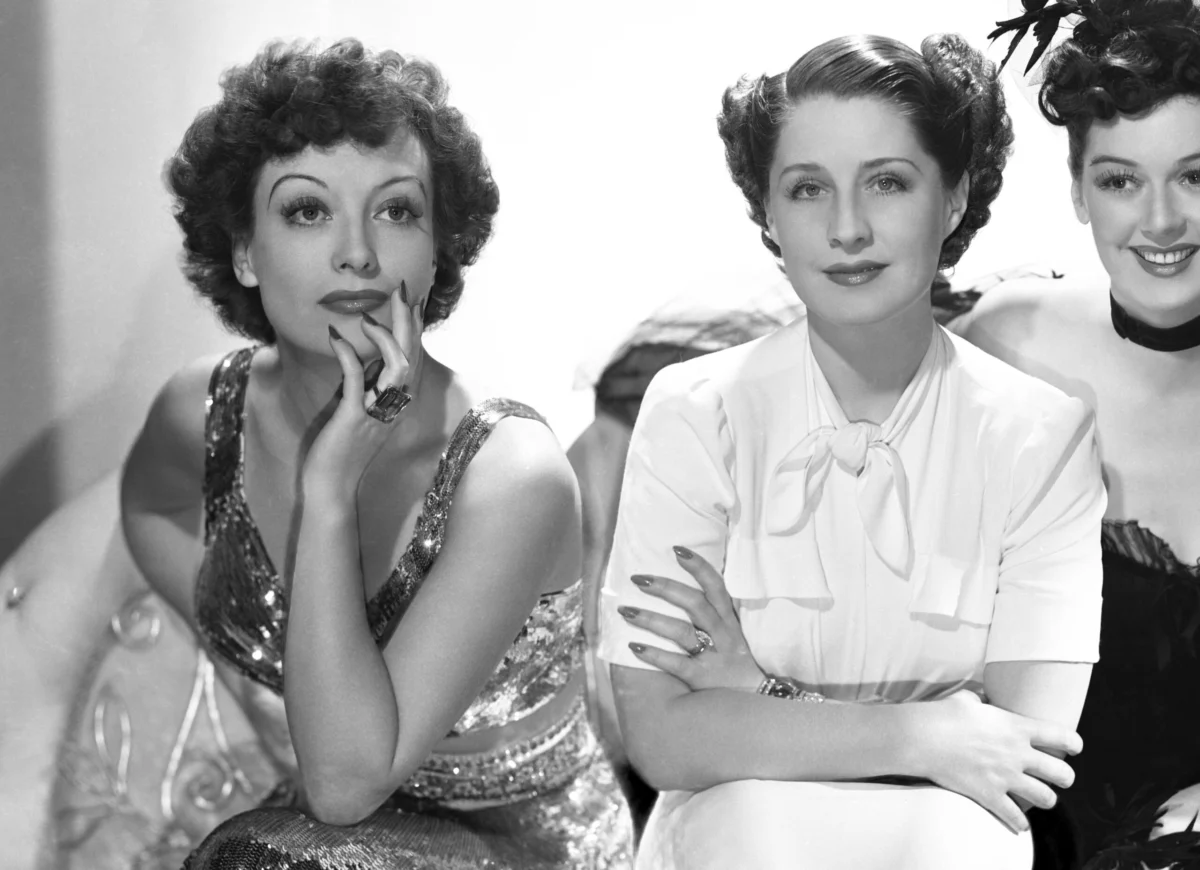
The 1939 production of The Women, directed by George Cukor, stands as a landmark in cinematic history, not only for its all-female cast—which excluded men entirely from both the screen and the narrative—but for the volatile real-life dynamics that played out behind the scenes. In her new book, Jungle Red! The Making of MGM’s The Women, author Illeana Douglas examines how the studio leveraged the genuine animosity between its two biggest stars, Joan Crawford and Norma Shearer, to promote the film. While Hollywood history is rife with tales of feuds, the friction between these two icons served as a foundational template for the modern, female-centric ensemble dramas that would dominate later decades, such as Sex and the City and the various iterations of The Real Housewives.
The Anatomy of an MGM Power Struggle
To understand the intensity of the friction between Shearer and Crawford, one must look at the structural hierarchy of Metro-Goldwyn-Mayer (MGM) during the 1930s. Norma Shearer was widely regarded as the "First Lady of the Studio," a position solidified by her marriage to production head Irving Thalberg. Following Thalberg’s death in 1936, Shearer’s status remained formidable, yet she found herself increasingly vulnerable in a changing industry.
Joan Crawford, by contrast, represented the "ambitious upstart." Her rise was characterized by a raw, relentless drive that contrasted sharply with Shearer’s polished, studio-sanctioned elegance. By 1939, Crawford was seeking to reclaim her status as a box-office powerhouse after being labeled "box office poison" in a notorious 1938 trade advertisement. For Crawford, The Women was a necessary career maneuver; for Shearer, it was a test of whether she could maintain her dominance without the protection of her late husband.
A Chronology of Conflict: 1939 Production Timeline
The tension was palpable even before cameras rolled on April 25, 1939. The following timeline outlines the key friction points that defined the production:
- March 1939: A Look magazine cover is released featuring Shearer and Crawford in a confrontational pose, explicitly marketing the film through the lens of their real-life dislike. This signaled to the public that the studio was comfortable weaponizing their rivalry.
- April 1939: Production officially commences. George Cukor, tasked with managing an ensemble of high-profile actresses including Rosalind Russell, Paulette Goddard, and Joan Fontaine, initially dismissed concerns regarding the leads, stating that they were "too smart" for unprofessional antics.
- May–June 1939: Escalations occur regarding the minutiae of production. Disputes arise over dressing room locations, trailer dimensions, and billing order. Shearer, as the top-billed star, attempted to enforce traditional hierarchy, while Crawford aggressively negotiated for parity.
- July 1939: Crawford takes an unexplained, short-lived leave of absence, attributed to "intestinal flu and arsenic poisoning" by contemporary reports, which served to delay key scenes and test the production schedule.
- August 1939: The wrap party luncheon occurs. Shearer attempts a public display of unity by hosting the event, which Crawford pointedly boycotts, effectively signaling that the off-screen drama remained unresolved.
Economic and Strategic Motivations
The rivalry was not merely personal; it was rooted in the competition for limited, high-quality roles. The most significant point of contention was the film Idiot’s Delight. Crawford had lobbied hard for the role opposite Clark Gable, viewing it as a career-saving vehicle. When the part was awarded to Shearer, the resentment became irreversible.

From an economic perspective, MGM’s strategy of pitting these two against each other proved lucrative. By the late 1930s, the studio system was beginning to shift away from the absolute control of the early talkie era. Actresses were becoming more aware of their own brand value. Crawford’s insistence on testing for the role of Crystal—a character that, in original drafts, was significantly smaller—demonstrated a modern understanding of how to force a studio’s hand. By convincing director George Cukor and producer Hunt Stromberg that the film needed a "heavyweight" adversary for Shearer, Crawford ensured her place in the film while simultaneously securing a platform to challenge Shearer’s established authority.
Industry Implications and Legacy
The behavior of Crawford and Shearer during the filming of The Women provided a blueprint for the "catfight" narrative that would become a staple of celebrity journalism. However, beneath the surface of their public disagreements, both women were navigating a transition in their own careers. Shearer was grappling with her image as a grieving widow, while Crawford was attempting to pivot from the "dancing daughter" archetype to more complex, mature roles.
The "feud" also served as a promotional mechanism that successfully bypassed the need for traditional romantic leads. In a film entirely devoid of men, the tension between the female protagonists provided the necessary narrative stakes. This was a revolutionary shift in marketing, proving that the dynamics of female social hierarchies were just as compelling to audiences as the standard romantic pairings of the era.
Analysis of Professional Conduct
While gossip columnists like Hedda Hopper fueled the flames of the rivalry, contemporary analysis suggests that the friction was largely a product of a high-pressure environment. Screenwriter Anita Loos noted that the two were "from different worlds," which made personal friendship an impossibility, yet they were both acutely aware that the public’s fascination with their animosity ensured the film’s financial success.
The incident involving the dressing room trailer—where Shearer demanded that Crawford’s unit be moved back one foot to maintain a visual hierarchy—illustrates the level of scrutiny the stars applied to their professional standing. Such disputes were common in the studio era, but the documentation surrounding The Women remains uniquely detailed due to the presence of high-profile observers and the stars’ own willingness to engage with the press.
Conclusion: The Lasting Impact
The legacy of the Crawford-Shearer rivalry on the set of The Women extends far beyond the mid-century headlines. It marked a turning point in how female power was represented in Hollywood. The film demonstrated that an all-female ensemble could command the same, if not greater, audience interest as any traditional blockbuster. By leveraging their professional antipathy, Crawford and Shearer created a cultural phenomenon that challenged the era’s gender norms, proving that women could be the primary engine of a film’s success. While their personal dislike for one another may have been genuine, their ability to channel that energy into their performances ensured that The Women would remain a permanent fixture in the annals of cinema history. The tension that Cukor managed on set was, in many ways, the very element that propelled the movie into the realm of the iconic.