The landscape of horror cinema has long been defined by the sequel, a narrative vehicle that serves both to extend the commercial life of successful intellectual property and to explore the evolving thematic boundaries of the genre. As part of its ongoing curated programming, the streaming platform Tubi has highlighted a diverse selection of horror sequels, ranging from high-budget studio endeavors to experimental cult classics. This retrospective analysis examines the historical context, production legacies, and critical evolution of five specific sequels now available for digital consumption, offering a window into how filmmakers have grappled with the challenges of iterative storytelling across several decades.
The Evolution of the Horror Sequel
Horror sequels occupy a contentious space in film history. While the industry standard often views them as diminishing returns, the genre has frequently utilized sequels to subvert expectations, deepen mythology, or pivot into entirely new aesthetic territories. The current collection on Tubi spans from the 1970s to the late 2010s, providing a longitudinal study of how horror audiences have interacted with recurring antagonists and established narrative universes.

Exorcist II: The Heretic and the Burden of Legacy
Released in 1977, John Boorman’s Exorcist II: The Heretic remains one of the most polarizing entries in the horror canon. Coming four years after William Friedkin’s Academy Award-winning original, the film faced the monumental task of following a project that had fundamentally shifted the cultural perception of supernatural horror.
Contextually, the production was plagued by significant creative departures, as Friedkin and author William Peter Blatty declined to return. Boorman’s decision to move away from the straightforward possession narrative toward a more surreal, metaphysical exploration of good and evil alienated many viewers expecting a direct tonal continuation. Despite its initial critical failure—often cited in historical lists of disappointing sequels—the film features an ambitious visual style and a notable performance by Linda Blair, who reprised her role as Regan MacNeil. Modern critical reassessment has increasingly viewed the film as a bold, albeit flawed, departure that attempted to expand the franchise’s theological scope rather than merely replicating the visceral shocks of its predecessor.
The Firefly Trilogy and the Conclusion of 3 From Hell
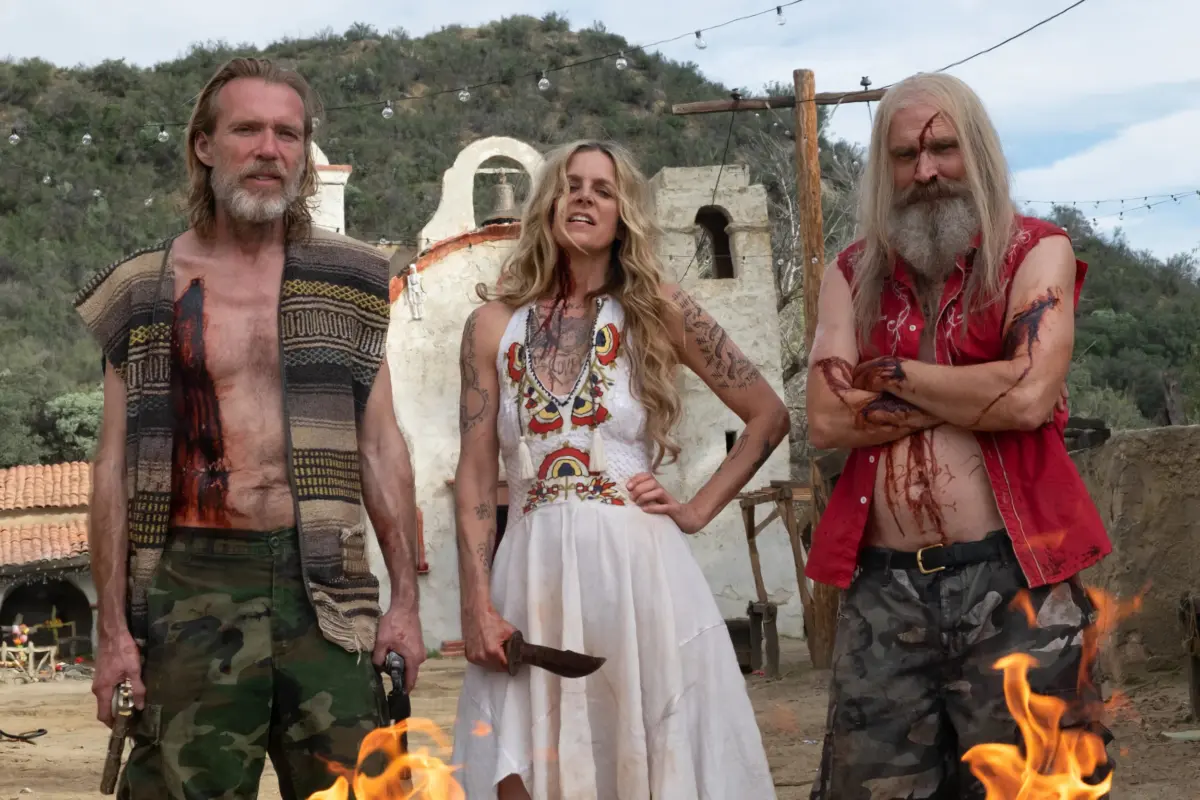
The transition of Rob Zombie’s Firefly family from the gritty, nihilistic House of 1000 Corpses (2003) to the more polished, albeit equally violent, 3 From Hell (2019) represents a distinct case study in long-term character development. The chronology of this series—spanning sixteen years—reflects the evolution of the independent horror landscape.

The production of 3 From Hell was heavily impacted by the health of lead actor Sid Haig, whose character, Captain Spaulding, served as the connective tissue of the franchise. His passing shortly after production underscored the finality of the trilogy. Unlike traditional slasher sequels that prioritize repetition, the Firefly films emphasize the stylistic flair of the director, often drawing from a fusion of 1970s exploitation cinema and southern gothic imagery. For audiences, the film serves as a closing chapter that balances the demand for familiar character archetypes with the logistical realities of a legacy production.
Alexandre Aja and the Reinvention of The Hills Have Eyes II
The 2006 remake of The Hills Have Eyes, directed by Alexandre Aja, is widely considered a benchmark for modern horror remakes, successfully updating Wes Craven’s 1977 original while retaining its bleak, survivalist core. The subsequent release of The Hills Have Eyes II (2007), directed by Martin Weisz, serves as an example of the rapid-turnaround sequel model prevalent in the mid-2000s.
While the first film focused on the violation of the suburban family unit, the sequel shifted the focus to a military unit, incorporating elements of action and tactical horror. The film’s reception highlighted a common trend in the mid-aughts: the pivot from psychological dread to more kinetic, high-octane scenarios. By contrasting the nihilism of the remake with the more straightforward "creature feature" mechanics of the sequel, analysts can observe how studios attempted to diversify the appeal of horror franchises to reach broader demographics.

The Cultural Impact of Ringu 2
Hideo Nakata’s Ringu (1998) is credited with catalyzing the global resurgence of Japanese horror (J-Horror) at the turn of the millennium. The film’s success was built on an atmosphere of inescapable, analog-based dread. The 1999 sequel, Ringu 2, faced the challenge of sustaining a mystery that had already been solved.
Nakata’s approach to the sequel involved a significant expansion of the supernatural mythology surrounding the antagonist, Sadako. By leaning into the "psychic" elements of the story, the sequel transitioned the series from a detective-style horror procedural to a more complex, lore-heavy narrative. This shift not only maintained the franchise’s commercial momentum but also solidified the visual iconography of the J-Horror ghost, which would go on to influence international horror tropes for the next two decades. The availability of Ringu 2 allows viewers to compare the tonal shifts between the original’s grounded, technological terror and the sequel’s more abstract, spectral expansion.
Camp and Subversion: Slumber Party Massacre II
The Slumber Party Massacre series stands as a unique artifact of the 1980s direct-to-video and drive-in market. Deborah Brock’s Slumber Party Massacre II (1987) is frequently cited by film historians for its surreal, dream-logic approach to the slasher formula. Departing from the straightforward realism of the first film, the sequel introduces a supernatural, guitar-wielding killer, transforming a standard slasher into a bizarre, music-video-inspired fever dream.

The film serves as an important reminder that horror sequels in the 1980s were often given creative leeway to experiment with genre conventions, provided they maintained the brand’s core appeal. The intentional campiness and stylistic excess of the film have earned it a cult following, illustrating the "creative volatility" that often emerges when low-budget franchises are allowed to deviate from their established formulas.
Broader Implications for Streaming Platforms
The inclusion of these titles on platforms like Tubi reflects a broader shift in how media is consumed. Rather than being relegated to "bargain bin" status, these sequels are now categorized as essential components of horror history. The curation of such lists provides a structured way for audiences to analyze the creative successes and failures of horror franchises.
Statistically, horror remains one of the most profitable genres for streaming services, characterized by high engagement rates and long-tail viewership. By providing access to the "deep cuts" and sequels that often lack the prestige of their predecessors, platforms are essentially creating a digital archive of genre history. This allows for a more comprehensive understanding of the horror genre, moving beyond a "best-of" list to include the messy, experimental, and frequently overlooked chapters of cinematic history.

As studios continue to revisit established properties, the study of these legacy sequels provides a roadmap for the future. The lessons learned from the successes and failures of these specific films—whether through the ambitious scope of a high-budget sequel or the uninhibited creativity of a low-budget cult classic—continue to inform how modern filmmakers approach the art of the follow-up. For the modern viewer, these films offer more than just scares; they offer a chronicle of how horror has attempted, with varying degrees of success, to reinvent itself in the shadow of its own history.