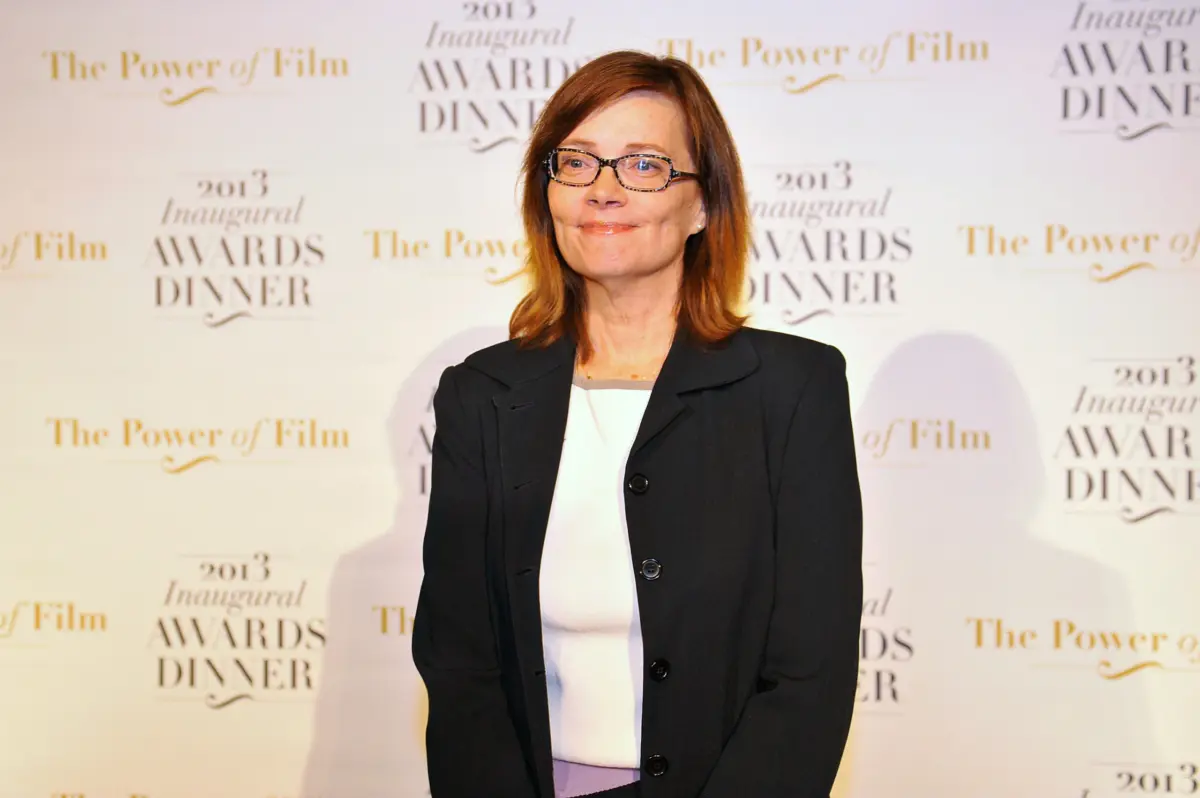
Ann Hornaday, the longtime film critic for The Washington Post whose insightful prose and cultural commentary defined the paper’s arts coverage for over two decades, died on Sunday at the age of 66. A Pulitzer Prize finalist and the author of the acclaimed guide Talking Pictures: How to Watch Movies, Hornaday was widely respected not only for her critical acumen but for her singular ability to foster community within the often-insular world of journalism. Her passing marks the end of a prolific career that bridged the gap between academic film analysis and accessible, populist cultural reporting.
The Chronology of a Storied Career
Born in Iowa, Hornaday’s career was characterized by a distinct Midwestern sensibility that informed her writing style—clear, unpretentious, and deeply empathetic. After establishing herself as a formidable voice in the media landscape, she joined The Washington Post in 2002. Her tenure at the paper spanned a transformative era in cinema, covering the decline of the traditional studio system and the meteoric rise of the independent film movement.
Throughout the 2010s, Hornaday became a fixture at major international film festivals, including Cannes and Sundance. It was during these high-pressure, fast-paced environments that she gained a reputation for her collegial nature. While the industry is often noted for its competitiveness, Hornaday was frequently credited by peers for breaking down professional barriers. Whether she was mentoring junior reporters or engaging with established industry veterans, her approach remained consistent: she viewed the cinematic world as a collective space where dialogue was more valuable than hierarchy.
Professional Contributions and Critical Acclaim
Hornaday’s professional portfolio was expansive. Her 2017 book, Talking Pictures: How to Watch Movies, served as a foundational text for a new generation of film lovers, distilling complex cinematic techniques into digestible, thought-provoking concepts. The book received widespread praise for its democratization of film criticism, emphasizing that the viewer’s engagement with a work of art was as significant as the technical execution of the film itself.
In addition to her written work, Hornaday was a frequent contributor to PBS NewsHour, where her analysis reached a national audience. Her ability to synthesize complex social themes—such as the representation of gender in cinema or the impact of digital media on storytelling—made her a sought-after voice for television discourse. Her critical style, described by colleagues as "chipper-cynical," allowed her to maintain a clear-eyed skepticism toward industry hypocrisies while retaining a genuine, palpable enthusiasm for the transformative power of film.
Reflections from the Newsroom
The news of Hornaday’s death has prompted an outpouring of tributes from across the media industry. Matt Murray, executive editor of The Washington Post, honored her legacy by noting that her criticism was "informed, insightful, warm, and accessible." This sentiment has been echoed by many in the journalism community, who highlight that her professional impact was rivaled only by the personal connections she fostered.
For many of her colleagues, Hornaday served as a confidante during moments of professional crisis. She was known for her willingness to set aside tight deadlines to offer guidance, perspective, and, perhaps most importantly, a listening ear. This "radical inclusion" was a hallmark of her character. Whether she was working within the Culture desk or interacting with staff from other departments, she treated her peers with a sense of familial care—what many have described as a state of "mishpocha."
Industry Implications and Future Projects
At the time of her death, Hornaday remained actively engaged in her craft. She had recently embarked on a significant book project regarding the production of the classic 1976 film All the President’s Men. According to industry reports, she had managed to submit the manuscript shortly before her health declined, suggesting that her final contribution to film history will reach the public posthumously.
The implications of her absence will be felt deeply in the editorial offices of the Post and in the broader cultural conversation. As the landscape of film criticism shifts toward digital-first, personality-driven content, Hornaday’s work stands as a testament to the endurance of long-form, thoughtful, and human-centric journalism. She proved that one could be a rigorous critic—demanding excellence from filmmakers—without losing the ability to connect with the people around them.
The Legacy of Inclusion
Beyond her published reviews and Pulitzer-recognized work, the most enduring legacy of Ann Hornaday may be the professional culture she modeled. In a field that often demands the maintenance of emotional barriers to preserve objective distance, she demonstrated that empathy is not a weakness but a tool for better understanding.
Data from the American Society of News Editors (ASNE) has historically indicated that the transition from competition to collaboration in newsrooms is often fraught with friction. However, anecdotal evidence from those who worked alongside Hornaday suggests that her presence acted as a stabilizing force. By bridging the gap between rival publications and diverse editorial desks, she helped foster a more collaborative environment for cultural critics.
Honoring a Life of Connection
In the wake of her passing, peers and industry figures are left to grapple with the loss of a mentor whose influence transcended the written word. The question of how to honor such a figure is one that many in the industry are now confronting. While traditional gestures like donations or formal obituaries are standard, those closest to her suggest a more profound approach: the emulation of her professional conduct.
Her ability to make individuals feel seen, heard, and supported in a high-stress industry remains her greatest contribution. As the journalistic community moves forward, the "Hornaday approach"—prioritizing human connection alongside critical rigor—serves as a template for the next generation of arts reporters.
The Final Months
During her final months, Hornaday continued to exhibit the resilience and curiosity that defined her career. Even as she navigated the challenges of her declining health, her focus remained on the intersection of cinema and history. Her upcoming work on All the President’s Men is expected to provide a definitive look at a film that shaped the very industry in which she spent her life.
For those who knew her, the loss is not merely the disappearance of a gifted writer, but the silence of a voice that made the complexities of the entertainment world feel more navigable. Her life serves as a reminder that the value of a journalist is measured not only by the accolades they receive or the reviews they publish, but by the community they build in the process.
Ann Hornaday’s career was a masterclass in the balance between professional distance and personal warmth. She navigated the corridors of power in Washington and the frantic festival circuits of Europe with the same unassuming grace. In the end, she leaves behind a body of work that will inform film scholars for decades, and a legacy of empathy that will continue to resonate with those who were fortunate enough to work by her side. As the industry reflects on her passing, the consensus remains: she was a singular force who reminded us that, in the midst of a demanding profession, the most important thing is how we treat the people we encounter along the way.