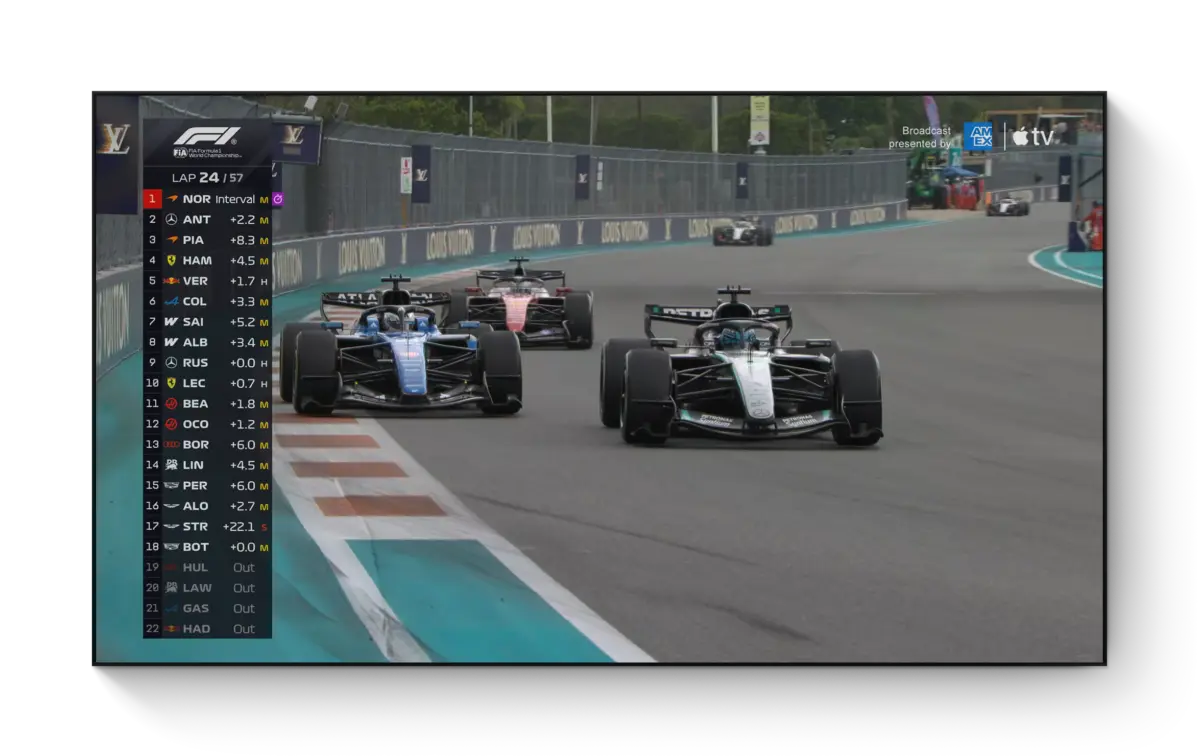
The landscape of digital advertising is undergoing a profound transformation as tech giants navigate the delicate balance between user experience and monetization. While platforms like Netflix and Hulu have aggressively expanded their ad-supported tiers to capture mass-market reach, Apple is charting a distinctly different course. By leveraging the high-octane, prestige-heavy world of Formula 1 (F1), the Cupertino-based company is proving that targeted, high-intent advertising within live sports can outperform traditional connected TV (CTV) benchmarks, setting a new standard for how premium content can sustain a lucrative ad ecosystem without compromising the viewer’s immersion.
The Anatomy of Apple’s Sports Integration
Todd Teresi, Vice President of Apple Ads, recently disclosed to The Hollywood Reporter that the company’s foray into live sports broadcasting has yielded significant performance metrics. According to internal brand lift studies commissioned by Apple and its advertising partners, sponsors integrated into F1 coverage have experienced measurable spikes in three critical performance indicators: brand familiarity, brand favorability, and purchase intent.
Crucially, these metrics have consistently outperformed established U.S. CTV benchmarks. This success is not accidental; it is the result of a deliberate, "seamless" integration strategy. Rather than interrupting the viewing experience with disruptive mid-roll commercials that risk alienating the audience, Apple has opted to embed brand presence directly into the programming. This approach ensures that sponsors are perceived as participants in the sporting narrative rather than intruders, a philosophy that resonates deeply with the passionate, loyal demographics inherent to global motorsport.
A Chronology of the Shift
The integration of F1 into the Apple ecosystem represents a strategic pivot in the company’s long-term services business. For years, Apple’s advertising revenue was largely siloed into two distinct buckets: intent-driven search ads within the App Store and Apple Maps, and content-adjacent display ads within Apple News.
The entry into live sports streaming—beginning in earnest with Major League Soccer (MLS) and bolstered by F1—marked a transition toward high-value, live-event monetization.
- The Foundation: Apple established its reputation for privacy-centric, non-intrusive advertising, which initially limited its appetite for the standard commercial-heavy models used by cable networks.
- The Catalyst: Recognizing the surge in U.S. interest in Formula 1—often attributed to the popularity of docuseries and the increasing accessibility of the sport—Apple positioned itself to capture this growth.
- The Execution: Over the last two seasons, Apple began refining the ad-tech stack, moving away from traditional ad breaks and toward integrated sponsorships that complement the racing product.
- The Result: By focusing on premium, upscale audiences, Apple has successfully secured blue-chip partners, such as American Express and Ford, who view the platform as an essential component of their broader marketing mix.
Data-Driven Demographics: Why F1 Matters
The appeal of F1 to advertisers goes beyond the thrill of the race; it is a demographic play. F1 fans, particularly in the United States, represent one of the most desirable cohorts in sports media. Data suggests that the median household income of the F1 audience significantly outpaces that of the NFL and NBA, providing a fertile ground for premium brands.
For luxury retailers, automotive giants, and high-end service providers, the F1 audience is not just larger; it is more affluent and highly engaged. This disparity in audience quality allows Apple to command industry-leading Cost Per Mille (CPM) rates. While the overall volume of viewers may remain smaller than the massive, general-interest audiences commanded by the NFL, the quality of engagement provides a higher return on investment (ROI) for advertisers. This "quality over quantity" approach aligns with Apple’s brand ethos, ensuring that the platform remains a premium destination rather than a cluttered ad-saturated environment.
Official Responses: The Partner Perspective
The sentiment among sponsors confirms that Apple’s strategy is resonating with those who matter most. Will Ford, General Manager of Ford Racing, emphasized that the partnership with Apple TV has been instrumental as the brand celebrates its 125th anniversary in motorsport. "Apple TV is a tremendous partner in helping us reach new audiences," Ford stated. "We’re seeing stronger awareness of Ford Racing and our leadership in innovation, which is vital as we lead the next generation of motorsport culture."
Similarly, American Express has found the platform to be a key tool for deepening customer relationships. Jill Hamilton, VP of Global Media at American Express, noted that the integration provides an opportunity to showcase tangible value, such as access to presale tickets and exclusive race-day experiences, thereby connecting the digital viewing experience with real-world consumer benefits.
The Philosophical Underpinning: Monetization Without Compromise
Eddy Cue, the Apple executive overseeing the company’s vast services division, has been a vocal proponent of this model. Recent data indicates that viewership for F1 on Apple platforms is experiencing double-digit growth compared to previous broadcast seasons on conventional networks.
However, the strategy is not to chase massive scale at the expense of the user. Teresi reiterates that Apple’s goal is not to grow advertising "at all costs." Instead, the company seeks a balanced model where the viewer receives a seamless, high-quality experience, and the advertiser receives high-impact visibility. This is a stark contrast to competitors who have pivoted to "ad-light" or "ad-supported" tiers that often feel like an afterthought or a degradation of the user experience.
Market Implications and Future Outlook
The implications of Apple’s success are significant for the broader streaming industry. If Apple can prove that a platform can sustain a profitable, high-CPM ad business without resorting to the intrusive commercial breaks that define traditional linear television, other streamers may be forced to rethink their own strategies.
As the industry moves toward a future where data privacy is paramount and user fatigue is rising, the "Apple way"—integrating ads into the fabric of the product rather than slapping them on top—may become the industry gold standard. Furthermore, as Apple continues to refine its targeting capabilities while maintaining its strict privacy standards, it is likely to attract an even wider array of premium advertisers who are increasingly skeptical of the fragmented data landscapes found elsewhere.
In the coming seasons, the focus will likely shift to how Apple scales this model. While currently limited to the U.S. market, the global nature of F1 presents a clear path for expansion. Should Apple decide to leverage its global infrastructure to integrate similar ad experiences into international broadcasts, the impact on its overall services revenue could be profound.
Ultimately, the success of the F1 integration underscores a fundamental truth in the modern media economy: when content is premium, the audience is engaged, and the advertising is treated with the same creative rigor as the programming itself, brands are willing to pay a significant premium. For Apple, the race is just beginning, but the early laps suggest a strategy that is as precise and calculated as the sport it is helping to broadcast. By prioritizing the user experience, Apple is not just building an ad business; it is defining the future of how we consume and engage with the world’s most exciting sporting events.