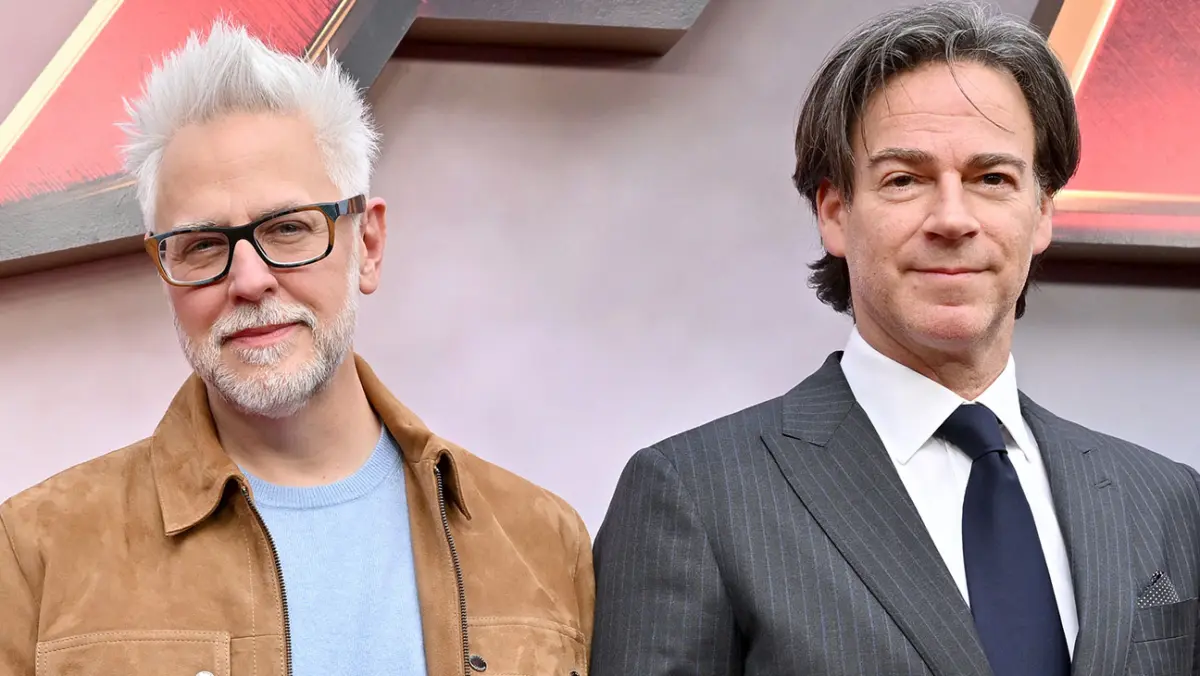
The landscape of the superhero cinematic universe shifted dramatically on Friday, November 6, as DC Studios co-CEOs James Gunn and Peter Safran were officially ousted from their leadership positions. The decision, handed down by Skydance co-CEOs David Ellison and Ynon Kreiz, brings a sudden end to a four-year tenure that had been defined by a concerted effort to unify DC’s fragmented film, television, and animation divisions under a singular, cohesive creative vision. Replacing the duo is Jeremy Latcham, a veteran producer whose background at Marvel Studios and recent focus on faith-based, family-oriented content signals a significant strategic pivot for the studio.
The transition comes at a delicate time for the DC brand, which has struggled to maintain consistent box-office momentum and critical consensus in the 21st century. Despite the recent success of the horror-tinged project Clayface—which exceeded $100 million globally against a modest $44 million budget—the broader financial performance of the DC slate has failed to satisfy the expectations of the incoming Skydance leadership.
A Timeline of Executive Turmoil
The removal of Gunn and Safran was not an impulsive decision but the culmination of mounting tensions that had been simmering since the Skydance acquisition of Warner Bros. became imminent. In the months leading up to the change, the reporting structure served as a primary point of friction. Under their previous contracts with Warner Bros. CEO David Zaslav, Gunn and Safran enjoyed a high degree of autonomy, reporting directly to the top. As Skydance sought to integrate DC into its broader Motion Picture Group, co-chaired by Josh Greenstein and Dana Goldberg, the insistence on maintaining this direct line of command became untenable.
By early fall, rumors of an executive shakeup began to circulate. Industry insiders note that Greenstein and Goldberg, who have deep roots in franchise management dating back to their work on early Marvel and Sony-distributed hits like Iron Man and Spider-Man: Homecoming, were eager to centralize production oversight. When Gunn and Safran allegedly proved slow to provide detailed slates, budget transparency, and early-stage footage, the rift between Burbank’s creative heads and the Skydance boardroom widened. On November 6, the decision was finalized, and the news was delivered directly at the Warner Bros. lot in Burbank.
Jeremy Latcham and the New Creative Mandate
The appointment of Jeremy Latcham represents a departure from the "auteur-led" approach that characterized the Gunn-Safran era. Latcham is a foundational figure in modern superhero cinema, having served as a key executive during the formative years of Marvel Studios. His tenure there included working as an assistant to David Maisel and later as a right-hand man to Kevin Feige. His career path, however, took a distinct turn when he moved to Texas to pursue independent projects, eventually gravitating toward the Wonder Project.
Latcham’s philosophy is markedly different from the stylistic flair associated with Gunn. During his time producing projects like the upcoming House of David and the Nate Bargatze-led comedy The Breadwinner, Latcham has frequently articulated a desire to bridge the gap between faith-based audiences and mainstream Hollywood production. "I had this nagging feeling that I needed to do more movies that had deeper meaning to me," Latcham stated during a recent podcast appearance. "Let’s be the HBO for the faith and family audience. Let’s try to make movies and television shows that restore faith in things worth believing in."
For Skydance, Latcham offers a "down the middle" approach. He is viewed as a producer who prioritizes accessibility and broad-market appeal over the niche, stylistic risks that sometimes defined the previous DC regime. His mandate is clear: stabilize the brand, ensure financial viability, and align DC content with the broader, family-oriented portfolio of the Skydance studio.
Financial Performance and Strategic Friction
The Skydance leadership’s decision to move on from the previous DC administration was largely driven by a bottom-line assessment of recent output. While the 2024 Superman film grossed $618 million worldwide—a figure that would be considered a success for most studios—it failed to generate the sustained cultural "heat" or the long-term franchise expansion potential that Skydance requires to justify its massive investments. Conversely, projects like Supergirl were viewed internally as significant financial and reputational liabilities.
Furthermore, the bureaucratic friction of having a studio-within-a-studio proved to be an obstacle for David Ellison. Sources close to the situation suggest that Ellison, who is tasked with steering a massive corporate entity, was uninterested in navigating the complex office politics and power struggles that emerged between the DC division and the core Skydance leadership. By installing Latcham, who will report directly to Greenstein and Goldberg, Skydance has effectively eliminated the "silo" approach that had governed DC Studios for the past four years.
The Future of the DC Slate
The sudden shift in leadership has left the future of several high-profile projects in a state of flux. James Gunn had recently completed production on a sequel to his Superman film, with a release date currently slated for July 2027. He had also been in the early stages of drafting a third installment, intending to build a cohesive trilogy that might eventually transition into a larger Justice League event. Whether these plans will remain intact or be scrapped in favor of a new direction under Latcham remains the most pressing question for fans and investors alike.
The immediate roadmap for DC currently includes the Man of Tomorrow sequel and The Batman Part II. The latter has been the subject of significant industry discussion following the news that Steven Soderbergh has been brought in to assist director Matt Reeves. This collaborative approach reflects a broader shift toward tighter oversight on high-stakes intellectual property.
For Gunn, the exit appears to be a mixed experience. In an Instagram post following the announcement, he expressed a sense of relief, noting that the political burdens of executive management were never his primary goal. "I will miss the people around me, and I will miss being the co-caretaker of these great characters," Gunn wrote, "but I’m also incredibly relieved and excited to get back to pure filmmaking."
Implications for the Industry
The DC transition serves as a case study in the challenges of corporate consolidation within the entertainment industry. As studios merge into larger conglomerates, the pressure to harmonize disparate creative cultures often results in "revolving door" leadership. The DC brand, in particular, has seen its identity fluctuate repeatedly over the last two decades, moving from the gritty realism of the Christopher Nolan era to the interconnected universe attempts of the Zack Snyder period, and finally to the ambitious, singular vision of Gunn and Safran.
Industry analysts suggest that the constant change in leadership has created a "franchise fatigue" among audiences, who may be hesitant to invest emotionally or financially in a cinematic universe that undergoes a total strategic overhaul every few years. As Latcham prepares to transition from his current obligations—including the production of the big-budget Naruto film for Lionsgate and Sony—he faces the Herculean task of convincing a skeptical fanbase that DC has finally found a stable, long-term direction.
Ultimately, the Skydance era at DC Studios is set to prioritize predictability and profitability over the idiosyncratic creative risks that previously defined the brand. Whether this shift will succeed in restoring DC to its status as a premier global franchise will depend on Latcham’s ability to navigate the complex demands of both the studio’s financial masters and the expectations of a highly vocal, global audience. As production continues on current projects, the industry will be watching closely to see if this latest iteration of DC Studios can finally break the cycle of instability that has defined its modern history.