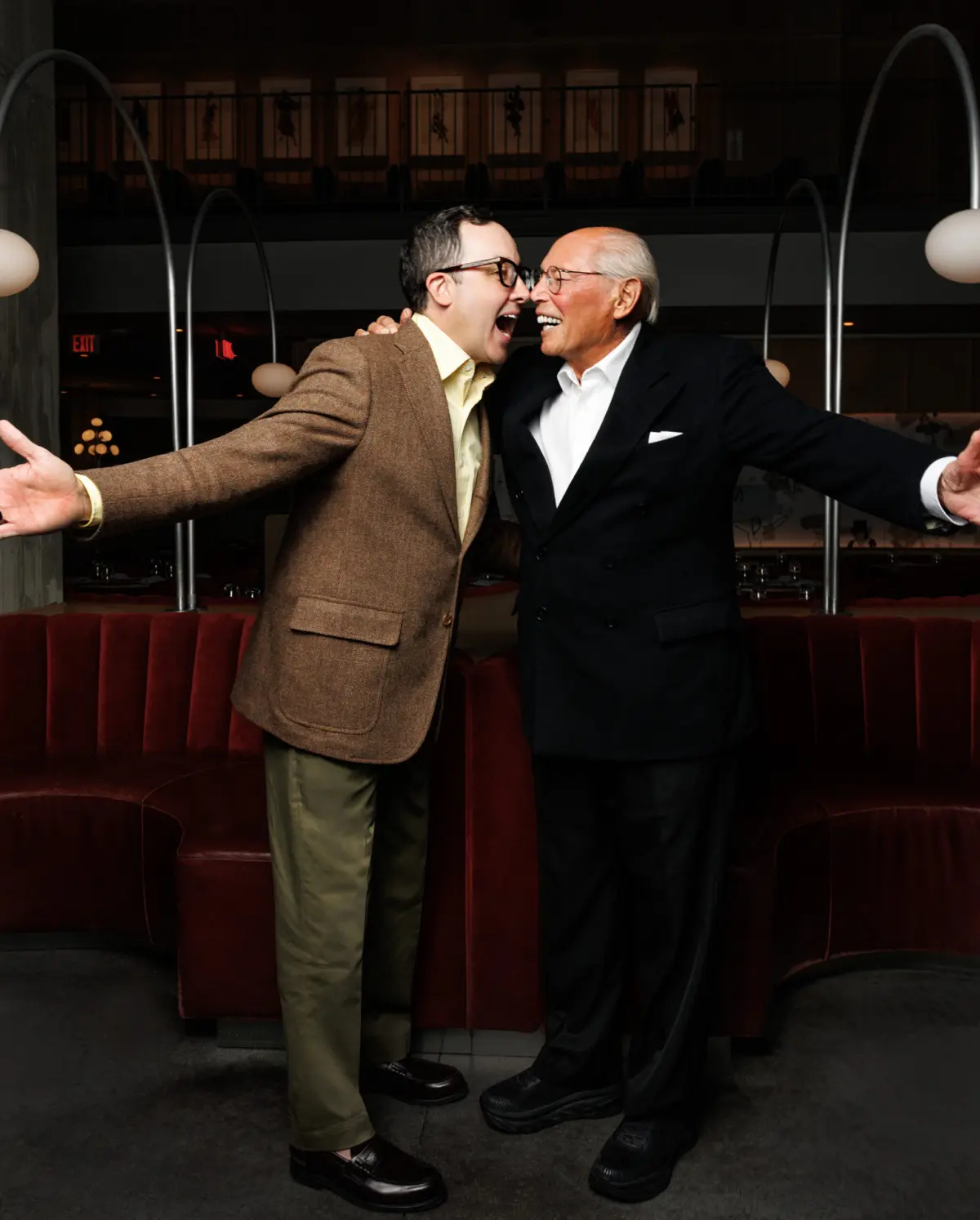
The trajectory of P.J. Byrne’s career over the last two decades serves as a masterclass in the evolution of the modern character actor, culminating in his transformative performance as legendary producer Irwin Winkler in the 2026 biographical drama I Play Rocky. While Byrne has long been a recognizable face in the industry—often noted for his ability to inject kinetic energy into ensemble casts—his recent professional output represents a significant shift toward anchoring high-stakes, awards-season narratives. In 2026 alone, Byrne appeared in eight distinct projects, including the conclusion of his run on the hit series The Boys, the satirical look at corporate failure in Coyote vs. Acme, and a series-regular turn in the USA Network drama The Rainmaker.
This prolific output is not merely a product of coincidence but a deliberate manifestation of Byrne’s "flow state" approach to acting, a philosophy he credits to his formative years in Chicago and his unique training in both business and the arts. His portrayal of Irwin Winkler—the man who, alongside Robert Chartoff, took an immense financial risk to produce Sylvester Stallone’s 1976 masterpiece, Rocky—represents the synthesis of his dual background in finance and drama.
The Financial Roots of a Performance
Byrne’s path to playing a titan of the film industry began in the halls of Boston College, where he earned a degree in finance. Though he eventually moved toward the arts, enrolling at DePaul University’s drama school, his understanding of the mechanics of capital and corporate negotiation has become his secret weapon. This was most evident in his breakout role as "Rugrat" in Martin Scorsese’s 2013 blockbuster The Wolf of Wall Street. During the audition process, Byrne leveraged his knowledge of boiler-room culture to create a monologue that so impressed Scorsese that the director recited it back to him during the callback.
Byrne’s background as a story editor at a production company founded by Chris O’Donnell provided him with an insider’s view of the industry’s "middle management." This experience allows him to inhabit roles like that of a producer or an executive with an authenticity that many actors lack. When playing Irwin Winkler, Byrne did not just adopt the mannerisms of a Hollywood mogul; he understood the existential stakes of the 1970s studio system, where the line between career success and personal financial ruin was perilously thin.

Chronology of an Underdog Production
The narrative of I Play Rocky mirrors the very story it seeks to tell. Just as Winkler and Chartoff fought to get the original Rocky made despite pushback from United Artists and a lack of faith in an unknown star like Stallone, the producers of the 2026 biopic faced their own set of challenges.
- 1975: Irwin Winkler and Robert Chartoff begin development on Martin Scorsese’s New York, New York, while simultaneously discovering an unknown screenplay written by Sylvester Stallone.
- 1976: Rocky is produced against significant studio skepticism; it goes on to win the Academy Award for Best Picture.
- 2024-2025: Production of I Play Rocky commences, with casting directors prioritizing talent over "name" recognition.
- 2026: The film is released, garnering critical acclaim for the performances of Anthony Ippolito and P.J. Byrne.
The decision to cast Anthony Ippolito as Stallone and Byrne as Winkler was a deliberate choice by director Peter Farrelly to prioritize authenticity over box-office magnetism. The risk paid off; the internal chemistry between the cast members, many of whom have worked with Farrelly on previous projects like Green Book and Dear Santa, provided a level of comfort that allowed for the high-wire act of improvisational dialogue.
Fact-Based Analysis: The Producer’s Role
In the context of the film industry, producers like Winkler and Chartoff act as the final line of defense against the cancellation of art. The tension depicted in I Play Rocky regarding the financing of the original film is historically grounded. The film highlights how the producers effectively bet their personal homes to ensure the project continued, a move that shifted the trajectory of modern sports cinema.
For P.J. Byrne, this professional dynamic provided a blueprint for his character. He notes that while there have been documented tensions between Stallone and Winkler in recent years regarding the ownership of the Rocky franchise, his performance was strictly focused on the "moment of creation." By focusing on the 1977 Oscars ceremony—where Winkler famously invited Stallone on stage to share the Best Picture glory—Byrne aimed to capture the genuine bond that existed during the film’s inception.
Industry Implications and the "Small Part" Myth
Byrne’s career underscores a broader shift in how character actors are utilized in the streaming and studio era. As the industry moves away from relying on a small rotation of top-tier celebrities to anchor every project, directors are increasingly turning to seasoned character actors to provide the gravitas necessary for biographical dramas.

Byrne’s work on sets ranging from The Wolf of Wall Street to Babylon has cemented his reputation as a "scene-stealer" who respects the broader vision of the director. His improvisational style—often utilized to add layers of relatability to otherwise static scenes—has made him a favorite among auteur directors. His ability to navigate the "happens to be" trope (where a story happens to involve boxing, or happens to involve finance, while remaining a character study) is a hallmark of his current artistic period.
The Future of the "Classy" Character Actor
When asked about his prolific 2026, Byrne maintains a self-deprecating humor, attributing his work rate to the practical realities of supporting a family. However, his colleagues and critics view it differently. His commitment to the craft—often spending weeks in isolation preparing for a role, only to emerge on set with a fully realized character—is a testament to his discipline.
The success of I Play Rocky, and the subsequent praise for Byrne’s portrayal of Winkler, suggests that there is a growing appetite for stories about the "men behind the curtain." If the behind-the-scenes drama of Coyote vs. Acme—a project Byrne holds in high regard—is any indication, the industry may see more narratives that explore the struggle of artists against the corporate machinery.
Byrne’s influence on the sets he works on is characterized by a "cheerleader" mentality. He emphasizes that film production is a team sport; when a production has spent years in development and millions of dollars on a single crane shot, the actor’s job is to ensure the moment lands. This professional ethos, combined with his unique technical background, has turned P.J. Byrne into one of the most reliable and compelling figures in contemporary film.
As the industry continues to evolve, the demand for actors who can seamlessly blend into period-accurate settings while providing modern emotional resonance will only grow. For Byrne, the goal remains unchanged: to deliver the best possible version of the story, to remain "classy," and to ensure that when the camera rolls, the "zone" is reached. With a string of critical successes behind him and a reputation for being the hardest worker on any set he graces, Byrne has transitioned from a supporting player to a cornerstone of the modern cinematic landscape.