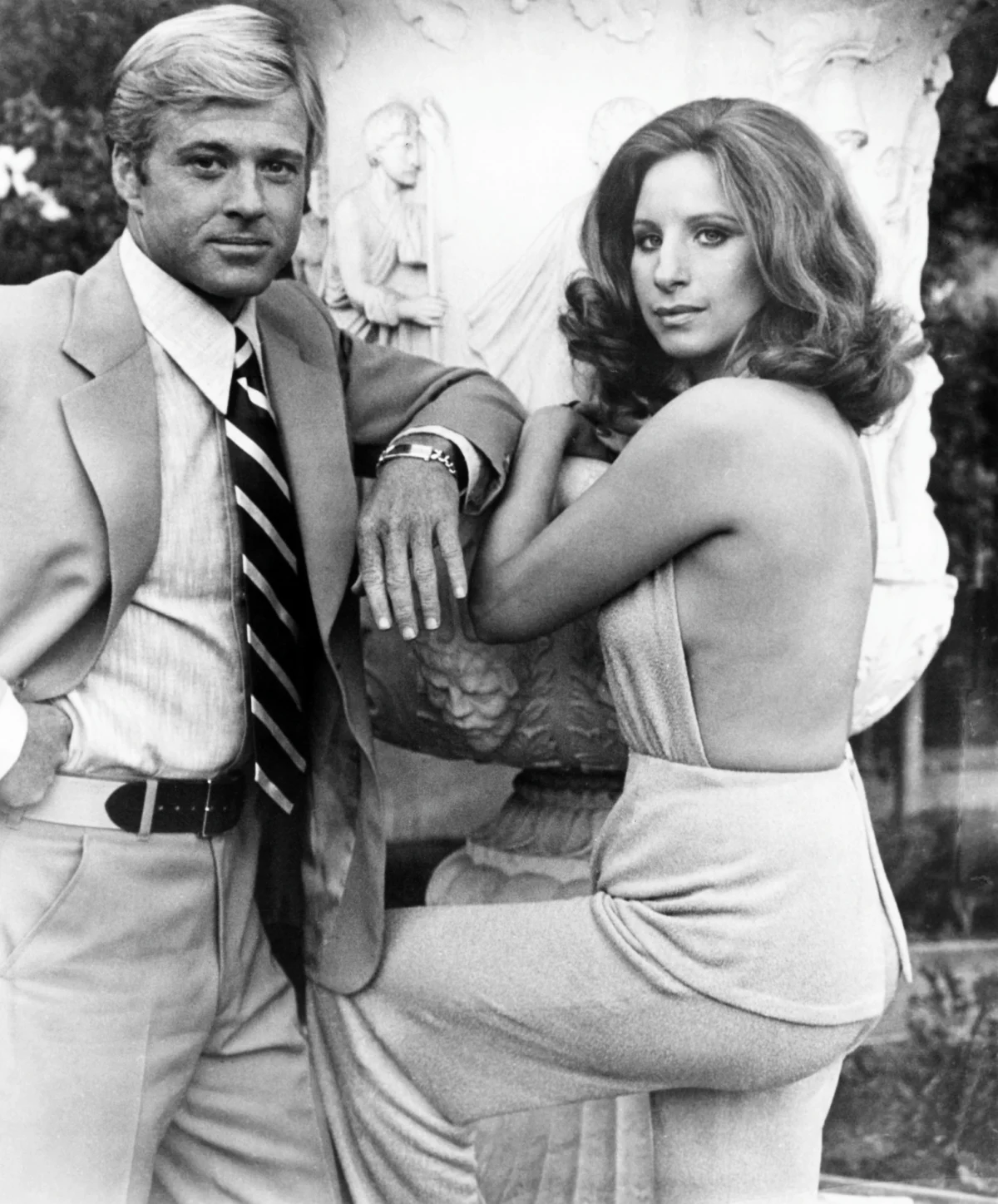
The Academy of Motion Picture Arts and Sciences is reportedly in advanced discussions with legendary artist Barbra Streisand to headline a high-profile tribute to Robert Redford at the upcoming 98th Academy Awards. This planned performance follows the passing of Redford in September 2025 at the age of 89, an event that marked the conclusion of one of the most influential careers in the history of American cinema. The centerpiece of the tribute is expected to be a retrospective of the 1973 classic The Way We Were, a film that not only defined the romantic drama genre for a generation but also established the professional gold standard for on-screen chemistry between its two leads. As the film industry prepares to honor Redford’s multi-decade contributions as an actor, director, and founder of the Sundance Institute, the focus has returned to the enduring cultural footprint of the 1973 Sydney Pollack-directed masterpiece.
The Significance of the 2026 Oscar Tribute
The potential participation of Barbra Streisand at the 2026 Oscars represents a significant moment for the Academy. Streisand, who has a storied history with the Oscars as both a winner for Best Actress (Funny Girl) and Best Original Song (A Star Is Born), has historically been selective regarding her live performances. A tribute to Redford, her long-time friend and collaborator, would serve as a poignant bookend to their shared cinematic legacy. Industry insiders suggest that the performance will likely feature a rendition of the film’s title theme, "The Way We Were," which won the Academy Award for Best Original Song and remains one of the best-selling singles of all time.
The tribute aims to acknowledge Redford’s dual legacy: his status as a quintessential Hollywood leading man and his transformative role as a champion of independent cinema. While Redford’s career spanned iconic roles in Butch Cassidy and the Sundance Kid, The Sting, and All the President’s Men, it is his portrayal of Hubbell Gardiner in The Way We Were that often resonates most deeply with audiences exploring the intersection of personal romance and political conviction.
Historical Context and the Making of a Classic
To understand the weight of this tribute, one must examine the complex production history of The Way We Were. Released in October 1973, the film arrived during a period of significant transition in Hollywood. The studio system was evolving, and audiences were gravitating toward more grounded, emotionally complex narratives.
The screenplay, written by Arthur Laurents, was semi-autobiographical, drawing on his own experiences at Cornell University and his encounters with the House Un-American Activities Committee (HUAC) during the McCarthy era. The narrative follows the tumultuous relationship between Katie Morosky, a politically active Jewish woman, and Hubbell Gardiner, a privileged, easy-going WASP with literary talent. Their relationship, spanning from the late 1930s to the early 1950s, served as a microcosm of the ideological fractures in American society.
Despite its eventual success, the film faced numerous hurdles during production. Sydney Pollack, the director, had to balance the intense creative energies of Streisand and Redford while navigating a script that underwent extensive revisions. The tension between the film’s romantic elements and its political backdrop was a constant point of debate among the producers and the cast.
A Chronology of the Film’s Evolution and Legacy
The journey of The Way We Were from a conceptual script to a cultural touchstone follows a specific timeline of creative milestones:
- 1970–1971: The Script Development: Arthur Laurents began developing the story specifically with Barbra Streisand in mind. However, securing a leading man proved difficult, as the role of Hubbell Gardiner was initially perceived as being secondary to Katie Morosky.
- 1972: Casting and Conflict: Robert Redford was approached for the role of Hubbell. He famously turned it down several times, concerned that the character lacked depth and was merely a "pretty boy" foil for Streisand. It took significant script rewrites by Pollack and David Rayfiel to give Hubbell the "edge" Redford required to commit to the project.
- 1973: Production and Post-Production: Filming took place across various locations, including Union College in Schenectady, New York. During editing, Pollack made the controversial decision to cut several scenes detailing the political persecution of the characters during the Hollywood Blacklist era, fearing they would overshadow the romance.
- October 19, 1973: The Premiere: The film was released to immediate commercial success, eventually grossing over $49 million domestically—a substantial sum for the early 1970s.
- 1974: Awards Recognition: The film received six Academy Award nominations, winning two for Best Original Dramatic Score and Best Original Song. Streisand received a nomination for Best Actress.
- 2023–2025: The 50th Anniversary and Redford’s Passing: The film’s 50th anniversary in 2023 saw a resurgence of interest, including the release of a restored 4K version. The death of Robert Redford in late 2025 solidified the film’s status as the definitive artifact of his era as a romantic lead.
Supporting Data: The Impact of the Streisand-Redford Partnership
The chemistry between Streisand and Redford is frequently cited by film historians as a primary driver of the movie’s longevity. Data from the American Film Institute (AFI) supports this, ranking The Way We Were as number six on its list of the 100 greatest film passions.
Statistically, the film’s soundtrack also set records. The title song, composed by Marvin Hamlisch with lyrics by Alan and Marilyn Bergman, spent three weeks at number one on the Billboard Hot 100 in 1974. It was the first number-one single of Streisand’s career and remains a staple of the "Great American Songbook." The enduring popularity of the song has ensured that the film remains in the public consciousness, even as the cinematic landscape has shifted toward high-concept blockbusters.
Furthermore, the film’s influence on the "opposites attract" trope is measurable in the decades of romantic comedies and dramas that followed. From Annie Hall to When Harry Met Sally, the archetype of the intellectual, outspoken woman paired with the reserved, traditional man owes a direct debt to Katie and Hubbell.
Five Definitive Facts About The Way We Were
As the industry reflects on the film in the wake of Redford’s passing, five specific facts highlight the unique nature of its production:
- Redford’s Initial Reluctance: Robert Redford was so hesitant to play Hubbell Gardiner that he reportedly told Sydney Pollack, "The guy is a mannequin." He only agreed after Pollack promised to emphasize Hubbell’s internal struggle and his awareness of his own flaws.
- The Lost Political Scenes: Two major scenes were cut from the final theatrical release that explained the breakup of Katie and Hubbell in the context of the McCarthy-era witch hunts. While these cuts were intended to keep the focus on the romance, Streisand and Laurents reportedly regretted their removal, believing they provided essential motivation for the characters’ final separation.
- The Title Song Controversy: Initially, the producers were not convinced that "The Way We Were" was the right title for the song or the film. There was also internal debate about whether the melody was too melancholy for a mainstream audience. Streisand’s vocal performance eventually silenced all critics.
- The Screenplay’s Real-Life Roots: The character of Katie Morosky was based on a real person Arthur Laurents knew at Cornell, a member of the Young Communist League who was known for her fiery activism.
- The Final Scene’s Improvisation: The iconic final scene outside the Plaza Hotel, where Katie brushes Hubbell’s hair out of his eyes, was a moment of genuine connection between the actors. It is widely regarded as one of the most emotional endings in film history because it avoids a traditional "happy ending" in favor of a realistic acknowledgement of lost time.
Broader Impact and Implications for the Film Industry
The planned Oscar tribute and the continued relevance of The Way We Were signal a broader trend in the film industry: a return to valuing "star power" and character-driven narratives. In an era dominated by franchises and digital effects, the legacy of Redford and Streisand serves as a reminder of the power of the human element in storytelling.
For the Academy, this tribute is an opportunity to bridge the gap between Hollywood’s Golden Age and the modern era. By honoring Redford through the lens of his work with Streisand, the Oscars can celebrate the craft of acting and the importance of the collaborative process.
The implications of Redford’s passing also extend to the future of independent film. As the founder of the Sundance Institute, Redford’s influence on the industry is immeasurable. The 2026 Oscar tribute will likely acknowledge how his success in mainstream hits like The Way We Were provided him with the cultural capital to build a platform for marginalized voices and unconventional stories.
Official Responses and Industry Sentiment
While the Academy has not yet released a formal schedule for the 98th Oscars, representatives for the organization have hinted at a "multi-generational celebration" of Redford’s life. A spokesperson for Barbra Streisand noted that while the actress remains deeply saddened by the loss of her friend, she views the potential performance as a way to "honor the magic they created together."
Film historians and critics have echoed these sentiments. "The chemistry between Redford and Streisand was a lightning-in-a-bottle moment," says Dr. Elena Vance, a cinema scholar. "It wasn’t just about two beautiful people; it was about the friction of two different Americas meeting and falling in love. That is why we are still talking about it fifty years later."
As the date of the 2026 Academy Awards approaches, the anticipation for Streisand’s tribute continues to grow. It promises to be a moment of collective nostalgia and a fitting farewell to Robert Redford, an actor who, much like Hubbell Gardiner, embodied a specific kind of American grace that remains, in the words of the famous song, "too painful to remember" yet "simply too beautiful to forget."