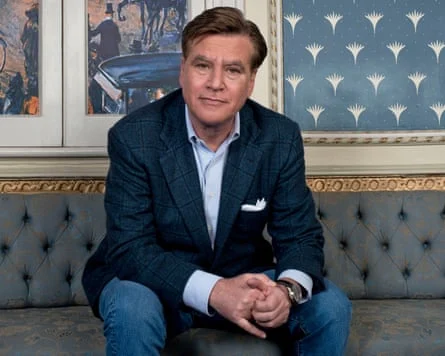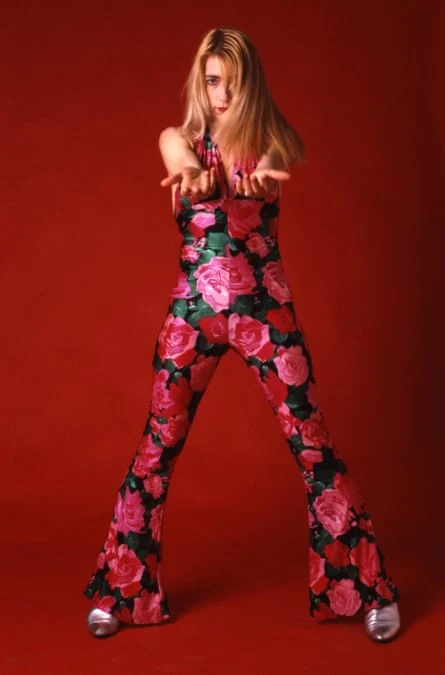
Kim Gordon, a seminal figure in the alternative music landscape and a foundational member of the iconic band Sonic Youth, recently offered a candid and insightful glimpse into her artistic journey, the genesis of her solo endeavors, and her perspectives on the ever-evolving cultural and technological currents shaping the music industry. In a series of illuminating exchanges, Gordon, known for her boundary-pushing creativity and unwavering artistic integrity, addressed a range of topics, from the experimental origins of Sonic Youth to her thoughts on artificial intelligence and the persistent relevance of punk ethos.
The Uncharted Territories of Sonic Youth’s Genesis
When asked about the initial ambitions behind Sonic Youth, Gordon’s response underscored a driving force of pure artistic exploration rather than a predetermined plan for industry disruption. "When Sonic Youth first started, there had been such a high bar set for music that achieved something that people hadn’t done before, it was difficult to know how to add to that," she recalled. The band emerged in the late 1970s and early 1980s, a period marked by the profound influence of artists like The Velvet Underground and the aggressive experimentation of the burgeoning no wave scene in New York City. Gordon vividly described the challenge of carving out a unique space within this rich artistic lineage: "There was the Velvet Underground, who cast a huge shadow, and then all the no wave bands, and when you’re faced with all that coolness, and you feel like you don’t belong, how do you make something happen? You have to focus on the thrill of making something that is like nothing that existed before."
This fundamental impulse to innovate and create the unprecedented became the band’s modus operandi. "It sounds pretentious to say, ‘We wanted to do something new,’ but that was it, and then you have to see what happens," Gordon explained. This philosophy of embracing the unknown and letting the creative process unfold organically has remained a guiding principle throughout her career.
The Accidental Ascent of a Solo Career
The prospect of a solo career, Gordon admitted, was not something she had actively envisioned. Her primary focus outside of Sonic Youth had been her collaborative project with guitarist Bill Nace, Body/Head, which explored improvisational soundscapes. "Honestly, I had no intention of doing solo records – I’d been playing in an improv-based project with Bill Nace, Body/Head, but that was all," she stated. The impetus for her solo work, it turned out, came from an external source: producer Justin Raisen. "It was this producer in LA, Justin Raisen, he kept bugging me to make a solo record. There was no plan; in the end, again, I was like, let’s see what happens." This narrative highlights Gordon’s consistent embrace of serendipity in her artistic endeavors, demonstrating a willingness to be guided by external stimuli and the potential outcomes of experimental ventures.
The Literary Canvas: From Memoir to Novel
Gordon’s critically acclaimed memoir, "Girl in a Band," has been lauded for its narrative depth and evocative prose, leading many to inquire about her potential for writing fiction. While acknowledging the allure of novel writing, Gordon positioned herself primarily as a visual artist with a penchant for writing, rather than a dedicated "writer." "I’ve thought about it," she confessed. "I consider myself more as a visual artist who writes, rather than a writer." The act of writing, she revealed, is often a challenging but ultimately rewarding process, particularly in its ability to clarify her own thoughts. "I won’t say I won’t ever try to write a novel, but writing is always a challenge, just the getting started part, and I’m such a procrastinator. But once I get into it, I really, really enjoy it. It’s the thinking I love. A lot of times I actually don’t know what I think about something until I start writing about it." This introspective approach to writing underscores its role as a tool for self-discovery and conceptual exploration.

Stepping into the Cinematic Realm: "The Chronology of Water"
Gordon also shared insights into her recent foray into acting, specifically her role in Kristen Stewart’s directorial debut, "The Chronology of Water." Based on the memoir of avant-garde writer Lidia Yuknavitch, the film saw Gordon portraying a character "very, very, very loosely based on the photographer Nan Goldin." Gordon expressed admiration for Stewart’s directorial vision and articulation. "I like [screenwriter/director] Kristen Stewart a lot, and it was interesting to see just how much she knew what she wanted. She was very articulate as a director." While not her primary artistic pursuit, Gordon finds value in acting, particularly in roles that delve into psychological depth and spatial dynamics. "I do like acting. I like things that are psychological, and that also involve moving around in space."
The Pillars of Success: Perseverance and Intuition
When probed about the qualities contributing to her enduring success, Gordon pointed to a combination of perseverance and an intuitive drive. "Oh God… I guess, perseverance? But also going after the things that interest me," she stated. Her approach has consistently been guided by an inner compass, even amidst personal self-doubt. "My approach towards achieving anything has always been intuitive. I’ve also had a lot of self-doubt; I feel like everything has been kind of a struggle." The gradual ascent of Sonic Youth’s audience serves as a testament to this unwavering commitment. "With Sonic Youth, it was such a gradual evolution towards gaining an audience, and it really involved a lot of perseverance. And we were fortunate – that achievement, and the experience of those years, has opened up lots of opportunities for me."
The Visual Tapestry of Sonic Youth’s Influence
Sonic Youth’s visual identity, particularly their album cover art, played a significant role in introducing many to contemporary visual art. Gordon reflected on her appreciation for various art exhibitions and artists, citing a recent visit to the Sol LeWitt wall painting exhibition at Okey Dokey gallery in Los Angeles. She was particularly struck by LeWitt’s instructional wall pieces, which involve intricate, often freehand lines installed by teams of artists. "A lot of LeWitt’s wall pieces are instructional: like, you start in the middle of the wall and make an uneven line, and that first line is black, and then you go towards the bottom and the top, alternating the colours, following this wiggly line," Gordon described. The sheer scale and collaborative nature of the installation, which took four days to complete, resonated with her. "This one was mainly in primary colours, and it was pretty amazing!"
Encounters in the Crucible of 1980s New York
Gordon also reminisced about her time working at a photocopy shop in Little Italy, a hub for artists in the 1980s, frequented by figures like Jim Jarmusch and Jean-Michel Basquiat. "I used to work at a photocopy shop in Little Italy run by this guy Todd, who was very welcoming to artists – he’d let them manipulate their work or whatever they wanted to do on the machines," she recalled. The shop was a nexus of creative energy, with Basquiat being a regular presence. "Basquiat would come in often – we actually sold his record by his band with Vincent Gallo, Gray. Stupidly, because they were always sat there on the counter, I never bought one. But I Xeroxed some things for him that he put in his paintings." Gordon described Basquiat as "very quiet," admitting to a sense of intimidation in the presence of so many talented individuals in the city at that time.
The Unseen Influence and the Specter of AI
When asked about reflecting on her career’s influence, Gordon expressed a deliberate avoidance of such contemplation to prevent self-consciousness. "No. That would make me self-conscious. And for me, the main goal of everything is not to become self-conscious."
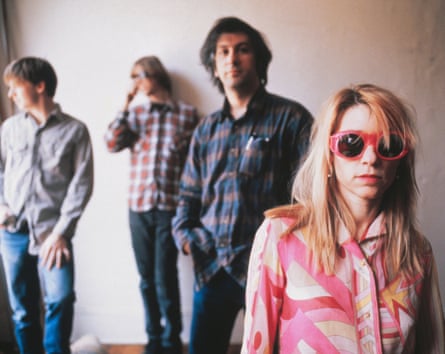
The emergence of artificial intelligence in music generation, with prompts like "in the style of Sonic Youth" becoming popular, elicits a complex reaction from Gordon. She expressed curiosity about the output while also voicing a degree of apprehension. "I would be curious what it sounded like. People are very seduced by technology – it’s cool, it’s sexy. Part of the appeal of AI is that it isn’t human at all: it’s clean, it has no sense of death about it, it has no sense of human frailty. It’s definitely something I’m kind of fearful of." This sentiment points to a concern about the potential dehumanization of art and the loss of the inherent imperfections and emotional depth that characterize human creation.
Punk’s True Rebellion: Beyond the Three Chords
Gordon’s perspective on punk rock emphasizes its anti-corporate ethos and the permission it granted for unconventional thinking, rather than its musical structure. "It was the anti-corporate sensibility that was important to me, really, rather than the three-chord rock," she clarified. Her early influences were drawn from the more nihilistic no wave scene, citing bands like DNA, Mars, Theoretical Girls, and Lydia Lunch. "They felt more free." She also acknowledged admiration for bands from the punk era, particularly The Raincoats and The Slits, noting the significant presence and agency of women in the British punk scene. "There were a lot of women playing music in punk and, in England especially, gender rules didn’t seem to matter so much."
The "Girls Invented Punk Rock" Manifesto
The impactful "Girls invented punk rock, not England" t-shirt, which Gordon frequently wore, originated from a statement made in an interview and subsequently adopted by a fan. Gordon elaborated on the shirt’s genesis, explaining, "It was really just born out of this discussion over who invented punk rock, England or America. I felt like women had the most to rebel against, that they were more outsiders." This statement encapsulates a broader feminist critique within the context of rock music’s history.
The Enduring "Kool Thing" and the Evolution of Influence
Reflecting on the enduring concept of "cool," Gordon humorously brought up New York City mayoral candidate Zohran Mamdani, expressing a hopeful sentiment. Her iconic song "Kool Thing" was inspired by an interview with LL Cool J, a figure she admired for his minimal yet impactful early work with Rick Rubin. When asked about LL Cool J’s musical tastes, Gordon recounted his surprising answer: "He said, ‘Bon Jovi’ [laughs]." This anecdote served as a stark illustration of the cultural divide between different music scenes, highlighting the insular nature of the punk community in contrast to broader popular music trends.
The Dimensions of Hell and the Nature of Shyness
On a more philosophical note, Gordon playfully responded to a question about establishing the "exact dimensions of hell," suggesting, "No. But I think we’re learning about them right now." This comment, delivered with a hint of wry humor, reflects a contemporary awareness of global challenges and societal struggles.
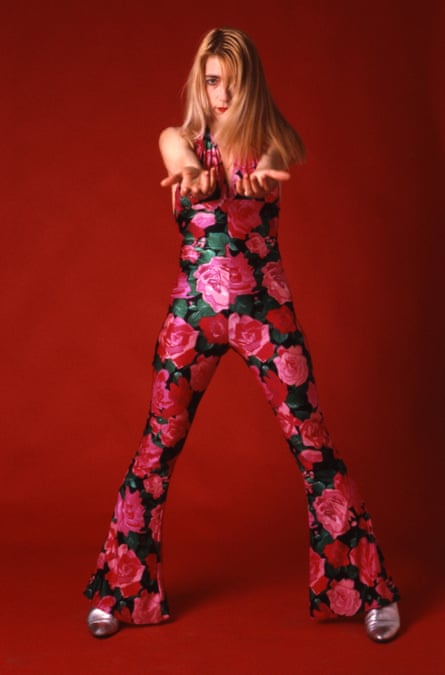
Addressing her own personality, Gordon revealed a shy disposition, a trait she finds common among performers. "Yeah, I’m a shy sort of person. A lot of performers are actually shy; there’s something about interfacing with the technology of being on stage, hearing your voice through a microphone, that is kind of transcendent and makes you feel like you’re not yourself, in a certain way." She views performing as a means of overcoming this shyness, a space where she can feel both invincible and vulnerable, driven by a desire to both please and subvert audience expectations. "When I’m on stage, no one can bother me, I can just enjoy myself. I feel invincible on stage sometimes. Sometimes, I feel incredibly vulnerable. I have as much of a desire to please as to fuck with people’s expectations, and that’s what makes performing in a rock ‘n’ roll context interesting for me."
The Shifting Sands of the Music Industry: Male Ego and Female Empowerment
Gordon perceives the male ego in the music business as increasingly fragile, noting a societal shift where men are expressing anxieties about their roles. "I think the male ego is even more fragile than it ever was. I read these articles like ‘I’m embarrassed to have a boyfriend,’ and I think, yeah, men are in trouble." She champions the increased presence of women in music, viewing it as a crucial step towards dismantling limiting stereotypes. "It’s great that there are more women in music now. The point of having more women, in any field, is that it gets rid of the cliches about who women are."
Maintaining Positivity in a Turbulent World
In navigating a turbulent world, Gordon finds solace and a sense of agency in the act of creating art. "Making art is always a good antidote – it makes you feel like you have some control over something, and that can be positive." She also relies on escapism through film and television, mentioning shows like "The Pitt" and "Vladimir" as sources of distraction and engagement.
The Evolution of Backstage Demands
Reflecting on the evolution of touring life, Gordon noted a significant shift in backstage rider demands. While early performances at venues like CBGB offered minimal amenities, European tours were once more appealing due to better riders. "Chicken from Whole Foods – someone in the band was on a particular diet, so we had to make sure there was always some protein, but we all ended up enjoying it." The contrast highlights a journey from basic survival to a more creature-comfort-oriented experience, underscoring the band’s growth in prominence and recognition.
Navigating the Landscape of Regret
When asked about regrets, Gordon offered a characteristically introspective response. "Maybe too many to mention [laughs]. Regrets, aren’t they just a kind of nostalgia?" she mused. Looking back, she expressed a wish for greater self-confidence upon her initial move to New York, suggesting she might have pursued art more directly and perhaps forgone her early immersion in the band scene. This sentiment speaks to a continuous process of self-evaluation and the ongoing exploration of artistic pathways.