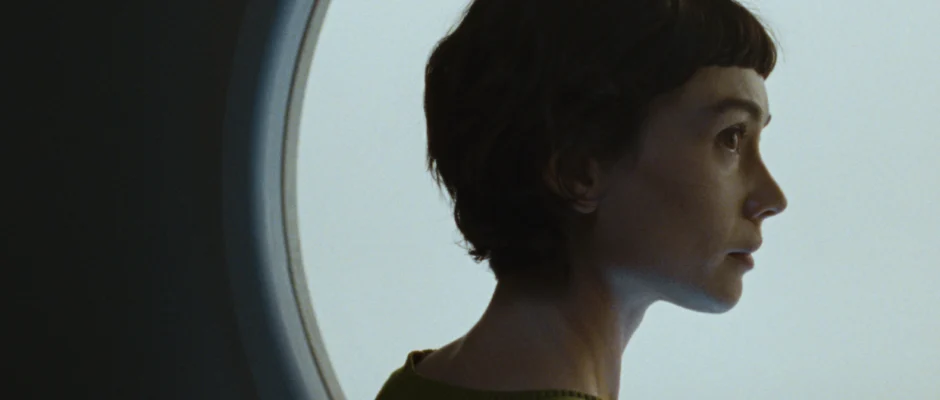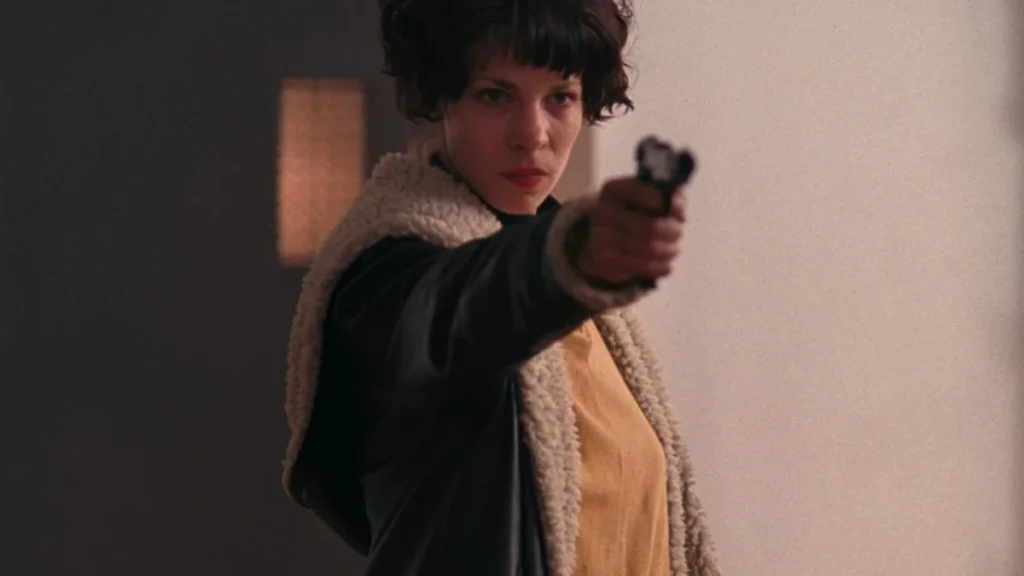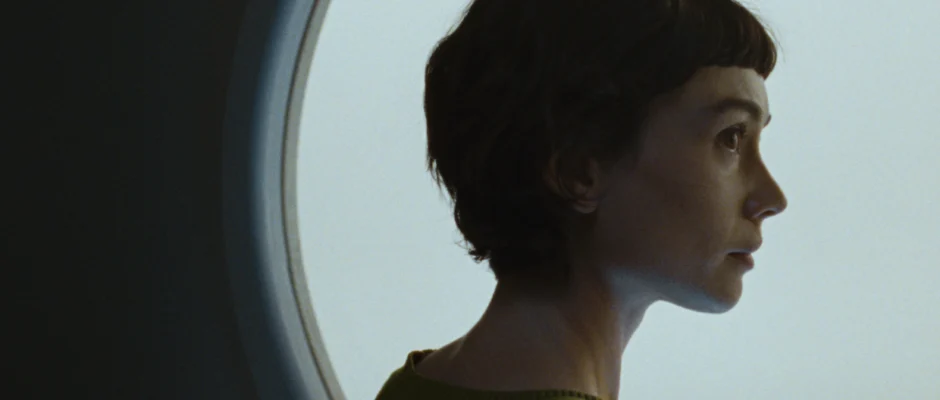
The independent science fiction road trip film, Anima, directed by Brian Tetsuro Ivie, premiered at SXSW on March 12, offering a poignant and grounded exploration of digital immortality, human connection, and the profound mysteries of life and death. The film, which has garnered attention for its lo-fi aesthetic and deeply spiritual underpinnings, centers on Beck (Sydney Chandler), a young woman assigned to escort Paul (Takehiro Hira) to a facility where he intends to upload his consciousness into a cloud system, a procedure that promises a form of digital afterlife accessible to others. What begins as a seemingly straightforward journey quickly transforms into an existential odyssey as Paul, veering off course, attempts to reconcile with individuals he has wronged. These acts of atonement are crucial for him, serving as a spiritual cleansing before he embarks on his digitized existence.
Despite its futuristic premise, Anima is characterized by a remarkable warmth and an insistence on the importance of remaining anchored in the present moment, even when contemplating the hereafter. Ivie’s deliberate choice to shoot the film on 16mm stock imbues the narrative with a grainy, lived-in texture, lending an authentic, almost nostalgic quality to Beck and Paul’s evolving relationship. This aesthetic decision underscores the film’s central tension: the human impulse to preserve and extend life against the often-overlooked necessity of simply being present and savoring the time we have. The film’s critical reception at SXSW highlighted its unique blend of speculative fiction with intimate character study, positioning it as a significant voice in contemporary independent cinema.
Thematic Core: Beyond Digital Immortality
At the heart of Anima lies a profound philosophical and spiritual inquiry into the nature of existence, a theme director Brian Tetsuro Ivie explicitly roots in his personal background and intellectual pursuits. Ivie, who grew up in a Catholic home in California, found his pathway to faith not through traditional religious dogma, but through the arts, which he perceives as a transcendent medium for exploring the divine. This perspective shapes his filmmaking philosophy, where the pursuit of truth and beauty supersedes the confines of conventional religious storytelling. He openly expresses an aversion to the genre of "Christian movies," believing that the divine is not a narrow aspect of the universe, but rather encompasses all truth.
The narrative of Anima draws inspiration from the biblical Parable of the Rich Fool (Luke 12:13-21), a story that cautions against earthly accumulation without spiritual foresight. Ivie modernizes this ancient parable, transplanting its core questions into a contemporary context dominated by technological advancements and the quest for immortality without spiritual consideration. In a world increasingly embracing transhumanist ideals—where concepts like consciousness uploading and digital archiving of self are explored by prominent figures in Silicon Valley and academic research institutions—Ivie offers a counter-narrative. He challenges the prevailing materialist view of humanity, which often posits individuals as mere collections of matter and chance, making them theoretically "uploadable" to silicon. Ivie fundamentally disagrees with this premise, advocating for a belief in humanity’s primarily immaterial essence. This philosophical stance forms the bedrock of Anima, creating a compelling dialogue between cutting-edge technology and timeless spiritual questions. The film implicitly asks: what truly constitutes a meaningful life when the boundaries of death itself are blurred by technology?
Beck’s Journey: A Reflection on Human Experience
Sydney Chandler’s portrayal of Beck is central to grounding Anima‘s expansive themes in relatable human experience. Chandler, whose career has seen her navigate various genre projects, expressed a particular appreciation for the opportunity to inhabit a "human being" in a sci-fi narrative that felt profoundly "grounded." To access Beck’s inner life, Chandler engaged in a rigorous character development process, delving into questions about Beck’s youthful limitations and her relationship with loyalty. She crafted a personal backstory for Beck, particularly regarding the ambiguous loss of her father, which she interpreted as fostering a "quiet rage" rather than overt sadness. This loss, in Chandler’s view, instilled in Beck a skepticism towards loyalty and love, transforming her into a character driven by transactional interactions. This coldness is evident in Beck’s initial approach to her assignment with Paul, viewing it purely as a job for a paycheck.
The dynamic between Chandler’s Beck and Takehiro Hira’s Paul is critical to the film’s emotional arc. Chandler observed that Hira brought immense humanity to Paul, which, in turn, allowed Beck’s initial frustration to evolve. Despite her reluctance to connect, Beck gradually recognizes a shared vulnerability with Paul, seeing them as "two sides of the same coin." Chandler found many answers to her guiding questions during the filming process itself, describing the exploration as both "beautiful and scary," yet ultimately authentic for the project. This organic discovery process, she noted, was profoundly impactful, akin to "paid therapy" as she navigated personal life aspects through her art, a sentiment reflecting the deep emotional investment many actors bring to their roles.
The Tangible Aesthetic: 16mm as an Act of Prayer
One of Anima‘s most distinctive features is its aesthetic commitment to shooting on 16mm film, a choice that Brian Tetsuro Ivie describes with almost spiritual reverence. Ivie began film school at a pivotal moment when the industry was rapidly transitioning to digital, a shift he viewed as a "tragedy" given his deep appreciation for the inherent humanity and imperfection of film. He echoes Steven Spielberg’s sentiment that film is a "chemical miracle," valuing its tangible qualities, the visible grain structure, and even the occasional light leaks that imbue scenes with an authentic, unpolished feel. For Ivie, working with film is a slower, more arduous process, akin to an "act of prayer," demanding deliberate consideration and fostering a deeper connection to the craft.
This analog approach serves a crucial narrative function in Anima. By rendering a futuristic concept—the transference of digital consciousness—through the warm, tactile medium of 16mm, the film intentionally grounds its speculative elements in a "felt reality." This juxtaposition creates a compelling dialogue between past and future, allowing the narrative to explore complex themes of technology and humanity without losing its intimate, human scale. Ivie’s dedication to film extends beyond his own projects; he co-founded Kebrado, a company dedicated to helping filmmakers "maintain their humanity through the arts" by supporting the use and preservation of film. His stated intention to "shoot on film for the rest of my life until they stop making it available" underscores a broader movement within cinema, where acclaimed directors like Christopher Nolan (Oppenheimer, Dunkirk) and Quentin Tarantino (The Hateful Eight) have championed the resurgence of film stock, citing its unique visual depth, dynamic range, and emotional resonance that digital formats often struggle to replicate. This trend suggests a growing appreciation for the distinct artistic qualities that analog film brings, especially in an era dominated by high-definition digital imagery.
Directorial Approach: Documentary Roots and Crew Care
Brian Tetsuro Ivie’s background in documentary filmmaking significantly informs his approach to narrative projects, particularly in his leadership style and commitment to ethical production. In the demanding environment of indie filmmaking, where resources are often constrained, Ivie prioritizes the well-being of his crew. He instituted a "Crew Careline" item in the budget, allocating personal funds to ensure that his team had access to better food, comfortable accommodations, or necessary transportation. This initiative, supported by his producers, was a tangible expression of his philosophy: "You’re not on the altar of my ambition. We want you to come out of this better than when you started." This empathetic leadership stands in contrast to common industry practices where crew welfare can sometimes be overlooked due to tight schedules and budgets.
Sydney Chandler recognized and valued this aspect of Ivie’s leadership, noting that his documentary background instilled a sense of trust on set. Documentarians, by nature, often embark on projects without a fully predetermined narrative, discovering the "truth" as they film. This open-ended, truth-seeking approach translated into Ivie’s narrative direction, where he encouraged authenticity in performances. Chandler expressed confidence that Ivie would guide the actors until he felt a genuine emotional resonance, mirroring the raw reality captured in documentaries. This collaborative and human-centered approach to filmmaking not only fostered a supportive environment but also allowed actors like Chandler to delve deeper into their characters, often finding personal revelations through their artistic work.

Crafting the Visuals: Costumes and World-Building
The visual identity of Anima is further enriched by the thoughtful collaboration between director Brian Tetsuro Ivie and costume designer Emily Costantino. Ivie expresses immense admiration for Costantino, stating he would work with her "every time, every forever," a testament to her unique artistic vision. Costantino distinguishes herself by avoiding derivative references to other films, instead drawing inspiration from diverse, often unconventional sources such as historical paintings or vintage Japanese magazines from the 1960s, ’70s, and ’80s. This approach ensures a distinct and original aesthetic that transcends typical sci-fi costuming tropes.
For Sydney Chandler, the practical aspect of the costumes was also noteworthy; she lauded their comfort and mobility, essential for an active road trip film. She observed that the clothing contributed to the film’s "different dimension" feel, a "cousin to the world we’re living in now," with a "throwback to the futuristic aspects of the clothes in the 90s or early 2000s." This blend of retro-futurism contributes to the film’s unique lo-fi sci-fi atmosphere. Ivie emphasized the critical role of costumes in defining the movie’s color palette and overall visual sync. He posits that the success of the film "rides on whether Beck and Paul were wearing the right costumes in the right room or situation," or even if their car was the correct color. This meticulous attention to visual detail, from the "scroungy outfits" of Beck to Paul’s more Matrix-inspired attire, ensures that the costumes are not merely adornments but integral elements that enhance character, mood, and the film’s cohesive world-building, creating a visual language that subtly reinforces the narrative’s themes.
Embracing the Unknown: Mystery, Death, and Art
A central philosophical thread woven throughout Anima is the profound importance of mystery, particularly in the face of death and the human desire to circumvent it. Paul’s decision to upload his consciousness is, in essence, an attempt to remove the ultimate mystery—what lies beyond life. Ironically, in his pursuit of extending his humanity, he risks losing access to an experience that universally defines it. Both Ivie and Chandler reflect deeply on the significance of "not knowing" in life and art.
For Sydney Chandler, the concept of mystery resonates deeply with her personal journey of identity. She acknowledges that her understanding of herself has constantly shifted, and she is still "figuring out the mystery of who I am, what my emotions mean to me, and what community and connection mean to me." This personal fluidity mirrors Beck’s own evolving perspective. Chandler passionately argues that "the beauty of life is the mystery itself." While acknowledging the fear associated with death, she sees it as "the most natural path in the world" and cautions against "messing with that." Her conviction is that "once you take away the aspect of death, life loses its color and meaning," a realization that Beck ultimately embraces as she chooses not to follow Paul’s path to digital immortality.
The film’s pivotal "pill scene," where Paul takes the final step toward uploading his consciousness, powerfully illustrates this thematic conflict. Chandler described an unexpected and intense emotional reaction during filming, where her deep connection to her co-star, Takehiro Hira, led to uncontrollable crying, despite it not being the intended moment for Beck’s breakdown. This raw, human error on set, she felt, informed Beck’s subsequent actions, particularly her shudder and turning away. This gesture, initially rooted in Chandler’s self-frustration, became a powerful non-verbal boundary for Beck—a refusal to abandon Paul in his final moments, yet a clear rejection of his choice. It signifies Beck’s growth towards "acceptance," even if it’s acceptance of a decision she fundamentally disagrees with. Brian Ivie, too, emphasizes the inherent mystery of life and how sci-fi provides a unique platform to explore "deeper longing and ache we all have" without resorting to didactic or preachy narratives, allowing audiences to grapple with these profound questions themselves.
Art in the Age of AI: Human Imperfection as Strength
The release of Anima comes at a time of heightened global discourse around artificial intelligence and its implications for humanity, themes that Sydney Chandler has explored academically. Her college thesis examined genre works, such as horror, sci-fi, and surrealist art, that emerged in the aftermath of major crises like World War I and II. This academic background provides a critical lens through which to view Anima‘s relevance in the current era, where anxieties about AI, technological displacement, and societal fragmentation are prevalent.
Chandler posits that the most impactful sci-fi narratives are, at their core, "intimate studies of humanity." By constructing entirely new worlds, sci-fi allows for powerful metaphors about the human condition. She observes a current trend where contemporary sci-fi stories about AI consistently return to fundamental questions of the soul and the irreplaceable importance of "real human connection." This trend, she believes, reflects a collective, perhaps subconscious, yearning for connection amidst technological advancements, offering a sense of hope. The filmmaking process itself, she notes, often blurs the lines between sci-fi and present realities, as the questions posed by these narratives feel increasingly urgent.
Beyond the narrative, Chandler offers an optimistic yet critical perspective on the future of art in an AI-dominated landscape. She firmly believes that "art made by humans will outlast and withstand because art is made from human mistakes." AI, she argues, cannot replicate the spontaneous, often imperfect, emotional reactions that define human creativity—the unexpected tears, the frustration, the raw authenticity that arises from lived experience. This capacity for error, for introspection, and for the subsequent attempt to "fix" or understand those mistakes, is what she sees as the essence of soul and art. Anima, by embracing human flaws and uncertainties, stands as a testament to this belief, contributing to a growing canon of films that challenge audiences to reflect on what truly defines us in an increasingly digital and automated world, offering not definitive answers, but vital questions to "chew on."
Broader Impact and Conclusion
Anima‘s premiere at SXSW positions it within a vibrant ecosystem of independent cinema known for pushing boundaries and fostering dialogue around innovative storytelling and technology. The festival, celebrated for its convergence of film, music, and interactive media, provides an ideal platform for a film that seamlessly blends speculative sci-fi with deeply humanistic concerns. Anima does not merely entertain; it serves as a cultural artifact that reflects and refracts contemporary anxieties and aspirations.
The film’s exploration of digital immortality is particularly timely. As tech giants invest billions in longevity research and the metaverse promises ever more immersive digital existences, Anima offers a vital counterpoint, reminding audiences of the irreplaceable value of physical presence, imperfect human connection, and the inherent beauty of life’s finite nature. Brian Tetsuro Ivie and Sydney Chandler’s reflections on the role of mystery, the power of analog aesthetics, and the enduring strength of human-made art resonate deeply in an era grappling with the rapid advancements of AI. Anima stands as a nuanced contribution to the ongoing cultural conversation, not dictating truths but inviting contemplation on what it means to live a meaningful life, to confront loss, and to find harmony in the discordant, messy, yet profoundly beautiful symphony of human existence. Its legacy may well be in galvanizing these crucial questions for a generation navigating the precipice of a new technological frontier, urging a recalibration towards the timeless essence of being human.