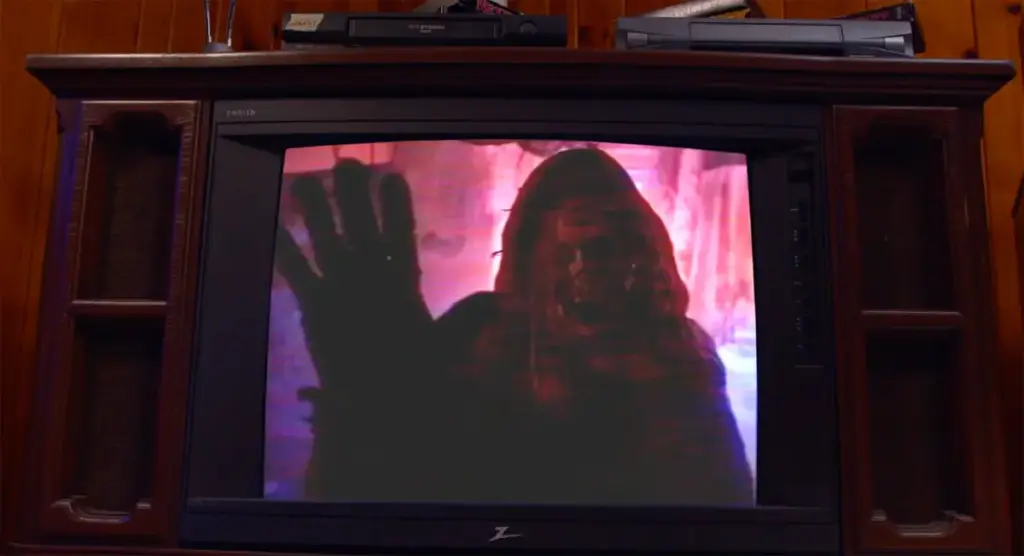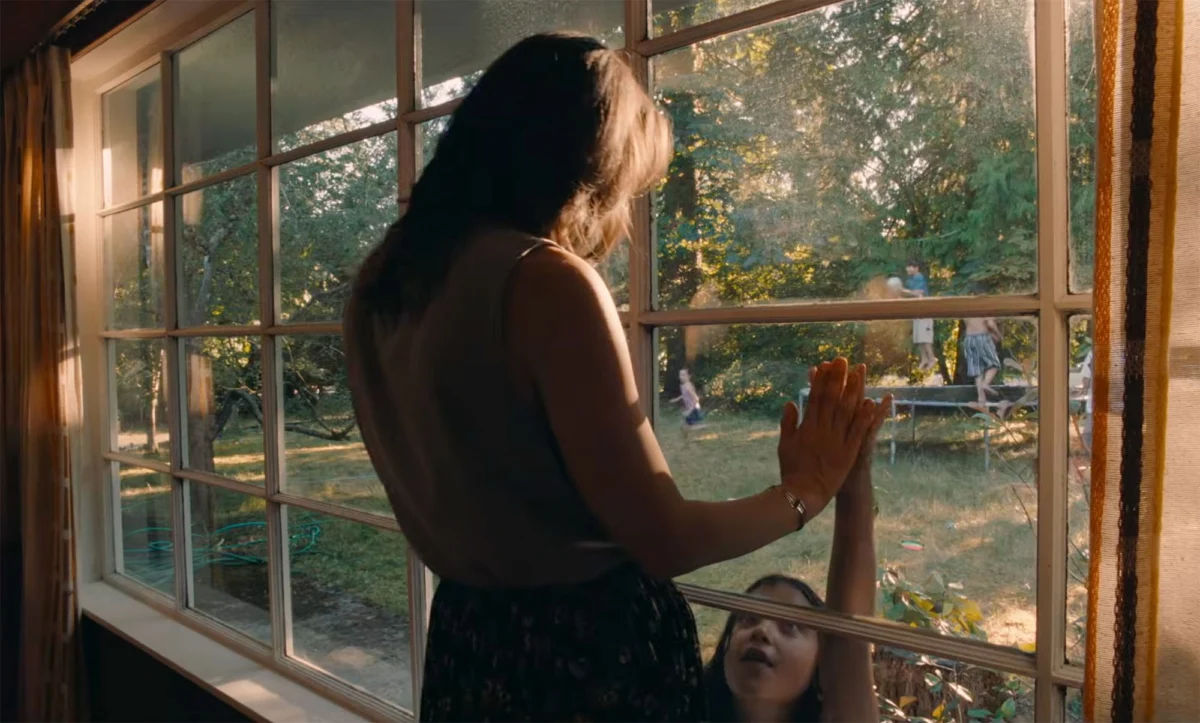
Janus Films has officially released the first trailer and promotional poster for Blue Heron, the highly anticipated feature-length directorial debut of Canadian-Hungarian filmmaker Sophy Romvari. The film, which garnered significant critical acclaim during its 2025 festival run, is scheduled to arrive in select United States theaters on April 17, 2026. This cinematic work marks a transition for Romvari, who has previously established a reputation within the international film community through a series of poignant and formally inventive short films. Blue Heron is described as a lyrical exploration of memory, familial displacement, and the often-unreliable nature of childhood recollection, drawing heavily from Romvari’s personal history as the child of Hungarian immigrants growing up in British Columbia.
The narrative of Blue Heron is set in the late 1990s and centers on eight-year-old Sasha, portrayed by Eylul Guven. The story follows Sasha’s family of six as they relocate to a new residence on Vancouver Island, seeking a metaphorical and literal fresh start. However, the domestic tranquility of their new environment is progressively undermined by the volatile and increasingly dangerous behavior of Sasha’s eldest brother, Jeremy, played by Edik Beddoes. Through the observant eyes of the youngest child, the film explores the internal dynamics of a family under duress, culminating in a pivotal decision that the parents must face regarding the safety and future of their household.
Development and Autobiographical Context
Blue Heron represents a deeply personal milestone for Sophy Romvari, who also wrote the screenplay. The filmmaker has explicitly stated that the project serves as her most significant attempt to reconcile with the fallibility of memory. By dramatizing her own upbringing on Vancouver Island, Romvari utilizes the medium of fiction to interrogate the subjective truths of her past. Her parents, like the characters in the film, were immigrants from Hungary, and the cultural friction of maintaining heritage while assimilating into the rugged landscape of Western Canada provides a foundational layer to the film’s atmosphere.
The production of the film was a collaborative effort involving producers Ryan Bobkin, Gábor Osváth, Sophy Romvari, and Sara Wylie. The involvement of Gábor Osváth, a prominent Hungarian producer, underscores the film’s dual identity as both a Canadian and a cross-cultural production. This partnership facilitated a narrative that accurately reflects the specificities of the Hungarian-Canadian experience, from linguistic nuances to the psychological weight of the immigrant "fresh start" narrative.

Festival Chronology and Critical Reception
The journey of Blue Heron toward its 2026 theatrical release began with its world premiere at the 2025 Locarno Film Festival in Switzerland. Locarno, known for championing auteur-driven cinema and innovative narrative structures, provided a prestigious platform for Romvari’s debut. Following its successful European launch, the film embarked on an extensive festival circuit, which was instrumental in building its critical momentum.
In late 2025, the film had its North American premiere at the Toronto International Film Festival (TIFF), where it was highlighted as a significant entry in contemporary Canadian cinema. Subsequently, it was screened at the San Sebastian International Film Festival, the Chicago International Film Festival, and the Vancouver International Film Festival (VIFF). Its inclusion in the Vancouver lineup was particularly resonant, as the film was shot on location in the same regions it depicts, allowing local audiences to engage with the familiar geography through Romvari’s stylized lens.
Critics have praised Blue Heron for its departure from traditional coming-of-age tropes. Rather than focusing solely on the protagonist’s loss of innocence, the film is noted for its "hyaline clarity"—a term used by the distributor to describe the sharp, almost translucent quality of specific memories that define a person’s history. The performances, particularly those of Eylul Guven and Edik Beddoes, have been singled out for their naturalism and emotional depth.
Cast and Creative Team
The ensemble cast features a blend of emerging talent and established performers. Eylul Guven leads the film as Sasha, providing the central perspective through which the audience experiences the family’s disintegration and resilience. Edik Beddoes portrays Jeremy, the eldest son whose behavioral shifts drive the film’s central conflict. The cast is rounded out by Iringó Réti, Ádám Tompa, Amy Zimmer, Liam Serg, and Preston Drabble.
The creative team behind the camera focused on capturing the "languid summer" aesthetic of the late 90s. The cinematography aims to evoke the specific light and texture of Vancouver Island, utilizing the natural environment to mirror the internal states of the characters. The choice of the late 1990s as a setting is not merely aesthetic; it serves to isolate the family in a pre-digital era where physical distance and domestic privacy played different roles in the management of family crises.

Analysis of Themes and Cinematic Approach
Romvari’s approach to Blue Heron is characterized by a refusal to adhere to rigid genre boundaries. While the film contains elements of the family drama and the immigrant narrative, it is primarily an investigation into how memory is constructed. By "breaking with the expectations of the traditional coming-of-age story," Romvari focuses on the atmospheric and the sensory—the "haze" of the past—rather than a strictly linear plot.
The titular "Blue Heron" serves as a recurring motif, likely symbolizing the observant, solitary nature of the protagonist and the fragile balance of the ecosystem the family inhabits. In many indigenous and local coastal cultures, the heron is a symbol of patience and grace, which contrasts sharply with the "dangerous behavior" and domestic instability depicted in the film. This juxtaposition highlights the central tension of the movie: the search for peace within a volatile domestic structure.
Furthermore, the film addresses the specific challenges faced by immigrant families in the 1990s. The pressure to succeed in a new country often compounds internal family struggles, as the "shattering choice" faced by the parents in the film suggests a conflict between cultural expectations of family loyalty and the practical necessity of safety.
Distribution and Market Impact
The acquisition of Blue Heron by Janus Films is a significant indicator of the film’s artistic value. Janus Films, closely associated with The Criterion Collection, is renowned for distributing world-class cinema and preserving films of historical and aesthetic importance. Their decision to handle the US theatrical release suggests that Blue Heron is viewed as a work of lasting significance rather than a standard independent release.
The film’s release on April 17, 2026, places it in a competitive window for independent cinema, often referred to as the "post-awards season" spring thaw, where arthouse theaters seek out fresh, critically acclaimed voices. The strategy of a limited theatrical release allows the film to build word-of-mouth momentum, targeting urban centers and university towns where Romvari’s previous short films have already cultivated a dedicated following.

Broader Implications for Canadian Cinema
The success of Blue Heron further solidifies Sophy Romvari’s position as a leading voice in a new wave of Canadian filmmakers who are redefining national cinema through personal, idiosyncratic storytelling. Unlike the broad, often subsidized Canadian productions of previous decades, this new wave—often referred to as "The New Canadian Auteurism"—is characterized by a focus on intersectional identities and formal experimentation.
By bringing a Hungarian-Canadian story to the international stage, Romvari contributes to a broader understanding of the North American immigrant experience, one that moves beyond the urban centers of Toronto or New York and into the isolated, atmospheric regions of the Pacific Northwest. The film’s reception indicates a growing appetite for stories that prioritize emotional honesty and visual poetry over high-concept plots.
As the industry moves toward the April release, Blue Heron stands as a testament to the power of independent filmmaking to transform personal trauma and memory into a universal cinematic experience. The trailer, now available on digital platforms, offers a glimpse into the "hyaline" world Romvari has created, promising a film that is as visually stunning as it is emotionally demanding.