Imagine stepping into a secluded room, furnished with a lone iPad, a dedicated screen, and strategically placed loudspeakers. Following a concise orientation to the sophisticated setup, one finds themselves alone, poised to embark on what is precisely described as an 80- to 90-minute "live cinema experience." This innovative offering, titled Burden of Other People’s Dreams: Chapter One – Ganymede, presents a profound departure from conventional storytelling, inviting its solitary participant into an intensely personal and often surreal narrative. The initial moments involve a period of acclimatization within the unique environment before the participant engages with the iPad, initiating a journey that quickly transcends traditional media classifications. Should the nature of this experience evoke a sense of mystification, its creator, Joe Bini, would likely acknowledge this reaction with a knowing smile, as ambiguity and subjective interpretation are central to his artistic vision.
Joe Bini: From Acclaimed Editor to Experiential Visionary
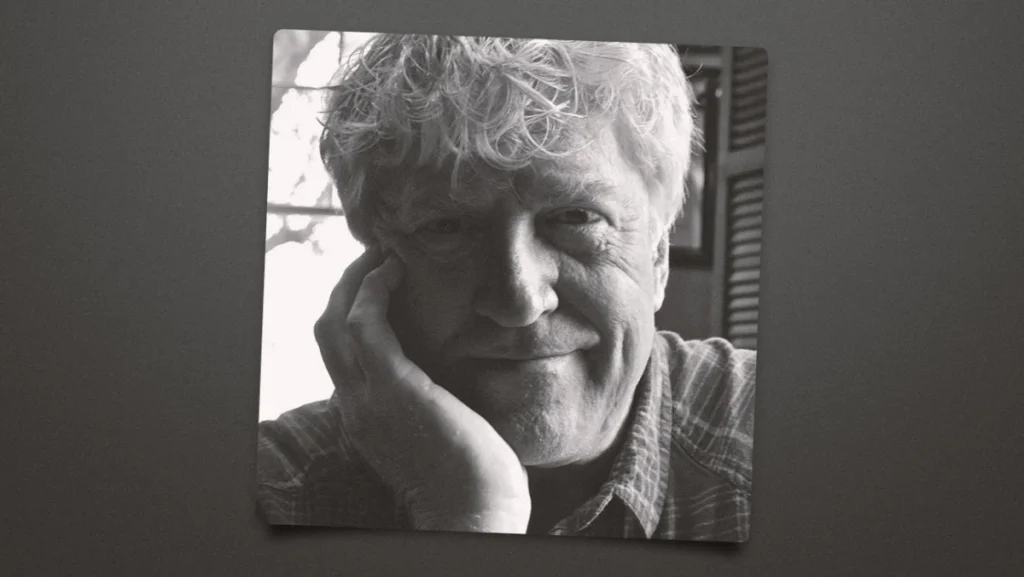
The name Joe Bini resonates deeply within cinematic circles, synonymous with a career spent meticulously shaping narratives for some of the most influential filmmakers of our time. His extensive filmography as an editor includes seminal collaborations with auteurs such as Werner Herzog and Andrea Arnold, among many others. In this capacity, Bini has been instrumental in translating diverse creative visions into compelling on-screen realities, his editorial prowess often lauded for its ability to imbue complex stories with profound emotional depth and intellectual rigor. His work has consistently demonstrated a keen understanding of pacing, structure, and the psychological impact of cinematic language. However, with Burden of Other People’s Dreams: Chapter One – Ganymede, Bini has embarked on a project that diverges sharply from his established professional trajectory, moving beyond the traditional role of an editor to assume the mantle of an independent creator, crafting an experience that is both deeply personal and radically experimental. This shift marks a significant evolution for an artist accustomed to working within the collaborative framework of feature film production, signaling a desire to explore new frontiers of narrative engagement.
Deconstructing "Live Cinema": An Immersive Journey
The question of how to categorize Ganymede is, by design, fluid. Is it a book? Is it a film? Bini himself suggests that the designation is less important than the experience itself. What remains undeniable is its status as a highly sought-after, sold-out component of the Inter:Active Exhibition at the 23rd edition of CPH:DOX, the Copenhagen International Documentary Film Festival. The festival, which concluded its run on Sunday, March 22, explicitly lists Burden of Other People’s Dreams: Chapter One – Ganymede under the intriguing descriptor of a "live cinema experience." This nomenclature itself speaks volumes about the project’s ambition to transcend established boundaries, signaling a new hybrid form that challenges preconceived notions of what cinema can be.
To truly grasp the essence of Ganymede, direct engagement is paramount. However, the festival website offers a tantalizing glimpse, characterizing it as "an abstract memoir of Bini’s life as a film editor and storyteller." This description hints at the introspective and meta-narrative qualities that define the experience. Bini’s own artist statement further illuminates his provocative approach, declaring: "Burden of Other People’s Dreams: Chapter One – Ganymede is a story told by an author who refuses to be an author, so they try to convince you that you are the author. Which is ridiculous, since clearly you’re the reader. But then it turns into a film and suddenly you’re a viewer. Which is even more ridiculous." This playful yet profound statement encapsulates the work’s inherent subversion of traditional roles, blurring the lines between creator, participant, and observer. It suggests a deliberate attempt to dismantle the conventional power dynamics inherent in storytelling, placing the onus of meaning-making squarely on the shoulders of the individual experiencing the work.
CPH:DOX and the Inter:Active Exhibition: A Hub for Innovation
CPH:DOX stands as one of the world’s most prominent documentary film festivals, renowned for its commitment to exploring the cutting edge of non-fiction storytelling. Held annually in Copenhagen, it consistently showcases innovative formats, critical discourse, and socially relevant narratives. The festival’s Inter:Active Exhibition is a particularly vital platform, dedicated to fostering new media art and pushing the conceptual and technological boundaries of documentary. In recent years, as the landscape of media consumption has diversified, festivals like CPH:DOX have become crucial incubators for projects that defy easy categorization, embracing immersive technologies, virtual reality, augmented reality, and other interactive forms. Ganymede, with its unique blend of personal narrative, technological interface, and individual agency, perfectly embodies the spirit of the Inter:Active Exhibition. Its inclusion underscores CPH:DOX’s reputation as a forward-thinking institution willing to champion experimental works that challenge the very definition of cinema. The sold-out status of Ganymede further highlights the audience’s growing appetite for these novel, deeply engaging experiences, demonstrating a hunger for forms of storytelling that demand active participation rather than passive reception.
Challenging the Cinematic Paradigm: Bini’s Critique of Traditional Filmmaking
During a CPH:DOX panel discussion earlier in the week, Bini articulated a perspective that may surprise many given his distinguished career. He shared that "a lot of what I’ve done is feature-length documentary that’s a very specific form," before candidly adding: "My feeling is that it really doesn’t work half the time. There are much better forms of documentary and much better forms of cinema." This provocative assessment reveals a deep-seated dissatisfaction with the limitations and conventions of traditional cinematic structures. Bini’s conclusion, that "Authorship more and more now is [about] the person taking it in," rather than solely the filmmaker or writer, serves as the philosophical bedrock for Ganymede. This sentiment reflects a growing trend in contemporary art and media that emphasizes user agency and participatory culture, moving away from a hierarchical model of creation and consumption.
This philosophical stance is further illuminated by Bini’s reflections on the film business itself. In a conversation with THR in Copenhagen, he elaborated on his motivations: "Something I’ve been thinking about a lot in my career as an editor is the idea of audience." He confessed, "A lot of what the piece comes out of are things I never liked about the film business. I don’t like the whole role of what the director is. And a lot of producers, or funders, when they imagine the audience, it’s adversarial," often leading to the belief that films must be made "okay for the audience," rather than challenging or engaging them authentically. This adversarial perspective, Bini argues, stifles creativity and limits the potential for genuine connection. Instead, he started conceptualizing his audience differently. "Instead of a filmgoer, I started thinking about a reader," he explained. "I like the idea of a reader, because a reader thinks you’re really smart and laughs at your jokes and all that kind of stuff, which to me, was very freeing." This shift in perspective from a potentially hostile "filmgoer" to an appreciative "reader" liberated Bini to create a work that prioritizes intellectual engagement and personal resonance.
The Philosophy of Authorship: Foucault and the Audience as Creator
Central to Bini’s experimental endeavor is his long-standing fascination with Michel Foucault’s concept of the "death of the author." The influential French philosopher famously argued that the author, rather than being a singular, definitive source of meaning, is a functional, historical construct designed to classify, limit, and control the interpretation of texts. In Foucault’s view, meaning is not inherent in the author’s intention but is instead generated by the reader’s engagement with the text and its broader cultural context. Bini emphatically echoed this sentiment, stating: "The author thing is [BS]. We put too much precedence on that when, in fact, you’re reading a novel, so it’s so much about you. You have that control. So these were just some of the things I thought were interesting to play with."
This philosophical underpinning directly informs the design of Ganymede. Bini aimed to craft an experience that employs the "language of open cinema," a framework that intentionally mixes text and imagery in a way that provides ample room for the audience "to put their own meaning on it." This approach actively resists prescriptive interpretation, inviting participants to become co-creators of the narrative through their individual engagement and imaginative faculties. When asked if he considers this experience to be cinematic, Bini’s answer was unequivocal: "Yes, for sure. I think that’s a really important message. You don’t have to spend five years on one movie. I love the art of cinema. That’s the reason I do it. And if you like cinema, then you should be creating." He also revealed that for Ganymede, he chose to "write in character." "The whole thing is a character. He speaks, he writes," Bini shared. "It’s similar to me, but it’s not me. It’s based on things from or about my life." This allows for a deeply personal yet fictionalized narrative, further complicating the notion of authorship and autobiography.
Behind the Scenes: Crafting the Immersive World
The realization of such an unconventional project required a dedicated and innovative team. Joe Bini not only wrote and directed Burden of Other People’s Dreams: Chapter One – Ganymede but also oversaw its intricate development. The production was skillfully handled by Orla Smith and Kimia Ipakchi, whose expertise was crucial in navigating the unique logistical and creative challenges presented by an interactive, solitary experience. Technical director Nick Bush played a pivotal role in designing and implementing the seamless integration of the iPad, screen, and loudspeakers, ensuring that the technological interface served to enhance, rather than detract from, the immersive quality of the narrative. Complementing the visual and textual elements, the atmospheric score composed by Max de Wardener further deepened the emotional and psychological landscape of the journey, providing a sonic backdrop that guided the participant through the surreal narrative without overtly dictating meaning. The collaborative effort of this team was essential in translating Bini’s audacious vision into a tangible and compelling experience.
The Title’s Resonance: A Nod to Cinematic Legacy
The evocative and lengthy title, Burden of Other People’s Dreams: Chapter One – Ganymede, is laden with symbolic meaning and intertextual references. The initial phrase, "Burden of Other People’s Dreams," serves as a direct homage to Les Blank’s seminal 1982 documentary, Burden of Dreams. Blank’s film chronicled the famously chaotic and arduous production of Werner Herzog’s epic 1982 film, Fitzcarraldo, illustrating the immense psychological and physical toll taken on the director as he struggled to realize his artistic vision. By invoking this iconic title, Bini subtly acknowledges the weighty responsibility and often-stifling pressure inherent in the creative process, particularly when one is tasked with bringing another person’s dream to fruition. This is especially pertinent to Bini’s long and distinguished career as an editor, a role that inherently involves deep immersion in, and meticulous shaping of, other filmmakers’ narratives. The phrase thus acts as a poignant nod to the editor’s often unsung labor, carrying the "dreams" of directors and translating them into cinematic reality. The "Chapter One" designation also hints at a larger, unfolding narrative, suggesting that Ganymede is merely the inaugural installment in a potentially expansive series of experiential explorations. The subtitle "Ganymede" adds another layer of intrigue, referencing the largest moon of Jupiter and a figure from Greek mythology, inviting further layers of metaphorical interpretation regarding journeys, celestial bodies, and perhaps even divine inspiration or abduction.
Audience Engagement and Future Horizons
The pragmatic challenge inherent in Bini’s live cinema creation lies in its bespoke nature: time and delivery limitations inherently restrict the number of individuals who can experience it. While Ganymede offers an intensely personal and profound engagement, its one-person-at-a-time format presents a logistical hurdle for broader dissemination. However, Bini affirmed that he is actively exploring various options to address this, hinting at potential future iterations or adaptations that could reach a wider audience without compromising the intimacy of the original concept.
The immediate feedback loop, however, has been rich and varied. A guest book made available for participants to make entries after experiencing Ganymede already contains a diverse array of responses. These range from heartfelt expressions of gratitude to intricate flow charts attempting to map the complex thoughts and emotions evoked, some even featuring short pieces of music composed spontaneously in reaction to the experience. One particularly noteworthy reaction shared by Bini was that a person fell asleep during the final minutes of Ganymede. Far from taking offense, Bini found this deeply gratifying. "I thought that was the greatest thing in the world," he told THR. "They got into that state of mind to such a degree that they felt comfortable enough to fall asleep. I didn’t take it as an offense." This response underscores Bini’s desire for an experience that fosters deep immersion and a sense of profound comfort, allowing the participant to surrender fully to the narrative, even to the point of subconscious engagement.
The very structure of the title, Burden of Other People’s Dreams: Chapter One – Ganymede, strongly suggests that this "wild ride" is just the beginning. Bini himself confirmed these suspicions, sharing that "I have ideas for others," indicating that this groundbreaking exploration into live cinema and interactive storytelling is likely to evolve into a series of distinct yet thematically linked experiences. This commitment to ongoing innovation positions Bini not just as a singular artist but as a pioneer, charting a course for the future of narrative in an increasingly diversified media landscape. The implications of Ganymede extend beyond its immediate artistic merit, offering a compelling model for how festivals, creators, and audiences might engage with storytelling in the digital age, prioritizing personal experience and intellectual freedom over traditional cinematic conventions.
Conclusion: Redefining Storytelling in the Digital Age
Joe Bini’s Burden of Other People’s Dreams: Chapter One – Ganymede stands as a seminal work in the evolving landscape of media and storytelling. Its successful, sold-out run at CPH:DOX’s Inter:Active Exhibition not only validates Bini’s radical vision but also signals a growing appetite among audiences for experiences that defy easy categorization and demand active participation. By meticulously crafting a solitary, immersive journey that blurs the lines between book, film, and personal introspection, Bini challenges long-held assumptions about authorship, audience, and the very definition of cinema. His philosophical grounding in Foucault’s "death of the author" manifests in a practical, engaging format, empowering the individual to become a co-creator of meaning.
As Bini looks to potential future chapters, his work represents a significant contribution to the ongoing discourse about the future of narrative. It prompts critical questions for the film industry, festivals, and artists alike: How can storytelling adapt to an increasingly interactive and personalized media environment? What new forms of engagement can emerge when traditional boundaries are dismantled? Ganymede offers a compelling answer, demonstrating that by embracing innovation and prioritizing the subjective experience of the individual, creators can unlock profound new dimensions of artistic expression and human connection. It is a testament to the enduring power of storytelling, reimagined for a new era, where the audience is not merely a passive recipient but an integral, active participant in the unfolding dream.