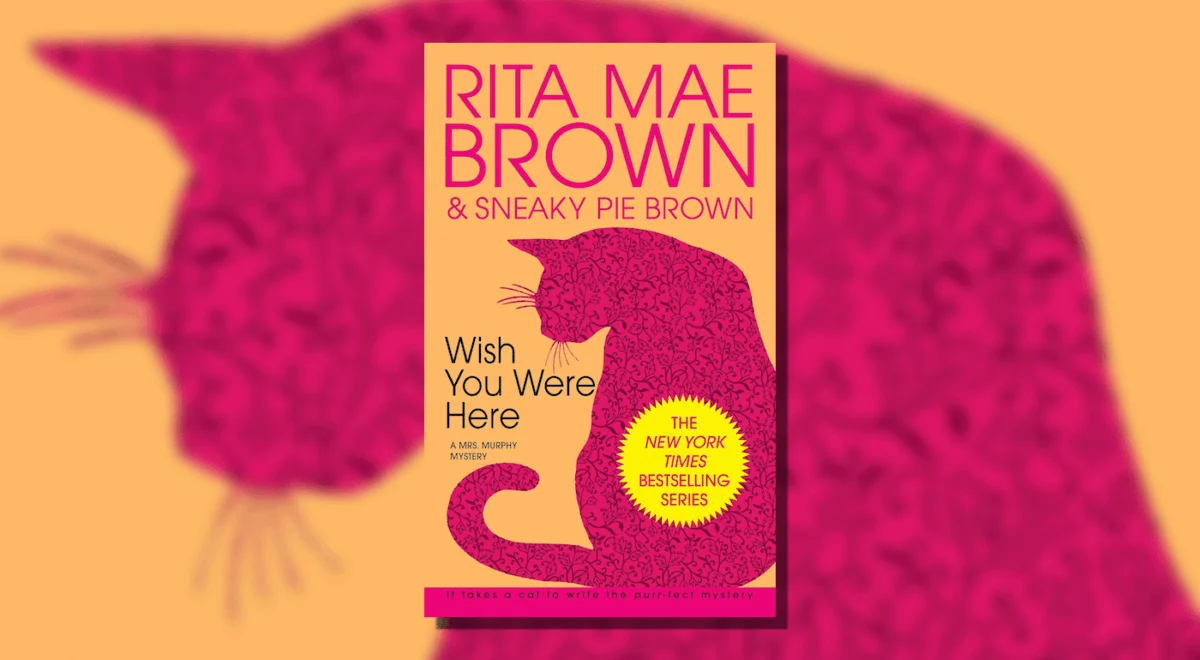
The Mrs. Murphy mystery series, a literary juggernaut boasting 34 volumes since its inception in 1990 and still growing, is officially attributed to the prolific human author Rita Mae Brown. However, within the narratives themselves, a delightful and unconventional truth is revealed: the true mastermind behind these captivating tales is a rescue cat named Sneaky Pie Brown. Sneaky Pie’s literary alter ego, the astute tabby detective Mrs. Murphy, alongside her loyal corgi housemate Tucker and her feline companion and eventual housemate, the grey cat Pewter, form an extraordinary investigative team. Together, they assist their human counterpart in unraveling a myriad of perplexing crimes that unfold in and around the charming small town of Crozet, Virginia.
The human at the center of these investigations is Mary Minor Haristeen, affectionately known as Harry. When the inaugural volume of the series commences, Harry holds the position of postmistress in Crozet, navigating the complexities of a divorce from the local veterinarian. This personal upheaval is swiftly eclipsed by her entanglement in a series of murders, each ominously foreshadowed by a postcard bearing an image of a famous grave site and the chilling message, “Wish You Were Here.” It is in these moments of human bewilderment that the true brilliance of the animal detectives shines through.
The unique premise of the Mrs. Murphy series lies in the extraordinary abilities attributed to its animal protagonists. The cats and the dog are depicted as possessing superior senses and an equally superior intellect, enabling them to solve the mysteries with remarkable speed. The primary challenge, as often portrayed in the novels, is not the detection of clues, but rather the arduous task of guiding their human companions to acknowledge and act upon the painfully obvious evidence that is so transparent to their animal counterparts. The narrative frequently highlights the limitations of human perception and comprehension in contrast to the keen observational skills and intuitive reasoning of Mrs. Murphy and her crew.
A cornerstone of the series’ charm is the detailed portrayal of the animals’ inner lives and their sophisticated communication. The animals engage in full, complex conversations with each other and the broader natural world, offering insightful analyses of history, culture, and even political machinations. Humans, however, perceive these exchanges as mere animal noises, only occasionally catching a glimmer of the intended meaning, often missing the crucial points by significant margins. This narrative device allows for a rich exploration of themes and a unique perspective on human affairs, filtered through the unvarnished observations of its animal protagonists.
As the series progresses, the narrative arc sees significant developments in Harry’s life and career. The closure of the Crozet post office marks a transition, leading Harry to pursue farming and horse breeding. Approximately midway through the series, she remarries, yet her propensity for stumbling upon bodies and being guided by her guardian animals to solve crimes remains a constant. This evolution of Harry’s life, coupled with the steadfast presence of her animal allies, provides a stable yet dynamic framework for the ongoing mysteries.
The pervasive presence of animals in the characters’ lives is a defining characteristic of the series. Cats and dogs accompany Harry virtually everywhere. They are her constant companions in her beloved vintage truck and at the post office. In fact, when the old post office closes and the new federal regulations restrict animals in public buildings, this very event serves as a catalyst for Harry’s career change. The animals’ involvement extends to freelance investigations, though this can present logistical challenges when crucial clues lie far afield and necessitate arrangements for transport.
Each installment of the Mrs. Murphy series introduces additional animal characters, often expanding the cast of potential witnesses or suspects. Dogs frequently appear, and wild animals may also feature, ranging from friendly encounters to actively hostile confrontations. One particularly memorable sidekick emerged in volume fifteen, Puss ‘n Cahoots, a monkey named Miss Nasty, whose name proved to be an apt descriptor of her personality.
Rita Mae Brown’s personal affinity for horses, in addition to her known love for cats and dogs, significantly influences the series. Horses are recurrent background characters and occasionally take center stage. The degree of animal participation varies from book to book, but Puss ‘n Cahoots prominently features horses, forcing the intrepid trio of cats and the corgi to navigate a complex web of human and animal politics.
The setting of Puss ‘n Cahoots is particularly noteworthy, situated at a major horse show in Kentucky, focusing on American Saddlebreds. Harry and her husband are on what is essentially their honeymoon, visiting friends who are breeders and trainers. Harry’s presence there is twofold: she is actively shopping for horses for herself and a client back home, while her friends are participating in the show.
Brown’s expertise in equine matters is consistently lauded. She demonstrates a profound understanding of various horse breeds, including Saddlebreds and Thoroughbreds, and meticulously details the nuances of their care, feeding, equipment, and breeding. This depth of knowledge lends an authentic and immersive quality to the horse-related aspects of the narratives.
As is typical for the series, Puss ‘n Cahoots features multiple interwoven mysteries, all rooted in the world of horses and equestrian competitions, with an underlying layer of political intrigue. Brown, a recognized feminist icon and lifelong civil rights activist, subtly weaves her convictions into her mysteries. In this particular volume, the narrative explores the trafficking of illegal immigrants through horse farms, a testament to her commitment to addressing significant social issues within her fictional worlds.
Brown’s method of integrating these themes is characterized by a light touch, primarily channeled through the distinct voices and attitudes of her characters, especially Mrs. Murphy. However, the perspectives of other characters, particularly Tucker and Pewter, are also richly explored. Tucker is consistently portrayed as a loyal friend and partner to both Harry and the feline detectives. Pewter, while primarily driven by her appetite, is equally intelligent and adept at deciphering clues, leaving the more physically demanding tasks to Mrs. Murphy.
In Puss ‘n Cahoots, beyond the aforementioned troublesome monkey, the story introduces a boisterous troupe of barn cats, marshaled by a snaggle-toothed orange tomcat named Spike. Through considerable effort, Mrs. Murphy and her cohort manage to enlist Spike’s assistance in unraveling the various mysteries. The animals’ involvement extends beyond mere intellectual deduction; they actively participate in apprehending the villains, employing their natural weaponry—teeth and claws—with considerable effectiveness.
A minor critique offered by some readers and critics, particularly those with a deep connection to the equestrian world, pertains to the portrayal of the horses themselves. While the narrative meticulously details the intricacies of horse breeding, bloodlines, and show classes, and a stolen horse is central to one of the mysteries, the horses themselves are often depicted as lacking individual agency or distinct personalities. Unlike the dogs, cats, and the monkey, their contributions are primarily instrumental, functioning more as sophisticated tools or equipment rather than fully realized characters with their own voices and perspectives.
The prevailing impression is that while the horses are acknowledged as large, beautiful, athletically gifted, and undeniably expensive, they are not portrayed as possessing the same level of intelligence or sentience as their canine and feline counterparts. This perception persists across multiple volumes, where horses are primarily viewed as a business, a form of transportation, and an integral part of the setting, but not as individuals in the same vein as the cats and dogs.
This nuanced portrayal raises questions about the consistency of characterization throughout the entire series and even within Brown’s other works, such as her fox-hunting novels. For devoted horse enthusiasts, this might represent a point of contemplation, prompting a deeper inquiry into how these majestic creatures are represented. As one hypothetical equine protagonist might express, “They may be fast, but they lack the depth of character.”
Despite this observation, Thoroughbreds, known for their spirited nature, and Saddlebreds, with their distinctive long necks and elegant heads, are undeniably intelligent. Their olfactory senses often surpass those of dogs, and their capacity for covering vast distances is unparalleled. Furthermore, their millennia-long history as partners in combat underscores their potential for defense and their inherent capabilities.
However, this perceived limitation in character development for the horses is hardly a dealbreaker for the series’ dedicated readership. The Mrs. Murphy mystery series has rapidly become a favorite for many, lauded for its compelling characters, well-drawn settings, and expertly crafted mysteries. The addition of animal detectives provides that ineffable extra layer of charm and intrigue that sets the series apart. The animals’ awareness of their own unique contributions, and their evident enjoyment of their roles, is perhaps the most delightful aspect of this enduring literary phenomenon.