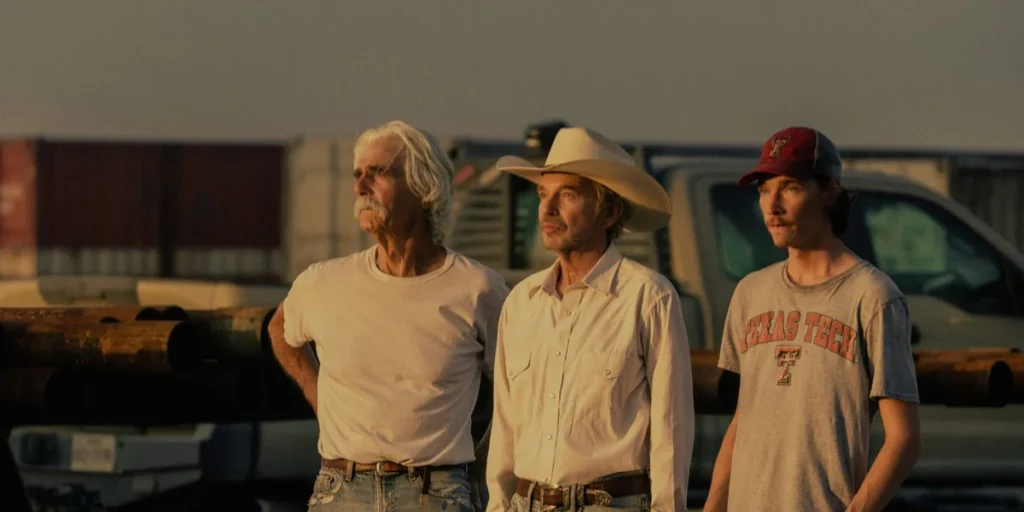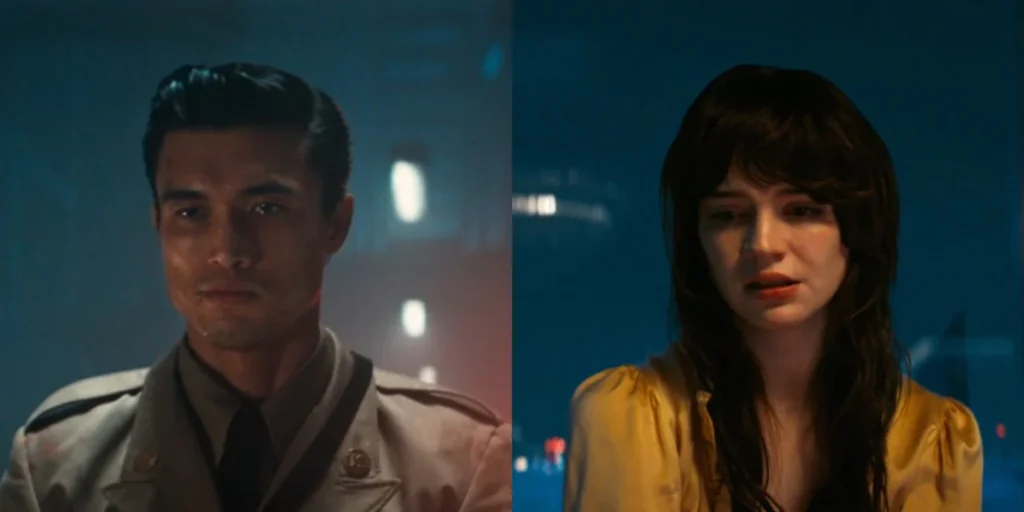
The 2025 historical drama Silent Friend, written and directed by Ildikó Enyedi, represents a significant milestone in contemporary international cinema, marking a high-profile collaboration between European auteur sensibilities and East Asian acting excellence. Set against the backdrop of the historic university town of Marburg, Germany, the film utilizes a triptych structure to explore the intersections of human history, botanical life, and the fluid nature of perception. The production features an ensemble cast led by Tony Leung Chiu-wai, Léa Seydoux, and Luna Wedler, supported by Sylvester Groth and Martin Wuttke. Following its world premiere in the main competition of the 82nd Venice International Film Festival, where it secured prestigious accolades including the FIPRESCI Prize and the Marcello Mastroianni Award, the film has entered theatrical distribution via 1-2 Special.
Narrative Structure and Temporal Settings
Silent Friend is organized into three distinct but thematically interconnected stories, each centered on a single ginkgo tree that serves as a silent witness to the passage of time and the evolution of human thought. The film spans over a century, with segments set in 1908, 1972, and 2020. This non-linear approach allows Enyedi to examine how the same physical space and biological entity can be perceived differently across shifting cultural and scientific paradigms.
The 1908 segment delves into the rigid academic atmosphere of the early 20th century, focusing on the dawn of modern botanical research and the era’s fascination with the classification of the natural world. The 1972 chapter shifts the focus to the social upheavals and changing interpersonal dynamics of the late 20th century, exploring themes of liberation and the questioning of established authorities. The final segment, set in 2020, brings the narrative into the contemporary era, grappling with the complexities of global connectivity, the digital age, and the environmental anxieties that define the present day. By anchoring these disparate eras to the life of a ginkgo tree—a species often referred to as a "living fossil"—the film highlights the relative brevity of human life compared to the enduring resilience of nature.
The Collaboration of Ildikó Enyedi and Tony Leung Chiu-wai
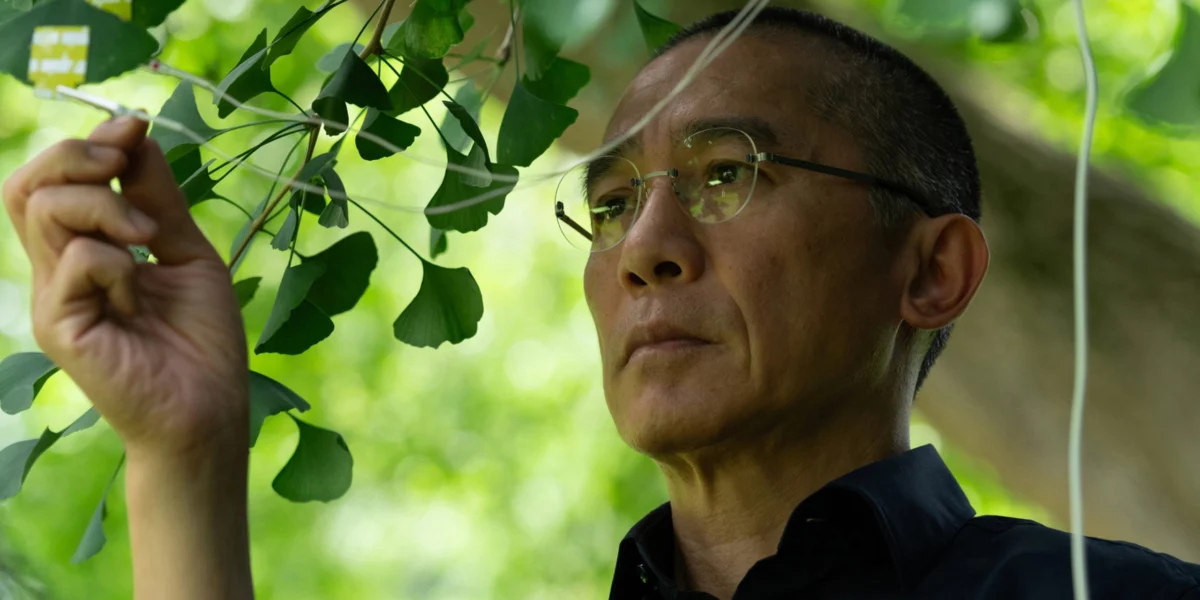
A central point of critical interest in Silent Friend is the involvement of Tony Leung Chiu-wai, the legendary Hong Kong actor known for his work with Wong Kar-wai. This project marks Leung’s first major foray into a European-led production of this scale. In the film, Leung portrays a renowned neuroscientist from Hong Kong who arrives in Marburg to deliver a lecture. His character’s perspective serves as a bridge between scientific inquiry and the more ephemeral, perhaps even spiritual, connections humans share with their environment.
Ildikó Enyedi, whose previous work includes the Golden Bear-winning and Academy Award-nominated On Body and Soul (2017), is known for her ability to blend mundane reality with dreamlike, poetic sequences. In Silent Friend, Enyedi reportedly sought to challenge the traditional boundaries of the "period drama" by focusing on the sensory experiences of her characters. The collaboration between Enyedi’s meticulous directorial style and Leung’s understated, emotive acting has been cited by critics as a primary driver of the film’s atmospheric depth. Leung’s preparation for the role involved extensive research into neuroscience and botany, reflecting the film’s commitment to factual grounding within its fictional narrative.
Recognition at the 82nd Venice International Film Festival
The world premiere of Silent Friend at the 82nd Venice International Film Festival solidified its status as a critical success. Competing against a field of international heavyweights, the film was honored by the International Federation of Film Critics (FIPRESCI) with the FIPRESCI Prize for Best Film in the Main Competition. The jury praised the film’s "extraordinary ability to weave together the biological and the historical into a seamless cinematic tapestry."
Furthermore, the Marcello Mastroianni Award, which recognizes emerging acting talent, was presented to Luna Wedler for her performance in the film. Wedler, a Swiss actress who has rapidly gained prominence in European cinema, was lauded for her ability to anchor one of the film’s temporal segments with a performance that balanced vulnerability with intellectual curiosity. The film’s success at Venice placed it at the forefront of the 2025 awards season conversation, highlighting the continued relevance of arthouse cinema in an increasingly commercialized global market.
Historical and Geographical Context: Marburg, Germany
The choice of Marburg as the primary setting for Silent Friend is integral to the film’s thematic concerns. Known for its prestigious university, the Philipps-Universität Marburg (founded in 1527), the town has been a center of intellectual life for centuries. The architecture of the town, characterized by its medieval "Oberstadt" (Upper Town) and its well-preserved academic buildings, provides a visual representation of layers of history existing simultaneously.

The ginkgo tree featured in the film is not merely a prop but a symbol rooted in botanical history. Ginkgo biloba is the last living species in the order Ginkgoales, which first appeared over 290 million years ago. Its ability to survive environmental catastrophes—including the atomic bombing of Hiroshima, where several ginkgo trees were among the few living things to survive near the epicenter—makes it a potent symbol of endurance. In the context of the film, the tree acts as a repository of memory, standing unchanged as the human occupants of Marburg navigate the ideological shifts of 1908, 1972, and 2020.
Supporting Data and Production Details
Silent Friend was produced as a multi-national co-production, involving production houses from Germany, Hungary, and France. This reflects the broader trend of "Euro-Asian" co-productions that aim to pool resources and talent from diverse markets. The cinematography, handled by Enyedi’s frequent collaborators, emphasizes the changing textures of the Marburg landscape across the four seasons and the three distinct time periods.
The distribution rights for the film were acquired by 1-2 Special, a boutique distributor known for handling high-concept international features. The release strategy has focused on a "platform" rollout, starting with major metropolitan areas and university towns before expanding to a wider audience. Preliminary box office data from the initial weeks of release suggest a strong performance in the "specialty" sector, particularly in Germany and France, where Enyedi’s work maintains a dedicated following.
Critical Analysis of Implications
The release of Silent Friend comes at a time when the global film industry is increasingly exploring themes of "eco-cinema" and the relationship between humanity and the natural world. By centering a non-human entity as the protagonist—or at least the narrative anchor—Enyedi joins a growing movement of filmmakers who seek to decenter the human experience in favor of a more holistic view of the planet’s history.
The film’s success also underscores the viability of multilingual and multicultural productions. With a cast speaking German, English, and Cantonese, Silent Friend reflects the reality of a globalized academic and scientific community. The character played by Tony Leung, an outsider navigating a historic European institution, serves as a metaphor for the cross-pollination of ideas that has defined the modern era.
Chronology of Development and Release
The timeline of Silent Friend’s journey from conception to screen illustrates the complexities of modern high-end filmmaking:
- 2022: Ildikó Enyedi announces the project, citing her long-standing fascination with the ginkgo tree in Marburg’s botanical garden.
- 2023: Tony Leung Chiu-wai is cast, sparking significant international media interest.
- Late 2023 – Early 2024: Principal photography takes place in Marburg, Germany, capturing the town across various seasons to reflect the film’s temporal shifts.
- Late 2024: Post-production is completed in Budapest and Paris.
- August 2025: World premiere at the 82nd Venice International Film Festival.
- September 2025: The film receives the FIPRESCI Prize and the Marcello Mastroianni Award.
- Late 2025: General theatrical release via 1-2 Special.
Conclusion and Future Outlook
Silent Friend stands as a testament to the power of contemplative cinema. In an era often dominated by rapid-fire editing and spectacle-driven narratives, Enyedi’s film demands a different kind of engagement—one that is patient, observant, and intellectually rigorous. The film’s ability to win major awards at Venice suggests that there remains a robust appetite for stories that bridge the gap between science and art, and between the local and the universal.
As the film continues its theatrical run and moves into the subsequent phases of digital and physical media release, its impact on the careers of its participants is likely to be enduring. For Tony Leung, it reinforces his status as a global icon capable of transcending linguistic barriers. For Luna Wedler, it marks a definitive transition into the upper echelons of international acting talent. For Ildikó Enyedi, it further solidifies her reputation as one of the most original and profound voices in contemporary world cinema. The "silent friend" of the title—the ginkgo tree—remains as it was, a symbol of the enduring continuity of life in an ever-changing world.