The Historical Context of the Lumière Innovations
To understand the weight of the documentary, one must look back to the late 19th century, a period of rapid industrial and scientific advancement. In 1895, the Lumière brothers, sons of a prominent photographic manufacturer in Lyon, France, patented the Cinématographe. Unlike Thomas Edison’s Kinetoscope, which was a "peep-show" device designed for individual viewing, the Cinématographe was a three-in-one device capable of recording, developing, and projecting motion pictures onto a screen for a collective audience.
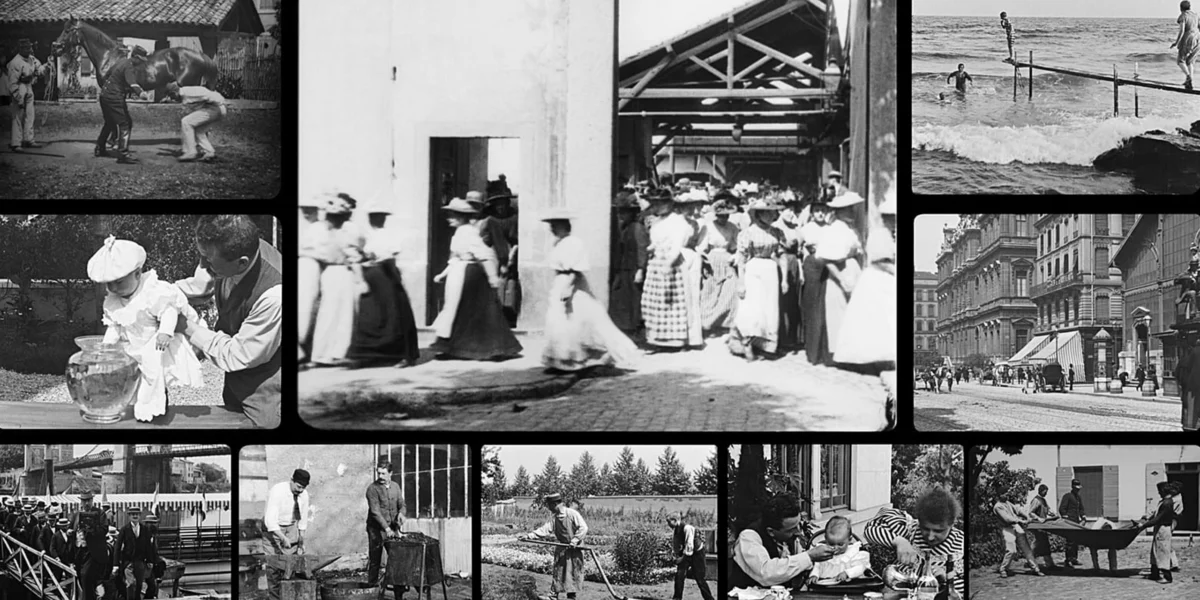
The chronology of this development reached its first major public peak on December 28, 1895, at the Grand Café in Paris. This event is widely cited by historians as the official birth of cinema, where a paying audience witnessed ten short films, including the famous "Workers Leaving the Lumière Factory" (La Sortie de l’usine Lumière à Lyon). This documentary highlights that while the Lumières initially viewed their invention as a scientific curiosity with "no commercial future," their output quickly evolved into a sophisticated exploration of reality. Between 1895 and 1905, the Lumière company produced over 1,400 films, each approximately 50 seconds in length, capturing everything from domestic life to international travels.
Curatorial Vision and Narrative Structure
In "Lumière! Le Cinéma," Thierry Frémaux serves as both a curator and a guide, utilizing his deep institutional knowledge to provide context for the 114 films selected for this presentation. The film is a sequel of sorts to his 2017 work, "Lumière!", continuing the mission to bring these silent, black-and-white vignettes into the modern consciousness. Frémaux’s narration emphasizes that the Lumière brothers were not merely technicians but the first true directors.
The documentary categorizes the films into thematic segments, showcasing the brothers’ mastery of framing, staging, and early narrative storytelling. Frémaux points out that the Lumières invented the "remake" (filming the factory exit multiple times to get the lighting and movement right) and the "comedy" (exemplified by the staged gag in "The Sprinkler Sprinkled"). By organizing these works chronologically and geographically, the film demonstrates how the Lumières sent operators to Russia, Japan, Egypt, and the United States, effectively creating the first global newsreels and travelogues.
Technical Restoration and Preservation Data
A critical component of the documentary’s impact is the quality of the visual presentation. The films featured in "Lumière! Le Cinéma" have undergone extensive 4K digital restoration. This process, led by the Institut Lumière in collaboration with the Archives Françaises du Film and the CNC (Centre National du Cinéma et de l’Image Animée), involved scanning original nitrate negatives to recover details that had been lost for over a century.
The restoration highlights the technical precision of the Cinématographe’s 35mm film format, which utilized a unique circular perforation system. Data from the restoration project indicates that the high-resolution scans allow modern audiences to see textures—such as the smoke from a locomotive or the intricate lace on a Victorian dress—with a clarity that exceeds what was possible during the original 1895 projections. This technical fidelity serves to bridge the gap between the 19th-century subjects and the 21st-century viewers, reinforcing the documentary’s theme that cinema is a "living" medium.
Analysis of Cinematographic Syntax
Frémaux’s commentary provides a fact-based analysis of how the Lumières established the "syntax" of filmmaking. While their contemporary, Georges Méliès, was pioneering special effects and theatrical fantasy, the Lumières focused on the "documentary" aspect of the medium, often referred to as "actualités." However, Frémaux argues that the Lumière films were far from accidental captures of reality.

The documentary explores several key techniques pioneered by the brothers:
- Depth of Field: Films like "Arrival of a Train at La Ciotat" utilized diagonal compositions that created a sense of three-dimensional space, a technique that would later be perfected by directors like Orson Welles.
- The Moving Shot: By placing the Cinématographe on a gondola in Venice or a train in Egypt, the Lumière operators invented the tracking shot (or "phantom ride"), changing the audience’s perspective from a static observer to a mobile participant.
- Composition and Staging: The film analyzes how the "actors"—often family members or factory workers—were positioned to maximize the visual impact of the 50-second frame, ensuring that the action began and ended with precision.
Official Responses and Distribution Strategy
The release of "Lumière! Le Cinéma" through Janus Films and its residency at MoMA reflects a strategic effort to position early cinema as a cornerstone of modern cultural education. Janus Films, known for its association with the Criterion Collection, has a long history of distributing foundational cinematic works. The partnership with MoMA underscores the film’s status as an archival achievement.
Representatives from the film community have noted that Frémaux’s work serves an essential role in the "democratization" of film history. Rather than keeping these films in the vaults of the Institut Lumière in Lyon, the documentary format allows them to be accessible to a global audience. Museum curators have praised the film for its ability to transform what could be a dry academic subject into an engaging, rhythmic, and often humorous cinematic experience. The involvement of the Evergreen Podcasts Network and the Next Best Picture Podcast in promoting the film further indicates a growing interest in long-form discussions regarding film preservation among younger, digitally-native cinephiles.
Broader Impact and Implications for the Future of Film
The enduring legacy of the Lumière brothers, as highlighted in the documentary, has significant implications for how we perceive the evolution of media. In an era dominated by short-form digital content—such as TikTok or Instagram Reels—the 50-second "Lumière format" feels unexpectedly contemporary. Frémaux’s presentation suggests that the brevity of the original films was not a limitation but a distillation of artistic intent.
Furthermore, the documentary reinforces the importance of institutional support for film archives. The work of the Institut Lumière serves as a blueprint for how other nations might approach the preservation of their own cinematic heritage. By showcasing the global reach of the Lumière operators, the film also acknowledges the "first gaze" of cinema on various cultures, providing a historical record that predates the modern geopolitical landscape.
The screening at MoMA also highlights the ongoing debate regarding the "death of cinema" in the streaming age. Frémaux’s work posits that as long as there is a desire to capture reality and share it with a collective audience, the spirit of the Lumière brothers remains alive. The documentary serves as a reminder that the fundamental elements of filmmaking—light, movement, and the human experience—have remained constant for nearly 130 years.
Conclusion
Lumière! Le Cinéma (or Lumière! The Adventure Continues) is more than a compilation of archival clips; it is a scholarly yet accessible tribute to the architects of modern visual culture. Through the expert curation of Thierry Frémaux and the distribution efforts of Janus Films, the documentary ensures that the pioneering work of Auguste and Louis Lumière is not relegated to the footnotes of history but is celebrated as a vibrant and essential part of the contemporary cinematic dialogue. As the film continues its run at MoMA and moves into wider digital distribution, it provides an invaluable resource for historians, filmmakers, and audiences alike, proving that the "adventure" of cinema is indeed far from over.