Directed and written by Reed Van Dyk, the film Atonement presents a rigorous examination of the moral and psychological debris left in the wake of the Iraq War, focusing on a singular 2003 tragedy and its decade-long aftermath. Inspired by actual events, the narrative traces the trajectory of Lou D’Alessandro, a U.S. Marine whose split-second decision during a Baghdad firefight results in the deaths of an Iraqi man and his two sons. The story follows D’Alessandro’s eventual attempt at reconciliation with the surviving matriarch, Mariam Khachaturian, facilitated by a New York Times journalist. Unlike many previous cinematic depictions of the Iraq conflict, which often centered exclusively on the American combat experience, Van Dyk’s debut feature attempts a dual-perspective analysis of trauma, accountability, and the elusive nature of forgiveness.
Historical Context of the 2003 Baghdad Invasion
To understand the stakes of the film, one must look at the historical environment of Baghdad in the spring of 2003. Following the initial invasion led by U.S. forces on March 20, the city became a landscape of profound chaos. The collapse of the Ba’athist regime led to a power vacuum, resulting in widespread looting and the emergence of localized insurgencies. For U.S. Marines and soldiers on the ground, the Rules of Engagement (ROE) were often fraught with ambiguity. The threat of Vehicle-Borne Improvised Explosive Devices (VBIEDs) was a constant concern for units stationed at checkpoints or on rooftops.
In the film, the Khachaturian family is depicted as attempting to navigate this volatility. Temporarily displaced by the bombardment, they seek a return to their home, only to drive into an active combat zone. The "fog of war" is rendered with stark clarity: Marines on a rooftop, under fire and operating under orders to neutralize approaching threats, view a civilian vehicle as a potential weapon. This scenario mirrors numerous documented incidents from the early years of the war where civilian vehicles were fired upon due to miscommunication or heightened threat assessments.
Chronology of the Event and its Aftermath
The timeline of Atonement is divided into two distinct eras: the immediate violence of 2003 and the lingering psychological fallout a decade later.
March 2003: The Incident
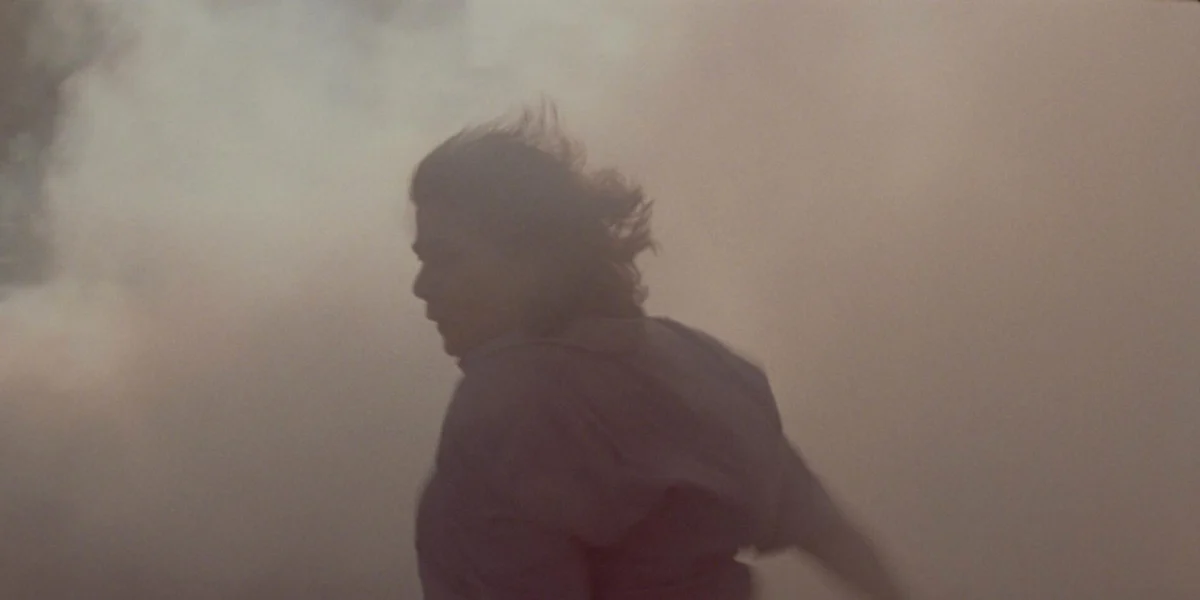
The Khachaturian family, led by Mariam (Hiam Abbass), attempts to drive through a war-torn intersection in Baghdad. Lou D’Alessandro (Boyd Holbrook), positioned as a sniper/lookout, observes the vehicle. Under the stress of an ongoing firefight and following military protocol regarding unidentified vehicles approaching a perimeter, D’Alessandro opens fire. The result is the immediate death of Mariam’s husband and two sons. This sequence serves as the film’s inciting incident, establishing the baseline of trauma for both the victims and the perpetrator.
2003–2012: The Divergent Paths of Trauma
Following the incident, Mariam Khachaturian and her surviving daughter, Nora, are left to navigate the wreckage of their lives in a country still gripped by occupation and civil strife. Simultaneously, D’Alessandro continues his military service. The film suggests that the military apparatus, much like a closed corporate or "mafia-style" system, discourages the internal processing of such "accidents." D’Alessandro completes eight deployments, but the initial event in Baghdad acts as a slow-acting poison on his psyche.
2013: The Pursuit of Absolution
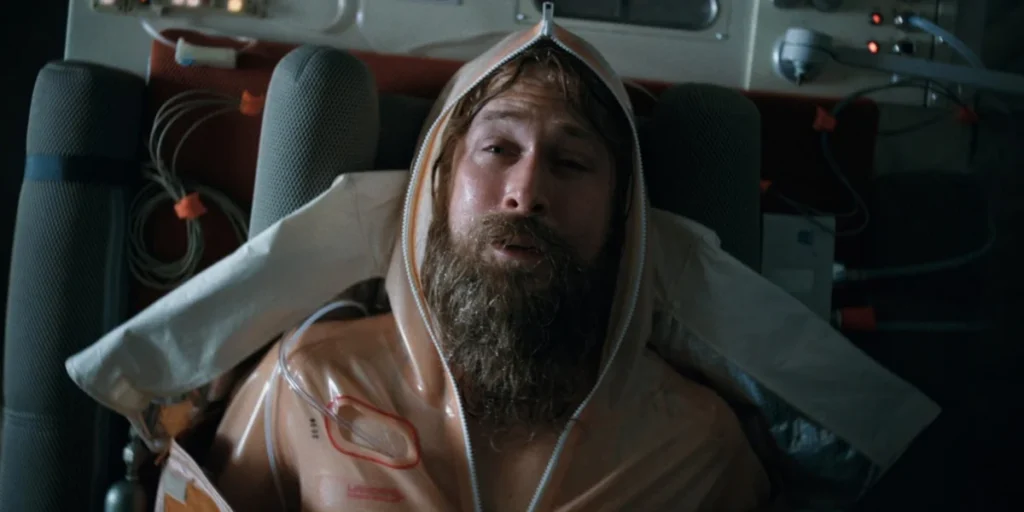
Ten years after the shooting, D’Alessandro has transitioned to civilian life, though unsuccessfully. He suffers from a dishonorable discharge, chronic unemployment, physical tremors, and severe post-traumatic stress disorder (PTSD). Seeking a way to reconcile his actions, he contacts Michael Reid (Kenneth Branagh), a journalist who had previously attempted to investigate the case. This leads to a brokered meeting between the former Marine and the woman whose family he destroyed, shifting the narrative from a war drama to a psychological study of restorative justice.
Statistical Analysis of Civilian Casualties and Veteran Welfare
The themes explored in Atonement are supported by significant real-world data regarding the human cost of the Iraq War. According to the Iraq Body Count project, approximately 7,299 civilians were killed during the "invasion phase" (March and April 2003) alone. Over the course of the entire conflict, estimates of civilian deaths range from 185,000 to over 200,000 due to direct war-related violence. The film’s focus on the Khachaturian family provides a microcosm of these broader statistics, humanizing the "collateral damage" often relegated to footnotes in military reports.
On the other side of the conflict, the film addresses the mental health crisis among U.S. veterans. D’Alessandro’s struggle with PTSD and suicidal ideation reflects a systemic issue. Data from the U.S. Department of Veterans Affairs (VA) indicates that veterans of the Iraq and Afghanistan wars experience PTSD at rates between 11% and 20% in any given year. Furthermore, the "moral injury"—a term used to describe the psychological distress resulting from actions that transgress deeply held moral beliefs—is a central component of D’Alessandro’s character arc. The film highlights the fact that many members of D’Alessandro’s unit took their own lives, a grim reflection of the reality that veteran suicide rates have historically been significantly higher than those of the general population.
The Role of Investigative Journalism and Public Record
The character of Michael Reid, portrayed by Kenneth Branagh, represents the bridge between the military-industrial complex and the civilian experience. In the film, Reid’s initial attempts to document the 2003 incident are thwarted by military stonewalling. This reflects the real-world difficulties journalists faced when attempting to report on civilian casualties that did not align with the official narrative of "precision strikes" and "liberation."
The involvement of a New York Times journalist underscores the importance of the public record in the process of atonement. For D’Alessandro, the journalist is not just a facilitator but a witness. For Mariam, the journalist represents a rare instance of the Western media acknowledging her specific loss, rather than treating her family as an anonymous statistic of war. The film suggests that true reconciliation cannot occur in a vacuum; it requires a factual foundation and a willingness to confront documented truths.
Analysis of the Dual-Perspective Narrative
A significant shift in Atonement compared to earlier Iraq War films, such as The Hurt Locker (2008) or American Sniper (2014), is its commitment to the Iraqi perspective. While earlier films focused on the technical prowess or the internal "addiction" to combat experienced by American soldiers, they often utilized Iraqi characters as mere catalysts for American emotional development.
Reed Van Dyk’s direction ensures that Hiam Abbass’s Mariam is the emotional anchor of the film. Her grief is not portrayed as a frantic or "othered" emotion, but as a dignified, enduring weight. The film avoids the trope of the "forgiving victim" who exists solely to grant the protagonist peace. Instead, it asks whether forgiveness is even a viable concept in the face of irreversible violence. By giving equal weight to the Khachaturian family’s domestic peace and subsequent devastation, the film forces the audience to confront the human cost of foreign policy decisions.
Broader Implications and the Evolution of War Cinema
Atonement arrives at a time when the cultural memory of the Iraq War is being re-evaluated. Twenty years after the invasion, the "War on Terror" narrative has shifted from one of urgent necessity to one of complex reflection. The film’s focus on "moral injury" suggests a maturing of the war film genre, moving away from the visceral thrills of combat toward the quiet, often uncomfortable reality of its long-term consequences.
The film also touches upon the concept of systemic accountability. D’Alessandro’s realization that the military "gives permission to kill" but offers no roadmap for living with that permission is a damning critique of institutional training. It implies that while soldiers are trained for the split-second decision, the society that sends them to war is ill-equipped to handle the decades of regret that follow.
Conclusion and Official Responses to the Themes
While the film is a fictionalized account of true events, its themes have resonated with both veteran advocacy groups and human rights organizations. Early screenings have prompted discussions regarding the need for more robust restorative justice programs for war victims and better mental health support for soldiers who have participated in civilian-involved incidents.
The performances of Boyd Holbrook and Hiam Abbass have been noted for their lack of artifice. Holbrook’s portrayal of a man "rotting away" from self-assured certainty into crushing self-hatred provides a visceral look at the collapse of the warrior archetype. Conversely, Abbass provides a masterclass in restrained performance, communicating the "impossible burden" of the survivor.
In summary, Atonement serves as a cinematic audit of the Iraq War’s moral ledger. It does not offer easy answers or a clean resolution. Instead, it suggests that atonement is a process rather than a destination—a difficult, ongoing effort to carry the weight of the past without being crushed by it. The film stands as a testament to the fact that while the guns of 2003 have long since fallen silent, the echoes of those shots continue to shape lives across two continents.