Growing up in Toronto, Maggie Kang felt she needed to conceal her obsession with H.O.T., the mid-1990s idol group whose tightly synchronized choreography, chantable hooks, and lurid crimson hair—sometimes topped with ski goggles—helped define the template for modern K-pop. "I had to hide that I liked K-pop," says Kang, co-writer and co-director of KPop Demon Hunters. "Even my Asian friends thought it was lame. But it was just part of me — it wasn’t escapism, it was identity." Today, Kang no longer hides. On March 15, her hyperkinetic animated Netflix hit, in which a K-pop girl group named Huntrix juggles global superstardom while slaying soul-eating demons disguised as a rival boy band, made history by winning Best Animated Feature at the Academy Awards. Its self-affirmation anthem, "Golden," currently being belted by 10-year-olds and their parents from Los Angeles to Osaka, became the first tune by a K-pop act ever to win Best Original Song.
Accepting the award, Kang tearfully apologized that it took so long "for those of you who look like me" to see themselves represented in such a film. Her poignant words underscored a watershed moment, not just for animation or music, but for the broader phenomenon known as the Korean Wave, or Hallyu. While the Academy had previously embraced K-culture with Parasite‘s historic Best Picture win six years prior, Sunday’s triumphs for KPop Demon Hunters felt different. They signaled a cultural tide, building for decades, that had finally crested, solidifying South Korea’s colossal cultural footprint on the global stage.
A Tsunami of Influence: K-Culture’s Ubiquitous Presence
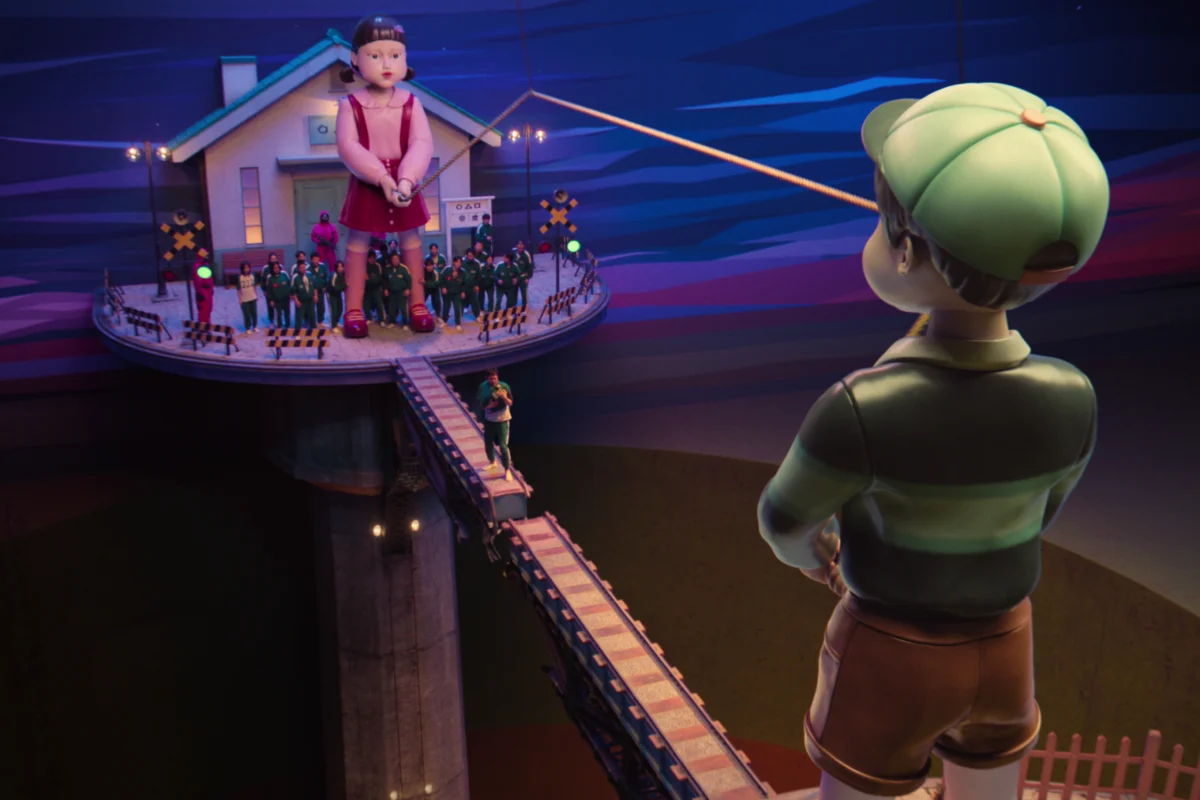
The impact of Korean culture is now undeniable and pervasive. K-pop groups like BTS and Blackpink routinely fill stadiums, drawing crowds once reserved for Western titans like Beyoncé and Taylor Swift. Industry analysts estimate K-pop’s net export revenue—including album sales, touring receipts, and streaming royalties—at a staggering $1.8 billion in 2025, a testament to its explosive economic power. Beyond music, Korean dramas have captivated audiences worldwide, with Squid Game becoming one of Netflix’s most-watched series in history, racking up 1.65 billion hours viewed in its first 28 days and spurring a global fascination with its dark social commentary and thrilling premise.
The cultural infiltration extends into daily life, transforming consumption habits across various sectors. Korean restaurants are expanding rapidly across the globe, experiencing a 10 percent growth in their numbers in 2024 alone, driven by surging demand for dishes like Korean fried chicken, kimchi jjigae, and bulgogi. Even the freezer aisle at Costco has felt the ripple effect, with shoppers repeatedly exhausting supplies of frozen kimbap, highlighting a mainstream embrace of Korean culinary traditions. The beauty industry has also been revolutionized by K-beauty, with an army of Gen Z consumers slathering on Korean creams and serums infused with exotic ingredients like snail mucin, rice water, and bee venom, reflecting a global shift towards innovative skincare routines pioneered in Seoul. This multifaceted permeation raises a compelling question: How did South Korea, a middle power of some 52 million people, a nation still emerging from a century of colonization, war, and military dictatorship as recently as the 1980s, manage to pull off such an extraordinary cultural conquest? The answer, it turns out, is a complex tapestry woven from strategic foresight, creative genius, and profound emotional resonance.
The Long Game: Engineering the Korean Wave
The Korean Wave didn’t simply happen organically; it was meticulously engineered over decades. The seeds were sown in the 1990s when a South Korean presidential advisory report highlighted a startling statistic: Jurassic Park had generated revenue roughly equivalent to the export value of 1.5 million Hyundai cars. This revelation galvanized South Korea’s industrial planners. Having already conquered global markets with electronics and automobiles, they recognized the immense economic potential of "stories."

What followed was a deliberate, government-backed push to build a robust cultural export industry. State subsidies for filmmakers, reinforced screen quotas shielding local cinema from Hollywood dominance, and significant investments in infrastructure laid the groundwork for an industry capable of projecting Korean narratives internationally. The Ministry of Culture, Sports and Tourism (MCST) played a crucial role, providing financial support for film production, music training, and cultural exchange programs, effectively treating cultural products as strategic national assets.
Into this nascent ecosystem stepped Miky Lee, the granddaughter of Samsung founder Lee Byung-chul and now the vice chairwoman of CJ Group, South Korea’s largest entertainment conglomerate. With a Harvard master’s degree and the poise of an old-school Hollywood star, Lee moved easily between Seoul boardrooms and Cannes red carpets, earning her the moniker "The Godmother." Many credit her as the chief architect of K-culture’s American ascent.
A pivotal moment occurred in 1994. Lee, then working as a director at Samsung Electronics America, received a proposition: Steven Spielberg, David Geffen, and Jeffrey Katzenberg were seeking backers for a new studio, DreamWorks. While Samsung Group initially declined, unwilling to back a venture it couldn’t control, Spielberg reportedly noted Lee’s unique interest in art over semiconductors. Impressed, DreamWorks approached her directly. By then, CJ, having gained operational independence from Samsung in 1993, was charting a new course as a "lifestyle and culture" group. Lee took the deal to her brother Jay Lee, who ran the company. Over pizza at Spielberg’s studio, clad in jeans, T-shirts, and sneakers, they committed $300 million for a 10.8 percent stake and Asian distribution rights. Katzenberg would later affirm that DreamWorks would not exist without Paul Allen and Miky Lee.
This investment proved transformative, not just financially. Back in Seoul, Lee leveraged the DreamWorks partnership as a master class, meticulously building Korea’s modern film infrastructure from the ground up: multiplexes like CGV, state-of-the-art studios, and efficient distribution networks. This infrastructure provided a fertile ground for directors like Bong Joon-ho and Park Chan-wook to hone their craft at home before finding global audiences. Korea’s contemporary film industry, in essence, was built on a pizza deal.
"When Parasite went to Cannes, it was like, ‘Wait, Koreans make movies the world wants to see?’" says Soo Hugh, showrunner of Pachinko, the Apple TV+ epic about a Korean family’s journey across three generations. "Miky Lee opened Hollywood’s eyes to the fact that Korean culture was worth money." Lee, an executive producer of Parasite, described the 2020 Oscars—when the film became the first non-English-language picture ever to win Best Picture—as an "impossible dream." The film grossed $53 million at the U.S. box office and in June topped The New York Times’ ranking of the century’s best films. Weeks before the Oscars, Bong accepted the Golden Globe for Best Foreign Language Film and delivered a line that became its own cultural touchstone: "Once you overcome the 1-inch-tall barrier of subtitles, you will be introduced to so many more amazing films."
The Right Content, The Right Pipeline: Netflix’s Global Stage
K-culture’s global breakout required two critical elements to converge: a production culture disciplined enough to craft compelling stories, and a distribution platform with the scale to deliver them everywhere simultaneously. Netflix provided the latter, becoming an indispensable pipeline for Hallyu’s global expansion. Over the past decade, the streamer strategically shifted from licensing third-party shows to producing local-language originals. Its model of simultaneous global releases gave hits like Squid Game and KPop Demon Hunters—which has surpassed 540 million views—audiences far beyond Korea’s borders. This synchronized global launch strategy amplified reach and created instant worldwide cultural phenomena.
Furthermore, a 2024 CivicScience survey revealed that 56 percent of Gen Z and younger millennials prefer to watch content in its original language. This demographic, saturated by algorithmically engineered sameness from Hollywood blockbusters, hungers for something that feels genuinely different, even if it means "braving subtitles." Korean content, with its fresh narratives and distinct aesthetics, perfectly tapped into this demand.

However, Netflix could only work with the narratives Korean creators gave it. And what they gave it stood out partly, argues Daniel Armand Lee—better known as Tablo, the Korean Canadian leader of Epik High and a pioneer of Korean hip-hop—because they had no choice. Working without Hollywood’s massive franchise infrastructure or Marvel-scale production budgets, Korean artists couldn’t paper over a weak story with expensive spectacle. "We didn’t have the luxury of throwing money at a problem," Tablo says. What they had instead was an unwavering commitment to craft, and they became exceptionally good at it.
James Shin, president of film and TV at HYBE America, the U.S. arm of the entertainment company behind K-pop sensations BTS, Seventeen, and Le Sserafim, and a producer on an upcoming, still-untitled Paramount K-pop film, observes this discipline baked into the Korean production system itself. "These lightning-in-a-bottle moments keep happening," he says. "Unlike Hollywood’s endless ‘development hell,’ Korean projects are built for completion, with room for last-minute creative shifts." This agile and focused approach ensures a steady output of high-quality, engaging content.
Fans as Strategy: The Power of Community and Innovation
In America, the entertainment industry has traditionally operated on a "make the thing, then find the audience" model. K-pop inverted this entirely. With groups like BTS, the seven-member phenomenon meticulously trained under Korea’s hyper-structured idol system, fans weren’t merely a byproduct—they were an integral part of the product. The fervent fanbases, known for their powerful collective action, actively shaped creative and commercial decisions through voting, streaming campaigns, and social media mobilization.
Shin notes that BTS, which ingeniously fused hip-hop, R&B, and EDM with distinctly Korean storytelling, created the template for K-culture’s global rise by pioneering a fan-engagement model that extended Korea’s cultural footprint across music, fashion, and social media. Fans became zealous cultural foot soldiers, relentlessly streaming, voting, and building global communities on platforms like Instagram, TikTok, and Twitter. During BTS’s 2019 Love Yourself World Tour—at the time, the highest-grossing North American tour ever by an Asian act—U.S. stans flooded social media with coordinated campaigns, organized elaborate line-dances outside arenas, and transformed hotel suites into pop-up shrines, demonstrating an unprecedented level of devotion and organization. This active co-creation model fostered an unparalleled sense of belonging and loyalty.
Artists across the industry credit BTS with a canny international strategy that expanded K-culture’s global sway. The group’s strategic release of English-language singles starting in 2020 was key to its international success, subtly dissolving the language barrier before American audiences even fully registered it. Eric Nam, who stars in the upcoming Paramount K-pop drama alongside Ji-young Yoo, suggests that K-pop’s intricately synchronized choreography has been equally decisive. "One Direction didn’t dance. Justin Bieber didn’t dance. Korea, by contrast, doubled down: ‘We know this works. We’re going to make it incredible.’" And Kevin Woo, the K-pop veteran who provided the singing voice for Demon Hunters’ Mystery, observes that the softer, more emotionally expressive masculinity often associated with K-pop boy bands—"really elaborate costumes and hair and makeup," he describes it—also profoundly resonates with female fans on both sides of the Pacific, offering a refreshing alternative to traditional Western archetypes.
The BTS template now extends beyond music. KPop Demon Hunters was launched more like an idol debut than a conventional animated film. Netflix staged sing-along screenings in over 1,700 theaters throughout the U.S., Canada, the U.K., Australia, and New Zealand, where audiences sang tracks like "Golden," waved light sticks, and arrived dressed as characters. Meanwhile, members of Blackpink have further expanded K-pop’s scope, projecting Korea’s already glittering brand onto Paris runways, acting as brand ambassadors for luxury houses like Chanel and Dior, and helping K-pop evolve in the American imagination from a niche boy-band phenomenon into a broader, multifaceted cultural engine.
Han: Korea’s Secret Weapon of Emotional Depth

There’s a word Koreans use that has no direct English equivalent: han. Roughly translated, it’s a profound, marrow-deep sorrow—a collective wound rooted in a century of colonization, war, and division that never quite heals. It permeates Korean storytelling: the unresolved endings, the flawed heroes, the villains you can’t quite hate, the pervasive sense that the system will probably win. It is, in other words, the opposite of a neat Hollywood ending.
And right now, American audiences can’t get enough of that fallibility. After decades of algorithmically optimized uplift, superhero franchises, and stories where good reliably triumphs over evil, something has shifted. In a polarized country grappling with inequality, institutional failure, and collective anxiety, the emotional honesty of Korean narratives—messy, painful, darkly funny, unresolved—feels less like foreign cinema than like profound recognition. You can see it vividly in the biting class warfare of Parasite, the dystopian dread of Squid Game, and the simmering immigrant rage of Beef, Lee Sung Jin’s Emmy-winning Netflix thriller. Han, it turns out, travels across cultural divides.
Soo Hugh knows han from the inside. Her grandmother, who lived through the Korean War and its aftermath, recounted that her family was so poor they boiled rocks to make stone soup. "All Koreans carry these dark stories," Hugh says. "But my grandmother told them laughing." That unique combination—genuine suffering refracted through dark humor, hardship worn lightly—is precisely what American audiences are finding so alluring and relatable in Korean stories right now. "I don’t think people realize how newly modern Korea is," Hugh adds. "K-dramas began as escapism—necessary escapism."
Maggie Kang felt it too, shaping Demon Hunters from her own inherited han. Her father fled North Korea, and she grew up in Toronto carrying the divided inheritance that marks so many Korean families. "I think han is just something you inherit as a Korean person," she says. "My dad’s side of the family is North Korean, so I feel very much part of this sorrow of a country that is divided. That’s something I thought about when writing the story—somebody who is split, with two sides that want to exist together, but it’s really hard." Arden Cho, who voices Rumi, the purple-haired half-demon, half-demon hunter grappling with her divided identities in Demon Hunters, observes that Korean storytelling resonates because it embraces a messy world that gleefully defies the binary moral codes of traditional Hollywood. The animated pop stars of the film are not idealized "Disney princesses" but flawed idols who slurp ramen, burp, cry, doubt themselves, and have bad hair days, reflecting a more authentic and relatable human experience.
Bridging Worlds: Korean-American Creators at the Forefront
Part of what has made K-culture’s American breakthrough so seamless is that so much of it is now made by Americans—Korean Americans who grew up with a foot in both worlds and possess the innate instincts to navigate between them. KPop Demon Hunters was co-written and directed by a Canadian Korean woman raised on H.O.T. Pachinko’s showrunner grew up in suburban Maryland rewinding K-drama cassettes in her mother’s video shop. These creators embody a unique bicultural fluency that allows them to craft narratives resonating with diverse audiences.
"The gap between Seoul and L.A. is gone," says Shin. "Now it’s ‘made with Korea,’ not ‘made for Korea.’" This shift signifies a collaborative, integrated approach where cultural exchange is mutual and authentic. These projects do not condescendingly overexplain Korea to Americans but rather trust audiences to comfortably inhabit both cultural spaces simultaneously. Kang noted that Demon Hunters’ visual style was consciously shaped by her lifelong love of anime and manhwa—Korean comics and graphic novels—and executed with careful attention to Korean linguistic and cultural nuances, even though the film’s lingua franca is American English. "We worked really hard on the details," she says. "Even the way the mouth shapes move—I wanted it to feel like Korean was coming out of their mouths even though they’re speaking English."
The opening credits of Pachinko brilliantly embody this cultural synthesis: characters dance in a pachinko parlor to the 1960s American pop anthem "Let’s Live for Today"—immigrant striving projected through an unmistakably American pop tableau. Beef achieves something similar, translating immigrant frustration into the visual vocabulary of an American thriller, yet animated by distinctly Korean notions of family honor, shame, resentment, and parental pressure. This seamless blend of cultural touchstones allows for universal themes to be explored through a specific, yet widely accessible, lens.

The Future of Hallyu: Sustaining the Momentum
The ultimate measure of K-culture’s conquest may be this: Hollywood has largely stopped trying to compete and has started actively trying to join. CJ Group, which helped build the infrastructure for Korean cinema three decades ago, is now a fixture at the Hollywood deal table. Korean directors, writers, and producers no longer appear as supplicants at the gate—they are sought-after partners, collaborators, and leaders. This integration signals a profound and lasting shift in the global entertainment landscape.
The question now isn’t whether K-culture has arrived, but whether the machinery that made it so effective—the scrappy production discipline, the emotional authenticity, the genuine creative hunger, and the unique fan engagement—can survive its own immense success. As K-pop spurs franchises, copycat spinoffs, and big studio blockbusters, the system that propelled K-culture’s rise could stumble if its authenticity begins to waver. The pressure to conform to global commercial trends, dilute cultural specificity, or prioritize profit over artistic integrity could potentially erode the very qualities that made Hallyu so compelling. Moreover, the industry must contend with the potential for K-culture fatigue and oversaturation if the market becomes flooded with derivative content.
However, there remains a strong undercurrent of optimism among creators. Arden Cho, for one, isn’t worried. Her upcoming psychological thriller Perfect Girl features nine Asian and Asian American female leads spanning three generations—flesh-and-blood actors this time, not animated heroines. "I hope that we continue to create more dynamic stories that are bold and don’t shy away from who we are," she says, emphasizing a commitment to diverse and authentic storytelling. This focus on unique narratives and voices suggests a resilience against potential pitfalls.
As for Maggie Kang—she accepted an Oscar on Sunday night, a monumental achievement that reverberates far beyond the stage. It’s a long way from hiding H.O.T. albums in Toronto, and a powerful symbol of how a once-hidden passion has blossomed into a global cultural force, reshaping industries and inspiring generations. The Korean Wave is not merely a trend; it is a profound testament to strategic investment, creative ingenuity, and the universal appeal of authentic human stories.