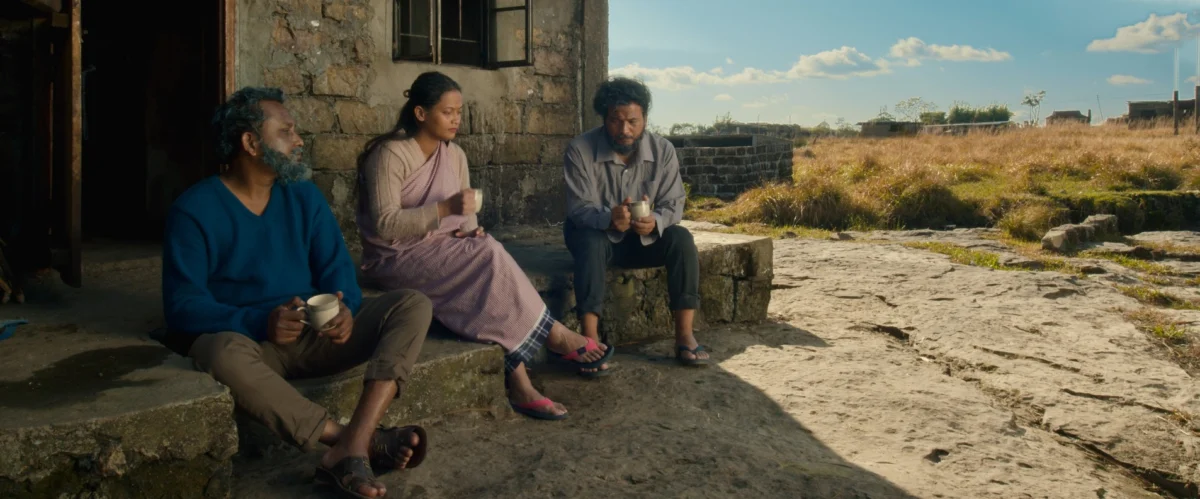
The cinematic landscape has long been a fertile ground for exploring the human condition, but rarely does a film delve into its depths with such profound empathy and stark realism as Pradip Kurbah’s "Ha Lyngkha Bneng" (The Elysian Field). Set to premiere in 2025, this feature film, rooted in the philosophy of communitarianism, has already achieved significant international recognition, most notably securing the coveted Golden St. George for Best Film, Best Director, and the NETPAC Award for Best Asian Film at the 47th Moscow International Film Festival. Penned by Kalpajyoti Bhuyan, the narrative is a deeply moving testament to the enduring human spirit, capturing the quiet dignity and resilience of lives often overlooked by the march of modern progress.
The Director’s Vision: A Consistent Thread of Humanism
Pradip Kurbah has consistently distinguished himself as a filmmaker whose artistic compass points firmly towards humanism. His previous works, such as "Iewduh" (2019) and "Onataah: Of the Earth" (2016), have garnered critical acclaim for their sensitive portrayal of ordinary lives, often those existing on the fringes of society. In "Iewduh," for instance, Kurbah masterfully wove together multiple narratives set within Asia’s largest traditional market, exploring themes of resilience, community, and the subtle interplay of human connections amidst the daily grind. Similarly, "Onataah" offered a poignant look at indigenous identity and the deep bond between people and their land. Across his filmography, Kurbah’s signature style is characterized by an unwavering commitment to realism, eschewing dramatic artifice in favor of authentic emotional resonance. His characters, whether grappling with poverty, social alienation, or existential questions, are always rendered with an innate sense of dignity, making their unspoken struggles and quiet triumphs universally relatable. "Ha Lyngkha Bneng" continues this rich tradition, further solidifying Kurbah’s reputation as a director keenly attuned to the pulse of humanity.
The Elysian Field: A Glimpse into a Dystopian 2047
"Ha Lyngkha Bneng" transports viewers to the year 2047, presenting a future that is less about technological marvels and more about the stark consequences of societal neglect. The film centers on the last remaining residents of a remote Khasi village in Meghalaya, a region in Northeast India celebrated for its lush landscapes and distinct indigenous cultures. In this envisioned future, the village stands as a poignant relic, mostly surrounded by the shadows of abandonment. Its only tangible link to the outside world is a solitary bus, a symbol of both connection and profound isolation.
The core narrative intricately traces the lives of six individuals: Livingstone, Miss Helen, Maia, Friday, Complete, and Promise. These characters are not just inhabitants; they are the living memory of a fading world. Their existence is defined by a ritualistic living, a shared rhythm that binds their presence, their lives, and their collective memories within the shrinking confines of their ancestral home. The film vividly portrays a place where structures remain, but the vibrant "homes" — filled with bustling life and communal spirit — have long since shifted, their former occupants having migrated in search of opportunities or simply vanished with time. This sense of loss is palpable, yet the remnants of stories and experiences still cling to the ruins, echoing the lives of those long bygone.
The reality for these remaining residents is almost absurd in its dystopian simplicity. Far removed from any semblance of modern progress, their daily struggles highlight a profound disconnect from the wider world. One character reveals a long-abandoned right to vote, a stark indicator of their political marginalization, while another fruitlessly struggles to catch a signal on a mobile phone, emphasizing the vast digital divide. Occasional news bulletins, heard faintly in the background, report on new developments in the state, creating an ironic counterpoint to the villagers’ inability to access even the bare essentials of modern living. This deliberate contrast underscores the film’s potent commentary on uneven development and the often-forgotten communities left behind in the relentless pursuit of progress.
Communitarianism and the Interplay of Opposites
At the philosophical heart of "Ha Lyngkha Bneng" lies the concept of communitarianism – a belief system emphasizing the interconnectedness of individuals within a community, stressing social responsibility, civic virtues, and the common good over extreme individualism. This philosophy is not merely an abstract idea but the very fabric of the villagers’ survival. Their shared rituals, mutual support, and collective acknowledgment of their precarious existence exemplify this spirit. A particularly striking scene depicts the male residents digging their own graves, a poignant act born not of despair, but of a shared understanding of their collective fate and a desire to ease the burden on those who will remain. This act, grim yet deeply communal, encapsulates the film’s core message: even in the face of ultimate solitude, human beings seek connection and shared responsibility.
Kurbah’s filmmaking is masterfully built upon such absurdities and the interplay of opposites, which are deliberately ingrained into the narrative. The film, though set in the future (2047), is deeply rooted in the memories and stories of the past, creating a temporal paradox that mirrors the characters’ anachronistic existence. There is an unspoken sorrow that permeates the narrative, yet it is punctuated by soft touches of humor, offering moments of levity amidst the pervasive melancholy. Similarly, light and darkness, presence and absence, joys and sorrows, and most profoundly, life and death, coexist as inescapable realities of truth in the village. This constant tension between opposing forces – the frequent power outages juxtaposed with small celebrations, predestined funerals embraced alongside shared laughter – highlights the resilience of the human spirit. These contrasts, as Kurbah’s vision suggests, are not merely narrative devices but elemental textures of life itself, inseparable from the endurance and intimacy of those who remain. They serve to underscore the idea that true connection blossoms not in the absence of hardship, but within its very embrace.
Cinematic Craftsmanship and Evocative Symbolism
The visual poetry of "Ha Lyngkha Bneng" is largely attributed to the exquisite cinematography of Pradip Daimary. His lens captures the painterly stillness of the green fields and the lonely hills of Meghalaya, transforming the natural landscape into a visual representation of the enduring human capacity to connect. Just as the fields seamlessly merge with the hills on the horizon, so too do the lives of the villagers blend into a collective tapestry of shared experience. The film also artfully observes the passage of time through the changing seasons, subtly mirroring the shifts in human existence and the cyclical nature of life and loss. A particularly touching scene, where Maia gifts yellow caps to all the other residents as a Christmas present, beautifully encapsulates the warmth of their bonds and the importance of small, shared joys in a world of scarcity.
Kurbah’s deliberate choice of non-professional actors lends an unparalleled authenticity to the roles. Their raw, lived-in performances, devoid of theatrical embellishment, allow the sparse dialogues to resonate deeply. Conversational exchanges are limited, forcing emotions to shine through subtle gestures, facial expressions, and pregnant silences. The characters are mostly quiet, occasionally funny, perpetually sad, yet always profoundly humane, embodying the complex nuances of human experience with remarkable honesty.
Beneath its philosophical layers, the movie also meticulously studies the various absurdities of daily existence. The fleeting pleasure derived from a small amount of alcohol, or the repetitive, almost ritualistic fixing of an electric transformer, serve as ironic beats in a life marked by incomplete routines and monotony. These seemingly mundane details are imbued with deeper meaning, reflecting the villagers’ attempts to find purpose and normalcy in an increasingly isolated world. The presence of a choir, often heard but rarely seen, subtly foreshadows death, acting as a memento mori that underscores the fragility of life. The lone bus, oscillating between connecting the village to the outside and reinforcing its isolation, emerges as a potent symbolic space—a liminal zone between the tangible and the metaphysical, suggesting that the village itself exists on the cusp of multiple worlds, a reality both physical and spiritual.
Political Commentary and Broader Implications
"Ha Lyngkha Bneng" is not merely a contemplative drama; it is also a potent and strategic political commentary. Kurbah’s critique of the neglect and uneven development inherent in the modern world is not subtle. The film starkly illustrates how remote communities, like the Khasi village depicted, continue to struggle for basic amenities and services within the larger narrative of national progress. This resonates deeply with real-world challenges faced by many indigenous and rural populations across India, particularly in the Northeast, where infrastructure development, healthcare access, and digital connectivity often lag behind urban centers. The film powerfully questions the very definition of "progress" when it comes at the cost of abandoning entire communities.
However, the genius of Kurbah’s direction lies in ensuring that this political critique never eclipses the humane dimensions of the story. The characters are not mere vessels for a political message; they are fully realized individuals whose struggles evoke empathy rather than just intellectual understanding. This balance ensures that the film remains a deeply personal experience, drawing audiences into the private and visceral flow of life within this small, fading world. The film’s visual scope, despite its intimate setting, feels vast, often expanding beyond the physical landscapes of Meghalaya to portray an entire universe of human emotion and connection.
While the film is undeniably immersive and spiritually contemplative, some critics have noted its sprawling runtime. Unlike Kurbah’s earlier work, "Iewduh," which incorporated secondary plots (like the issues of a sweet seller’s daughter or a character confronting domestic violence) to add narrative tension and immediacy, "Ha Lyngkha Bneng" remains purposefully unsophisticated in its narrative structure. This stylistic choice prioritizes a meditative pace, allowing viewers to fully immerse themselves in the quiet rhythms and unspoken emotions of the villagers. This deliberate pacing, though potentially challenging for some audiences accustomed to faster narratives, ultimately serves the film’s lyrical quality and its profound message. Even in its expansive lyricism, the movie remains a positively rewarding experience, serving as a powerful reminder that love, presence, memory, and solidarity are the truest measures of human life, even for worlds teetering on the verge of fading into oblivion.
International Acclaim and Local Impact
The journey of "Ha Lyngkha Bneng" from a remote Khasi village to the international stage is a testament to its universal appeal and profound artistic merit. Its triumphant run at the 47th Moscow International Film Festival in 2025, one of the oldest and most prestigious film festivals globally, marked a significant milestone. Winning the Golden St. George, the festival’s highest honor, alongside awards for Best Director and the NETPAC Award for Best Asian Film, positioned Kurbah’s work at the forefront of contemporary world cinema. The NETPAC Award, presented by the Network for the Promotion of Asian Cinema, specifically acknowledges outstanding Asian films and plays a crucial role in promoting diverse cinematic voices from the continent.
Following its international success, "Ha Lyngkha Bneng" received a special screening on February 28 at the Kelvin Gold Cinema Hall in Guwahati, Assam, before a more extensive run from March 6 to 11 at the Soso Tham Auditorium in Shillong, Meghalaya. These local screenings were not merely commercial events but significant cultural moments, allowing the film to return to its spiritual home. For the people of Meghalaya, seeing their landscapes, their culture, and their realities depicted with such authenticity and artistic vision on the big screen, especially after international acclaim, is a source of immense pride and validation. It fosters a sense of cultural ownership and encourages further exploration of regional narratives in cinema.
Broader Implications for Indian and Regional Cinema
The success of "Ha Lyngkha Bneng" carries significant implications for Indian cinema as a whole, and particularly for the burgeoning film industry in Northeast India. For decades, cinema from this diverse and culturally rich region has struggled for mainstream recognition, often overshadowed by the dominant industries of Bollywood or South Indian cinema. Kurbah’s consistent output and the international accolades for "Ha Lyngkha Bneng" highlight the immense talent and unique storytelling potential emanating from the Northeast.
This film’s success serves as a powerful beacon, demonstrating that narratives rooted in specific regional contexts can achieve global resonance when handled with artistic integrity and universal human themes. It encourages other filmmakers from the region to tell their stories without compromise, and it challenges audiences and critics alike to broaden their perspectives beyond conventional cinematic landscapes. Furthermore, such recognition can attract greater investment, distribution opportunities, and critical attention to films from Northeast India, fostering a more inclusive and diverse national cinematic identity. "Ha Lyngkha Bneng" is not just a film; it is a cultural statement, a call for introspection, and a vibrant affirmation of the enduring power of human connection in an increasingly fragmented world. Its success underscores the critical role of art in illuminating societal challenges while simultaneously celebrating the indomitable spirit of humanity.