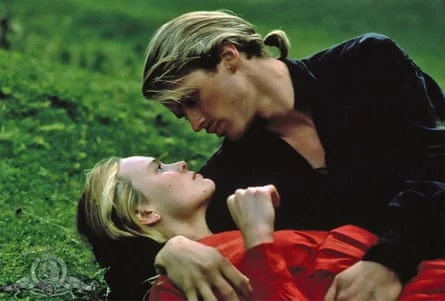
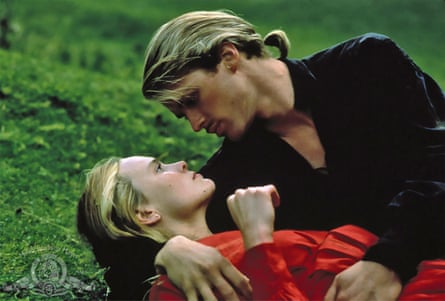
In 1988, a period of professional uncertainty loomed large for actor Cary Elwes. His career, which had once promised bright horizons, had seemingly plateaued after a fantasy film, wherein he portrayed a farm boy thrust into the role of a swashbuckling hero, failed to capture audience imagination and box office receipts. The subsequent year found Elwes out of work, grappling with the anxieties of an industry known for its ephemeral nature. It was during this challenging juncture that a chance encounter in a New York restaurant would prove to be a pivotal turning point. Spotting the legendary Al Pacino, Elwes, driven by a blend of respect and a desire for guidance, approached the acclaimed actor.
"He asked me if I was working and I said no," Elwes recalls, the memory still vivid. Pacino’s response was direct and insightful: "You need to exercise your [acting] muscles." He advised Elwes to return to formal training, a suggestion that resonated deeply. Pacino then facilitated an introduction to the prestigious Lee Strasberg Theatre & Film Institute, an institution where Pacino himself had honed his craft under the tutelage of his own mentor, Charlie Laughton. "I auditioned, I got in and ended up working with Al’s mentor, and it changed my life," Elwes reflects. This connection to the Strasberg Institute marked the beginning of a renewed focus on his craft, a commitment that would undoubtedly shape the trajectory of his subsequent career.
However, the serendipitous meeting with Pacino was not the sole transformative event of that year. The very film that had contributed to Elwes’s professional lull, the one featuring him as the charming farmhand, was none other than "The Princess Bride." This cinematic gem, a masterful blend of fairytale whimsy, swashbuckling adventure, and sophisticated wit, was initially met with marketing challenges. Director Rob Reiner himself later admitted the difficulty in positioning the film for a broad audience, as it defied easy categorization, appealing to both children and adults with its layered humor and genuine heart. Its theatrical release in 1987 did not immediately set the box office ablaze, but its subsequent debut on VHS the following year ignited a cultural phenomenon.

Nearly four decades later, "The Princess Bride" has ascended to the pantheon of beloved films, cherished for its ensemble cast of iconic performers and its inexhaustible supply of memorable catchphrases. The film’s enduring appeal is a testament to the collective talents of actors such as Billy Crystal, Mandy Patinkin, Wallace Shawn, Robin Wright, and Peter Cook. Elwes, in particular, attributes the film’s quotability to the unparalleled genius of its screenwriter, William Goldman. "He put more memorable lines in one movie than any other in cinema history," Elwes asserts, underscoring the profound impact of Goldman’s literary prowess on cinematic dialogue. Lines like "As you wish," "Inconceivable!" and the iconic "Hello. My name is Inigo Montoya. You killed my father. Prepare to die" have become ingrained in popular culture, transcending the boundaries of the film itself.
A Tribute to Friendship and Artistic Vision
The bond forged during the filming of "The Princess Bride" extended far beyond the professional realm for Elwes, particularly his connection with director Rob Reiner. Reiner, also celebrated for helming such classics as "This Is Spinal Tap" and "When Harry Met Sally…," was a constant presence in Elwes’s life. The news of Reiner’s untimely death in December, along with his wife, producer and photographer Michele Singer, sent ripples of grief through the entertainment community. Their son, Nick Reiner, has since been charged with their murder and is slated to stand trial. Elwes and Reiner often shared poignant anecdotes at "The Princess Bride" anniversary events, recounting the "non-stop silliness and laughter" that characterized the on-set atmosphere. "He was a very dear friend and I miss him terribly," Elwes says, his voice tinged with sorrow. "It’s a tragedy, an absolute tragedy."
In a recent poignant moment, Elwes joined a constellation of Reiner’s esteemed friends and collaborators, including Billy Crystal, Carol Kane, Meg Ryan, Kiefer Sutherland, Demi Moore, Kathy Bates, and John Cusack, on stage at the Oscars. This gathering served as a heartfelt tribute to the late director and his wife, acknowledging their indelible contributions to cinema and their profound impact on the lives of those who knew them.
Navigating Darkness: "Dead Man’s Wire" and Elwes’s Craft
Currently, Elwes, at 63, is speaking from his Los Angeles home, a transatlantic accent hinting at his British origins and his decades-long immersion in American cinema. He politely declines to turn on his camera, citing a preference for audio-only conversations and a need to remain unshaven. His demeanor is courteous, marked by a habit of addressing his interviewer by name, a subtle yet effective gesture of attentiveness.
The focus of their conversation shifts to Elwes’s latest project, Gus Van Sant’s "Dead Man’s Wire." The film delves into the harrowing true story of Tony Kiritsis, an Indianapolis businessman whose desperate plight in 1977 led him to take an executive hostage. Kiritsis, feeling wronged by his mortgage brokers, attached a sawn-off shotgun to the neck of Richard O. Hall (portrayed by Dacre Montgomery), a pivotal executive within the company. The ensuing standoff, played out at Kiritsis’s apartment with media camped outside, became a public spectacle as Kiritsis voiced his demands for debt cancellation and an apology from the company’s leadership.
Echoes of the Past, Relevance for the Present
Significantly, the film features none other than Al Pacino in the role of the powerful company boss, a casting choice that serves as a striking meta-commentary and a direct nod to Sidney Lumet’s 1975 masterpiece, "Dog Day Afternoon." In that iconic film, Pacino portrayed a small-time crook whose bank robbery attempt spiraled into a chaotic hostage situation. Both "Dog Day Afternoon" and "Dead Man’s Wire" explore the desperation of working-class individuals pushed to extreme measures by financial hardship and societal pressures.
Elwes confesses he had no prior recollection of the Kiritsis case when he first encountered the script. However, the inherent "moral grey area" surrounding Kiritsis’s actions immediately captured his attention. The film, he explains, offers a stark portrayal of what can transpire "when people feel pushed to the edge and sometimes make decisions they regret later." He elaborates, "More people [today] are feeling as if they’ve been marginalized or put in a corner. We’re not advocating resorting to violence but just trying to show that this is what can happen." This thematic resonance highlights the film’s potential to spark conversations about societal disenfranchisement and the consequences of economic instability.
In "Dead Man’s Wire," Elwes embodies Detective Mike Grable, a local police officer who also served as an undercover narcotics detective. Grable, who passed away in 2016, was renowned for his mastery of disguise. Elwes himself is virtually unrecognizable in the role, sporting a beard, long brown hair, and an effortlessly cool persona, accentuated by a terracotta roll-neck sweater and a brown leather jacket. "That sweater is what Mike wore. Not the actual one, but I met his kids who showed me pictures, so we just tried to recreate it. We wanted to give it that authenticity, you know?" Elwes explains, emphasizing his commitment to verisimilitude.
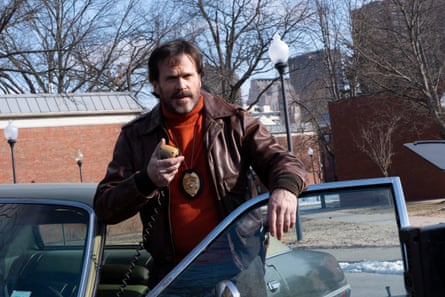
The visual and thematic landscape of "Dead Man’s Wire" is clearly influenced by the cinematic titans of the 1970s, directors who shaped Elwes’s early artistic sensibilities. "Billy Friedkin, Scorsese and Sidney Lumet, obviously. The plan was to try to make a film that evoked that era in cinema," he reveals.
A Journey from Paddington to Hollywood: Dreams Manifested
Elwes’s path from Paddington, London, to the glittering heights of Hollywood is a narrative fueled by an unwavering ambition. "I dreamed big, Fiona!" he exclaims, recalling his childhood fascination with the entertainment industry. "Even when I was a kid, from the moment I discovered television, I wanted to be in the entertainment industry. And I just manifested it. I really believe in that." His early immersion in the autobiographies of acting legends such as Laurence Olivier, Ralph Richardson, Richard Burton, Peter Sellers, and Peter O’Toole instilled a profound sense of purpose. "I was absolutely focused on doing everything I could to get into the business," he states.
His stepfather, Elliott Kastner, a prominent American film producer known for films like "Where Eagles Dare" and "The Long Goodbye," inadvertently provided Elwes with a formative experience at the tender age of 15. Due to the absence of Marlon Brando’s regular personal assistant, the young Elwes found himself serving as Brando’s stand-in for a week on the set of "Superman: The Movie." His duties included answering the door to Brando’s trailer, fetching meals, delivering script pages, and ensuring the legendary actor made it to set on time. While this might have been an intimidating prospect for a teenager, Elwes recounts the experience with characteristic calm: "I was a little nervous. He was a legend and I looked up to him." He then adds a curious detail: "So I had two godfathers influence me in my life, which is pretty strange."
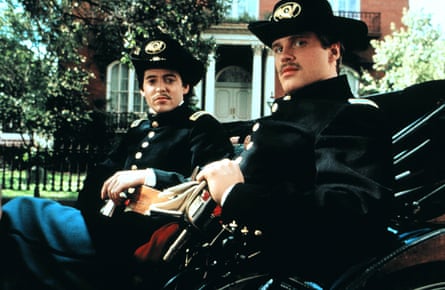
Upon relocating to the United States, Elwes pursued formal acting training at Sarah Lawrence College in Yonkers, New York. His professional debut came swiftly after graduation with a role in the 1984 film "Another Country," starring alongside Rupert Everett and Colin Firth. "So I got it from my first audition, which I don’t recommend because after that I thought it was too easy," he admits with a wry smile. This was followed by the role of Lord Dudley in "Lady Jane," opposite Helena Bonham Carter, a part that seemed to solidify his image as a romantic lead, paving the way for his iconic portrayal in "The Princess Bride."
Reclaiming Identity: Beyond the Swashbuckler
The initial box office disappointment of "The Princess Bride" served as a crucial "wake-up call" for Elwes, prompting a re-evaluation of his career strategy. He found himself inundated with offers for similar swashbuckling roles. "So even though The Princess Bride was not a success at this point, casting directors wanted to pigeonhole me [as the romantic lead] and I didn’t want that. I wanted to play character roles," he explains. His immersion in the rigorous training at the Lee Strasberg Institute proved instrumental in breaking free from this typecasting, allowing him to showcase a wider range of his acting abilities.
Since then, Elwes has demonstrated remarkable versatility, contributing to a diverse array of genres. His filmography includes critically acclaimed war dramas such as "Glory," chilling horror franchises like "Saw," tense thrillers including "Twister," "Kiss the Girls," and "Mission: Impossible," and successful comedies like "Robin Hood: Men in Tights" and "Liar Liar." He has also made a significant impact on television, appearing in popular series such as "The Marvelous Mrs. Maisel" and "Stranger Things."
The Enduring Power of a Beloved Role
When considering new projects, Elwes often gravitates towards roles that present a degree of challenge. "If I come across something I’m a little bit scared of, then that’s usually the thing I gravitate towards," he states. Yet, despite his extensive and varied career, it is his role as the dashing Westley in "The Princess Bride" that continues to define him in the public consciousness. It is a rare day when Elwes ventures out without being asked to deliver Westley’s signature line, "As you wish." Far from finding this repetitive request tiresome, Elwes embraces it with grace and professionalism. "This film brings people and families together," he reflects. "I feel I have a responsibility to it, but it’s a wonderful responsibility. You’re lucky as an actor to have your work resonate with anyone, so I don’t take that for granted." This profound sense of gratitude underscores the enduring legacy of "The Princess Bride" and Elwes’s integral part in its cultural tapestry.
"Dead Man’s Wire" is scheduled for release in cinemas on March 20th.