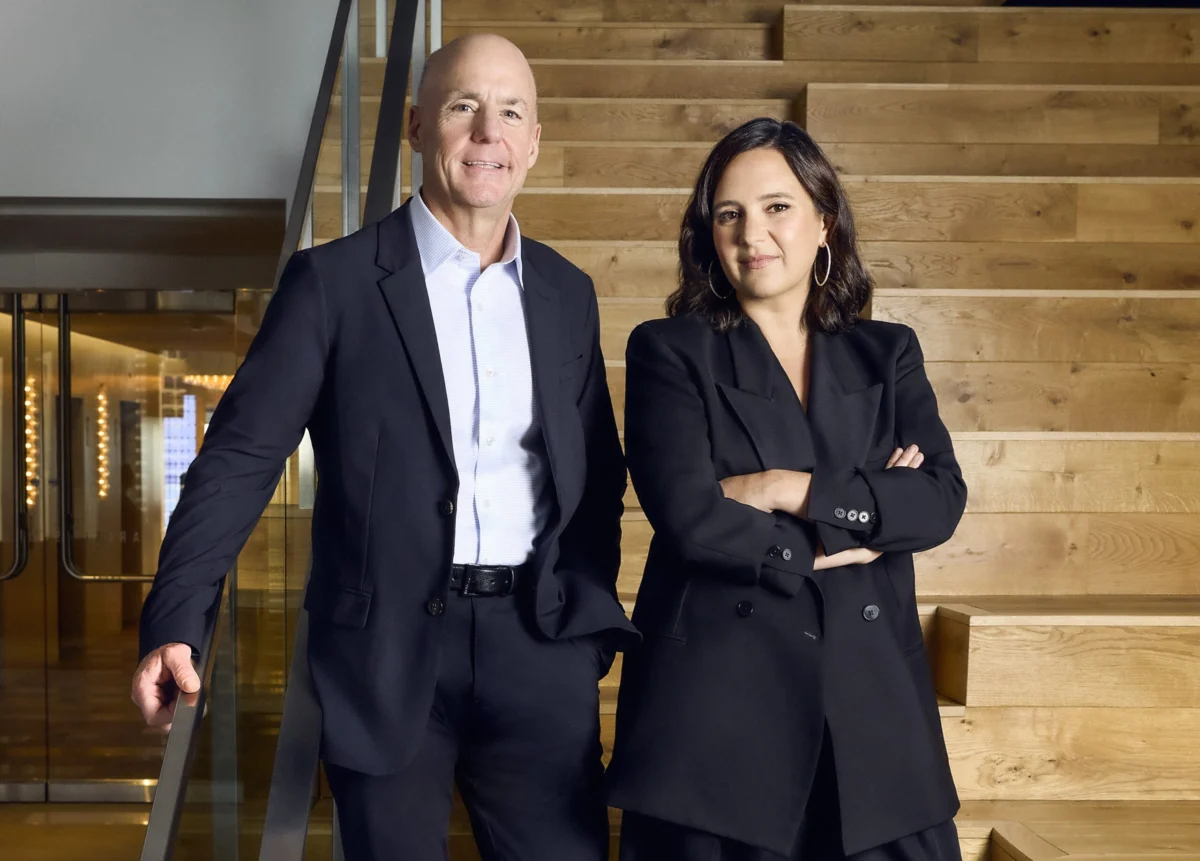
CBS News has initiated a significant round of layoffs affecting approximately 6 percent of its total workforce as part of a broader organizational restructuring led by Editor-in-Chief Bari Weiss and President Tom Cibrowski. The staff reductions, which were announced to employees on Friday morning, impact dozens of journalists and support staff across various departments. This move marks the second major wave of layoffs for the news division in a six-month period, following an October restructuring that saw the cancellation of several streaming programs and a complete overhaul of the network’s Saturday morning broadcast. However, these current cuts represent the first major personnel changes directly tied to the new editorial and strategic vision outlined by Weiss since she assumed her leadership role earlier this year.
In a joint internal memorandum distributed to the staff, Weiss and Cibrowski characterized the day as "difficult" but necessary for the long-term viability of the network. They argued that the traditional broadcast news model is facing an existential crisis due to radical shifts in consumer behavior and that the division must aggressively pivot toward digital platforms and emerging media formats to remain competitive. The leadership team emphasized that while certain legacy departments would be scaled back or eliminated entirely, the savings generated from these cuts would be reinvested into growth areas, specifically digital products and video podcasting, where they believe new audiences are rapidly congregating.
The Shuttering of a Century-Old Institution
Perhaps the most significant and symbolic component of the restructuring is the announced closure of CBS News Radio, effective May 22, 2026. The decision brings an end to a service that has been a cornerstone of American journalism since its inception in 1927. For nearly 100 years, CBS News Radio has provided critical news programming to a massive network of affiliates, which currently stands at approximately 700 stations across the United States. The dissolution of this division involves the elimination of all associated positions, marking a total exit from the terrestrial radio news business for the storied broadcaster.
The historical weight of CBS News Radio cannot be overstated. It served as the platform for some of the most iconic moments in 20th-century journalism, most notably the World War II dispatches of Edward R. Murrow. Murrow’s "This is London" reports helped define the role of the broadcast journalist as a witness to history. Furthermore, the division is home to the "World News Roundup," which holds the distinction of being the longest-running news broadcast in the United States. Weiss and Cibrowski acknowledged this legacy in their note to the radio staff, stating that the service served as the "foundation for everything" the network built over the last century.
Despite this history, management cited "challenging economic realities" and a fundamental shift in how local radio stations program their airtime as the primary drivers for the closure. The two-year lead time for the shutdown is intended to fulfill contractual obligations to the hundreds of affiliated stations that rely on CBS for national and international news coverage. This long-term wind-down is a rare move in an industry often characterized by immediate exits, reflecting the complexity of uncoupling from a century of syndication agreements.
The Weiss Strategy: Personality-Driven News and Digital Expansion
The layoffs serve as the practical implementation of the "Weiss Strategy," a plan to modernize CBS News by moving away from the "voice of God" institutional style of reporting toward a more personality-driven, experiential model. Since her arrival, Bari Weiss has sought to recruit and promote journalists who place themselves at the center of the story, emphasizing on-the-ground presence and a more direct, often more opinionated, engagement with the audience. This approach is designed to mirror the success of the "video podcast economy," where viewers gravitate toward individual voices and transparent perspectives rather than anonymous corporate branding.
A key pillar of this strategy is the stabilization and eventual growth of the network’s flagship morning and evening broadcasts, which have struggled with declining linear ratings for years. By integrating more contributors with diverse and often provocative viewpoints, Weiss aims to create "appointment viewing" that generates social media engagement and digital "clippability." The internal memo noted that the newsroom must "get smaller to make room for the things we must build," suggesting that the future of CBS News lies in high-margin digital content rather than the high-overhead production of traditional radio and linear secondary programming.
Labor Backlash and Corporate Consolidation
The reaction from labor organizations was swift and condemnatory. The Writers Guild of America (WGA) East, which represents many of the affected journalists, issued a scathing statement on Friday afternoon, attributing the cuts to "recklessness and greed." The union specifically targeted David Ellison, whose family’s Skydance Media is currently in the process of merging with Paramount Global, the parent company of CBS. The WGA East argued that the layoffs represent a degradation of a vital public service and expressed deep concern over the potential for further consolidation in the media industry.
The statement from the WGA East also alluded to reports that Paramount is exploring a potential acquisition of Warner Bros. Discovery, the owner of CNN. The union warned that allowing the Ellison family or Paramount to acquire additional news outlets would be detrimental to the health of American journalism, given the recent track record of staff reductions at CBS. "The dozens of CBS journalists laid off today have served the American people through their talent and dedication," the statement read, adding that the "damage" done to the news division in recent months should serve as a warning to regulators regarding further media mergers.
Contextualizing the Media Industry Downturn
The cuts at CBS News do not occur in a vacuum. The entire American media landscape is currently undergoing a period of intense contraction. In the past year alone, major news organizations including NBC News, ABC News, CNN, the Los Angeles Times, and the Washington Post have all implemented significant layoffs. The primary driver is a "double squeeze" on revenue: the continued decline of traditional cable and satellite television subscriptions (cord-cutting) and a softening advertising market as brands shift their budgets toward social media influencers and search engine marketing.
For CBS, the challenges are compounded by the corporate uncertainty surrounding its parent company, Paramount Global. As the company navigates a complex merger and acquisition process, there is immense pressure on every division to achieve "bottom-line efficiency." The decision to shutter the radio division, while historically painful, is a clear indication that the company is prioritizing digital scalability over legacy prestige. Terrestrial radio has seen its share of the advertising market dwindle as consumers pivot to on-demand streaming services like Spotify and Apple Podcasts, making the maintenance of a 700-station affiliate network an increasingly difficult financial proposition for a television-first company.
Timeline of Recent CBS News Restructuring
To understand the current state of CBS News, it is necessary to look at the sequence of events leading up to this Friday’s announcement:
- October Previous Year: CBS News conducts its first major round of layoffs under new corporate mandates. Several streaming-only shows are canceled, and the "CBS Saturday Morning" program undergoes a significant staff and format overhaul to reduce production costs.
- January Current Year: Bari Weiss is officially introduced to the staff as Editor-in-Chief. In an initial all-hands meeting, she outlines a vision for a "braver" and "more agile" newsroom that focuses on digital-first reporting and "center-of-the-story" journalism.
- February Current Year: Reports surface of a potential merger between Skydance Media and Paramount Global. Internal anxiety grows regarding how a new ownership group might view the news division’s profitability.
- March Current Year: The second round of layoffs is announced. Management confirms the 6 percent staff reduction and the total shuttering of CBS News Radio by 2026.
Implications for the Future of Broadcast Journalism
The downsizing of CBS News and the elimination of its radio arm signal a fundamental shift in the definition of a "national broadcaster." For decades, the "Big Three" (CBS, NBC, and ABC) were defined by their ubiquity—their ability to reach every American household via television, radio, and print syndication. By exiting the radio market, CBS is effectively conceding that it no longer needs to be "everywhere" in the traditional sense. Instead, it is betting that it can survive by being "everywhere" in the digital sense, through mobile apps, YouTube, and social media platforms.
However, critics of this strategy worry that the loss of legacy divisions like CBS News Radio will erode the institutional knowledge and the "boots-on-the-ground" reporting capacity that once made the network a titan of the industry. The move toward personality-driven news also carries risks; while it may drive short-term engagement, it can also lead to increased polarization and a perceived loss of objectivity, which has historically been the hallmark of the CBS News brand.
As the May 22, 2026, deadline for the radio division approaches, the industry will be watching closely to see if other major networks follow suit. The transition from a 20th-century broadcast powerhouse to a 21st-century digital content creator is proving to be a volatile process, marked by the loss of historic institutions and the displacement of veteran journalists. For now, the remaining staff at CBS News must navigate an "exceptionally intense news cycle" with a smaller team and a radically different mandate, as the network attempts to redefine its place in a fractured and rapidly evolving media ecosystem.