The television landscape has welcomed a new interpretation of one of literature’s most enduring tales of betrayal and retribution as PBS Masterpiece officially premiered its limited series adaptation of The Count of Monte Cristo. This eight-episode production, which debuted following the premiere of the reimagined The Forsyte Saga, brings Alexandre Dumas’ 1844 masterpiece to a modern audience with a focus on historical authenticity, psychological depth, and high-production value. Directed by the Academy Award and two-time Palme d’Or winner Bille August, the series seeks to distinguish itself from dozens of previous cinematic and television iterations by leaning into the nuances of character motivation and the stark political realities of 19th-century France.
The Genesis of a New Adaptation
The Count of Monte Cristo remains a cornerstone of Western literature, a sprawling epic that explores the themes of justice, mercy, and the corrupting nature of vengeance. This latest version is a collaboration between Mediawan and several international partners, designed specifically to capture the grandeur of Dumas’ vision through a limited series format that allows for a more leisurely exploration of the plot than a standard feature film.
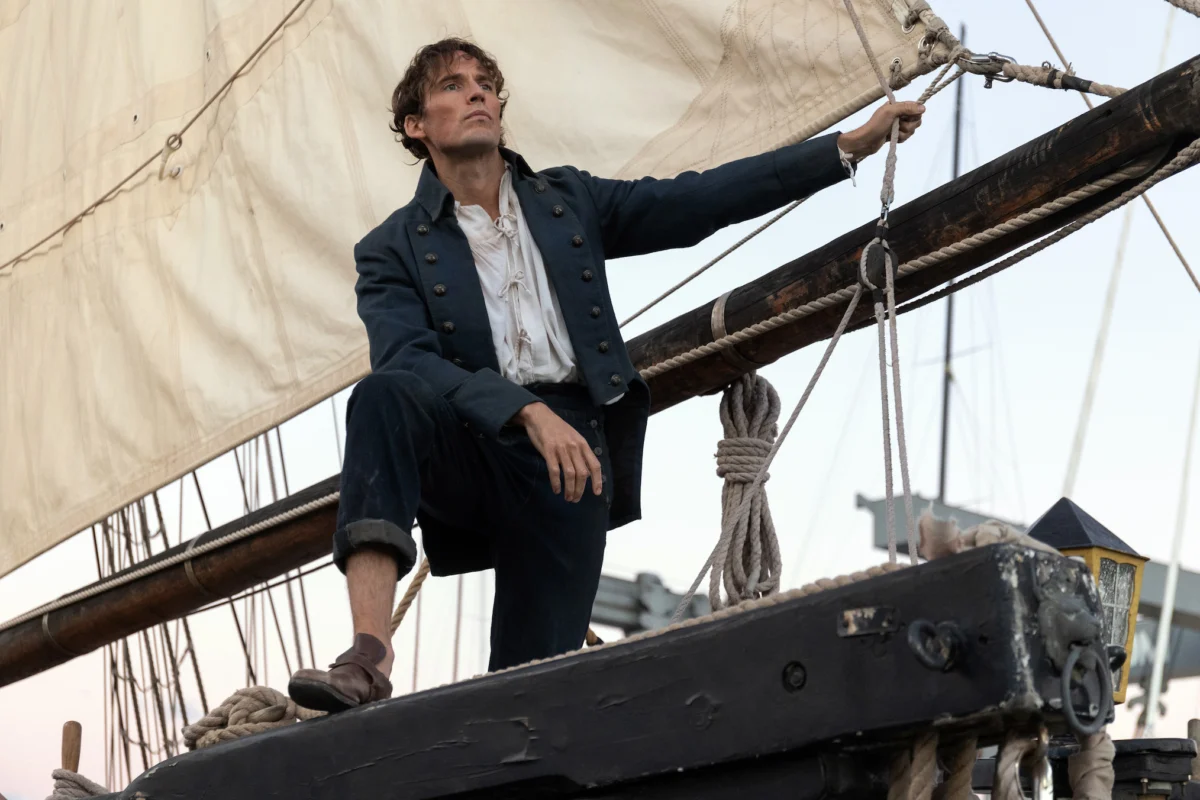
In the lead role of Edmond Dantès, Sam Claflin—known for his roles in Daisy Jones & The Six and The Hunger Games—takes on the challenge of portraying a man who transforms from a naive, optimistic sailor into a cold, calculating architect of revenge. Joining him is Academy Award winner Jeremy Irons as the Abbé Faria, the "Mad Priest" of the Château d’If who becomes Dantès’ mentor, providing him with the education and the means to reinvent himself. The series was filmed across several European locations, including Malta, France, and Italy, utilizing historical architecture to ground the narrative in the specific atmosphere of the Bourbon Restoration.
Narrative Breakdown: The Architecture of Betrayal
The series premiere establishes the foundational tragedy of Edmond Dantès with meticulous detail. Set in 1815, the story begins with Dantès returning to Marseille aboard the merchant ship Le Pharaon. His return is marked by professional triumph; following the death of the ship’s captain at sea, the ship’s owner, Monsieur Morrel, promotes the young and capable Dantès to the rank of captain. This promotion, however, serves as the catalyst for his downfall.
The primary antagonist in this early stage is Danglars, portrayed by Blake Ritson. As a senior officer on the ship who expected the promotion himself, Danglars’ professional jealousy curdles into a lethal conspiracy. He finds an ally in Fernand Mondego (Harry Taurasi), the cousin of Dantès’ fiancée, Mercédès (Ana Girardot). Fernand’s motivation is rooted in unrequited obsession; he believes that by removing Edmond from the picture, he can claim Mercédès for himself.
The conspiracy is executed through a letter of denunciation, accusing Dantès of being a Bonapartist agent. The historical context is vital here: in 1815, France was a tinderbox of political tension between the supporters of the exiled Napoleon Bonaparte and the restored monarchy of Louis XVIII. An accusation of treason was effectively a death sentence or a ticket to life imprisonment without trial.
The third pillar of the conspiracy is Gérard de Villefort (Mikkel Boe Følsgaard), the deputy crown prosecutor. Unlike Danglars and Fernand, Villefort’s motivations are not personal but purely political. During his interrogation of Dantès, Villefort realizes the young man is innocent—an unwitting courier for a letter intended for Villefort’s own father, a known Bonapartist. To protect his own career and family reputation from the taint of treason, Villefort destroys the evidence and orders Dantès to be secretly imprisoned in the Château d’If, a fortress from which no prisoner is expected to return.
Casting and Character Dynamics
The casting of the series has been a point of significant discussion among critics. Sam Claflin’s portrayal of Dantès in the premiere highlights the character’s initial vulnerability. His Edmond is a man of simple virtues—loyalty to his employer and devotion to his fiancée—making his sudden incarceration all the more jarring.
Jeremy Irons, as Abbé Faria, provides the intellectual weight necessary for the middle acts of the story. Faria is not merely a cellmate but a surrogate father who transforms Dantès’ mind. The relationship between the two men in the Château d’If is expected to be a highlight of the series, as Faria teaches Dantès languages, science, and the location of a hidden treasure on the island of Monte Cristo.
The supporting cast is equally robust. Ana Girardot’s Mercédès is portrayed with a sense of tragic agency, while the inclusion of Karla-Simone Spence as Haydée—an enslaved princess in the novel who becomes a key figure in the Count’s later life—suggests that the series will follow the book’s later, more complex subplots that are often excised from shorter film versions.
Production Value and Historical Accuracy
Director Bille August, renowned for his work on Pelle the Conqueror and Les Misérables (1998), brings a cinematic eye to the television format. The production design emphasizes the contrast between the vibrant, sun-drenched docks of Marseille and the oppressive, damp darkness of the Château d’If. By filming on location in Malta—doubling for 19th-century Marseille—the production achieves a level of scale that CGI cannot replicate.
The series also delves into the legal and social structures of the time. The premiere highlights the lack of due process for political prisoners during the Restoration, a period where the "White Terror" saw many former Napoleonic soldiers and sympathizers purged. By grounding the personal story of Dantès in these historical realities, the series adds a layer of weight to his eventual quest for "Providential" justice.
Comparative Analysis: Book vs. Screen
Initial reactions to the premiere suggest that this adaptation is one of the most faithful to Dumas’ original text in recent years. While the 2002 film starring Jim Caviezel took significant liberties with the ending and character relationships to fit a two-hour runtime, the eight-hour format of the PBS series allows for the inclusion of characters like Caderousse (Jason Barnett).
In the premiere, Caderousse is depicted as a weak-willed neighbor who witnesses the forging of the accusatory letter but fails to act out of cowardice and greed. This inclusion is critical for the later stages of the story, as Caderousse becomes one of the first targets of the Count’s elaborate "tests" of character. The series’ commitment to these secondary characters indicates a desire to explore the moral grey areas of the story rather than a simple "hero vs. villain" narrative.
The Broader Impact of Literary Adaptations on PBS
The arrival of The Count of Monte Cristo on PBS Masterpiece underscores a broader trend in the television industry: the return to prestige literary "event" programming. Masterpiece, which has been a staple of American public broadcasting for over 50 years, continues to leverage its reputation for high-quality British and European dramas to anchor its Sunday night lineup.
Industry analysts note that literary adaptations provide a "built-in" audience and a sense of prestige that original IPs often struggle to achieve in a crowded streaming market. By pairing Monte Cristo with The Forsyte Saga, PBS is positioning itself as the primary destination for viewers seeking sophisticated, long-form storytelling.
Chronology of the Series Premiere
The premiere episode follows a tight chronological structure that mirrors the first several chapters of the novel:
- The Arrival: Edmond Dantès arrives in Marseille on Le Pharaon and is promoted to captain.
- The Engagement: Edmond celebrates his betrothal to Mercédès, unaware of the brewing jealousy of Fernand and Danglars.
- The Conspiracy: Danglars and Fernand write the anonymous letter; Caderousse witnesses the act but remains silent.
- The Arrest: Royal guards arrest Edmond during his wedding feast.
- The Interrogation: Villefort discovers the letter is addressed to his father and realizes Edmond is an innocent pawn.
- The Condemnation: To save himself, Villefort burns the letter and consigns Edmond to the Château d’If.
- The Imprisonment: The episode ends with Edmond’s first night in the dungeon, marking the beginning of his 15-year ordeal.
Future Outlook and Audience Reception
As the series progresses, viewers can expect a shift in tone. The "innocence" of the first episode will give way to the "transformation" phase in the dungeon, followed by the "execution" of the revenge plot in the high society of Paris. The Count of Monte Cristo is a story that thrives on the slow burn—the meticulous setup of a trap that takes decades to spring.
The whole season is currently available for streaming via PBS Passport, a strategy that acknowledges the modern "binge-watching" culture while maintaining a traditional weekly broadcast schedule for linear television viewers. Early social media sentiment suggests that Sam Claflin’s performance is a major draw, with many praising the series for its lush visuals and adherence to the source material’s darker undertones.
In an era of rapid-fire content, this adaptation of The Count of Monte Cristo serves as a reminder of the power of a well-told classic. By focusing on the emotional cost of betrayal and the heavy burden of revenge, Bille August and his cast have created a version of the story that feels both timeless and timely. As Edmond Dantès begins his long wait in the dark of the Château d’If, the audience is left with the series’ central, haunting question: can a man seek total vengeance without losing his soul in the process?