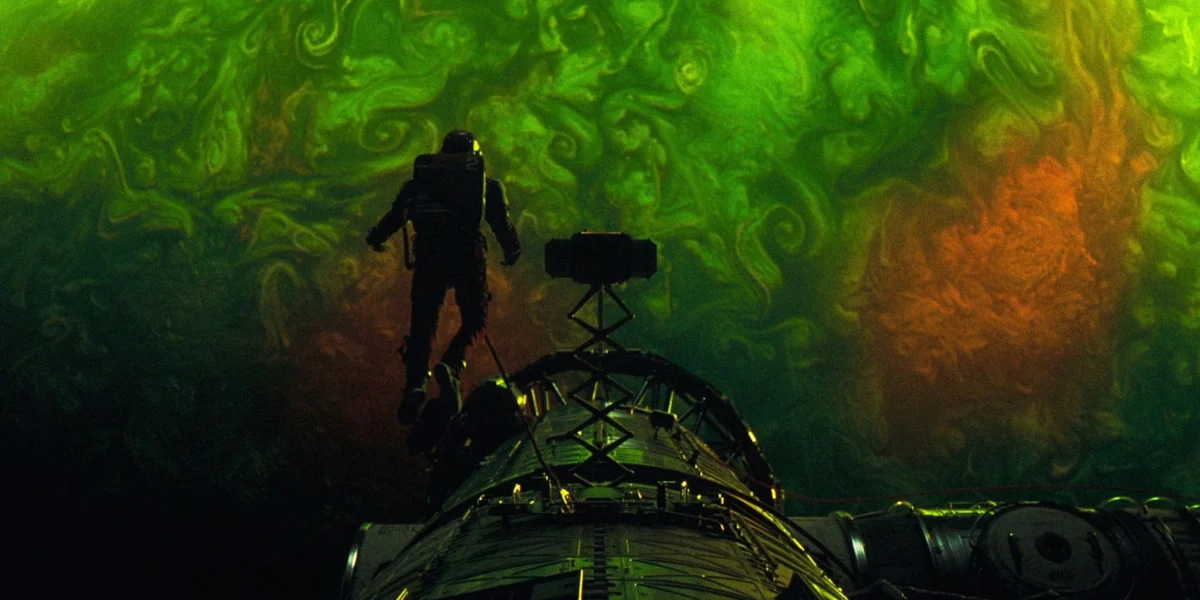
The 2025 Academy Awards season concluded less than a week ago, yet the trajectory of the 2026 awards cycle has already been fundamentally altered by the theatrical release of Project Hail Mary. Directed by the filmmaking duo Phil Lord and Chris Miller and adapted from Andy Weir’s best-selling 2021 novel, the film has arrived in theaters with a level of critical and commercial momentum rarely seen in the first quarter of the calendar year. Featuring a screenplay by Drew Goddard and starring Academy Award nominee Ryan Gosling, the production is currently dominating both box office receipts and critical aggregators, positioning itself as a formidable "juggernaut" that industry analysts suggest will remain relevant throughout the long road to the 98th Academy Awards.
The film’s early success is characterized by an exceptionally high Metacritic score and near-perfect ratings on Rotten Tomatoes from both critics and general audiences. While traditional awards strategy often dictates a late-autumn release to ensure proximity to the voting period, Project Hail Mary appears to be following a modern precedent established by films such as Everything Everywhere All At Once and the previous year’s record-breaking Sinners. These productions have demonstrated that immense critical acclaim coupled with sustained cultural visibility can overcome the perceived disadvantage of an early-year release.
Historical Context and Development Timeline
The path to the big screen for Project Hail Mary began even before the novel’s publication in May 2021. Metro-Goldwyn-Mayer (MGM) acquired the film rights for approximately $3 million in early 2020, demonstrating high institutional confidence in the source material. This confidence was largely rooted in the previous success of The Martian, another Andy Weir adaptation scripted by Drew Goddard, which earned seven Academy Award nominations in 2016 and grossed over $630 million worldwide.
Ryan Gosling was attached to the project as both the lead actor and a producer from its inception. The directorial search concluded with the hiring of Phil Lord and Chris Miller, known for their innovative work on the Spider-Verse franchise and The LEGO Movie. Principal photography took place throughout 2024, utilizing advanced production techniques designed to minimize reliance on traditional green screens—a detail that has become a focal point of the film’s marketing and critical praise. The film’s release in March 2025 was strategically timed to capitalize on a window with minimal blockbuster competition, allowing it to claim a significant portion of the IMAX and premium large-format screen market.
Critical Reception and Quantitative Performance
Initial data from the film’s opening weekend indicates a "box office explosion" that exceeds early tracking estimates. While specific domestic totals are still being finalized, the film is trending toward one of the highest March openings for a non-franchise science fiction property. On the critical front, reviewers have praised the film’s ability to balance complex scientific exposition with emotional resonance, a hallmark of Weir’s writing that Goddard has reportedly translated with precision.
The film’s audience score is particularly noteworthy, suggesting a level of populist appeal that often translates into the "Best Picture" conversation. In recent years, the Academy of Motion Picture Arts and Sciences has shown an increased willingness to recognize high-concept genre films that achieve both critical prestige and commercial dominance. Project Hail Mary fits this mold, bridging the gap between "hard" science fiction and the accessible, character-driven narratives that traditionally appeal to the broader Academy membership.
Analysis of Acting and Directorial Prospects
The central performance by Ryan Gosling is being cited as the film’s emotional and narrative anchor. Gosling portrays Ryland Grace, a schoolteacher-turned-astronaut who wakes up on a spacecraft with no memory of his mission or identity. Because the character spends a significant portion of the film in isolation or interacting with a non-human entity, the performance requires a high degree of technical skill and charismatic screen presence. Reports indicate Gosling is on screen for more than 90% of the film’s duration, drawing comparisons to other successful "solo" space performances, such as Sandra Bullock in Gravity or Matt Damon in The Martian.
While Gosling’s path to a Best Actor nomination appears relatively clear, the directorial category presents a more complex set of variables. Phil Lord and Chris Miller are celebrated for their kinetic style and technical innovation, yet the Directors’ Branch of the Academy has historically been hesitant to recognize directors associated with comedic or high-concept blockbuster backgrounds. This "snub" phenomenon was famously seen with Ridley Scott for The Martian and Christopher Nolan for Inception. However, if Project Hail Mary maintains its status as a top-tier Best Picture contender, Lord and Miller may follow the path of "The Daniels" (Everything Everywhere All At Once), whose undeniable creative vision eventually forced the branch’s hand.
Supporting performances are also under scrutiny, specifically that of Sandra Hüller. Coming off a string of highly acclaimed roles in international cinema, Hüller’s presence adds a layer of "prestige" to the ensemble. While her role as Eva Stratt is more functional than Gosling’s, her recent history with the Academy could facilitate a "coattail" nomination in the Best Supporting Actress category if the film sweeps the nominations.
Technical Achievement and Craft Categories
Below-the-line categories are where Project Hail Mary is expected to be most dominant. The film’s cinematography, handled by Academy Award winner Greig Fraser (Dune, The Batman), has been lauded for its stark, realistic depiction of deep space and its innovative use of lighting. Fraser’s involvement alone makes the film a frontrunner for Best Cinematography.

Furthermore, the production design and visual effects are being hailed as industry-leading. The decision to eschew traditional green screens in favor of more tactile, practical sets—combined with the sophisticated rendering of the alien character "Rocky"—positions the film as the primary challenger to upcoming sequels like Dune: Part Three. The sound design, which must navigate the vacuum of space and the unique linguistic challenges presented by the plot, is also expected to be a major contender.
Daniel Pemberton’s original score is another point of interest for analysts. Despite being one of the most prolific and respected composers in the industry, Pemberton has only one Academy Award nomination to his name (for Best Original Song). Critics note that his work on Project Hail Mary is more traditional and "Academy-friendly" than his experimental Spider-Verse scores, potentially securing him a long-overdue nomination for Best Original Score.
Broader Industry Implications and the 2026 Landscape
The emergence of Project Hail Mary as a powerhouse so early in the year highlights a shift in how studios approach the awards calendar. By releasing in March, the film avoids the "fall shuffle," where dozens of prestige titles compete for limited media attention and theater space. This strategy allows the film to build a narrative of "longevity," proving its staying power over several months of home media release and streaming availability.
However, the 2026 Oscar season is projected to be highly competitive. Several high-profile projects are slated for release later in the year, including:
- Dune: Part Three: Denis Villeneuve’s conclusion to the trilogy, which carries immense technical and critical momentum.
- The Odyssey: A high-budget historical epic that is expected to appeal to the Academy’s traditional tastes.
- Michael: The Michael Jackson biopic, which may dominate the acting and musical categories.
- Narnia: The Magician’s Nephew: Greta Gerwig’s foray into high fantasy, which will likely be a major craft contender.
The success of Project Hail Mary suggests that these later films will be the ones forced to react to Lord and Miller’s work, rather than the other way around. The film has set a high bar for technical excellence and emotional engagement that subsequent releases must now strive to meet or exceed.
Summary of Award Prospects
Based on current critical data, box office performance, and historical Academy trends, the following categorization represents the film’s standing as of March 2025:
Primary Contention (Most Likely):
- Best Picture: The film’s combination of critical acclaim and commercial success makes this a near-certainty in a ten-film field.
- Best Adapted Screenplay: Drew Goddard’s track record with Weir’s material and the film’s dialogue-heavy structure make this a strong bet.
- Technical Categories: Best Production Design, Best Sound, and Best Visual Effects are considered the film’s most secure paths to victory.
Strong Contention (Likely):
- Best Actor: Ryan Gosling’s performance is being viewed as a career-best, though the final field will depend on the strength of fall performances.
- Best Cinematography: Greig Fraser’s reputation and the film’s visual scale make it a top-tier candidate.
- Best Original Score: Daniel Pemberton is expected to benefit from the film’s overall strength.
Speculative Contention (Least Likely):
- Best Director: The branch’s history of overlooking genre directors remains the primary obstacle for Lord and Miller.
- Best Supporting Actress: Sandra Hüller’s nomination would likely require a significant "sweep" of the major categories by the film.
Ultimately, Project Hail Mary has transitioned from a highly anticipated adaptation to a legitimate cultural phenomenon. While the road to the 2026 Academy Awards is long, the film’s initial "blast off" has provided it with enough fuel to remain in the conversation until the final envelopes are opened. For a film centered on a desperate, long-shot mission to save humanity, its own path to Oscar glory appears increasingly secure.