In a landscape where technological disruption frequently sparks apprehension, the story of Rick Carter offers a compelling counter-narrative of adaptation and enthusiasm. At 73, with a storied career boasting two Academy Awards and an impressive filmography that spans modern classics from Forrest Gump to Star Wars: The Force Awakens, one might expect a seasoned veteran like Carter to be resting on his laurels. Instead, he has embraced the burgeoning field of artificial intelligence, opting to return to school to acquire new skills that he believes are indispensable for the future of filmmaking. His decision, highlighted in The Hollywood Reporter’s upcoming AI Issue publishing on March 31, underscores a significant shift in how the entertainment industry is grappling with the transformative power of AI.
The Veteran’s Venture: Rick Carter’s AI Journey
Rick Carter’s journey back to the classroom is not merely a personal pursuit but a reflection of a broader industry imperative. His illustrious career as a production designer has seen him shape the visual worlds of some of cinema’s most iconic productions. Beyond the aforementioned blockbusters, Carter’s touch can be found in films like Avatar, Jurassic Park, Cast Away, and Munich, demonstrating a consistent ability to innovate and define cinematic aesthetics across diverse genres and directorial visions. His two Oscars for Avatar and Lincoln are testament to his profound impact on the art form.
For Carter, this late-career pivot is rooted in a philosophy of perpetual evolution. "I’m just not a static person — I’m moving forward as long as I’m here and the artists I admire the most are those who’ve evolved throughout their lifetimes," Carter explains, articulating his motivation. "So that’s why I picked going down this road." This commitment to lifelong learning led him to Curious Refuge, an online institution that positions itself as a vanguard in teaching AI filmmaking techniques. His proactive stance stands in stark contrast to the widespread anxieties about AI’s potential to displace human talent, instead viewing it as an avenue for creative expansion.
Curious Refuge: A Sanctuary for AI Filmmaking
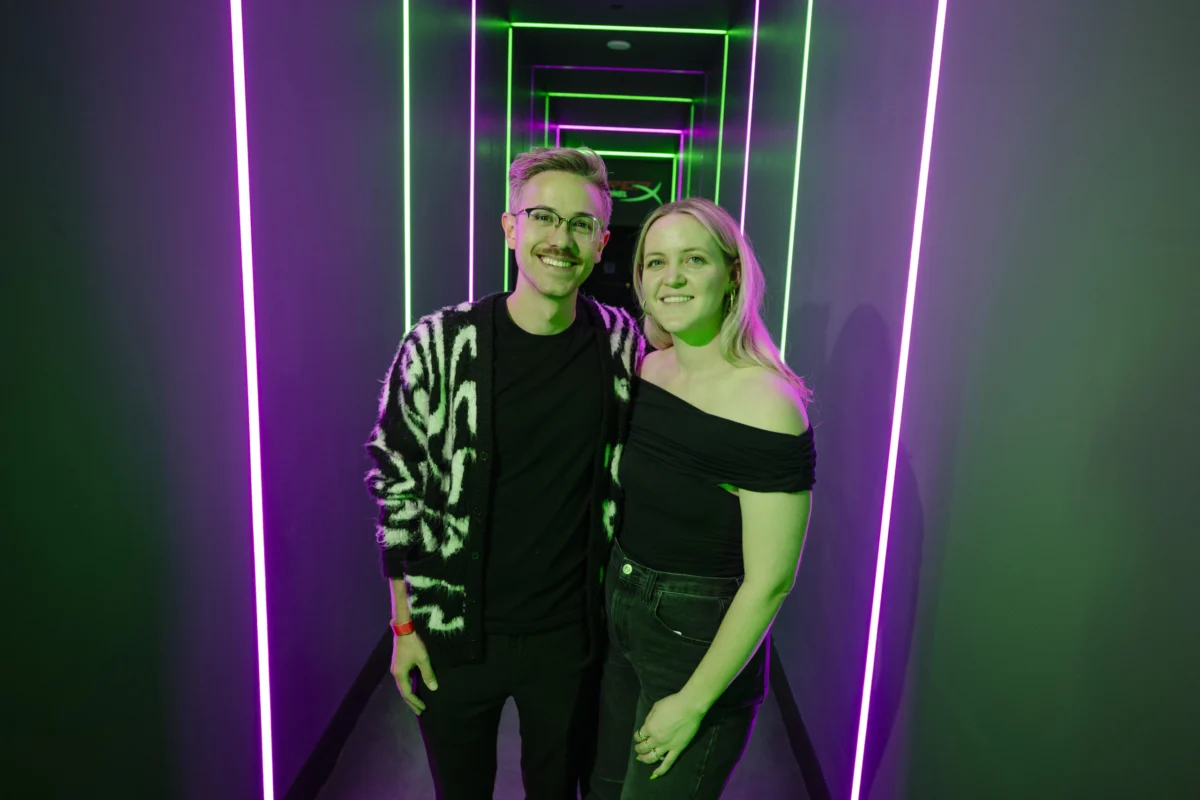
Founded three years ago by Shelby and Caleb Ward – a timeline considered an eternity in the rapidly accelerating world of AI development – Curious Refuge emerged from a vision to cultivate a "safe space" for creators across all backgrounds to master AI storytelling and production. The online-only school offers specialized coursework covering AI filmmaking, advertising, screenwriting, VFX, and documentary production. Its pedagogical approach combines video tutorials, hands-on training with various AI tools, and practical assignments. The ultimate test for students is to produce a short film primarily utilizing AI, a rigorous requirement designed to ensure practical proficiency. The Wards proudly report thousands of current students, with a remarkable 95 percent already employed within the entertainment or advertising sectors.
Initially, a palpable sense of trepidation characterized the school’s student body. Professionals, many hailing from Hollywood’s established studios, were hesitant to disclose their affiliations, treating their AI education as a clandestine pursuit. The very name "Curious Refuge" implicitly acknowledged this discreet environment, serving as a shelter for those "closeted AI-curious" individuals exploring the nascent technology. However, this reticence has begun to dissipate. "We had a lot of professionals out here in Hollywood joining our cohorts and learning with us, but they stayed quietly in the background," notes Shelby Ward, co-founder and COO of Curious Refuge. "Now they’re much more willing to say where they work, which studio they’re at." This shift signals a broader acceptance, if not outright embrace, of AI within mainstream industry circles.
Bridging the Gap: The "Prompt Engineering" Misconception
The evolving sentiment around AI in Hollywood is a study in paradox. On one hand, it is frequently depicted as an existential threat, an "apocalyptic job-destroying force." On the other, it is increasingly viewed as an "essential tool" for maintaining a competitive edge in a rapidly changing industry. Curious Refuge, in this context, embodies a fascinating irony: a platform offering a pathway to career resilience through the very technology often perceived as a threat.
Skeptics sometimes dismiss the concept of an AI filmmaking school with derision. "A school for typing prompts?" one colleague reportedly quipped, echoing a common misconception. This skepticism is often fueled by viral demonstrations, such as a short video clip featuring virtual versions of Tom Cruise and Brad Pitt, where the "filmmaker" claimed to have generated the sequence by merely entering two sentences into a tool like Seedance 2.0. Such examples, while showcasing AI’s impressive capabilities, inadvertently oversimplify the intricate process involved in creating professional-grade AI-assisted content.
Caleb Ward, CEO of Curious Refuge, directly confronts this simplification. "The biggest misconception about AI filmmaking in general is you type in a prompt and get a film," he states emphatically. "It’s artistry. It takes work to tell a meaningful story that resonates with other people. You can’t create an AI film that resonates with an audience without understanding how to craft an incredible story. We found the people making the very best AI-assisted films in our community are working professionals in the industry." This perspective highlights that effective AI filmmaking, far from being a purely automated process, requires a deep understanding of traditional narrative structures, visual aesthetics, and emotional resonance – skills typically honed over years in the industry.
While prompt engineering – the art of crafting effective text inputs for AI models – is indeed a crucial component of the curriculum, Curious Refuge’s approach extends far beyond simple textual commands. The coursework includes foundational instruction in traditional screenwriting techniques, even while encouraging the use of AI tools like ChatGPT to brainstorm plot points and story concepts, integrating AI at the very inception of the creative process.
The Evolving Landscape of AI Tools and Training
Producing a visually credible AI short film demands a considerably more nuanced technical understanding than casual observers might assume. The ecosystem of AI tools is vast and fragmented, each offering a dizzying array of options that require deliberate choices from the filmmaker. Consider the granularity of decision-making: should the footage emulate the classic look of a 35mm Panavision camera or the crisp digital aesthetic of a Sony FX3? What specific color grading style best serves the narrative? And for every sound effect, from a simple rustle to a complex "werewolf howl" (for which, surprisingly, 203 royalty-free options might be available), careful selection and integration are paramount. The process, therefore, is both infinitely simpler than traditional production in terms of physical logistics, yet far more complex in terms of navigating the technical and artistic choices within the AI realm.
Adding another layer of challenge is the relentless pace of technological advancement. AI tools are not static; they are constantly being updated, refined, or even rendered obsolete by newer, more powerful offerings. Taking an AI film class, therefore, is likened to pursuing an English degree where "every few months, the very rules of grammar change and the dictionary deletes and adds hundreds of commonly used words." This fluid environment underscores the value of a structured, curated educational experience.
This inherent volatility in the AI landscape is perhaps a key reason why Curious Refuge primarily attracts established professionals rather than novices. While a plethora of free online tutorials exist, the Wards contend that the internet’s overwhelming flood of often-conflicting and rapidly outdated information makes Curious Refuge’s carefully designed curriculum and expert guidance invaluable. Caleb emphasizes the hyperbole often surrounding new tool launches: "Every single post out there says, ‘This new tool launched and it completely changes the way that we tell stories forever’ — it’s incredibly hyperbolic." He asserts that Curious Refuge’s mission is to provide "a clear and objective path about what tools to use and what is actually helpful at the professional level."
The current cost for a single course at Curious Refuge is $749, with additional expenses for recommended online tools, which can range from $200 to $500 for a 10-minute professional-quality short film. The school is preparing to transition to a subscription model, which will offer unlimited access to its content library and enhanced one-on-one feedback with industry experts, reflecting a common trend in online education for continuous learning and community engagement.
Promise and the Professional Pipeline
Curious Refuge’s efficacy in career advancement is further bolstered by its parent company, Promise, an AI studio backed by significant industry players including Google, Peter Chernin’s North Road, and Michael Ovitz’s Crossbeam. Promise acquired the school last year, integrating it into a strategic ecosystem that not only trains AI talent but also provides a direct pathway to employment. Promise actively hires Curious Refuge graduates and assists students in securing positions elsewhere in the industry, effectively creating a dedicated "school-to-job funnel."
Jamie Byrne, co-founder and President of Promise and a YouTube veteran, explains the rationale behind the acquisition: "When we were creating Promise, we realized that competition for talent for the best Gen-AI artists was going to become pretty fierce." He adds, "I think that’s proving to be true. And we wanted to figure out how do we make sure that we always know who the best up-and-coming talent is." This proactive approach highlights the strategic importance of developing specialized AI expertise within the entertainment industry.
One notable success story is VFX artist Michael Eng, known for his work on Black Panther: Wakanda Forever. After completing courses at Curious Refuge, Eng reportedly "started getting work immediately," as he told Reuters. Shelby Ward elaborates on his success: "He’s incredibly in demand because so many people want to use his existing experience in the visual effects industry in conjunction with the AI tools that he knows." Eng’s trajectory exemplifies a new paradigm for career development in the creative sector: if the previous generation’s mantra for career security was "learn to code," the contemporary equivalent might well be "learn to prompt," but with the crucial understanding that "prompting" encompasses a much broader set of artistic and technical skills.
The Hybrid Future of Production
Byrne observes a rapid evolution in attitudes towards AI within major studios, noting that "not a day goes by" without calls from "some of the largest studios and production companies" worldwide inquiring about AI tools. Their immediate interest, he clarifies, isn’t in the wholesale production of entirely AI-generated films—at least not yet. Instead, studios are keenly exploring AI for specific, high-efficiency tasks: generating trailers for pitching ideas, pre-visualizing storyboards, and, most significantly, adopting a "hybrid model" where AI complements traditional filmmaking techniques.
"We’re very bullish on the use of hybrid — meaning shooting on a soundstage and using generative AI for effects and background," Byrne asserts. This approach allows for significantly more efficient cost structures and accelerated production timelines compared to physically shooting actors in diverse, often complex environments. The subtlety of this integration means that audiences may not even perceive AI’s presence. "I think people may be surprised by that because they don’t realize it’s happening — because it fits nicely into the existing ecosystem, right? You can move a little bit faster and you can achieve cost efficiencies, but you still have a cast and crew." This strategy suggests a future where AI acts as an invisible force multiplier, optimizing existing production workflows rather than outright replacing them.
AI and the Workforce: A Contentious Debate
Despite the optimistic outlook of educators and industry leaders like Caleb Ward, the potential downside of AI on employment remains a significant point of contention. In a Curious Refuge training video, Caleb boldly declares, "Is AI coming for your job? No. AI is not coming for your job. But AI will more than likely be required for your job, like a computer is required for most professions today." This perspective positions AI as an essential skill augmentation, rather than a replacement.
However, research and anecdotal evidence present a more complex and often grim picture. A study conducted last year involving 300 leaders across the entertainment industry revealed that three-quarters of respondents anticipated AI tools would lead to the elimination or consolidation of jobs, with an estimated 200,000 positions potentially impacted. These figures, while broad, hint at substantial shifts within the creative workforce, particularly in areas susceptible to automation or significant efficiency gains. Alongside Eng’s success, numerous reports from film and television artists losing their jobs amidst the escalating AI boom serve as stark reminders of this looming threat. The recent WGA and SAG-AFTRA strikes further underscored these anxieties, with AI regulation being a central demand in negotiations, reflecting widespread concerns about job security, intellectual property, and fair compensation in an AI-driven future.
Caleb Ward, while acknowledging these concerns, maintains his belief in AI’s supplementary role. "I really feel like AI is going to supplement the creative process. AI won’t be used for everything. It won’t be able to have taste. It won’t be able to craft something that is emotionally resonant." He draws parallels to historical technological shifts in Hollywood, arguing that innovations like the advent of sound or digital cinematography ultimately led to "more storytellers end up in the entertainment ecosystem," by expanding creative possibilities and making filmmaking more accessible.
Echoes of the Past: Lessons from CGI’s Dawn
Rick Carter’s decision to embrace AI is deeply informed by a past "sea-change moment" in Hollywood history, a pivotal experience that profoundly shaped his understanding of technological evolution. He recounts being present when Steven Spielberg made the groundbreaking decision to utilize nascent CGI technology for the dinosaurs in Jurassic Park, a choice that dramatically diverged from the traditional stop-motion animation then favored by industry veterans.
This decision directly impacted legendary stop-motion animator Phil Tippett, an "incredible artist" who suddenly faced the potential evaporation of his entire craft. Carter vividly recalls the moment of apprehension: "And [legendary stop-motion animator Phil Tippet], of course, who is an incredible artist, just saw his whole way of doing things potentially evaporating." Yet, Tippett adapted, contributing his expertise to the CGI models, effectively transitioning from manipulator of physical puppets to digital architect. "You still wanted Tippett’s point of view [in the modeling], but it was an example of somebody who saw that his way of doing things was being complemented by another development." This historical anecdote serves as a potent metaphor for the current AI revolution, suggesting that adaptation, rather than resistance, is the key to longevity and continued creative relevance.
Looking Ahead: Redefining Creativity in the AI Era
Despite the valid concerns about job displacement and the rapid pace of change, the Wards describe an overwhelmingly optimistic atmosphere within Curious Refuge, a sentiment shared by Rick Carter. This optimism stems from a belief in AI’s potential to democratize creativity, accelerate production, and unlock entirely new forms of storytelling.
Carter’s personal enthusiasm transcends mere professional necessity. "I have nothing in this game other than my own enthusiasm for something that’s new," he states, reflecting on the profound opportunity before him. "To just think about going from my age, to the end of my time, into a whole new era of how to express oneself." His perspective encapsulates the spirit of continuous innovation that has always driven Hollywood, reminding us that while tools change, the fundamental human desire to create and connect through stories remains constant. The journey of Rick Carter and the rise of Curious Refuge represent more than just a trend; they signify a fundamental redefinition of what it means to be a filmmaker in the 21st century, where human ingenuity, augmented by artificial intelligence, promises to unlock unprecedented creative horizons.