The eagerly anticipated sequel, Ready or Not 2: Here I Come, from directing duo Matt Bettinelli-Olpin and Tyler Gillett, collectively known as Radio Silence, has arrived, delivering a gleefully subversive and significantly more vicious follow-up to their 2019 cult hit. The film, which opened to critical and audience acclaim, plunges deeper into its predecessor’s satirical horror, presenting a narrative that consistently defies expectations while grounding its histrionic antics in striking character interiority. Beyond its increased gore and heightened stakes, the movie offers a cathartic commentary on corporate greed and the enduring power of imaginative resistance against entrenched systems.
A Deep Dive into the Immediate Aftermath
Ready or Not 2: Here I Come picks up precisely where the original film’s explosive climax left off. Audiences are immediately thrust back into the harrowing world of Grace (Samara Weaving), the sole survivor of the Le Domas family’s deadly "Hide-and-Seek" ritual. The opening scene witnesses Grace collapsing on the steps of the now-incinerated Le Domas estate, a testament to the supernatural and spectacular demise of her entire in-law clan, including her late husband. This bold narrative choice to begin in the direct aftermath of such an iconic moment sets a precedent for the sequel’s relentless pace and unyielding commitment to Grace’s enduring struggle.
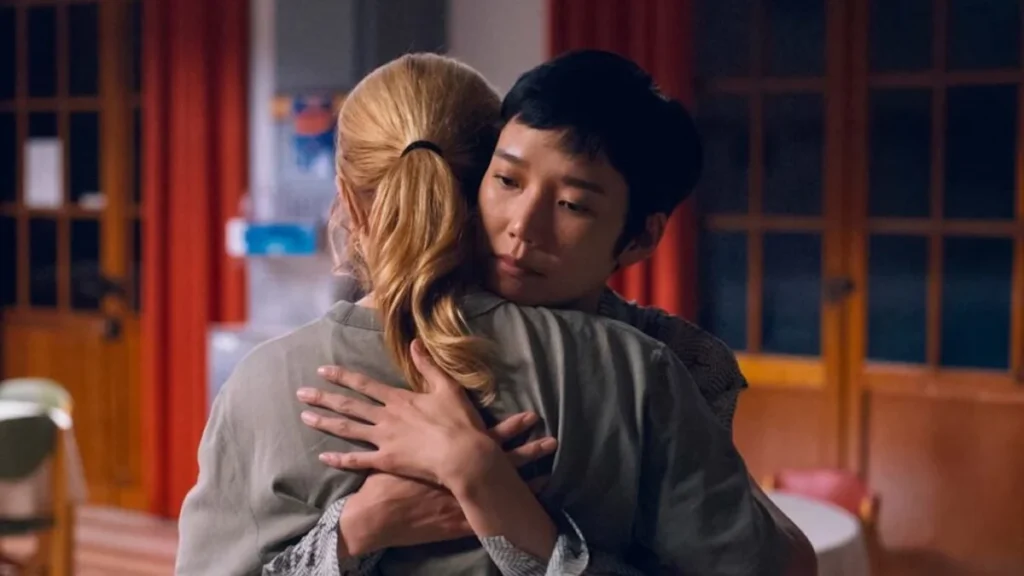
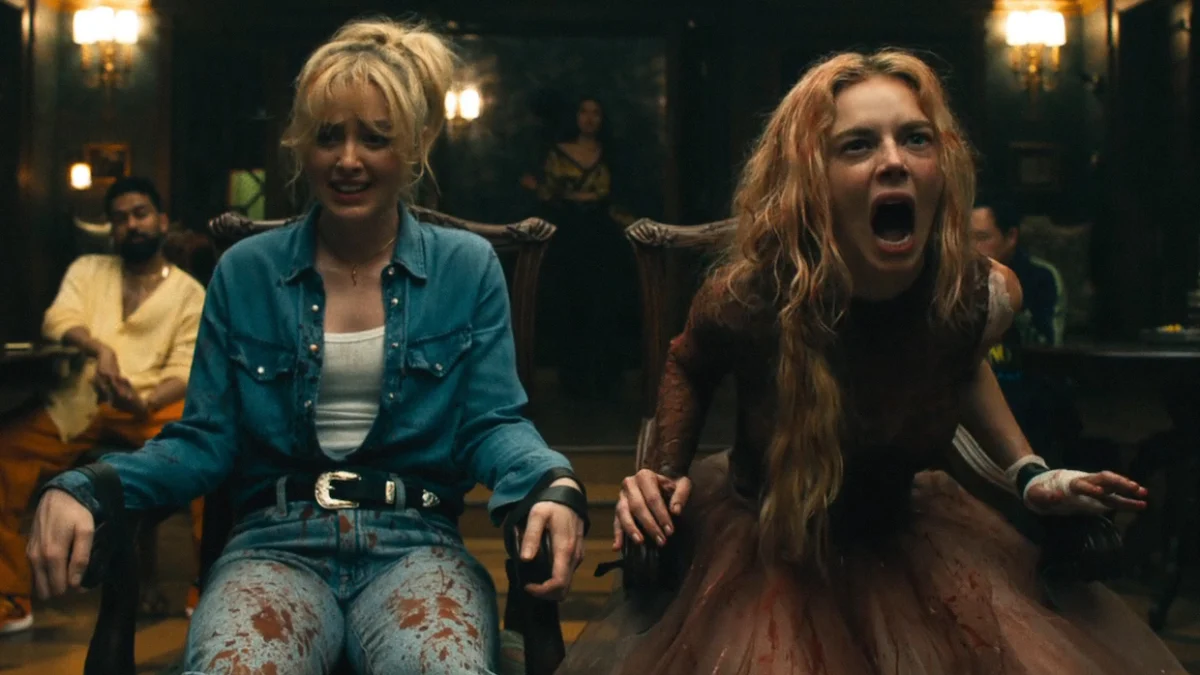
Before Grace can even process her survival or the trauma she has endured, she is confronted by her estranged sister, Faith (Kathryn Newton). Their reunion, however, is short-lived and fraught with tension, quickly giving way to their capture. It is revealed that the Le Domas family was merely one faction within a larger, more expansive capitalist Satanic cult. Now, other powerful families within this insidious network, spearheaded by the ruthless siblings Titus (Shawn Hatosy) and Ursula (Sarah Michelle Gellar), vie for leadership. Their path to power involves eliminating Grace and her sister, who must fight tooth and nail to survive until dawn, once again trapped in a deadly game where their lives are the ultimate prize.
Radio Silence’s Evolving Vision of Horror
Directors Matt Bettinelli-Olpin and Tyler Gillett, who operate under the banner of Radio Silence, have carved a distinct niche in contemporary horror cinema. Their filmography, which includes segments in anthology series like V/H/S and Southbound, as well as features such as Devil’s Due and the recent Scream franchise revival, showcases a consistent interest in blending genre conventions with sharp wit and often brutal violence.
Gillett explained the decision to open the sequel immediately after the first film’s ending: "I think what people responded to from the first film was Grace’s scrappiness and how, down to the very end, she never gave up. She had every bit of fight in her at the end of Ready or Not that she had at the beginning. We loved the notion of dragging someone through Hell and not giving them a break. Starting from the end was a fun way to suggest that the world of corruption and evil is much more expansive than just one family. The devil won’t wait for you." This approach not only maintains the momentum of Grace’s journey but also immediately broadens the scope of the film’s sinister universe, hinting at a much larger, more organized evil.
Bettinelli-Olpin elaborated on their recurring fascination with the supernatural: "It’s interesting to explore these questions of spirituality through characters who themselves have their own crises of faith. When you look at those movies with a stronger supernatural element, there’s a darkness to them. Ready or Not 2: Here I Come does go a bit darker in terms of the exploration of the divine." However, both directors are quick to clarify that their engagement with supernatural horror is often through a lens of subversion rather than earnest participation. Gillett stated, "What you’re seeing in our work is very much a skewering and subversion of that subgenre. A lot of it is the sense of humor that is derived from colliding our very human world and characters with the high-octane, survive-the-night stakes of our stories. I’m hesitant to say that our movies are entries into that canon." Bettinelli-Olpin added, "We try to treat our stories with a very grounded approach. I say that knowing that in both Ready or Not films, the fucking devil shows up at the end. It’s not subtle." This deliberate juxtaposition of the mundane with the overtly demonic is a hallmark of their style, allowing them to extract both horror and dark humor from the absurdity of their premises.
Subverting Expectations and Challenging Tropes
A core strength of Ready or Not 2 lies in its commitment to defying audience expectations, a trait Radio Silence honed with the first film. The directors highlighted instances where the narrative intentionally misleads, only to pivot sharply. Bettinelli-Olpin recalled a memorable moment from the original: "I think back to the first film when we saw the image of Samara with the shotgun, looking regal and badass. But when that scene actually comes up in the movie, the gun doesn’t work, and it’s not as ‘cool’ as the image showed." This calculated refusal to deliver conventional "cool" moments underscores their unique approach to action and character development.
In the sequel, this subversion extends to the portrayal of violence and the characters’ reactions to it. The "laundry machine kills," for instance, are designed to be uncomfortable and protracted, deliberately contrasting with the quick, stylized deaths often seen in horror. Gillett explained, "You feel uncomfortable because of how drawn out it is and how it doesn’t feel like a horror movie death." This choice emphasizes the brutal reality and messy consequences of violence, preventing the audience from becoming desensitized or celebrating bloodshed uncritically.
Furthermore, the film consciously avoids transforming Grace into a typical "superhero" archetype. Bettinelli-Olpin emphasized, "We’re so used to seeing these characters become superheroes, filled with bloodlust. But Grace is not that. She can protect herself and protect her sister when she needs to, but she’s still very human and she doesn’t want to just go around murdering people. There is a fine line to walk there where you want her to be fun and badass and get that revenge that we love, but also keep her very relatable and human. There’s kindness to her that I think she carries through the whole movie." This dedication to Grace’s humanity ensures that her struggles and triumphs resonate on a deeper, more empathetic level, making her a more compelling protagonist than a mere instrument of vengeance.
Themes of Resistance and Corporate Greed

At its thematic core, Ready or Not 2 expands on the original’s critique of wealth and power. The "capitalist Satanic cult" is no longer just a backdrop but a central force, highlighting the insidious nature of inherited privilege and unchecked greed. The film delivers a potent, albeit darkly comedic, "cathartic thrill of seeing the wealthy get their devilish comeuppance," aligning with a growing trend in popular culture that scrutinizes extreme wealth disparities.
However, the film aims for more than just simple revenge. It champions "the power of imaginative resistance." The choice presented to Grace—to either join a corrupt system or die fighting it—is a profound one. Bettinelli-Olpin articulated the film’s message: "If you’re given this power, do we really only have two options? Do we have to join a corrupt system or be killed? To have Grace take that moment and say, ‘I don’t believe that. I think there’s another way.’ We’re not presented with that option anymore." This refusal to accept predetermined, cynical outcomes positions Grace as a beacon of hope, demonstrating that even within the darkest circumstances, a third path rooted in defiance and alternative thinking can emerge.
Gillett reinforced this sentiment, stating, "In both versions of those scenarios, the bad guys win. I’m fucking sick of living in a world where the bad guys win. We don’t want to express that in our work; we want the good guys to get the shot at victory. It should be complicated, it should come at a cost, it should be bittersweet, but it’s fucking great when the bad guys get what’s coming to them." The directors consciously infuse their narratives with this hopeful, anti-cynical worldview, believing that genuine victory requires rejecting the very mindset of the oppressor.
Expanding the Universe: Budget, Practicality, and Memorable Gags
The sequel not only amplifies the narrative but also expands its visual and practical scope. Discussions around the film have highlighted the increased "blood budget," a natural progression for a film promising more viciousness. However, the directors also humorously pointed to a significant increase in the "candle budget." Bettinelli-Olpin recalled the shoestring operations of the first film: "I think in the first film we had a total of fifteen candles and three candelabras. We’d move them into each shot to give them the appearance of candelabras in these long hallways. We’d have to then blow them out immediately so that they wouldn’t melt. Otherwise, we’d have to get new fucking candles that we could not afford."
This anecdote underscores the difference in scale, allowing the sequel to fully realize the opulent, yet sinister, aesthetic of the expanded cult. The lighting, heavily reliant on candles, contributes to an atmosphere of ancient rituals and shadowy dealings, making the new families’ operations feel genuinely more competent and menacing than the Le Domas clan’s "cosplaying evil."
One of the film’s most talked-about moments involves a cameo by legendary director David Cronenberg, who delivers a line that has been hailed as one of the film’s best gags: "Approve the ceasefire." This moment perfectly encapsulates the film’s unique blend of the archaic and the modern. Bettinelli-Olpin explained its origin: "That was always funny on the page because our question was, ‘How do you distill this guy’s power into one moment?’ After Cronenberg says that line, it’s literally about three seconds before we see the notification that the ceasefire has happened." Gillett added, "But critically, the moment before it says there’s ‘no end in sight’ for the war, and then all of a sudden it gets resolved." This quick, impactful gag not only provides a moment of unexpected humor but also subtly reinforces the immense, almost supernatural, power wielded by these shadowy elite figures, capable of altering global events with a simple text message.
Character Arcs and Relatability
Beyond Grace, other characters in Ready or Not 2 are given surprising depth. Titus, played by Shawn Hatosy, offers a nuanced portrayal of a capital-V villain. The script meticulously traces his psychological unraveling through a series of significant slaps—from his father, his sister Ursula, and eventually, Faith. Bettinelli-Olpin noted, "Even though Titus is a capital-V villain in this movie, you want to know why he is the way he is. There’s something about those slaps, especially from his dad, where you do feel empathy for him, and you watch that get peeled away throughout the movie." This gradual descent into unchecked brutality allows for a deeper understanding of the forces that shape such characters within the cult’s hierarchy.
Gillett drew a parallel between Titus and Alex, Grace’s husband from the first film: "I think that those slaps imply that it’s not the first time his sister or his dad has hit him. Titus has probably been kept in line with physical attack for his entire life. Watching those two characters leave his life, and him come into his own, was an interesting idea for us. In a lot of ways, it’s what happens with Grace’s husband, Alex, in the first movie. His brother and mom both died, who are the pillars in his life, and he’s sort of left to just become what he’s always wanted to be." The parallel highlights how both men, though on opposing sides, are products of their oppressive environments, with Titus embracing the brutality Alex reluctantly succumbed to.
The Enduring Impact of Entertaining Thematic Depth
Radio Silence firmly believes in the power of entertainment to convey meaningful messages. Gillett expressed a common frustration: "I think that our tone gets written off because it’s entertaining and silly and fun. I think people think, ‘Oh, there’s nothing to see here.’ There’s no deeper significance, message, or meaning." He countered this perception, asserting, "I would say that some of the hardest work that we do is actually working to hide all of that nutritive shit inside of something that is hopefully digestible and approachable."
The directors’ approach reflects a philosophy that art should make you "feel first instead of think first." By wrapping profound thematic explorations—such as resistance against oppressive systems, the nature of evil, and the importance of choosing empathy over cynicism—within a thrilling, bloody, and often hilarious horror-comedy framework, Ready or Not 2: Here I Come achieves a unique blend of popcorn entertainment and thoughtful commentary. It solidifies Radio Silence’s reputation as master storytellers who can deliver genuine scares and laughs while subtly nudging audiences towards reflection on contemporary societal issues. The film stands as a testament to the idea that horror, even when outlandish, can be a potent mirror to our world, challenging audiences to consider their own choices in the face of daunting systems.