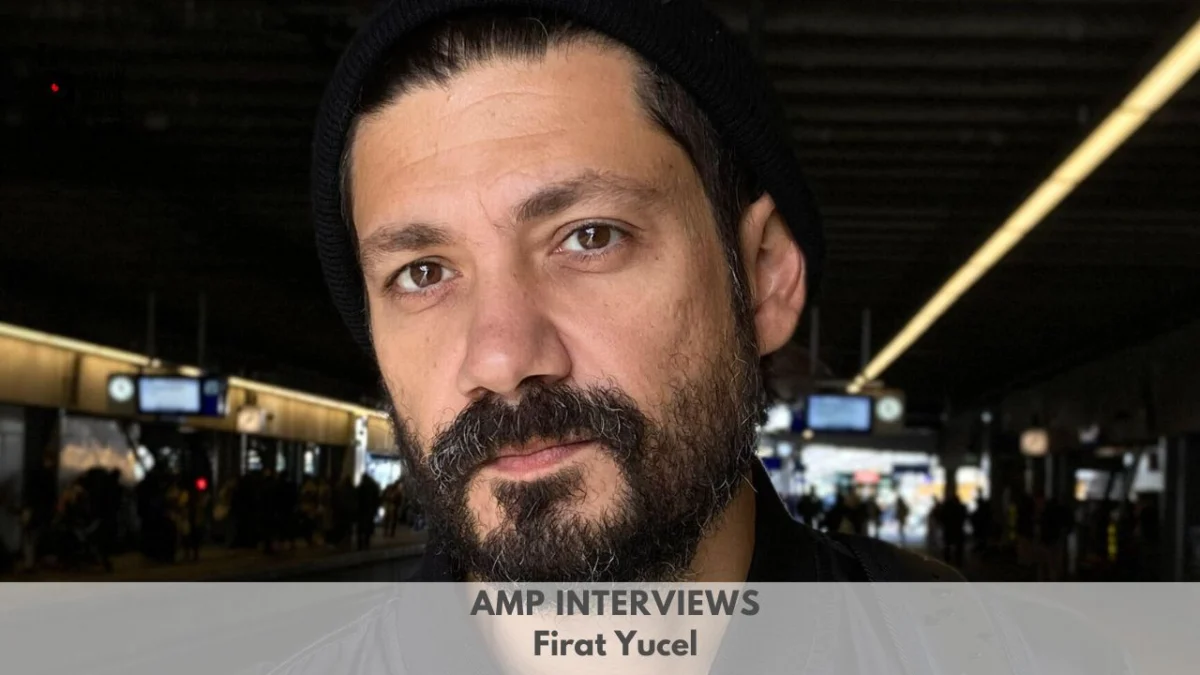
Documentary producer and editor Fırat Yücel, a prominent voice in contemporary political filmmaking, alongside producer Aylin Kuryel, has garnered significant attention for their latest collaborative work, "Happiness." This feature documentary, which they co-directed with the Image Acts Collective, directly confronts the harrowing reality of a livestreamed genocide, exploring its profound impact on individual consciousness and collective action in the digital age. Having premiered to critical acclaim, including screenings at the Thessaloniki Documentary Festival, the film has sparked vital discussions on media consumption, institutional complicity, and the evolving responsibilities of artists in an era of incessant global crises.
Based in Amsterdam and Istanbul, Yücel’s oeuvre consistently revolves around themes of collective filmmaking and resistance against censorship. His documentaries frequently delve into complex subjects such as exile, surveillance, and the fundamental right to the city, employing innovative forms like the video essay, desktop documentary, and biopic. Yücel is an active participant in the BAK Cell, Utrecht, within the Fellowship for Situated Practice, underscoring his commitment to practice-based research and socially engaged art. His previous work, "Translating Ulysses" (2023), co-directed with Image Acts Collective, received accolades at prestigious festivals including the Bloomsday Film Festival in Dublin and FIC.UBA in Buenos Aires, establishing his reputation for incisive and experimental storytelling. Kuryel, a crucial collaborator, brings a complementary theoretical and practical depth to their projects, particularly in exploring the intersection of media, affect, and political engagement.
"Happiness": A Response to Livestreamed Violence
The genesis of "Happiness" was not, as some might infer, a therapeutic endeavor to combat insomnia, but rather an urgent artistic and political response to the unprecedented livestreaming of the Palestinian people’s genocide. Yücel firmly rejects the notion of filmmaking as therapy, instead framing their work as a necessary confrontation with a stark contemporary reality. He cites Susan Abulhawa’s poignant observation that Palestinians are perhaps unique in history for being expected to witness their own genocide while simultaneously being policed on what they are permitted to say about it. This double bind, Yücel argues, extends to the global community of social media users, who are increasingly expected to bear witness to atrocities online and then simply carry on with their lives.
This phenomenon underscores a profound shift in how humanity experiences conflict. Unlike previous eras where war footage was filtered, delayed, and often sanitized by traditional media, the current digital landscape allows for real-time, unedited dissemination of violence, creating a unique form of digital witnessing. It is this condition that "Happiness" seeks to dissect and challenge. The filmmakers contend that the desktop cinema format, which purports to capture the reality of our relationship with digital screens, was the most appropriate medium to reflect on this pervasive state. Their motivation stemmed from a belief that the way livestreamed genocide infiltrates and affects daily life demands direct artistic engagement, not a quest for personal solace. On the contrary, Yücel provocatively suggests that the ability to sleep soundly while witnessing genocide online is, in itself, a greater cause for therapeutic concern.
The Strategic Choice of Video Essay and Desktop Documentary
The decision to employ the video essay and desktop documentary formats for "Happiness" was a deliberate artistic and political choice, offering a versatile framework to navigate the film’s complex themes. Yücel explains that the essayistic form seamlessly integrates literary elements into the narrative. While the film features a first-person diary, it functions more as a collage of collective experiences, encapsulating the shared liminal state of individuals oscillating between activity and passivity, both in physical spaces and behind their screens. This format, he notes, effectively reflects a collective state of mind grappling with overwhelming information.
Furthermore, it was crucial for the film to bridge local and global perspectives without resorting to simplistic narratives. The filmmakers intentionally steered clear of portraying the "interior guilt of a comfortable, middle-class protagonist," finding such a narrative uninteresting. Instead, they crafted a character who embodies the urgency of the migrant experience in Amsterdam: someone facing the threat of deportation, yet unable to remain disengaged while a genocide unfolds globally. This character inhabits a "liminal space" – suspended between sleep and wakefulness, and geographically "between here and there." The video essay, with its inherent flexibility and capacity for nuanced exploration, provided the ideal vehicle to capture these intricate political complexities.
Aylin Kuryel elaborates on the power of these forms, stating that working with video essay and desktop documentary "opens up a space to think through and with images rather than simply illustrating an argument." These formats inherently allow for the inclusion of "moments of research, hesitation, questioning of ideas and methods into the film texture itself." For "Happiness," the desktop format proved particularly meaningful because it enabled direct engagement with the vast material already circulating on screens. By rearranging and recontextualizing these images, the film renders their hidden connections visible. Desktop documentary, in this context, becomes a process of "re-seeing and reinterpreting what is there through the interface itself, turning browsing into a form of inquiry." As the cursor navigates, and windows open and close, the viewer is guided through a trajectory of attention, witnessing how one image leads to another, how a thought unfolds, mirroring a state of being caught "between images, between places, between action and paralysis." This immersive approach creates a visceral experience of the digital information overload that defines contemporary life.
Editing and Pacing: Mirroring Digital Reality
The editing process of "Happiness" is a testament to its thematic concerns, designed to reflect the multi-windowed surface of digital existence. Yücel describes a montage where the view of police on horseback passing a physical window intermingles with the virtual windows of a laptop browser. These spaces are not merely layered but are designed to transform one another. A striking example is the subversion of a sleep remedy like listening to white noise, which is converted into a call to action: "let’s make some noise." This literal transformation signifies a shift from passivity to active resistance.
The film also employs a layer of dark humor to underscore the inherently political nature of insomnia, challenging the common perception of it as a purely individual ailment. The filmmakers argue that no matter how diligently one attempts to reduce screen time or blue light exposure, the pervasive social anxiety generated by war is inescapable. This fundamental contradiction – the tension between individual efforts to disengage and the inescapable reality of global conflict – defines the film’s dialectical montage.
The deliberately fast pace of "Happiness" is another critical component of its artistic strategy. It is designed to mirror the frantic flux of images in the digital realm, capturing the tension between randomness and deliberation that characterizes online experience. The film explores the collision between the algorithms that curate our digital lives and our own autonomous political agency. Yücel explains that this relentless rhythm seeks to reflect the "rhythmic synchronicity of late capitalism": the ceaseless bombardment of consumer advertisements moving in lockstep with the bombing campaigns of imperialist expansion. To navigate such a complex and overwhelming landscape, the film’s pace had to be equally relentless, mirroring the sensory and political overload that defines contemporary existence.
Connecting Personal Anxiety with Global Political Violence
A central tenet of "Happiness" is the inseparable connection between personal anxiety and global political violence. Aylin Kuryel emphasizes that for the filmmakers, this was not about "making a connection" between two distinct realms, but rather about "making visible or contemplating a condition that is already there." She posits that what is frequently framed as personal anxiety is, in fact, an outcome of broader social and political structures. Kuryel draws on the work of critical theorist Sara Ahmed, particularly her book "The Promise of Happiness," which demonstrates how affects like happiness are not private states but are shaped and directed by normative social expectations. Similarly, anxiety, Kuryel argues, emerges from living within these socio-political conditions.
In this sense, "Happiness" does not merely link two separate spheres but meticulously traces their inherent entanglement. The film portrays insomnia, restlessness, and the inability to detach from the screen not as individual pathologies but as collective symptoms of a world where violence is continuously mediated and circulated. Simultaneously, these shared affective states are presented as potential catalysts for collective attention, solidarity, and action. While a tension exists between the "here" and "there," the "screen" and the "street," Kuryel clarifies that these are not strict binary oppositions or mutually exclusive states; rather, they are deeply interconnected facets of contemporary experience.
"Happiness" as a Political Film: Image Politics and Emotional Landscapes
The filmmakers unequivocally assert "Happiness" as a political film. Aylin Kuryel explains that the film engages with the idea that happiness is not merely an individual emotion but can serve as a "tool of normative social orientation." Reaffirming Sara Ahmed’s insights, Kuryel notes that "the promise of happiness" often steers individuals toward particular ways of living, functioning as a disciplinary mechanism that reinforces the existing social order. Thus, "Happiness" delves into the "politics of emotions and politics of images." Furthermore, Kuryel views the act of filmmaking itself as a response to unfolding events, an attempt to make sense of the present without prematurely resolving its complexities. It is a means of "staying with certain questions and opening up another channel to discuss them."
Fırat Yücel takes this assertion a step further, declaring that "ultimately, every film is political." He illustrates this by suggesting that even romantic comedies, seemingly apolitical, can be seen as "propagandizing heteronormativity and setting the norms for relationships." In this broader understanding, "Happiness" emerges as a film primarily concerned with "image politics" – the ways individuals react to images and the actions that stem from these reactions. This perspective underscores the film’s ambition to move beyond mere depiction, towards an active engagement with how visual media shapes our understanding of and response to the world.
Navigating Digital Complicity and the Potential for Collective Witnessing
The question of whether watching war through screens fosters a sense of passive complicity is a critical point addressed in the film and by the filmmakers. Aylin Kuryel acknowledges that it can indeed produce "a sense of paralysis," but she redirects the inquiry to examine how such passivity is generated. She argues that images and information are not simply "out there" for consumption; they are actively "filtered, ranked, suppressed, and at times actively invisibilized by commercial and complicit media platforms." What often appears as passive consumption, Kuryel suggests, is largely shaped by these underlying infrastructures, by what is made visible, what is obscured, and how attention is directed.
However, Kuryel emphasizes that this is not the complete picture. She invokes Nicholas Mirzoeff’s concept of "seeing in the dark," highlighting that individuals are also learning to "piece together fragmented, circulating images and testimonies in order to grasp realities that are not fully visible within dominant media frameworks." In this sense, online circulation, despite its pitfalls, can enable forms of collective witnessing that, while not always translating directly into organized action, can certainly be a crucial part of it. The issue, therefore, is not simply that screens induce passivity, but that they are "contested spaces." They possess the capacity to generate distance and numbness, yet simultaneously can evolve into "sites of attention, connection, and political activation." This nuanced perspective challenges a simplistic condemnation of digital media, instead advocating for a critical engagement with its dual potential.
Institutional Complicity in Systemic Violence
"Happiness" bravely tackles the concept of "institutional complicity in systemic murder," a powerful accusation that the filmmakers do not shy away from clarifying. Fırat Yücel specifies that in the context of their film, this refers directly to Dutch universities that maintain partnerships with Israeli institutions. He contends that these Israeli institutions "directly host sites for military technology development," serving not only as "ideological engines of occupation" but also providing "critical scientific infrastructure for autonomous drones, surveillance systems, and weapons of mass destruction." Consequently, Yücel asserts that any university that fails to sever its ties with these entities is "complicit in systemic violence."
This critique resonates with a broader global movement advocating for academic boycotts and divestment from institutions perceived as supporting human rights abuses or military occupation. Such movements gained prominence during the anti-apartheid struggle in South Africa and have seen resurgence in various contexts, including the Israeli-Palestinian conflict. Proponents argue that academic collaborations can lend legitimacy and material support to oppressive systems, making universities morally obligated to divest. Opponents often counter that academic freedom necessitates open collaboration and that boycotts stifle dialogue and research, potentially harming innocent academics. "Happiness" firmly aligns itself with the former, pushing for a re-evaluation of ethical responsibilities within academic partnerships.
Desensitization to War and the Media Landscape
The question of whether Western audiences have become desensitized to war through constant media exposure elicits a multi-layered response from Fırat Yücel. He suggests that such audiences might have already been desensitized to conflicts and genocides in West Asia and Africa even before the current level of media saturation. Yücel reframes the issue as fundamentally a "war between state propaganda and the grassroots counter-propaganda of the people."
He acknowledges that media exposure, when driven by individuals and independent outlets, can indeed "activate global movements," citing historical examples such as the Vietnam War, the World Tribunal on Iraq, and the ongoing anti-genocide protests for Palestine. However, a critical distinction is drawn when "imperialist, pro-war state propaganda takes over," particularly when entities like the IDF "disseminate images of torment and atrocity toward Palestinians and activists." In such scenarios, Yücel argues, the sheer weight of these imposed images can be paralyzing. He concludes that the public feels powerless not when they are sharing "images from below" – those generated by affected communities and grassroots activists – but when "those images are being violently imposed on them from above," designed to control narratives and suppress dissent. This analysis provides a crucial framework for understanding the complex dynamics of media influence in conflict zones.
Filmmaker Responsibility and Future Directions
On the critical question of whether filmmakers bear a responsibility when engaging with real-time political crises, Aylin Kuryel’s response is concise yet profound: "Yes, in the sense that any publicly active position carries responsibility." This statement underscores the ethical imperative that guides their work, recognizing that artistic expression in the public sphere is never neutral, especially when confronting issues of life and death.
Looking ahead, the Image Acts collective, with which both Fırat Yücel and Aylin Kuryel are affiliated, continues its blend of collaborative and individual projects. Kuryel reveals an exciting upcoming endeavor that revolves around the concept of "watching the watchers." This project involves following a story centered on a camera ingeniously constructed out of police weaponry, specifically designed to document police violence. This future work signals a continued commitment to critical media practice, utilizing innovative methods to challenge power structures and bring accountability to light, further solidifying their reputation as vital voices in contemporary political documentary. Their ongoing efforts promise to keep pushing the boundaries of what cinema can achieve in confronting the most pressing social and political issues of our time.