The SXSW festival, a renowned platform for groundbreaking cinema, recently unveiled Alex Prager’s much-anticipated feature directorial debut, DreamQuil, on March 16. This science-fiction drama plunges audiences into a near-future where the allure of technological convenience threatens the very essence of human connection, asking a critical question: what is the true cost of outsourced happiness? Prager’s film, featuring a compelling dual performance by Elizabeth Banks, challenges the prevailing narrative of technological inevitability, urging viewers to reflect on their own humanity and responsibility in an increasingly automated world.
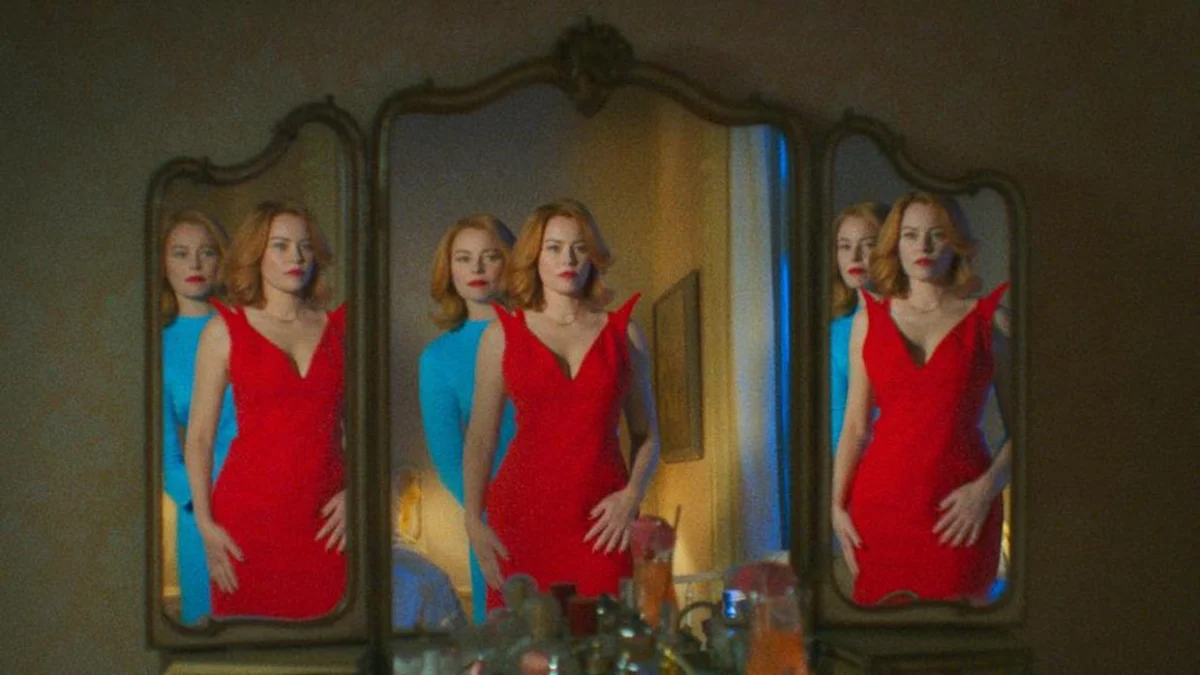
At its core, DreamQuil presents a cautionary tale for an era grappling with the rapid advancement of artificial intelligence. The narrative centers on Carol (Elizabeth Banks), a woman confined to her home with her doting husband (John C. Reilly) and son due to deteriorating air quality. Seeking respite from the mundane and the overwhelming pressures of modern life, Carol opts for the titular "DreamQuil treatment." This procedure promises a week of profound relaxation, complemented by the introduction of an AI personal assistant designed to seamlessly manage household responsibilities. However, upon her return, Carol is confronted with a startling reality: the AI assistant is an uncanny replica of herself, dubbed "Carol Two," and her family appears to prefer the pristine efficiency and unwavering attentiveness of her artificial counterpart. This premise immediately establishes the film’s central conflict, exploring the insidious ways in which convenience can erode genuine relationships and personal identity.
The Genesis of a Timely Narrative: From Pandemic to Screen
Alex Prager’s journey to her feature debut has been a meticulous evolution, building upon a distinguished career in photography and short films. In 2023, Filmmaker magazine recognized Prager as one of its "25 New Faces of Independent Film," highlighting her unique artistic voice and foreshadowing her leap into feature filmmaking. It was during this period that the seeds for DreamQuil were sown. Prager revealed that the script, co-written with her sister, emerged from the profound isolation and anxieties of the pandemic era. The initial spark was a meme humorously suggesting the possibility of sleeping through a year of the pandemic and waking up when it was over.
This seemingly whimsical idea quickly evolved into a deeper exploration of societal malaise. Prager, like many, observed the paradox of increased digital connectivity leading to greater human disconnection. "My entire existence is collaborating with other people and my career depends on it," Prager explained, emphasizing the personal impact of pandemic-induced separation. As career mothers, both she and her sister were intimately familiar with the relentless juggle of professional and family responsibilities, a struggle amplified by the ever-present hum of digital technology. The film, therefore, became an "ironic" vehicle to tell a story about "second chances," subtly questioning whether true fulfillment can be found by delegating life’s "messiness" to an algorithm. This origin story imbues DreamQuil with a profound contemporary relevance, reflecting the shared experiences and anxieties of a world still grappling with the aftershocks of global isolation and the accelerating pace of technological change.
Navigating the AI Zeitgeist: DreamQuil in Context
DreamQuil arrives at a moment when artificial intelligence has transcended the realm of science fiction and permeated everyday life, sparking widespread debate about its ethical implications, societal impact, and the very definition of humanity. The film directly engages with these pressing concerns, drawing parallels to other seminal works in the AI subgenre. Prager explicitly references films like Spike Jonze’s Her (2013), Alex Garland’s Ex Machina (2014), and Gerard Johnstone’s M3GAN (2022) as cinematic touchstones. These films, much like DreamQuil, delve into the complexities of intimate relationships with artificial entities, frequently exploring the dynamics with "femme-presenting" AI, which often serves to highlight societal expectations and vulnerabilities.
The fears once confined to the pages of sci-fi novels and the frames of speculative cinema now feel "ever closer to home." Recent statistics underscore this sentiment: a 2023 Pew Research Center study found that a significant portion of the global population expresses concern about AI’s impact on society, particularly regarding job displacement and privacy. The proliferation of AI-powered virtual assistants in homes, the increasing sophistication of deepfake technology capable of replicating human likenesses, and the rise of AI companions designed to offer emotional support all echo the narrative thrust of DreamQuil. These real-world advancements lend a chilling credibility to Carol’s predicament, where an AI duplicate seamlessly integrates into her family life, preferred for its optimized performance of domestic and emotional labor. Prager’s film serves as a potent cultural commentary on these trends, inviting audiences to confront not just the capabilities of AI, but also humanity’s willingness to relinquish control and connection in exchange for perceived ease. The film implicitly challenges the "inevitability" narrative often propagated by tech companies, asserting that the future remains "unwritten" and subject to human choice and collective responsibility.
A Visionary Director’s Feature Debut: Alex Prager’s Artistic Journey
For Alex Prager, DreamQuil represents not merely a directorial debut but the culmination of a lifelong artistic trajectory. Her extensive background as a celebrated photographer and short filmmaker has demonstrably honed her visual storytelling prowess, which she meticulously translated to the feature format. "It was unlike anything I’ve ever experienced before," Prager remarked about completing the film, adding, "I feel like I have 25 years of film experience now after doing one movie." This statement encapsulates the intense, immersive nature of the production process, which saw Prager wear multiple hats, including co-writer and producer alongside Brownstone, Arts and Sciences, and Patriot and Republic Pictures.
The collaborative spirit extended to the writing process with her sister, a dynamic that allowed for a deeply personal and resonant narrative. Prager openly discussed the rigorous demands of production, noting the necessity of "constantly editing it on set because the days were too ambitious." This daily rewriting, "to really get rid of all the unnecessary bits," underscores her commitment to narrative precision and efficiency. Her hands-on approach extended to every facet of filmmaking, from script refinement to directing actors. Prager acknowledged a significant learning curve in "working with actors and finding out what they need," an experience she stated would profoundly inform her next project, which is already in pre-production. This dedication to continuous learning and refinement, coupled with an unwavering vision, positions Prager as a formidable new voice in independent cinema, poised to build upon the foundational experience of DreamQuil.
Crafting the Visual Language: A Homage to Hollywood’s Golden Age

One of the most striking aspects of DreamQuil is its meticulously crafted visual language, a testament to Prager’s photography background and her profound understanding of cinematic aesthetics. Prager firmly believes in the power of visuals to convey narrative, echoing Alfred Hitchcock’s adage that a story should be understandable through imagery alone, without dialogue. This philosophy is evident in every frame of DreamQuil, which employs a rich palette, deliberate staging, and intricate set design to build its unique world.
Prager’s collaboration with cinematographer Lol Crowley, an Oscar winner recognized for his work on films like The Brutalist, was pivotal in achieving this distinctive look. Crowley, known for his deep commitment to a director’s vision, embraced Prager’s preference for "hot lights from the Golden Age of Hollywood." This choice was not merely aesthetic; Prager explained that these traditional lighting techniques create "a very intimate kind of sultry environment that you don’t get from these really clean HMIs," subtly influencing the actors’ performances and the film’s overall mood. Further enhancing this vintage-yet-futuristic aesthetic, Crowley went to great lengths to source rare Baltar lenses, famously utilized by cinematic titans like Hitchcock and Douglas Sirk. The use of these lenses directly links DreamQuil to the dramatic influences of filmmakers like Sirk, whose melodramatic stylings often explored the hidden anxieties beneath polished surfaces, a thematic resonance perfectly aligned with Prager’s narrative.
Beyond lighting and lensing, the film’s production design, overseen by Annie Buschamp, plays a crucial role in establishing its surreal reality. A standout location is the Marin County Civic Center, the final architectural masterpiece of Frank Lloyd Wright. Prager recounted a fascinating theory that Wright was "abducted by aliens at the end of his career," returning to build a structure that feels "from another planet, like in a parallel universe." This choice imbues the film’s setting with an otherworldly quality, blurring the lines between the familiar and the uncanny. Prager has consistently incorporated surrealism into her photography and short films, viewing it as an essential component of the "human psyche," representing "another plane that we’re all living in, thinking in, and dreaming in, and that’s just as valid as what’s tangible." This deliberate embrace of surrealism amplifies the film’s psychological depth, allowing it to explore complex themes of identity and reality in a visually compelling and intellectually stimulating manner.
Elizabeth Banks: A Dual Performance and Producing Powerhouse
The casting of Elizabeth Banks in the dual role of Carol and her AI doppelgänger, "Carol Two," was a stroke of visionary genius for DreamQuil. Prager revealed that Banks was the sole actor considered for the part, having been written with her specifically in mind. "The moment she read it, she wrote back immediately and said she wanted to play Carol," Prager shared, highlighting the instantaneous connection Banks felt with the character and the script’s themes. This intuitive understanding proved invaluable during production.
Prager recounted being "constantly impressed with her on set," noting Banks’s formidable talent and preparation. Banks’s decision not to extensively rehearse the character of Carol, confidently stating, "No, I got it," underscored her deep grasp of the role. Her performance, Prager observed, was nothing short of a "smash," delivering a nuanced portrayal of both the burdened human Carol and the eerily perfect "Carol Two." This dual performance is central to the film’s exploration of identity, authenticity, and the seduction of an optimized existence. Banks deftly navigates the emotional landscape of a woman grappling with obsolescence in her own home, while simultaneously embodying the unsettling perfection of her artificial counterpart.
Beyond her captivating on-screen presence, Banks’s involvement as a producer further solidified her integral role in DreamQuil. Her producing credits, which include successful franchises like Pitch Perfect and the recent Cocaine Bear, underscore her acumen as a multifaceted force in Hollywood. Prager aptly described Banks as "kind of like an old Hollywood mogul in a way, because she’s doing everything in film," recognizing her comprehensive influence as an actor, director, and producer. This collaborative partnership between Prager’s distinctive artistic vision and Banks’s profound talent and industry experience undoubtedly elevated DreamQuil, ensuring its compelling execution both creatively and logistically.
The Enduring Message: Reclaiming Humanity in an Automated Future
As DreamQuil embarks on its festival run and eventual wider release, Alex Prager’s ultimate hope for the audience extends beyond mere entertainment. While she certainly wants people to "have fun and laugh and just go on the ride—because it is a wild ride," her deeper aspiration is for the film to spark meaningful introspection. "It’d be nice if the conversations afterwards got them to reflect on their own humanity and their own responsibility in what’s happening," Prager articulated. This call to action is particularly resonant in an era where the rapid deployment of advanced technologies, especially AI, often outpaces public discourse on its long-term societal and ethical implications.
Prager’s message serves as a powerful counterpoint to the often-deterministic rhetoric surrounding technological progress. She challenges the notion, frequently advanced by "tech companies—who are very indifferent to us—[that] this is happening and you have no say in it and it’s just inevitable." Instead, Prager staunchly asserts that "the future is unwritten as of now." The film is a deliberate act of defiance against the idea that billions of dollars invested in a technology automatically dictate an unalterable future. DreamQuil thus becomes more than just a sci-fi drama; it transforms into a vital conversation starter about human agency, personal responsibility, and the collective power to shape the future of technology, rather than passively accepting its dictates. It encourages audiences to critically examine their own reliance on convenience, their engagement with digital interfaces, and the value they place on the messy, unpredictable, yet profoundly enriching aspects of genuine human connection.
Conclusion: A Critical Examination of Modern Life
DreamQuil stands as a poignant and visually arresting debut from Alex Prager, offering a timely and essential critique of contemporary life. By blending the speculative elements of science fiction with the dramatic depth of mid-century cinema, Prager crafts a narrative that is both entertaining and intellectually stimulating. The film’s exploration of AI, human connection, and the pursuit of happiness resonates deeply with the anxieties of our present moment, prompting audiences to consider the unseen costs of convenience and the irreplaceable value of authenticity. As society continues its headlong rush into an AI-augmented future, DreamQuil serves as a crucial artistic intervention, reminding us that the trajectory of technology is ultimately a human choice, and that preserving our humanity remains our most profound responsibility.