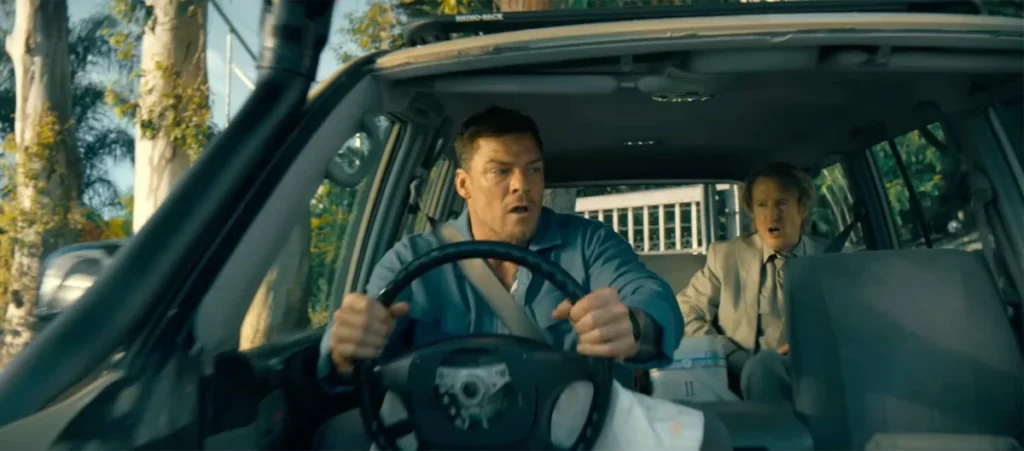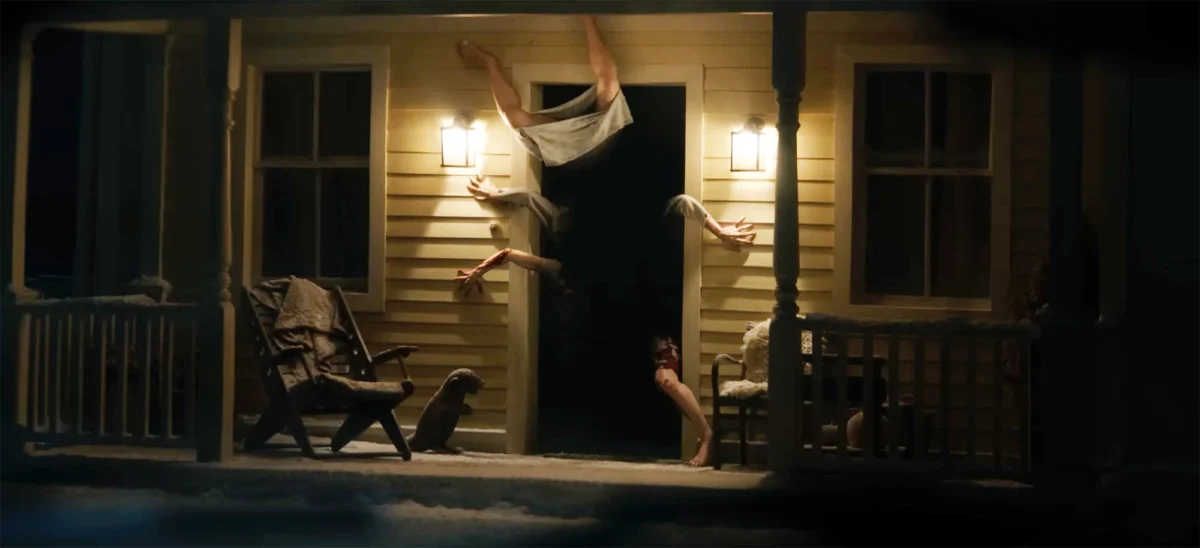
Sony Pictures has officially released the first teaser trailer for its upcoming Resident Evil reboot, a production that marks a significant departure from previous cinematic interpretations of the long-standing Capcom video game franchise. Directed by Zach Cregger, the filmmaker who rose to prominence with the 2022 sleeper hit Barbarian and the 2025 thriller Weapons, this latest iteration promises a return to the visceral, survival-horror roots that first defined the series in 1996. The film, scheduled for a wide theatrical release on September 18, 2026, features Austin Abrams in the lead role, supported by an ensemble cast including Zach Cherry, Kali Reis, and Paul Walter Hauser.
The teaser trailer introduces a narrative centered on Bryan, portrayed by Abrams, a medical courier whose routine delivery to a remote hospital facility descends into a nightmare. Unlike the action-heavy sequences found in the Paul W.S. Anderson-directed films of the early 2000s, Cregger’s vision appears focused on claustrophobic suspense and the psychological terror of an escalating biological outbreak. The footage showcases the collapse of order over the course of a single night, emphasizing the "unwitting" nature of the protagonist’s involvement in the Umbrella Corporation’s catastrophic experiments.

A Strategic Shift in Creative Direction
The appointment of Zach Cregger as director and co-writer represents a strategic move by Sony Pictures and Constantin Film to revitalize a franchise that has seen fluctuating critical and commercial returns over the last decade. Cregger, whose background in comedy with The Whitest Kids U’ Know preceded a sharp and successful turn into the horror genre, has become a sought-after name for "elevated horror" projects. His work on Barbarian was lauded for its unpredictable structure and mastery of tension—elements that appear to be central to this new Resident Evil project.
Collaborating on the screenplay is Shay Hatten, a prolific writer known for his work on the John Wick franchise and Zack Snyder’s Army of the Dead. The pairing of Cregger’s horror sensibilities with Hatten’s experience in high-stakes action suggests a film that balances character-driven dread with the kinetic requirements of a modern blockbuster. Industry analysts suggest that this creative team was assembled to distance the new film from the 2021 reboot, Resident Evil: Welcome to Raccoon City, which attempted to condense the plots of the first two games into a single narrative with mixed results.
Narrative Premise and Character Profiles
The plot of the 2026 Resident Evil film deviates from the established protagonist roster of the video games—such as Chris Redfield, Jill Valentine, or Leon S. Kennedy—to focus on a new civilian perspective. Bryan, the courier, serves as an "everyman" archetype, providing the audience with a grounded entry point into the chaos. This narrative choice mirrors the structure of Resident Evil 7: Biohazard, the 2017 video game that successfully rebooted the gaming franchise by focusing on a civilian searching for his wife in a derelict estate.

The casting of Austin Abrams, known for his nuanced performances in Euphoria and The Walking Dead, aligns with this grounded approach. He is joined by Zach Cherry, whose work in Severance has demonstrated a capacity for navigating surreal and high-pressure environments. Kali Reis, fresh from her acclaimed role in True Detective: Night Country, and Paul Walter Hauser, an Emmy winner known for his transformative roles in Black Bird and Richard Jewell, round out a cast that leans more toward dramatic pedigree than traditional action-star billing. This suggests a film that prioritizes character development and atmospheric storytelling.
The Evolution of the Resident Evil Cinematic Franchise
The Resident Evil film franchise remains one of the most successful video game adaptations in history, though its path has been non-linear. The original series, starring Milla Jovovich, spanned six films between 2002 and 2016, grossing over $1.2 billion worldwide. While those films were commercially successful, they were often criticized by fans of the games for drifting too far into the realm of science-fiction action and away from the survival-horror mechanics of the source material.
In 2021, Welcome to Raccoon City attempted a more faithful aesthetic recreation of the games but struggled to find a broad audience, earning approximately $42 million against a $25 million budget. Simultaneously, a live-action Netflix series released in 2022 was canceled after one season due to poor reception. The 2026 film represents a "third era" for the franchise on the big screen—one that seeks to synthesize the high-production values of the original series with the gritty, horror-forward tone of modern genre cinema.

Production Background and Industry Context
The film is a joint venture between Columbia Pictures and Constantin Film, in association with TriStar Pictures. Constantin Film has held the film rights to the Resident Evil property since the late 1990s and continues to oversee the brand’s cinematic output. The production team includes veteran producers Robert Kulzer and Roy Lee, the latter of whom has been instrumental in the success of horror hits like It and Barbarian.
Asad Qizilbash and Carter Swan are also attached as producers representing PlayStation Productions. Their involvement is a key indicator of the current trend in Hollywood: the "Golden Age" of video game adaptations. Following the critical and commercial success of HBO’s The Last of Us and the Fallout series on Amazon Prime, studios are increasingly treating gaming intellectual property with the same prestige as literary or comic book adaptations. By bringing in a "visionary" director like Cregger, Sony is signaling that Resident Evil is being repositioned as a premier horror event rather than a standard genre filler.
Analysis of Teaser Footage and Practical Effects
Early reactions to the teaser highlight the film’s visual palette, which favors deep shadows, industrial grime, and a muted color scheme. The "remote hospital" setting provides a classic horror backdrop, allowing for a controlled environment where the threat can be teased through sound design and brief, terrifying glimpses of "mutant creatures."

Sources close to the production indicate that Cregger has advocated for a heavy reliance on practical effects and prosthetics for the monsters, a hallmark of his previous work. This commitment to physical realism is intended to heighten the "freaky" and "terrifying" nature of the Umbrella Corporation’s bioweapons, which in previous films were often rendered through early-2000s era CGI. The teaser’s focus on Bryan’s isolation and the "one fateful, horrifying night" structure suggests a real-time or near-real-time progression, which could enhance the tension and pacing of the survival narrative.
Broader Implications for the Horror Genre
The release of Resident Evil in September 2026 places it at the start of the lucrative autumn horror season. Historically, September has been a strong month for genre films, serving as a lead-in to the Halloween market. By scheduling the film for this window, Sony Pictures is positioning it as a major tentpole release for the fiscal year.
Furthermore, the success of this film could dictate the future of the franchise. While the story is described as an "all-new story" and a "reinvention," the inclusion of the Umbrella Corporation ensures that the core lore remains intact. If successful, this could pave the way for a new cinematic universe that integrates classic game characters into Cregger’s more grounded and frightening world.

Conclusion and Expected Timeline
With the first teaser now in the public domain, the marketing campaign for Resident Evil is expected to ramp up throughout late 2025 and early 2026. Following the initial look, industry observers anticipate a full-length trailer during the 2026 summer blockbuster season, likely attached to other major Sony releases.
The film’s debut on September 18, 2026, will be a pivotal moment for both the Resident Evil brand and for Zach Cregger’s career. As the director moves from independent horror success to a major studio franchise, his ability to maintain his unique creative voice while navigating the requirements of a global IP will be closely watched. For fans of the series, the promise of a "dark and frightening" take on the Raccoon City legacy offers a renewed hope that the cinematic version of Resident Evil can finally match the terror of its digital counterpart.