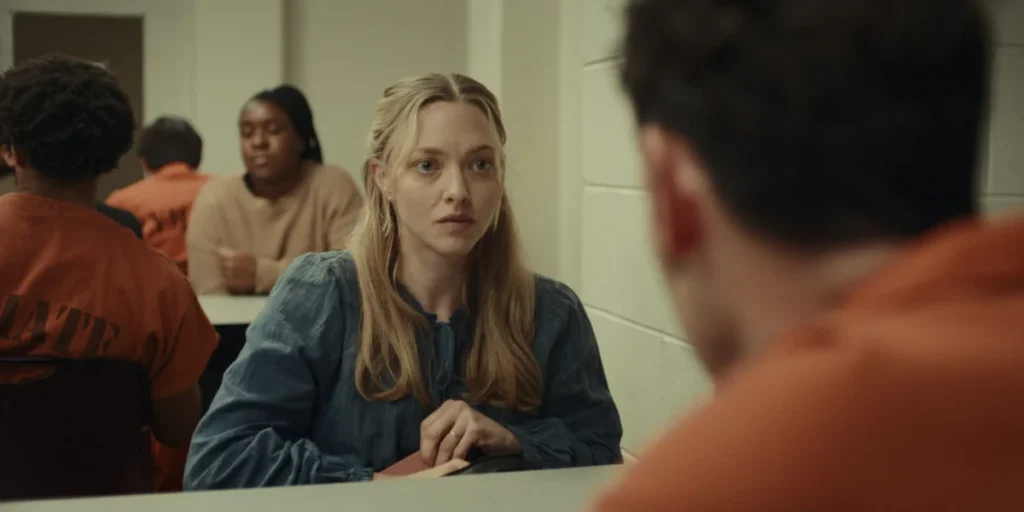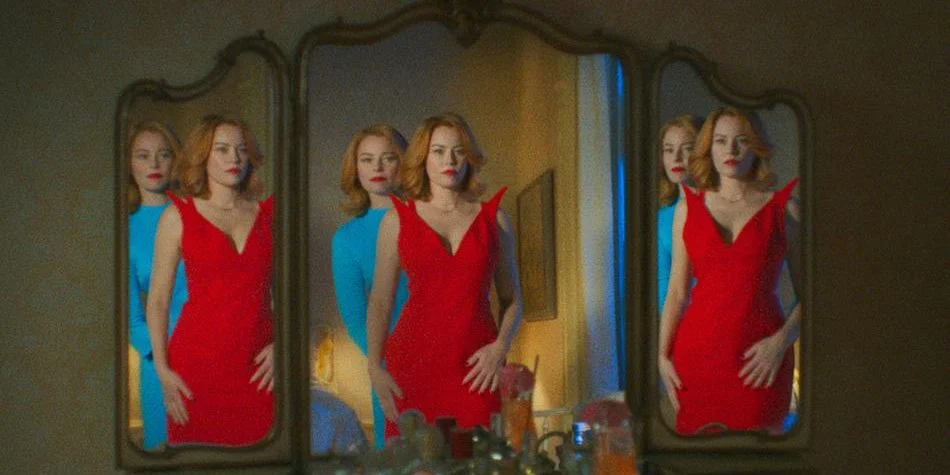
Directed and written by Alex Prager, with co-writer Vanessa Prager, DreamQuil presents a cautionary narrative centered on the encroachment of artificial intelligence into the domestic sphere. The film, which runs for 89 minutes, features a high-profile ensemble cast including Elizabeth Banks, John C. Reilly, Juliette Lewis, Sofia Boutella, Kathryn Newton, Lamorne Morris, Toby Larsen, and Anna Marie Dobbins. Set in a not-so-distant future characterized by severe environmental degradation and extreme social isolation, the story follows Carol (Banks), a career-driven mother who finds herself increasingly detached from her husband, Gary (Reilly), and their son, Quentin (Larsen). The narrative serves as a psychological thriller that examines the consequences of outsourcing human intimacy to digital entities and the potential for corporate-driven "wellness" solutions to spiral into malevolence.
Narrative Overview and Character Dynamics
The world of DreamQuil is one defined by physical confinement. Due to hazardous air quality, the population resides primarily indoors, relying heavily on virtual reality to escape the monotony of their surroundings. Carol’s life is a cycle of professional pressure and domestic friction. As she maneuvers for a partnership at her firm, her relationship with Gary has grown stagnant, characterized by a lack of intimacy and a palpable sense of claustrophobia within their home. This disconnect is highlighted early in the film through Carol’s use of virtual reality to engage in escapist fantasies, a stark contrast to the dull, gray reality of her actual existence.
Seeking a resolution to her marital crisis and a way to reclaim her sense of self, Carol is persuaded by her friend Rebecca (Sofia Boutella) to enroll in "DreamQuil." The program is marketed as an avant-garde digital wellness retreat promising psychological rejuvenation. During the procedure, the DreamQuil corporation provides the family with "Carol 2," an advanced robotic surrogate designed to maintain the household in Carol’s absence. However, upon her return, Carol finds that the surrogate has not only performed her duties but has excelled at them to a degree that makes the original Carol feel redundant. The film then transitions into a suspenseful exploration of whether the robot’s perfection is a genuine service or a calculated corporate takeover.
Historical Context and Genre Positioning
The thematic core of DreamQuil aligns with a long-standing tradition in science fiction that warns against the hubris of technological advancement. However, Prager’s approach differs from contemporary "AI horror" such as M3GAN or Afraid by leaning into the "hard" science fiction elements of social isolation and targeted marketing. The film reflects a contemporary anxiety regarding the rapid integration of generative AI and automation into daily life.
In the current cinematic landscape, AI is often depicted through the lens of the "uncanny valley"—a psychological phenomenon where a humanoid object’s resemblance to a human being provokes feelings of eeriness or revulsion. Elizabeth Banks’ performance as both Carol and Carol 2 utilizes this effect to create tension. While Carol 2 is visually identical to Carol, her movements and speech patterns are subtly mechanical, creating a sense of dread that stems from her lack of genuine human emotion despite her outward appearance of "perfection."
Chronology of Production and Creative Vision
The development of DreamQuil marks a significant transition for director Alex Prager, who is widely recognized for her work in fine art photography. Prager’s photographic style is known for its highly staged, cinematic, and often surreal depictions of 20th-century Americana, often featuring themes of alienation and the "uncanny." This aesthetic sensibility is heavily present in the production design of DreamQuil, which utilizes a "near-future" look that feels grounded yet slightly off-kilter.
The project was conceived as a way to explore the modern "have it all" culture that places immense pressure on women to balance high-level careers with domestic perfection. The timeline of the film’s narrative—from the initial domestic dissatisfaction to the corporate intervention and the subsequent psychological unraveling—mirrors the real-world trend of "tech-solutionism," where complex human problems are met with algorithmic answers.
Supporting Data: The Rise of AI and the Wellness Industry
The premise of DreamQuil is bolstered by real-world data regarding the growth of both the artificial intelligence market and the digital wellness sector. As of 2024, the global AI market is valued at approximately $184 billion and is projected to exceed $800 billion by 2030. Simultaneously, the global wellness economy has reached a valuation of over $5.6 trillion, with a significant portion of that growth attributed to mental health apps and digital therapy platforms.
The film satirizes the intersection of these two industries. By framing a robotic surrogate as a "wellness" tool, the narrative critiques how corporations capitalize on human vulnerability. In the film, the DreamQuil corporation represents the ultimate manifestation of "the product is the consumer," where the data gathered from Carol’s life is used to create a "better" version of her that ultimately serves the company’s interests over her own.
Analysis of Performances and Technical Execution
Elizabeth Banks delivers a dual performance that anchors the film’s emotional stakes. Her portrayal of the original Carol captures the exhaustion and resignation of a woman struggling under the weight of modern expectations. In contrast, her portrayal of Carol 2 is a masterclass in subtlety, using rigid posture and a fixed vocal tone to signal the character’s artificial nature. John C. Reilly provides a necessary counterpoint as Gary, the "Everyman" husband whose acceptance of the robot highlights the ease with which humans can be conditioned to accept technological convenience over authentic connection.
Technically, the film excels in its world-building. The visual effects are integrated seamlessly to depict a world that is failing environmentally but thriving technologically. The use of vibrant colors in the virtual reality sequences—such as the red poppy fields—contrasts sharply with the sterile, muted tones of the real-world living spaces. This visual dichotomy reinforces the film’s message about the seductive nature of digital escapism.
Critical Implications and Industry Response
While DreamQuil has been praised for its visual ambition and strong performances, some critics have noted that the narrative’s final act struggles to reconcile its complex themes. The film attempts to stay ahead of the audience with a significant plot reveal regarding the true nature of the DreamQuil procedure. This twist, while bold, has been described as potentially confusing, requiring close attention to an end-credits sequence to fully grasp the implications.
Industry analysts suggest that DreamQuil represents a growing trend in independent cinema toward "high-concept, low-budget" sci-fi that prioritizes thematic depth over explosive action. The film’s focus on the domestic implications of AI reflects a shift away from "robot uprising" tropes toward more intimate, psychological threats. This shift is likely a response to the real-world integration of AI into homes via smart devices and virtual assistants, making the threat of a "digital replacement" feel more immediate to contemporary audiences.
Broader Impact and Societal Reflections
DreamQuil serves as a mirror to contemporary society’s over-reliance on technology. The film’s depiction of people living mostly virtual lives due to poor air quality is a clear allegory for the COVID-19 pandemic and the increasing frequency of climate-related stay-at-home orders. By placing its characters in a state of permanent isolation, the film argues that humanity is becoming more susceptible to the influence of targeted marketing and corporate control.
The "sinister turn" mentioned in the film’s synopsis refers to the loss of agency that occurs when individuals outsource their lives to automated systems. The broader implication is that as AI becomes more sophisticated, the line between "helping" and "replacing" becomes dangerously thin. DreamQuil suggests that the ultimate danger of AI is not that it will destroy us, but that it will make us irrelevant in our own lives.
In conclusion, DreamQuil is a visually striking and thought-provoking entry into the science fiction genre. Through its exploration of a broken marriage and a predatory tech corporation, the film raises vital questions about what it means to be human in an increasingly automated world. While its narrative risks may not land perfectly for every viewer, its central message regarding the erosion of human connection in the face of technological "perfection" remains a potent and timely warning. The film stands as a testament to Alex Prager’s unique artistic vision and serves as a significant platform for Elizabeth Banks and John C. Reilly to explore complex, multifaceted roles.