The landscape of modern television has been significantly reshaped by a prevailing trend in prestige programming: the assertion that certain series transcend the traditional television format, masquerading instead as extended, ten-hour cinematic experiences. This narrative approach, often characterized by a pseudo-novelistic structure, dissects stories into discrete installments, each functioning as a chapter within an overarching plot. Such serializations frequently eschew conventional episodic arcs, opting instead for a singular, protracted storyline. This deliberate pacing can result in a markedly slow tempo, frequent cliffhanger endings, and a blurring of individual episode identities until the climactic finale, which promises a commensurate payoff for the viewer’s substantial time investment.
However, the efficacy of this "ten-hour movie" model is increasingly being called into question. The promised culmination frequently falls short of its ambitious design, with the journey often feeling ponderous and the destination, when it arrives, scarcely justifying the protracted and sometimes arduous viewing experience. Even critically acclaimed programs that have embraced this format, such as HBO’s Westworld and HBO’s True Detective, have grappled with validating the sacrifice of immediate narrative satisfaction for the allure of a more profound, later payoff. The underlying premise—that deferring gratification now will yield a richer storytelling experience later—is a gamble that seldom fully materializes. If established creators like Jonathan Nolan, with Westworld, have struggled to fully realize this cinematic television ideal, then Netflix’s new horror series, Something Very Bad Is Going to Happen, faces an even more formidable challenge. As the series’ blunt title suggests, and as many viewers will discover, the expected payoff is largely absent.
The involvement of The Duffer Brothers, the acclaimed creators of Netflix’s global phenomenon Stranger Things, undoubtedly draws significant attention to Something Very Bad Is Going to Happen. However, their role is primarily as executive producers, with the series originating from creator Haley Z. Boston. The thematic and tonal divergence between the two productions is stark. Where Stranger Things balances its horror elements with humor and a palpable sense of heart, Something Very Bad Is Going to Happen delves into darker, gorier territory, largely devoid of levity. This absence of the emotional anchor that buoyed the Duffers’ signature hit leaves the series vulnerable to its narrative shortcomings. While Something Very Bad Is Going to Happen succeeds in cultivating an atmospheric and creepy milieu, punctuated by genuine jump scares and a few surprising twists, it is also frequently marred by a sluggish pace, consistently poor narrative rhythm, and a cast of thinly drawn characters. Many of these characters operate with motivations that appear to serve the immediate needs of a scene rather than contributing to a cohesive character arc or plot development.
A Wedding on a Collision Course with Disaster
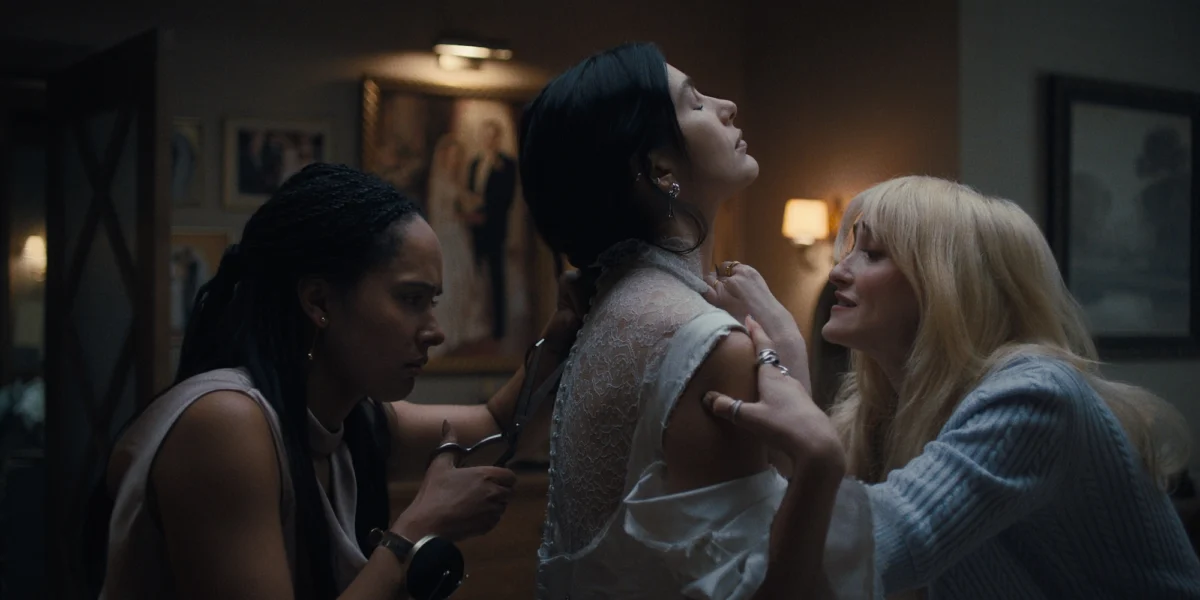
The foundational premise of Something Very Bad Is Going to Happen is deceptively straightforward, at least in its initial presentation. Rachel Harkin, portrayed by Camila Morrone, and Nicky Cunningham (Adam DiMarco) are scheduled to marry in five days. The series commences with the couple embarking on a road trip to Nicky’s family estate, a sprawling country house nestled in a secluded wooded area. Their intention is to host a modest, intimate wedding ceremony, surrounded by their closest family and friends, thereby circumventing the ostentatious trappings often associated with contemporary nuptials. However, Rachel is plagued by a persistent premonition that "something bad is going to happen," an anxiety that is amplified by several unsettling encounters during their journey to the Cunningham compound. The impending introduction to Nicky’s peculiar family further exacerbates her unease. The series does not thoroughly explore how Rachel and Nicky have reached such a critical juncture in their relationship without Rachel having previously engaged significantly with her prospective in-laws, a narrative leap that viewers are expected to accept. As the countdown to the wedding progresses—a fact visually underscored by stark, blood-red lettering on screen—tensions escalate. Rachel is compelled to confront not only the viability of her union with Nicky but also the profound meaning of lifelong commitment.
Camila Morrone delivers a luminous performance throughout the series, demonstrating a remarkable ability to convey deep emotion even in a role that is, at times, thinly written. Her on-screen chemistry with Adam DiMarco is visually appealing; they present as an attractive couple. However, the emotional connection between Rachel and Nicky often feels tepid, leaving it ambiguous whether their bond stems from genuine love or a desire for permanent companionship. While this portrayal might reflect a certain realism in modern relationships, the central emotional conflict of the story is ultimately overshadowed by the more overt life-or-death stakes introduced later in the narrative.
A Family Haunted by Trauma and Eccentricity
Rachel’s own background is steeped in familial trauma. Her mother passed away at a young age, and her relationship with her largely absent father is strained. Lacking a foundational model for healthy relational dynamics, Rachel finds herself initially overwhelmed by Nicky’s extended family. Their eccentricities are so pronounced and off-putting that the rationale for Rachel’s extended stay, let alone her impending marriage into such a unit, becomes questionable. The family’s peculiarities are vividly portrayed: Nicky’s sister, Portia (Gus Birney), claims an ability to communicate with the deceased and shares unsettling bedtime stories about potential woodland entities. Nicky’s brother, Jules (Jeff Wilbusch), a physician, remains haunted by a childhood encounter with a murderer he refers to as the "Sorry Man." The matriarch, Victoria (Jennifer Jason Leigh), exhibits signs of mental health challenges and adheres to antiquated notions of familial structure. The patriarch, Boris (Ted Levine), is fixated on taxidermizing the family wolfhounds and positioning them as guardians around the estate. The prospect of marrying into this family is inherently disturbing, even before the introduction of eerie coincidences, unsettling revelations, and vaguely supernatural threats that Rachel must navigate on her path to the altar.
As the series’ title explicitly foreshadows, Something Very Bad Is Going to Happen makes little pretense of subtlety. The plot’s trajectory is largely discernible from the outset, and it is evident that the "Something Very Bad" will remain undisclosed until deep into the series’ eight-hour runtime. The critical question then becomes whether this protracted build-up justifies the eventual reveal. Unfortunately, for many viewers, the answer is likely to be in the negative, particularly given the current format.
The Missed Potential of a Cinematic Adaptation
There is a genuinely engaging premise at the core of Something Very Bad Is Going to Happen, unfortunately buried beneath an abundance of red herrings and exposition. Had this narrative been conceived as a feature film, it might have proven considerably more effective. The process of wedding planning itself can often be a source of considerable stress and, in its own way, a horror story, even under ideal circumstances. It is somewhat surprising that this universally relatable source of anxiety has not been more frequently exploited in cinematic horror. A tightly plotted two-and-a-half-hour film, or even a four-episode limited series, could have compelled Something Very Bad Is Going to Happen to commit to a clearer thematic direction or to strike a more effective balance between its supernatural elements and the complex family drama surrounding Rachel and Nicky’s impending union. As it stands, substantial portions of the series’ midsection are likely to be forgotten by viewers, as they struggle to reconcile the disparate events or understand their connection to the broader narrative. A particularly egregious example is a lengthy family group therapy session, bizarrely facilitated by Rachel herself.
Despite its narrative flaws, Something Very Bad Is Going to Happen is undeniably atmospheric and artfully rendered. The visual aesthetic contributes significantly to the mood, with decorative boughs resembling dead trees framing the altar and soft snowfalls sparkling in the light, alternately appearing magical and foreboding. The series’ more grisly elements are depicted with a deliberate, almost delicate touch, from decaying animal carcasses to elegantly spread pools of blood. A pervasive sense of claustrophobia and impending doom permeates the entire production, effectively conveying the unsettling certainty that, indeed, something very bad is going to happen. The ultimate disappointment lies in the fact that the final revelation fails to provide a truly satisfying conclusion to the arduous journey.
The series’ struggles highlight a broader challenge within the television industry: the tension between ambitious artistic vision and the fundamental requirements of engaging serialized storytelling. While the "ten-hour movie" concept holds appeal for creators seeking greater narrative depth, its successful execution demands a meticulous balance of pacing, character development, and thematic coherence. Without these elements, even the most visually striking and atmospherically rich productions risk alienating audiences with a narrative that feels drawn out and ultimately unrewarding. The critical reception of Something Very Bad Is Going to Happen suggests that this cautionary tale serves as a potent reminder of the enduring principles of compelling storytelling, regardless of the medium.