IFC Films has officially announced a major cinematic event for the spring of 2026: the theatrical re-release of Werner Herzog’s landmark documentary, Cave of Forgotten Dreams, following an extensive 6K restoration and IMAX 3D optimization. Originally premiering at the Toronto International Film Festival (TIFF) in 2010 and seeing a wide release in 2011, the film remains one of the most celebrated entries in Herzog’s prolific filmography. The new restoration is designed to commemorate the 15th anniversary of its initial debut, offering audiences a technologically superior look at the Chauvet Cave in Southern France, which contains the oldest known pictorial creations of humanity.
The restoration project, produced by James Stewart and Liane Kotler, utilizes contemporary digital scanning techniques to elevate the film’s original 3D cinematography into a high-fidelity 6K format. Digital Restoration Artist Paul Marengo and 3D Pablo Artist Murray Wren led the technical team in revitalizing the footage, ensuring that the crystalline structures of the cave and the charcoal-drawn silhouettes of prehistoric animals are rendered with unprecedented clarity. The film is scheduled for a limited two-night engagement in IMAX and select theaters on April 15 and April 19, 2026, followed by a digital and home media release on April 21.
The Historical and Archaeological Context of Chauvet Cave
At the heart of Herzog’s documentary is the Chauvet-Pont-d’Arc Cave, located in the Ardèche department of France. Discovered on December 18, 1994, by a trio of speleologists—Jean-Marie Chauvet, Eliette Brunel, and Christian Hillaire—the cave had been sealed by a rockfall for approximately 32,000 years. This natural sealing created a pristine time capsule, preserving hundreds of pristine paintings and engravings dating back to the Aurignacian period.
The significance of Chauvet Cave cannot be overstated in the fields of archaeology and art history. The artwork found within depicts at least 13 different species, including predators that were rarely illustrated in other Ice Age caves, such as cave lions, panthers, bears, and hyenas. The sophistication of the techniques used—shading, the use of perspective, and the utilization of the cave wall’s natural contours to imply movement—challenged previous academic assumptions that prehistoric art evolved linearly from primitive to complex. Instead, Chauvet revealed that humanity possessed a fully realized artistic mastery at the very dawn of our history.

Due to the extreme fragility of the cave’s interior environment, the French government strictly limits access. The breath of visitors can alter the humidity and carbon dioxide levels, potentially triggering the growth of invasive fungi or mold that could destroy the ancient pigments. Consequently, fewer people have stood inside the Chauvet Cave than have walked on the surface of the moon. Herzog’s film remains the only high-definition, professional-grade visual record of the site available to the public, making this 6K restoration an essential piece of cultural preservation.
Production Challenges and Herzog’s Vision
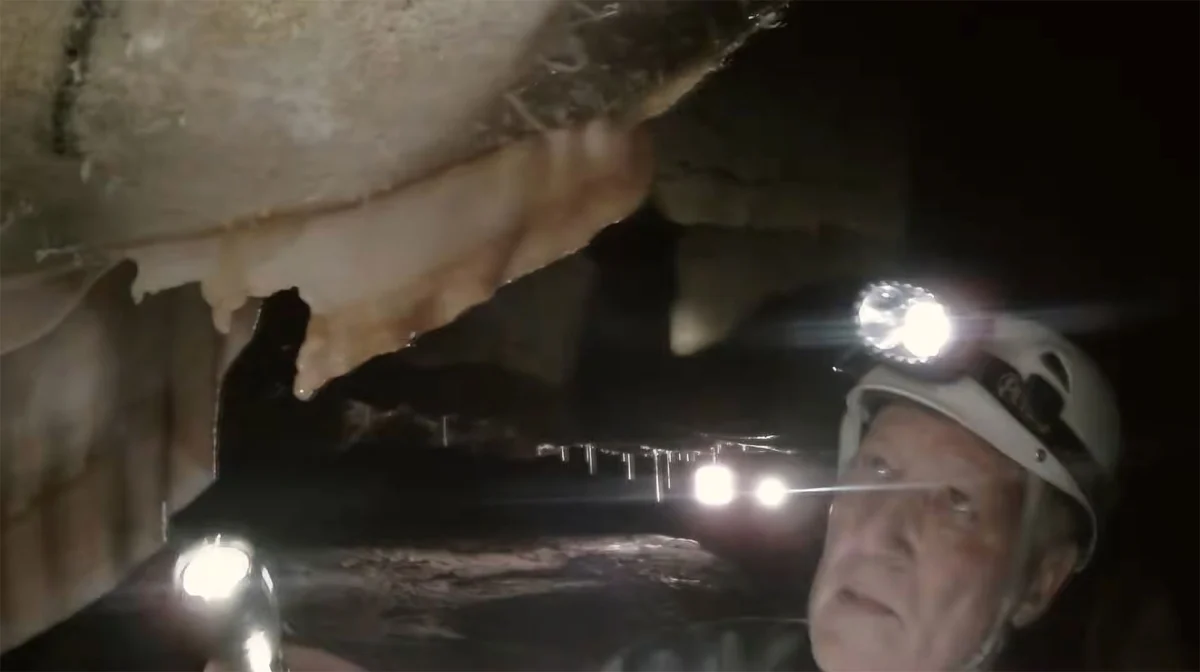
When Werner Herzog was granted permission by the French Ministry of Culture to film inside the cave in 2010, he was required to adhere to stringent protocols. He was permitted only a "skeletal crew" of four people, including himself. The team was restricted to a narrow, two-foot-wide metal walkway and was prohibited from touching the cave walls or floor. Furthermore, they were only allowed to spend a few hours at a time inside the cave to minimize the impact of their presence.
The technical requirements of the shoot were immense. At the time, 3D technology was largely dominated by heavy, cumbersome rigs used for Hollywood blockbusters. To navigate the cramped and delicate environment of the cave, the production had to utilize custom-built, miniaturized digital 3D cameras. Herzog insisted on the 3D format not for spectacle, but for its ability to capture the three-dimensional "intent" of the original artists. The prehistoric painters often utilized the bulges and recesses of the rock to give their drawings of bison and horses a sense of volume and motion.
Herzog’s narrative approach in the film transcends traditional documentary filmmaking. Known for his philosophy of "ecstatic truth"—a deeper level of reality reached through poetry, stylization, and imagination—Herzog frames the cave as a "natural cathedral." The film explores not just the paintings themselves, but the philosophical implications of what it means to be human and the moment the "modern human soul" was born.
Technical Specifications of the 6K Restoration
The 2026 restoration represents a significant leap in digital archival technology. While the 2010 production was limited by the digital sensors of the era, the 6K upgrade allows for a much more nuanced representation of the cave’s textures. The restoration process involved scanning the original digital masters and applying advanced noise reduction and color grading to match the actual conditions of the cave as accurately as possible.

The IMAX optimization is particularly noteworthy. By expanding the film for the massive IMAX screen, the 6K resolution ensures that the image remains sharp and immersive. The 3D elements have been refined to eliminate the "ghosting" or eye strain sometimes associated with earlier 3D films. For the viewer, the goal of this restoration is to simulate the actual experience of standing on the metal walkway in the dark, illuminated only by the crew’s hand-held lights.
Ernest Reijseger’s haunting musical score, which combines choral arrangements with avant-garde cello and flute, has also been remastered for modern theatrical sound systems. The audio upgrade aims to capture the unique acoustics of the cave, which Herzog described as having a silent, heavy atmosphere that feels almost pressurized by history.
Chronology of the Film’s Legacy
Since its release, Cave of Forgotten Dreams has followed a trajectory of increasing critical and academic importance:
- September 2010: World premiere at the Toronto International Film Festival. It was immediately hailed as a masterpiece of the documentary form.
- April 2011: Original theatrical release. Despite the niche subject matter, the film became a commercial success for a documentary, grossing over $6 million in the United States alone.
- 2011 Award Season: The film won Best Documentary at the New York Film Critics Circle Awards, the Los Angeles Film Critics Association Awards, and the National Society of Film Critics Awards.
- 2014: The Chauvet-Pont-d’Arc Cave is officially designated as a UNESCO World Heritage site, further cementing the importance of Herzog’s visual record.
- 2020-2025: The film becomes a staple in university curricula for both film studies and anthropology.
- March 2026: IFC Films announces the 6K restoration and the 15th-anniversary IMAX re-release.
Werner Herzog’s Prolific Career in Non-Fiction
The re-release of Cave of Forgotten Dreams also serves as a celebration of Werner Herzog’s ongoing contribution to cinema. Now in his 80s, Herzog has maintained a pace of production that rivals filmmakers half his age. His career, which began as a leading figure of the New German Cinema alongside Wim Wenders and Rainer Werner Fassbinder, has evolved into a singular journey through the world’s most extreme environments.
His documentary work often focuses on individuals or places at the edge of existence. Notable titles in his non-fiction canon include:

- Grizzly Man (2005): A portrait of Timothy Treadwell, an activist who lived among grizzly bears in Alaska.
- Encounters at the End of the World (2007): An exploration of the scientists and dreamers living in Antarctica.
- Into the Abyss (2011): An examination of the death penalty through interviews with death row inmates.
- Fireball: Visitors from Darker Worlds (2020): A look at the cultural and scientific impact of meteorites.
Cave of Forgotten Dreams remains a standout in this list because of its focus on deep time. While many of Herzog’s films look at the present or the recent past, this documentary looks back 30,000 years, attempting to bridge the gap between the modern viewer and our ancestors.
Broader Impact and Industry Implications
The decision to restore a documentary in 6K and release it in IMAX reflects a growing trend in the film industry: the treatment of non-fiction films as prestige cinematic experiences. Historically, high-end restorations were reserved for narrative classics like Lawrence of Arabia or The Godfather. However, the success of large-format documentaries like Apollo 11 and National Geographic’s nature films has proven that there is a significant audience for high-fidelity reality.
Furthermore, the 6K restoration of Cave of Forgotten Dreams highlights the role of cinema in cultural preservation. As the original Chauvet Cave remains sealed to protect its integrity, the film serves as the primary "proxy" for the site. By upgrading the film to the highest possible current standard, IFC and the restoration team are ensuring that this archaeological treasure remains accessible to future generations in a format that honors its grandeur.
The re-release is expected to draw a diverse audience, from art historians and archaeologists to cinephiles and students. As Herzog famously states in the film’s narration, "We are locked in history and they were not." This 6K restoration offers a rare opportunity to momentarily pick the lock of history and step back into the mysterious natural cathedral where human art began. Through the lens of Herzog’s camera and the power of modern restoration technology, the "forgotten dreams" of the Chauvet Cave are poised to be remembered once again by a new generation of viewers.