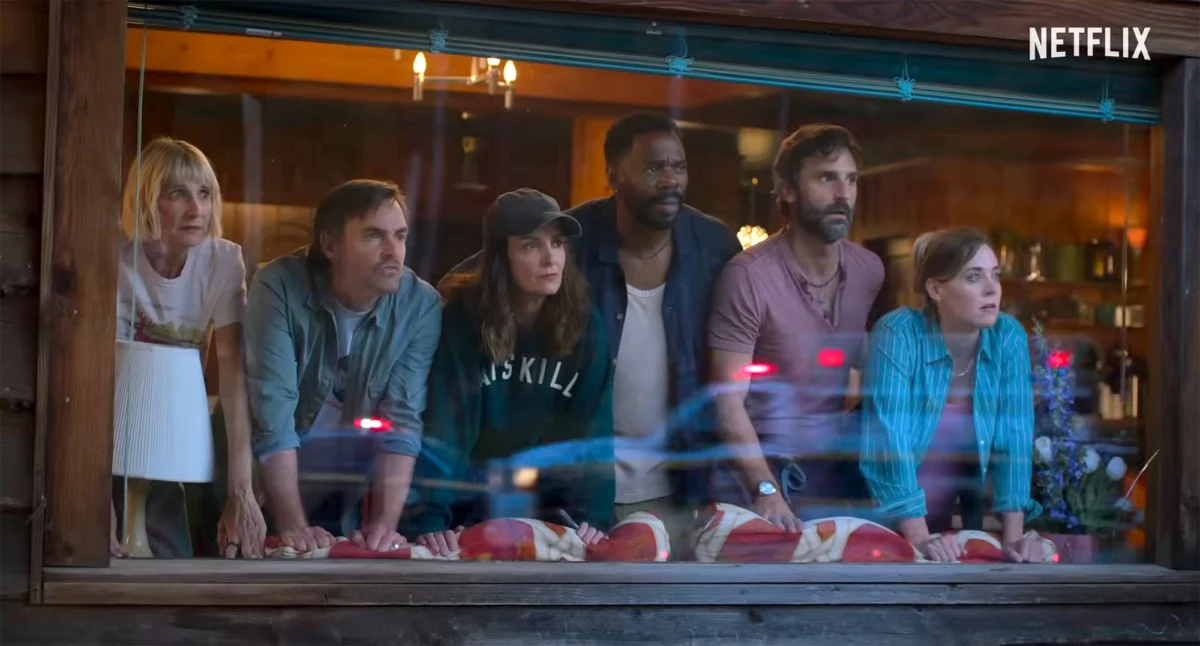
Netflix has officially debuted the first trailer for the second season of its acclaimed comedy series, The Four Seasons, signaling a significant shift in the show’s narrative trajectory and ensemble dynamic. Scheduled for a global release on May 28, 2026, the second installment of the series arrives exactly one year after the premiere of its debut season. The series, which is co-created by Tina Fey, Lang Fisher, and Tracey Wigfield, continues to explore the complexities of long-term adult friendships through the lens of seasonal vacations. However, the new footage reveals that the group must now navigate a drastically altered landscape following the departure of a central character and the introduction of a new generation.
The Four Seasons serves as a modern reimagining of the 1981 film of the same name, which was originally written, directed by, and starred Alan Alda. While the Netflix series updates the sensibilities and comedic rhythms for a contemporary audience, it retains the core premise of three middle-aged couples who vacation together four times a year. Season 2 finds the group attempting to honor their tradition despite a "hard year" that has fundamentally reshaped their social circle. The trailer emphasizes a themes of resilience and recalibration, as the characters travel to international locales, including Italy, while adjusting to the presence of a new infant.
Narrative Evolution and Character Dynamics
The first season of The Four Seasons established a foundation centered on three core couples: Kate (Tina Fey) and Jack (Will Forte), Danny (Colman Domingo) and Claude (Marco Calvani), and Nick (Steve Carell) and Anne (Kerri Kenney-Silver). The initial conflict arose when one couple’s impending divorce threatened to dismantle the group’s decades-long stability. Season 2, however, deals with the aftermath of a more permanent shift. As confirmed by the new trailer and production notes, Steve Carell will not return for the second season. The narrative explanation for his absence stems from the events of the Season 1 finale, which left the group mourning his character’s departure or demise, necessitating a period of mourning and eventual regrouping.
In Carell’s absence, the cast sees the return of Fey, Forte, Domingo, Calvani, and Kenney-Silver. Joining the ensemble for the second season is Erika Henningsen, whose character appears to be integral to the group’s new configuration. The most notable addition to the cast, however, is "Ginny’s baby," a narrative pivot that introduces the challenges of parenting into a group dynamic previously defined by the freedoms of middle-aged adulthood. The trailer highlights the comedic friction that arises when a baby is introduced to high-end vacation settings, forcing the friends to re-evaluate their routines and their roles within the group.

Production Background and Creative Leadership
The Four Seasons is a high-profile collaboration between Universal Television and Little Stranger, the production company headed by Tina Fey. The creative team behind the series represents a significant gathering of comedic talent. Tina Fey, a multi-Emmy Award winner known for 30 Rock and Unbreakable Kimmy Schmidt, serves as a writer, executive producer, and showrunner. She is joined by Lang Fisher, the co-creator of Never Have I Ever, and Tracey Wigfield, the creator of the Saved by the Bell revival and a long-time collaborator of Fey’s on 30 Rock and Great News.
The direction for Season 2 is handled by the filmmaking duo Shari Springer Berman and Robert Pulcini. The pair has a diverse portfolio that includes the Oscar-nominated American Splendor, as well as television work on prestige dramas such as Succession and Fleishman Is in Trouble, and comedies like Only Murders in the Building. Their involvement suggests a continuation of the show’s "dramedy" aesthetic, blending sharp, fast-paced dialogue with poignant reflections on aging and loss.
The involvement of Alan Alda as a producer provides a direct link to the original 1981 source material. The original film was a commercial and critical success, praised for its realistic portrayal of adult friendship and its avoidance of typical sitcom tropes. By bringing Alda on as a producer, the Netflix adaptation maintains a level of creative continuity while allowing Fey, Fisher, and Wigfield to overhaul the dialogue and social context for a 2020s audience.
Chronology of Development
The journey of The Four Seasons from a classic film to a modern streaming staple follows a specific production timeline:
- January 2024: Netflix officially announces a series order for The Four Seasons, with Tina Fey attached to star and co-create.
- May 2025: Season 1 premieres on Netflix to positive reviews, highlighting the chemistry between Fey, Carell, and Domingo.
- Late 2025: Production begins on Season 2, with filming moving from domestic locations to international settings, including the Italian countryside.
- May 4, 2026: The official trailer for Season 2 is released via Netflix’s social media channels and YouTube.
- May 28, 2026: All episodes of Season 2 are scheduled to become available for streaming worldwide.
The annual release cycle mirrors the "seasonal" nature of the show’s premise, allowing the audience to grow alongside the characters in real-time. This release strategy is increasingly common for Netflix’s flagship comedies, aiming to maintain momentum and viewer retention in a competitive streaming market.

Supporting Data and Industry Context
The renewal and continued investment in The Four Seasons reflect broader trends in the streaming industry. According to internal viewership metrics frequently cited in Netflix’s quarterly reports, "comfort comedies" featuring established television stars tend to have high completion rates and long-term "tail" value. The presence of Tina Fey and Colman Domingo—the latter of whom has seen a significant surge in prestige following his recent Academy Award and Emmy nominations—positions the show as both a mainstream comedy and a "prestige" offering.
Data from the 2025 streaming season indicated that The Four Seasons Season 1 was a top-ten performer in over 40 countries during its first month of release. Industry analysts suggest that Netflix’s decision to move the production to Italy for Season 2 is a strategic move to capitalize on the "destination television" trend popularized by series like The White Lotus. By combining the emotional stakes of a character-driven comedy with the visual appeal of luxury travel, Netflix aims to capture a broad demographic, ranging from older viewers familiar with the original Alda film to younger fans of Fey’s previous work.
Official Responses and Marketing Campaign
The marketing campaign for Season 2 has utilized the tagline "Mark your out of office because a new trip is right around the corner!" This positioning frames the show as a seasonal event, encouraging viewers to view the series as a digital vacation. Netflix’s promotional materials have leaned heavily into the ensemble nature of the show, emphasizing that while Steve Carell’s character is gone, the "tradition" of the group remains the central protagonist.
While official statements from the cast have been limited to promotional social media posts, the creative team has hinted in various industry trade interviews that Season 2 is "braver" in its approach to grief. During a brief press junket earlier this year, showrunner Tracey Wigfield noted that the challenge of Season 2 was to maintain the comedy while acknowledging the "void" left by a departing friend. The inclusion of the baby is intended to represent the "spring" of a new lifecycle, contrasting with the more "autumnal" themes of the first season.
Broader Impact and Implications
The success of The Four Seasons has implications for how classic IP (Intellectual Property) is adapted for streaming. Unlike many reboots that rely on high-concept gimmicks or genre shifts, The Four Seasons remains a grounded, dialogue-heavy exploration of human relationships. Its success suggests a robust appetite for adult-oriented comedies that prioritize character development over high-stakes plotting.

Furthermore, the series reinforces Tina Fey’s status as a cornerstone of Netflix’s comedy division. Following the success of Unbreakable Kimmy Schmidt and the acquisition of Girls5eva, Fey’s Little Stranger production company has become a primary supplier of sophisticated humor for the platform. The Four Seasons represents a more grounded entry in her filmography, moving away from the surrealism of her earlier work toward a style more reminiscent of classic 20th-century ensemble dramedies.
As the May 28 release date approaches, Netflix is expected to release further clips focusing on the individual pairings within the group. The focus will likely remain on how Kate and Jack (Fey and Forte) manage the group’s transition, and how Danny and Claude (Domingo and Calvani) adapt to the changing needs of their inner circle. With its blend of scenic international locations, a high-caliber cast, and a narrative that balances humor with the realities of life transitions, The Four Seasons Season 2 is positioned as a significant component of Netflix’s summer 2026 programming slate.