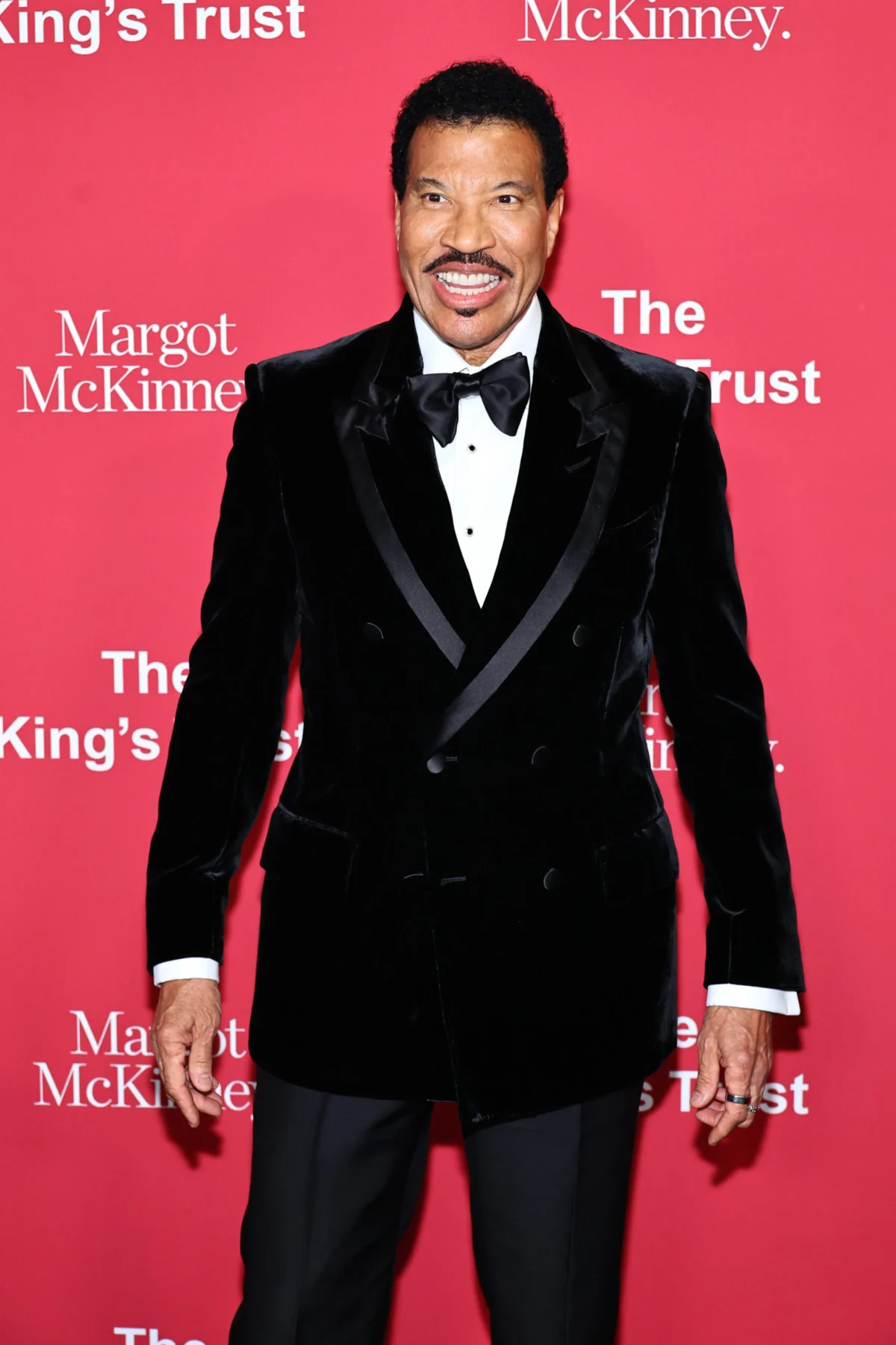
The veteran music icon and American Idol judge Lionel Richie has sparked a significant conversation regarding the nature of celebrity and the expectations of public life during a candid discussion on the Artist Friendly podcast. In an interview conducted by his son-in-law, Joel Madden, the 76-year-old performer offered a seasoned perspective on the complexities of fame, specifically targeting a growing trend where modern stars appear to recoil from the very public attention they once sought. Richie’s remarks arrive at a pivotal moment in the music industry, as younger artists like Chappell Roan navigate the friction between massive commercial success and the personal boundaries they wish to maintain with their fanbases.
During the March 25 episode of the podcast, Madden, the 47-year-old frontman of Good Charlotte, engaged Richie in a deep dive into his four-decade-long career. Richie, whose influence spans from the soul-infused 1970s with the Commodores to his solo superstardom in the 1980s and his current role as a mentor on American Idol, argued that a fundamental part of the "celebrity contract" involves a willingness to engage with the public. He suggested that many rising stars fail to account for the human element of the industry before they achieve their goals.
"I tell people when they get into the business: ‘There’s one thing you didn’t calculate. I hope you like people,’" Richie shared during the sit-down. He went on to describe a psychological pattern he has observed in the industry, where artists spend years clamoring for visibility only to reject it once it arrives. Richie characterized this transition as a jarring shift from "Look at me, look at me" to "Don’t look at me, don’t look at me," noting that such a reversal is often unsustainable and contradictory to the nature of the business.
The Philosophical Divide: Legacy Stars vs. New Era Boundaries
Richie’s comments highlight a burgeoning generational divide in how celebrities view their obligations to the public. For Richie, fame is inextricably linked to the people who consume the art. "The universe gave you what you were asking for," Richie told Madden. "Now, what is it about people you don’t like? Oh, you want to be famous and rich without the people? It doesn’t work like that. You have to be able to engage."
This philosophy stems from Richie’s long-standing reputation as one of the most accessible figures in Hollywood. Madden recounted observations of Richie in public settings, such as restaurants, where the singer consistently acknowledges fans rather than avoiding eye contact. Richie admitted that his children, including Madden’s wife Nicole Richie, have often teased him for his proactive friendliness. He explained that even if a fan does not speak, he chooses to break the ice with a simple "Hi, how are you?" to bridge the gap between his public persona and the real-world interaction.
This "old school" approach to stardom stands in stark contrast to the experiences of contemporary artists like Chappell Roan. Roan, whose rise to fame in 2024 has been meteoric following the success of her album The Rise and Fall of a Midwest Princess, has become a lightning rod for debate regarding fan boundaries. Unlike the carefully curated public relations of Richie’s era, Roan has used social media to directly confront what she describes as "predatory" behavior from fans.
The Chappell Roan Controversy and the "Parasocial" Conflict
While Richie did not mention Roan by name, his critique of artists who struggle with the "don’t look at me" phase of fame mirrors the public discourse surrounding the "Pink Pony Club" singer. Roan has recently faced intense scrutiny following several incidents that have polarized her audience. In August 2024, Roan posted a series of videos on TikTok and Instagram, asserting that she does not owe fans her time, photos, or physical contact outside of her professional performances.
The tension reached a boiling point during the 2024 MTV Video Music Awards, where Roan was involved in a confrontation with a photographer on the red carpet. Furthermore, reports surfaced involving a security guard in her entourage whose actions reportedly left the 11-year-old stepdaughter of actor Jude Law in tears. These incidents have fueled a broader debate: is the modern fan’s expectation of access becoming toxic, or are new artists failing to appreciate the mechanics of the fame they pursued?
Roan has defended her stance by citing her right to safety and privacy. "I’ve been in too many nonconsensual physical and social interactions," she stated in a social media manifesto. "I need you to understand that I am a human being and I am allowed to say no to things that make me uncomfortable." Her supporters argue that the digital age has created "parasocial relationships"—where fans feel an unearned intimacy with a star—leading to stalking, harassment, and entitlement.
Historical Context: The Evolution of the Fan-Artist Contract
To understand the weight of Richie’s advice, it is necessary to look at the evolution of the music industry over the last 50 years. In the 1970s and 80s, the barrier between a star and a fan was largely maintained by physical distance and the lack of instant communication. A star like Richie interacted with fans through controlled environments: concerts, autograph sessions, and traditional media. The "mystery" of the celebrity was a marketable asset.
In the current landscape, the barrier has collapsed. Social media platforms like TikTok and Instagram require artists to be "authentic" and "accessible" to stay relevant in the algorithm. This constant digital presence often leads fans to believe they are part of the artist’s inner circle. When the artist attempts to re-establish boundaries in the physical world, the resulting friction is often interpreted by fans as ingratitude.
Richie’s perspective suggests that the "people" element is the core of the business model. From a purely economic standpoint, the music industry relies on fan loyalty to drive ticket sales, merchandise revenue, and streaming numbers. Data from the music industry analytics firm Luminate shows that "superfans"—those who engage deeply with an artist’s brand—spend 80% more on music-related purchases than the average listener. Richie’s argument implies that if an artist rejects the "people," they are essentially rejecting the engine of their own career.
The Psychological Toll of Rapid Fame
While Richie emphasizes the "calculated" nature of fame, psychologists and industry analysts point out that the speed of modern fame is significantly faster than it was in the 1980s. Chappell Roan’s transition from a niche indie artist to a global phenomenon occurred in a matter of months, largely fueled by viral moments on social media. This "overnight" success can lead to significant psychological stress, often referred to as "sudden wealth syndrome" or "fame-induced anxiety."
For a veteran like Richie, fame was a slow build. The Commodores formed in 1968, and it took years of touring and recording before they achieved mainstream success. This gradual ascent allowed Richie to develop the social and emotional tools necessary to manage public life. In contrast, modern stars are often thrust into the spotlight without the infrastructure or the time to adapt, leading to the "fed up" attitude that Richie criticized.
Industry Implications and the Path Forward
The dialogue between Richie’s traditionalism and Roan’s boundary-setting reflects a turning point for the entertainment industry. Labels and management teams are increasingly being forced to consider the mental health and safety of their artists as part of their business strategy. However, the backlash against Roan suggests that the public is not yet ready to abandon the traditional "celebrity contract" that Richie describes.
Industry experts suggest that a middle ground must be found. While artists should not be subjected to harassment or physical threats, the total withdrawal from public engagement can damage a brand’s longevity. Richie’s advice to "like people" serves as a reminder that, regardless of the platform, the music industry remains a service-oriented business built on human connection.
As the industry moves forward, the "Richie Method"—proactive, polite, and intentional engagement—will likely remain the gold standard for legacy acts. Meanwhile, the challenges faced by artists like Chappell Roan will continue to serve as a case study for how the next generation of stars will redefine what it means to be famous in an era of unprecedented transparency.
Richie’s interview with Madden concludes with a reflection on the gratitude required to sustain a long career. By acknowledging fans with a simple "Hi," Richie maintains the human connection that has kept him relevant for half a century. Whether the new guard of pop stars will adopt this philosophy or successfully rewrite the rules of celebrity remains to be seen, but the tension between the "Look at me" and "Don’t look at me" phases of fame continues to be the defining struggle of the modern artist.