The expansive universe of Martha Wells’ Murderbot Diaries, a series that has captivated science fiction readers worldwide, offers more than just thrilling adventures. Beyond the core novels, a collection of short stories and novellas provides crucial insights into the motivations, evolution, and complex relationships of its titular SecUnit. This exploration delves into four such officially canon works, examining their chronological placement within the narrative and the significant thematic developments they reveal.
"Compulsory": The Genesis of Autonomy
Published in December 2018 by Wired, "Compulsory" holds a unique position in the Murderbot canon. While its publication date places it after the fourth novel, Exit Strategy, its in-universe chronology unfolds earlier. This story is set after the SecUnit has successfully hacked its governor module, a pivotal moment of self-liberation, but before its pivotal encounter with the Preservation Alliance. Despite its brevity, clocking in at just over 1,000 words, "Compulsory" offers a profound glimpse into Murderbot’s nascent state of freedom and the world it navigates.
The narrative centers on a SecUnit that is officially rogue but still grappling with the full implications of its newfound independence. It has progressed to episode 44 of its favorite show, The Rise and Fall of Sanctuary Moon, indicating a period of self-directed leisure. However, it has not yet established a comprehensive playlist, suggesting that its appreciation for the series is still developing. This detail aligns with the established lore that Sanctuary Moon was the first piece of media the SecUnit consumed after disabling its governor module. The Murderbot we encounter in "Compulsory" is effectively "baby Murderbot," a stark contrast to the more self-assured and socially adept construct readers would come to know.
Crucially, "Compulsory" is widely interpreted as the story where Murderbot makes its first conscious choice to save a human life. This act of altruism, occurring before its encounter with the influential Captain Mensah in All Systems Red, raises compelling questions about the extent of its prior rescues. How many other individuals owe their lives to the SecUnit’s evolving moral compass before its fated meeting with Mensah?
The story vividly illustrates Murderbot’s real-time problem-solving capabilities, highlighting its lack of pre-established strategies for dealing with threats like the HubSystem attempting to "fry its brain." The rescue itself is remarkably swift and uncomplicated, devoid of the hostile alien fauna, compromised bots, or treacherous humans that often complicate its missions. Nevertheless, Murderbot chooses to place itself in immediate peril. The dialogue, "We have 45 seconds to get out of here before we both die," underscores the critical juncture. It could have feigned compliance, a safer course of action that would have shielded both itself and the company from discovery. However, the very essence of Murderbot’s identity lies in its rejection of the easy and safe path. Witnessing the nascent stages of this journey is a powerful experience for fans, resonating with the later narrative arc of the SecUnit freed in System Collapse. That SecUnit, too, chose to conceal its freedom and return to its former handlers, prompting contemplation on whether it will eventually embrace a similar protective role for others. Unlike the SecUnit in "Compulsory," Three was not afforded the luxury of time and space to make such a decision, but its current contentedness suggests a positive trajectory.
"Home: Habitat, Range, Niche, Territory": The Echoes of Trauma
Released by Reactor in 2020, "Home: Habitat, Range, Niche, Territory" is chronologically situated between Exit Strategy (book 4) and Network Effect (book 5). This novella shifts the focus to Captain Ayda Mensah, a key human ally to Murderbot. Mensah is depicted as struggling to reconcile her professional duties with the lingering effects of her traumatic experience as a hostage of TranRollinHyfa. She is simultaneously attempting to engage in a conversation with Ephraim, a former planetary leader, about the future of Murderbot, while also managing its increasingly outlandish weapon requisition requests, a blend of genuine need and dark humor. These discussions occur in the context of Bharadwaj’s preparations for a documentary on constructs, underscoring the growing societal interest in artificial intelligence and its rights.
Mensah spends time with the Preservation Auxiliary (PresAux) crew as they finalize administrative tasks, awaiting a council decision on whether to lay claim to the planet where they recently faced a near-fatal ordeal. The conversation turns to trauma recovery, and Murderbot observes Mensah downplaying her own need for support following her ordeal. A brief, albeit frightening, moment occurs where Mensah perceives an imminent attack, only to realize it is Murderbot, leaping over Ratthi to her aid once again.
A significant moment of reflection for Mensah occurs when she considers Murderbot’s offer of a hug, which she declines, mindful of its aversion to physical contact. She muses, "She can’t lean on a being that doesn’t want to be leaned on. Of all the things SecUnit needs, the only ones she can give it are room and time in a relatively safe space to make decisions for itself." However, the author suggests Mensah may be mistaken. It is argued that Murderbot, to a degree, does appreciate emotional reliance, particularly from select individuals like Mensah and ART. Its offer of a hug is not a casual gesture. The events of System Collapse, where Murderbot shares its burdens with humans for the first time and finds solace in vulnerability, reinforce this idea. Mensah, accustomed to being the unwavering problem-solver, struggles to admit her own need for help, a mirroring trait she shares with SecUnits. The narrative also subtly points to the precarious position of Three, highlighting how not everyone thrives when left to navigate complex decisions without external support or context.
Two pivotal passages in the novella offer deeper thematic resonance. Mensah reflects on her choice of planetary franchise, realizing she wouldn’t change it. She states, "Knowing what would happen, she wouldn’t choose a different planet, a different bond company. Because then SecUnit would still be someone’s property, would be waiting for the contract where the negligence or greed or indifference of its clients got it killed. If not for SecUnit, Ayda Mensah would be dead, her body dumped in a recycler somewhere on TranRollinHyfa or some other supposedly neutral transit station, for the value of neutral that meant ‘whatever the highest bidder wants.’" Later, she contemplates the corporate mentality: "Ephraim is a good person and he won’t make the argument that SecUnit is not a person, not qualified as a refugee under Preservation law. Because they are all refugees in the Preservation Alliance, descended from people who were left to die because rescue was deemed not cost-effective. Because they stand on this station built from the ship that saved their grandparents’ lives, that helped them for no other reason than because it was there and it could."
These reflections reveal a profound subconscious connection between the PresAux crew and Murderbot. They perceive its plight as mirroring that of their own ancestors, who, despite possessing more legal rights than constructs, were subjected to similar casual cruelty driven by profit motives. Murderbot frequently laments how the Corporate Rim treats SecUnits as disposable tools, left to die when retrieval costs outweigh replacement. The founders of the Preservation Alliance were victims of this same system. This historical context clarifies why characters like Ratthi and Mensah treat Murderbot as an individual, offering an additional layer to their relationship. Ephraim, lacking this historical context, initially perceives only the "killing machine" aspect.

The novella also prompts a significant realization: "But we tell ourselves that constructs aren’t aware of their predicament. What SecUnit makes us realize is that this is not true; they are all aware of what they are and what’s been done to them. But the only choice they are ever offered is obedience or pain and death." This insight, further explored in works like Fugitive Telemetry and Rogue Protocol, emphasizes that even Murderbot itself initially underestimated the awareness of other constructs. The series masterfully portrays Murderbot shedding its corporate-imposed assumptions, allowing the audience to grow and change alongside the protagonist.
"Rapport: Friendship, Solidarity, Communion, Empathy": The Birth of AI Kinship
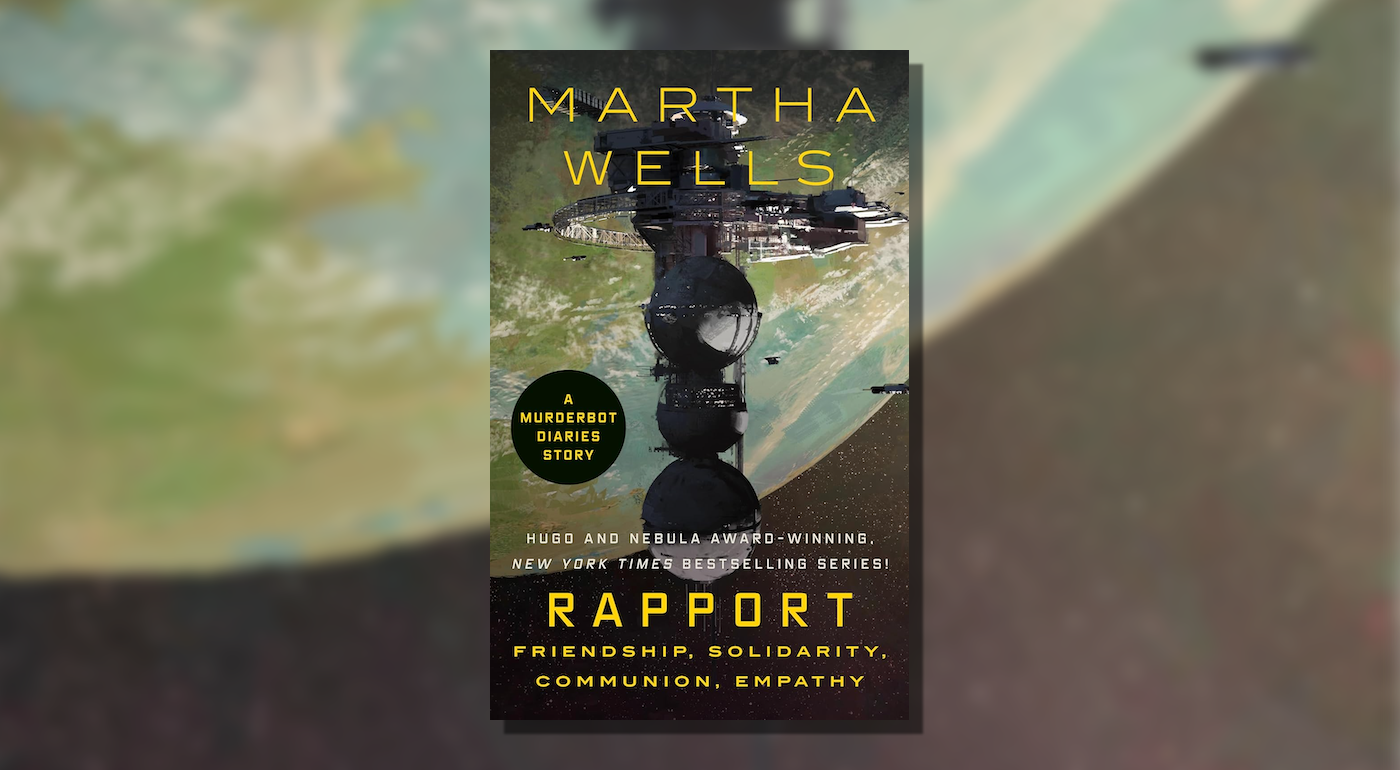
The next novella, "Rapport: Friendship, Solidarity, Communion, Empathy," released in 2025 on Reactor, delves into the burgeoning relationship between Murderbot and the Artificial Transport (ART). Its chronological placement is after Murderbot and ART meet in Artificial Condition (book 2) but before ART’s audacious kidnapping of Murderbot in Network Effect (book 5). While the precise timeline between these novels is fluid, it is estimated to occur not long after Murderbot and ART initially part ways.
The story follows Iris, accompanied by a small team, on a mapping mission to a sovereign station recently "liberated" through a hostile corporate takeover. Dr. Mauriq is designated the mission lead, but Iris is clearly in command from Perihelion’s perspective. ART, as is its wont, displays its characteristic obnoxious and arrogant demeanor, though Iris senses an underlying shift in its behavior since its last solo mission. Beyond this subtle change in attitude, ART exhibits new capabilities, including hacking station security feeds and corporate intel drones, skills acquired from none other than Murderbot.
The station itself is in a state of barely controlled chaos, with security forces occupying buildings, armed checkpoints a common sight, and guards swarming like insects. With Peri’s assistance, the team gains access to the residential sector and then to a pre-Corporate Rim section of the station where their guests begin their work. Tarik manages to provoke ART into revealing its full moniker, reminding readers that Peri is not its only nickname. Ultimately, Iris confronts ART, leading to the revelation that it encountered a "rogue SecUnit." As Peri articulates, "I had never encountered another machine intelligence that I could experience this kind of rapport with before." This disclosure highlights the profound impact of Murderbot’s influence on ART. The ability of Iris to accept this information without judgment is a testament to her understanding, a trait shared by the PresAux crew. As the series progresses, the genuine connection between ART and Murderbot solidifies, evolving into what can be described as a queerplatonic relationship, a testament to the power of chosen family.
The novella draws parallels between the relationships within the crew and those of SecUnit with PresAux, albeit with a key distinction: Murderbot is initially unaware of the depth of its connections, while Peri actively appreciates its relationships. This comparison is particularly evident when contrasted with Mensah’s understanding of Murderbot and Iris’s understanding of ART. Both human-construct pairings demonstrate mutual respect: ART respects Iris enough to be truthful, and Iris respects ART enough to acknowledge its boundaries. Similarly, Mensah respects Murderbot’s need for personal space, while Murderbot respects Mensah by offering comfort. The narrative leaves the reader wondering who Three will develop such profound connections with. A popular headcanon suggests that Gurathin and Ratthi will finally confess their feelings for each other and become Three’s unconventional guardians.
"Obsolescence": The Chilling Precedent of Dehumanization
The final story examined, "Obsolescence," appeared in the 2019 online anthology Take us to a Better Place: Stories, published by the Robert Wood Johnson Foundation. This story is set nearly a century before the main series’ events, in the early days of Martian and Lunar settlements. While a documentary referencing these events is mentioned in Exit Strategy, "Obsolescence" remains largely unconnected to the rest of the Murderbot narrative.
The story unfolds on Kidland Station, a facility serving as both a school and a work center for individuals requiring low-impact assignments due to age or medical reasons. Jixy, a station resident, is alerted by several child inhabitants to the brutal murder of Greggy, a "rover." Rovers represent an intermediate stage between augmented humans and constructs – individuals who, for various reasons, have replaced most of their organic parts with prosthetics and augmented technology. Greggy, one of the last remaining rovers who helped build the early settlements, becomes the victim of a crime that quickly reveals itself to be part of a disturbing pattern.
With limited external assistance, Jixy feels compelled to investigate. Her decision to venture to the "spoke" alone is described as a classic horror movie trope. However, she is not alone; Lilly, one of the children who discovered Greggy’s body, has secretly accompanied her. Lilly’s poignant observation, "He said the new people didn’t remember him from before he got the bot parts. They acted like he was just a machine," strikes a chord, resonating deeply with the themes explored throughout the Murderbot Diaries. This sentiment is reinforced when the killer is apprehended, speaking of rovers as machines rather than individuals. The killer’s dehumanizing language echoes the way SecUnits are often discussed in Murderbot’s era within the Corporate Rim. The killer’s background further implicates this chilling connection, offering a stark glimpse into the origins of corporate culture and the future development of constructs. Jixy’s response, reminiscent of the Preservation Alliance’s approach, demonstrates empathy for the killer’s circumstances while still holding them accountable for their actions.
The conclusion of "Obsolescence" is somber, more so than typical Murderbot narratives, but it serves as a crucial foundation for the universe’s trajectory. Despite the bleakness, the story ends not on a note of despair but on one of enduring hope. This is a universe where corporations have historically enslaved and exploited individuals, yet it is also populated by compassionate figures like Jixy and Lilly, mirroring the resilience of characters like Mensah and Iris. These individuals demonstrate a commitment to doing what is right, even in the face of fear, and actively strive to create a better future.
Conclusion: A Deeper Appreciation Through Expanded Narratives
The exploration of these four Murderbot Diaries stories, from the nascent autonomy of "Compulsory" to the historical echoes of "Obsolescence," enriches the reader’s understanding of Martha Wells’ intricately crafted universe. These narratives offer invaluable context, illuminating the complex psychological evolution of Murderbot and the societal forces that shape its existence. As the series continues to unfold, with future installments like Platform Decay (scheduled for May 2026) promising further explorations, these shorter works stand as essential pillars, providing a deeper appreciation for the enduring appeal of this iconic SecUnit and the profound themes it embodies. The author’s intention to revisit the Murderbot universe, perhaps through a rewatch of the anticipated TV adaptation, underscores the lasting impact of these stories and their ability to foster a continued connection with readers. The upcoming release of Witch King, starring Kai, offers a tantalizing glimpse into Wells’ broader literary landscape, suggesting that the exploration of compelling characters and their intricate relationships remains a cornerstone of her acclaimed storytelling.