The cinematic adaptation of Andy Weir’s "Project Hail Mary" transcends its source material’s intricate scientific detail to deliver a profoundly resonant exploration of humanity, connection, and the nature of heroism. While the novel captivated readers with its meticulous scientific problem-solving and the gripping narrative of a lone astronaut tasked with saving Earth, the film, directed by Dan Trachtenberg, skillfully reinterprets these elements, prioritizing emotional depth and character-driven storytelling. The result is a film that, while streamlining complex scientific exposition, amplifies the core thematic heart of Ryland Grace’s mission and, crucially, his extraordinary bond with the alien companion, Rocky.
The genesis of "Project Hail Mary" as a literary work can be traced back to Weir’s signature blend of hard science fiction and engaging character arcs. Following the success of "The Martian," Weir continued to explore the resilience of the human spirit in the face of overwhelming odds. The novel’s premise—a science teacher awakening on a spaceship with amnesia, light-years from home, tasked with averting an extinction-level event—immediately presented a compelling narrative hook. The audiobook version, masterfully narrated by Ray Porter, further enhanced the immersive experience, bringing Ryland Grace’s journey to life with nuance and charisma.
The Existential Threat and the Hail Mary Mission
The narrative unfolds against the backdrop of an impending global catastrophe. Earth’s sun is dimming, a consequence of an alien microorganism dubbed "Astrophage" that is consuming its energy. This phenomenon, discovered by scientists, initiated a desperate, last-ditch effort—a "Project Hail Mary"—to find a solution. The mission’s objective was to send a ship, crewed by individuals with specific scientific knowledge and genetic predispositions, to the Tau Ceti system, the only known star unaffected by the Astrophage, in hopes of discovering a way to combat the organism and save humanity.
The book meticulously details the scientific challenges and Ryland Grace’s gradual recovery of his memories, revealing the circumstances that led him to be the sole survivor on this solitary voyage. He was not a volunteer in the traditional sense but rather the individual deemed most suitable and available when all other options had been exhausted. This revelation shifts the narrative from one of aspirational heroism to a more grounded portrayal of an ordinary person thrust into extraordinary circumstances.

The Film’s Adaptation: Prioritizing Emotion and Connection
The film adaptation, released by Amazon MGM Studios, faced the inherent challenge of translating Weir’s detailed scientific explanations into a visually and narratively accessible format. While acknowledging that some scientific intricacies might be simplified, the filmmakers, led by producers including Erwin Stoff and Andy Weir himself, made a strategic decision to focus on the emotional core of the story. This approach, while potentially disappointing to purists seeking exact scientific fidelity, proved instrumental in amplifying the film’s impact.
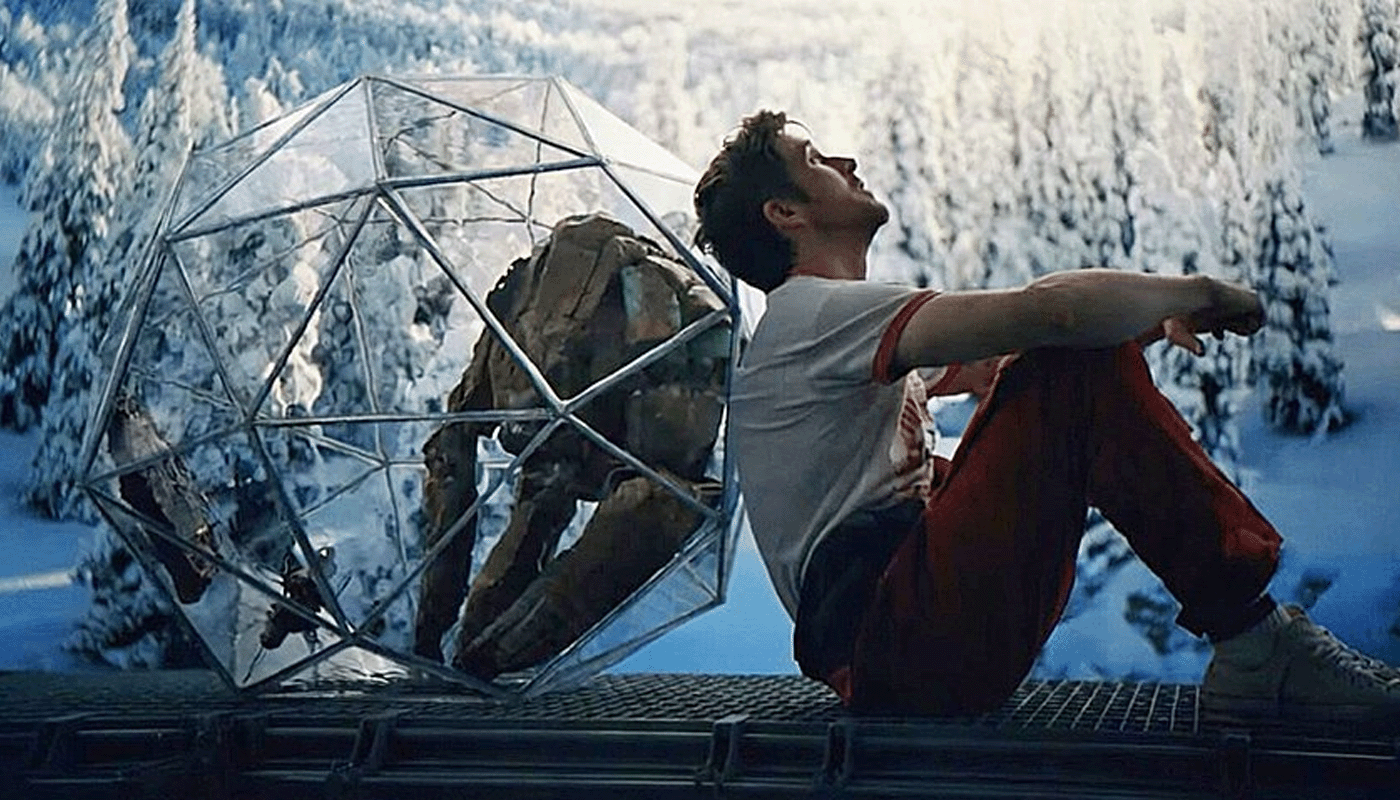
One of the most significant departures, and arguably the film’s greatest triumph, is the portrayal of Rocky. In the novel, Rocky is an alien life form encountered by Grace in space. The film’s decision to bring Rocky to life as a meticulously crafted puppet, rather than relying solely on CGI, injects a tangible, almost tactile presence into the character. This choice, echoing the legacy of the Jim Henson Creature Shop and the practical effects prevalent in beloved science fiction series like "Farscape," imbues Rocky with a unique charm and relatability. The performance of puppeteer Jim Ortiz, who also provided Rocky’s voice, is central to this success. His nuanced delivery and physical manipulation of the puppet allow Rocky to convey a wide spectrum of emotions, making the alien feel not just alien, but a fully realized individual.
The Power of Puppetry and Practical Effects
The decision to utilize puppetry for Rocky represents a conscious embrace of practical effects in an era often dominated by digital manipulation. The film’s creative team recognized that a physical puppet, interacting directly with the actors and sets, could lend a greater sense of authenticity and emotional weight to the interspecies relationship. This approach contrasts with the sometimes sterile or detached feel of purely CGI-generated characters, allowing for a more immediate and visceral connection between the audience and Rocky.
The influence of shows like "Farscape," which featured a diverse cast of puppets and creatures from the Jim Henson Company, is evident. These productions demonstrated the power of tangible characters to foster genuine emotional bonds with audiences. The film’s commitment to this aesthetic reinforces the idea that even in the vastness of space, real, physical connections are possible and deeply impactful.
The Heart of the Story: Friendship Across Worlds
At the crux of "Project Hail Mary" lies the unlikely friendship that blossoms between Ryland Grace and Rocky. Both are adrift in the cosmos, each facing the existential threat of their respective star systems’ demise. Their shared predicament, coupled with their distinct yet complementary intelligences, forms the bedrock of their burgeoning camaraderie. The film excels in portraying this bond as organic and earned. Scenes depicting their collaborative efforts to solve scientific puzzles are interspersed with moments of genuine humor and heartfelt connection.

A particularly relatable sequence occurs when Rocky decides to relocate to Grace’s ship, leading to Grace’s humorous lament about the loss of privacy. This seemingly mundane interaction underscores the film’s ability to ground its fantastical premise in everyday human (and alien) experiences. The filmmakers masterfully balance Rocky’s often quirky demeanor with poignant moments, such as Rocky’s expressions of longing for their mate, which highlight the universal nature of connection and loss. This juxtaposition of the grand scale of humanity’s survival with the intimate, personal friendship between Grace and Rocky is a deliberate and effective narrative choice.
Ryland Grace: The Unlikely Hero
The film’s narrative arc for Ryland Grace is a departure from traditional heroic archetypes. As Grace’s memories return, the audience learns that he was not a willing hero who volunteered for a suicide mission. Instead, he was the individual left with the necessary knowledge and genetic makeup to undertake the mission when all other avenues were closed. This revelation positions Grace not as a fearless warrior, but as a fundamentally human character, grappling with fear, self-preservation, and the immense weight of responsibility.
This portrayal resonates with the sentiment expressed by John Crichton in "Farscape," who famously declared, "I am not Kirk, Spock, Luke, Buck, Flash or Arthur frelling Dent. I’m Dorothy Gale from Kansas." Grace’s reluctance to face certain death is not a character flaw but a testament to his humanity. The film suggests that while stories of aspirational heroes are valuable, narratives that explore the "imperfect but beautiful messiness of humanity" are equally, if not more, crucial. Grace’s journey is one of accepting his limitations and finding courage not in the abstract concept of saving humanity, but in the concrete reality of saving a friend.
Redemption Through Sacrifice and Connection
Despite his initial unheroic circumstances, Grace is presented with an opportunity for redemption, intrinsically linked to his friendship with Rocky. When the "taumeoba," the organism consuming their respective suns, proves capable of escaping containment and jeopardizing their fuel supply, Grace faces a critical choice. He can use the astrophage to return to Earth, dooming Rocky, or he can expend his fuel reserves to rescue his alien companion.
While the film could have perhaps made Grace’s self-sacrificial intent more explicit—he is aware he is likely dooming himself without adequate sustenance for long-term survival—his choice is ultimately clear. He cannot sacrifice himself for the abstract notion of humanity, but he can and does sacrifice himself for the sake of a friend. This act of profound personal sacrifice underscores the film’s central theme: that the most powerful motivations often stem from individual connection rather than grand, impersonal ideals.

Eva Stratt: A Shifting Perspective on Leadership
The character of Eva Stratt, the driving force behind Project Hail Mary, undergoes a significant reinterpretation in the film. In the novel, Stratt is portrayed as a woman of singular, almost ruthless, focus on the survival of the human race, willing to sacrifice anyone and anything for the greater good. Her actions are dictated by a cold pragmatism, even if she herself grapples with the moral implications.
The film, however, softens Stratt’s character considerably, largely due to the compelling performance of Sandra Hüller. Hüller imbues Stratt with a subtle humanity that was less pronounced in the novel. Her dry wit, as seen in her response to Grace’s query about being expendable ("We agree it would be preferable if you did not die"), injects moments of levity and underscores a less clinical approach. The film suggests that Stratt develops a personal respect for Grace, moving beyond viewing him solely as a necessary component of the mission. This subtle shift humanizes Stratt, presenting her not as a cold strategist but as someone who, despite the immense pressures, can forge genuine connections and harbor regret for the sacrifices demanded by her role.
The Enduring Message: What Makes Humanity Worth Saving?
Ultimately, "Project Hail Mary" compels audiences to confront the question of what aspects of humanity are truly worth preserving. The film argues that beyond abstract ideals, it is our imperfections, our messiness, and our capacity for deep, personal connection that define our worth. The visceral reaction to Rocky’s suffering, even more so than the abstract threat to humanity, highlights this point. The audience, like Grace, grows to love Rocky—his cleverness, his quirks ("fist my bump!"), his earnestness, and his vulnerability. Jim Ortiz’s performance ensures that Rocky’s emotions are palpable, making the audience fear for him when he is injured.
The film’s confirmation that Project Hail Mary ultimately succeeds in saving Earth provides narrative satisfaction. However, the true emotional resolution lies in the enduring friendship between Rocky and Grace. This is not a flaw in the storytelling but a deliberate feature, emphasizing that person-to-person connection, the very essence of what it means to be human, is perhaps the most valuable thing we have to protect. In a world grappling with existential threats, from climate change to societal divisions, "Project Hail Mary" offers a timely and uplifting reminder of the power of empathy, collaboration, and the profound beauty of shared humanity, even across the vast expanse of the cosmos.