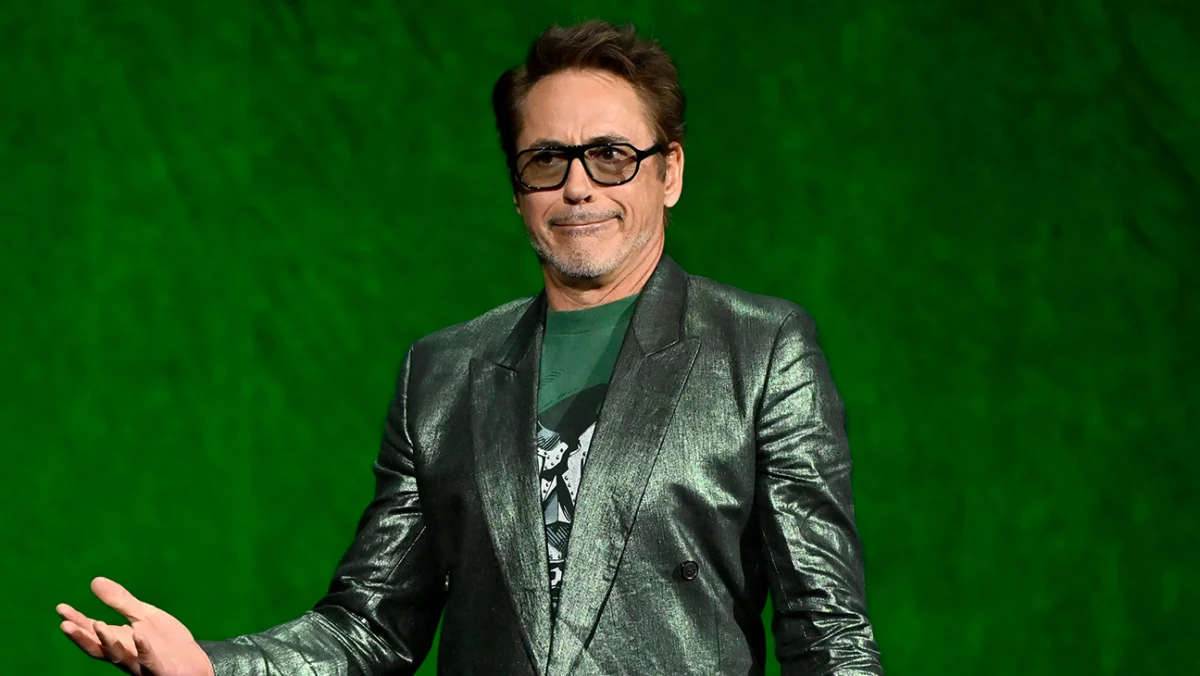
In an era defined by the escalating convergence of traditional Hollywood and the burgeoning digital creator economy, Oscar-winning actor Robert Downey Jr. has voiced a pointed skepticism regarding the assertion that social media influencers represent the entertainment industry’s future vanguard. During a recent appearance on the Conversations for our Daughters podcast, the acclaimed performer articulated a clear distinction between ephemeral digital celebrity and the enduring legacy of meaningful creative endeavor, challenging the prevailing narrative around influencer dominance. His remarks underscore a fundamental debate within the entertainment sphere about authenticity, artistic purpose, and the evolving nature of stardom in the 21st century.
The Critique of Ephemeral Celebrity
Downey Jr., known for his transformative roles and a career spanning decades, did not mince words when discussing the rise of influencer culture. He critically contrasted the current ease of attaining public recognition through digital platforms with the more arduous paths to celebrity that characterized earlier eras. "It was also a time when in the late ’70s, early ’80s, dangerous though it was, there was this sense that the competition wasn’t so stiff that you shouldn’t even bother trying," Downey Jr. reflected, painting a picture of a past landscape where creative pursuit, despite its challenges, felt more accessible and less diluted. He continued, "Whereas nowadays, people can create a celebrity without ever doing much besides rolling a phone on themselves. I don’t look at that as a negative thing. I just look at it as more like the challenge for individuation is being upped."
This observation highlights a core tension: the democratization of content creation versus the perceived devaluation of artistic craft. For Downey Jr., the proliferation of easily manufactured digital personas raises the bar for genuine self-expression and unique contribution. His concern is not merely with the existence of influencers but with the potential for such forms of celebrity to overshadow creators driven by a deeper ambition to "build something" of lasting value. The Avengers: Doomsday star expressed a fervent hope for future generations, stating, "Hopefully the grosser part of the youth of — let’s just call it America for locality’s sake — is gonna say, ‘Yeah, but that’s not my thing. I want to go do something, I’m going to make something, I want to build something, I want to educate myself and I want to have more inputs,’ so whatever my output is, it isn’t just a self-aggrandizing kind of influencer-type thing."
The most unequivocal expression of his viewpoint came when directly addressing the popular notion of influencers as the future of stardom. "When I hear people talk about, ‘Oh, the stars of the future are going to be influencers,’ I go, ‘I don’t know what world you’re living in, but I think that that is absolute horseshit,’" he declared. This blunt assessment from a figure who has navigated the complexities of fame for over 40 years resonates with many who perceive a widening chasm between celebrity earned through demonstrable talent and widespread cultural impact, and the often transient nature of digital notoriety.
A Nuanced Perspective: Between Critique and Understanding
Despite his strong disapproval of the premise that influencers are the inevitable stars of tomorrow, Downey Jr.’s commentary is not entirely dismissive. He revealed a more nuanced understanding of the evolving digital landscape, shaped in part by personal experience. When questioned about the novelty and potential contributions of influencers, he shared an anecdote involving his 13-year-old son. "My now 13-year-old son, he kinda got caught up in this whole influencer thing, and next thing you know, it’s like, ‘Hey, if you like the way I’m playing this video game, do you wanna send me a donation?’ And really, it becomes a religion," the Iron Man actor recounted.
This observation points to the potent monetization strategies inherent in the creator economy, where direct fan engagement can translate into significant revenue streams, sometimes blurring the lines between entertainment and a form of digital evangelism. Downey Jr. went further, likening some aspects of influencer culture to "the Evangelical hucksters of the information age." This comparison, while provocative, highlights a perceived transactional dynamic that can underpin certain influencer-fan relationships, where charisma and perceived authenticity are leveraged for financial gain.
However, Downey Jr. also acknowledged the novelty and uncharted territory of this digital frontier. "At the same token, it’s different because we’re playing in this new territory and so it’s a little bit of a frontier and I don’t really have a judgment on it," he conceded. This statement indicates a degree of open-mindedness and an understanding that the rules of engagement are still being written. Furthermore, he admitted to encountering "grounded, accomplished, cool people" among the influencers he has met while promoting his films, suggesting that his critique is directed more at the system and the premise of their future dominance rather than a wholesale condemnation of all individuals within the space. This nuanced view reflects a sophisticated engagement with a complex phenomenon, recognizing both its problematic aspects and its inherent potential.
The Historical Trajectory of Stardom and Content Creation
To fully appreciate Downey Jr.’s remarks, it is essential to contextualize them within the broader history of celebrity and content dissemination. For much of the 20th century, stardom was largely a product of centralized media institutions—Hollywood studios, major record labels, and broadcast television networks. Actors, musicians, and public figures typically rose to prominence through established pipelines, involving talent scouts, rigorous training, and significant investments from powerful gatekeepers. Their celebrity was often carefully curated, protected, and projected onto a mass audience.
The advent of the internet in the late 20th century, followed by the explosion of social media platforms in the 2000s, irrevocably altered this paradigm. Platforms like YouTube, MySpace (early on), Instagram, Twitter, and later TikTok, provided individuals with unprecedented tools to create, distribute, and monetize their own content, bypassing traditional intermediaries. This democratization of media creation gave birth to the "creator economy," a vast ecosystem where individuals could cultivate direct relationships with audiences, build personal brands, and generate income through advertising, sponsorships, merchandise, and direct fan support.
The term "influencer" emerged to describe individuals who leveraged their online presence and perceived authenticity to sway the opinions, purchasing decisions, and lifestyles of their followers. Initially, many early digital stars gained traction through genuine passion for niche topics—gaming, beauty, fashion, comedy, or educational content. Their rise felt organic, driven by relatability and direct engagement. However, as the industry matured, it became increasingly professionalized, with agencies specializing in influencer marketing, brands allocating significant portions of their advertising budgets to digital campaigns, and the pursuit of viral fame becoming an end in itself for many aspiring creators.
This shift has profound implications for how talent is discovered, developed, and valued. Traditional acting schools and audition processes still exist, but a significant portion of younger talent now emerges from platforms like TikTok, where viral dance trends or short-form comedy sketches can launch careers overnight. The question then arises: what constitutes a "star" in this fragmented and rapidly evolving landscape? Is it the ability to command a massive audience, irrespective of the content’s depth, or does it still require a more profound artistic contribution? Downey Jr.’s comments lean heavily towards the latter, advocating for a return to purposeful creation.
Data and Statistics: The Creator Economy’s Staggering Scale
The scale of the creator economy underscores why the debate around influencers is so significant. The global influencer marketing market size was estimated at over $16 billion in 2022 and is projected to reach upwards of $24 billion by 2028, demonstrating its immense economic power. Millions of individuals worldwide identify as content creators, with a subset achieving "influencer" status, commanding millions of followers and significant endorsement deals.
For instance, top Instagram influencers can earn hundreds of thousands, if not millions, of dollars per sponsored post, depending on their reach and engagement rates. YouTube stars generate revenue through ad sharing, channel memberships, and brand integrations. TikTok creators leverage the platform’s viral potential for rapid growth and brand partnerships. This direct revenue generation model stands in stark contrast to the traditional Hollywood system, where actors often work through agents, unions, and studios, receiving fixed fees or backend participation in larger projects.
Audience demographics further illustrate the power shift. Younger generations, particularly Gen Z and younger Millennials, spend a significant portion of their media consumption time on social media platforms, often prioritizing content from creators they follow over traditional television or film. A 2022 study by Deloitte found that Gen Z spends more time on social media than any other generation, with a strong preference for short-form video content. This preference translates into massive reach for top influencers, sometimes surpassing the viewership of network television shows or niche cable channels.
This data provides the backdrop against which Downey Jr.’s comments are made. He is not dismissing a fringe phenomenon but rather a multi-billion-dollar industry that is fundamentally reshaping how media is produced, consumed, and monetized. His challenge is not to the existence of this economy but to the idea that its most visible figures—those who primarily "roll a phone on themselves"—should be considered the epitome of future stardom, potentially at the expense of more profound creative endeavors.
Robert Downey Jr.’s Personal Engagement with Social Media
As someone with over 58 million followers on Instagram alone, Robert Downey Jr. is undeniably a significant presence in the digital space. His reflections on his own relationship with social media offer further insight into his perspective. He described himself as "a little bit of a blinders guy," indicating a deliberate effort to limit his immersion in the digital world. "I try not to get too deep down any rabbit hole because I don’t wish to be consumed," he explained, articulating a common struggle among public figures to maintain boundaries and protect their personal lives from the insatiable demands of online engagement.
This approach contrasts sharply with the influencer model, which often thrives on constant, unfiltered sharing and the cultivation of an intimate, albeit often manufactured, connection with followers. Downey Jr. is wary of this manufacturing process. "I know, like people say, ‘Robert, they just love it when you’re just kind of like seeming off the cuff, and they’re getting a glimpse into your life.’ And I go, ‘But yeah, but I’d be manufacturing that aspect for them, so it’s B.S. I like things that feel a little more prepared,’" he elaborated. His preference for "prepared" content underscores a professional distance and a commitment to deliberate creation, rather than the spontaneous, often unscripted, content that defines much of influencer output. This distinction highlights his core belief in artistic intentionality over perceived, yet often staged, authenticity.
He recalled an early moment that presaged the current landscape: Jon Favreau tweeting on stage during the Iron Man teaser launch at Comic-Con in 2007. "I saw the audience… This is the new hue where the audience is going to feel like they’re on the steering committee of this thing. OK, so that’s the new landscape in part," he acknowledged. This anecdote reveals his early awareness of the shift towards participatory culture, where audiences demand a more direct connection and a sense of involvement in the creative process.
Yet, his recent work on Christopher Nolan’s Oppenheimer provided a stark contrast to this digital dynamic. "Oppenheimer was the opposite of that. Senior to me was the antithesis of that because I had to almost trick myself into doing something truly organic and deeply personal while knowing that it was ultimately going to be viewed and would be there as an item for consumption on Netflix," he mused. This reflection encapsulates the paradox of modern artistry: the creation of deeply personal and organic work within a system designed for mass consumption, often through digital platforms that prioritize metrics and immediate engagement. His Oscar-winning performance in the film stands as a testament to the power of traditional, deeply crafted acting, even when consumed through modern digital channels.
Industry Reactions and Broader Implications
Robert Downey Jr.’s outspoken remarks are likely to resonate across various segments of the entertainment industry, sparking further debate about the future of talent, marketing, and creative production.
For Traditional Hollywood: Downey Jr.’s perspective offers validation for those who champion traditional acting, filmmaking, and storytelling. It reinforces the value of craft, sustained artistic development, and the pursuit of meaningful narratives over transient digital trends. However, Hollywood also grapples with the undeniable reach and economic power of the creator economy. Many studios and production companies now actively seek out social media stars for roles or promotional partnerships, recognizing their built-in audiences. The challenge for Hollywood is to integrate the effective aspects of digital engagement without compromising artistic integrity or diminishing the value of established talent.
For the Creator Economy: Influencers and their representatives might view Downey Jr.’s comments as a generational critique or a misunderstanding of the unique skills and challenges involved in building and maintaining a digital audience. They could argue that building a successful personal brand, consistently generating engaging content, and cultivating a loyal community online requires its own form of creativity, business acumen, and resilience. Some influencers do transition into traditional media, demonstrating that the two worlds are not entirely separate. However, Downey Jr.’s challenge encourages a deeper introspection within the creator community: is the primary goal self-aggrandizement, or is there a genuine desire to "build something" that transcends mere digital popularity?
The Redefinition of "Star": The core of the debate centers on the definition of a "star." Traditionally, stars were figures whose talent, charisma, and cultural impact transcended their specific roles, becoming household names with broad appeal. In the digital age, "stardom" can be more fragmented, niche-specific, and sometimes fleeting. Downey Jr.’s comments suggest a preference for the traditional definition, emphasizing artistic contribution and lasting impact. This ongoing redefinition has implications for talent agencies, casting directors, and even awards bodies, as they navigate a landscape where different forms of celebrity coexist and compete for attention and accolades.
The Future of Storytelling and Authenticity: The tension between "prepared" content and manufactured "off the cuff" glimpses highlights a crucial discussion about authenticity in media. As audiences become increasingly savvy about digital manipulation, the demand for genuine connection remains high. However, the very nature of performance, whether on screen or online, involves a degree of curated reality. Downey Jr.’s concern about "manufacturing" authenticity speaks to the ethical considerations of content creation in an age where the lines between genuine self and public persona are increasingly blurred.
Ultimately, Robert Downey Jr.’s intervention in this ongoing conversation is a significant one. As a highly respected figure who has mastered both critical acclaim and blockbuster appeal, his voice carries considerable weight. His call for purpose-driven creation and his skepticism regarding the default elevation of influencers to "future stars" serves as a powerful reminder of the enduring value of craft, substance, and a commitment to building something truly meaningful in the vast and often superficial landscape of modern media. As he prepares for his next major cinematic outing in Marvel’s Avengers: Doomsday, set to hit theaters on December 18, Downey Jr. continues to embody a form of stardom that, in his view, transcends the ephemeral trends of the digital age.