
As May 2026 approaches, Netflix subscribers are facing a notable recalibration of the platform’s licensed content library, with a significant purge scheduled for the first day of the month. This impending removal includes a diverse array of critically acclaimed features, genre-defining classics, and popular animated films that have, in some cases, been long-standing staples on the service. While Netflix continues to bolster its original programming, including anticipated titles such as Remarkably Bright Creatures set to premiere in May 2026, the departure of these licensed movies underscores the dynamic and often transient nature of streaming availability. This comprehensive review serves as a final advisory for viewers to engage with these eight prominent films before they vanish from the streaming giant.
Understanding the Evolving Landscape of Streaming Content Licensing
The periodic rotation of licensed content is an inherent characteristic of the modern streaming ecosystem, a reality often driven by complex contractual agreements between streaming platforms and content owners. These licensing deals typically have fixed durations, ranging from a few months to several years, dictating when a film or series can be hosted on a particular service. As these agreements expire, content owners often reassess their distribution strategies, which can involve negotiating new terms, moving titles to competitor platforms, or consolidating them onto their own proprietary streaming services. For Netflix, a company that initially built its empire on a vast library of licensed films and television shows, this ongoing churn is a delicate balancing act. While the streamer has invested billions in developing original content to ensure long-term exclusivity and control, licensed titles remain crucial for maintaining subscriber engagement and offering a broad appeal. The departure of a high-profile slate like that slated for May 2026 often reflects the conclusion of such licensing windows, sometimes without immediate renewal, or the strategic repositioning of these assets by their owning studios. This constant flux necessitates that subscribers remain vigilant about titles in their watchlists, as availability can change without extensive prior notice, beyond the standard "leaving soon" banners.
A Detailed Look at the Departing Classics and Critically Acclaimed Titles
The upcoming departures represent a compelling cross-section of cinematic history and modern filmmaking, ranging from foundational horror to intense character studies and family-friendly animated epics. Each film, in its own right, has left an indelible mark on its respective genre or the broader cultural consciousness.
Dawn of the Dead (2004): A Modern Zombie Classic’s Farewell
Zack Snyder’s 2004 remake of George A. Romero’s seminal zombie film, Dawn of the Dead, stands as a rare example of a reimagining that not only honored its predecessor but also injected fresh, high-octane energy into the genre. Released as Snyder’s directorial debut, the film defied the common skepticism surrounding remakes, earning critical praise and commercial success, grossing over $102 million worldwide against a $26 million budget. Critics lauded its relentless pacing, visceral action sequences, and a cast that included Sarah Polley and Ving Rhames, who grounded the chaos with compelling human drama. Unlike Romero’s shambling undead, Snyder introduced fast, aggressive zombies, a stylistic choice that would heavily influence subsequent zombie narratives in film and television. The narrative, centered on a disparate group of survivors sheltering in an abandoned shopping mall amidst a global apocalypse, effectively blended survival horror with sharp social commentary, echoing Romero’s original while carving its own distinct identity.
The film’s impact was significant, solidifying Snyder’s reputation as a visually distinct filmmaker and a master of action choreography. Its departure from Netflix removes a key title in the modern horror canon, especially poignant given Snyder’s later return to the genre with Netflix’s own original Army of the Dead (2021). While Army of the Dead garnered a more mixed critical reception, it demonstrated Netflix’s continued interest in the zombie genre, making the loss of Snyder’s impactful debut a notable absence for horror aficionados on the platform.

Whiplash (2014): The Rhythmic Intensity Departs
Damien Chazelle’s Whiplash (2014) is arguably one of the most intense and emotionally charged films of the 21st century. This psychological drama chronicles the fraught relationship between Andrew Neiman (Miles Teller), an ambitious young jazz drummer, and Terence Fletcher (J.K. Simmons), his ruthlessly demanding and emotionally abusive conservatory instructor. The film plunges audiences into the high-stakes world of elite music education, exploring themes of ambition, perfectionism, and the ethical boundaries of mentorship. Teller and Simmons deliver powerhouse performances, with Simmons, in particular, receiving widespread acclaim for his terrifying portrayal of Fletcher, earning him the Academy Award for Best Supporting Actor. The film’s taut screenplay, propulsive jazz score, and masterful editing contribute to an unrelenting sense of tension, making it a challenging yet profoundly rewarding viewing experience.
Whiplash was a monumental critical success, boasting a 94% approval rating on Rotten Tomatoes and grossing over $48 million worldwide on a modest $3.3 million budget. Beyond Simmons’ Oscar, the film also secured Academy Awards for Best Film Editing and Best Sound Mixing, along with nominations for Best Picture and Best Adapted Screenplay. Its departure removes a modern cinematic masterpiece from Netflix, a film celebrated for its raw emotional power and its unflinching exploration of artistic obsession.
The Jaws Franchise (1975, 1978, 1983): Iconic Thrillers Swim Away
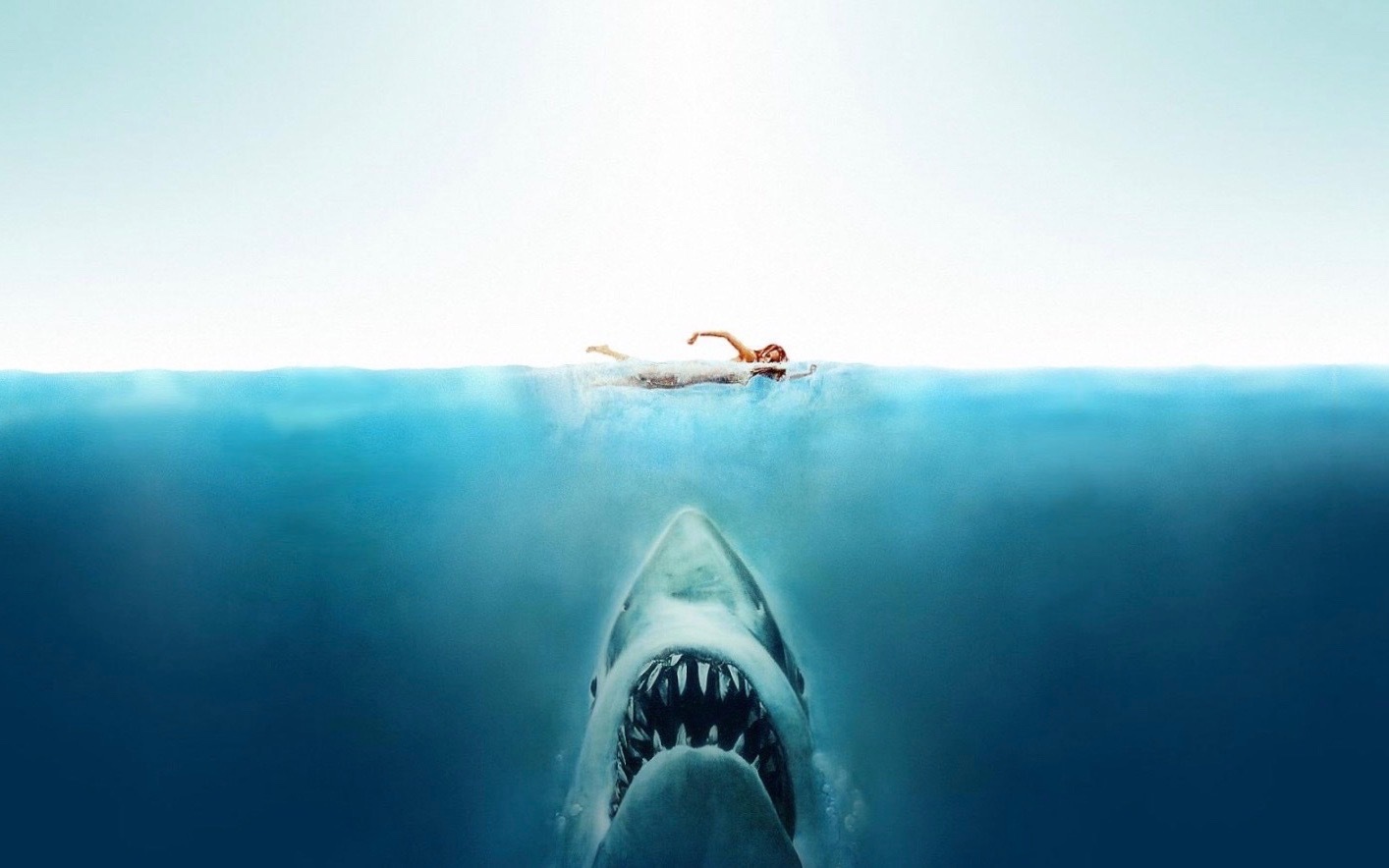
Steven Spielberg’s Jaws (1975) is not merely a film; it is a cultural phenomenon that fundamentally reshaped the landscape of Hollywood filmmaking, pioneering the summer blockbuster. The chilling tale of a great white shark terrorizing a New England beach town, and the unlikely trio tasked with hunting it down, has captivated audiences for decades. Its innovative use of suspense, iconic score by John Williams, and memorable performances from Roy Scheider, Robert Shaw, and Richard Dreyfuss cemented its status as a timeless thriller. Jaws was a colossal box office success, earning over $470 million worldwide and holding the record for the highest-grossing film until Star Wars two years later.
The original film has been a frequent, albeit intermittent, presence in Netflix’s library since September 2016, often joined by its two direct sequels, Jaws 2 (1978) and Jaws 3-D (1983). While the sequels never reached the critical or commercial heights of the original, they remain integral parts of the franchise’s legacy. Jaws 2, with its return of Roy Scheider, offered a respectable continuation, grossing over $208 million, while Jaws 3-D, despite its innovative (for the time) use of 3D technology, was largely panned by critics. The absence of these films, particularly the seminal original, marks a significant loss for Netflix’s catalog of classic cinema. Historically, Jaws has rarely been absent from Netflix’s U.S. library for more than a year since 2016, making this upcoming departure a notable break in its recurring availability, leaving fans wondering when the iconic shark might resurface on the platform.
Fury (2014): A Gritty WWII Tank Drama’s Last Stand
David Ayer’s Fury (2014) offers a stark, unflinching look at the brutal realities of tank warfare during the final desperate days of World War II. Headlined by Brad Pitt as Don "Wardaddy" Collier, the film follows his five-man Sherman tank crew as they embark on a perilous mission behind enemy lines into the heart of Nazi Germany. The film stands out for its commitment to gritty realism, meticulously recreated battle sequences, and its exploration of the psychological toll of war on its combatants. The ensemble cast, featuring Logan Lerman, Michael Peña, Shia LaBeouf, Jon Bernthal, and Scott Eastwood, delivers compelling performances, embodying the weariness and camaraderie forged under extreme duress.
Fury was a critical and commercial success, praised for its visceral action and strong performances. It garnered over $211 million globally against a $68 million budget and holds a respectable 76% on Rotten Tomatoes. The film’s authentic portrayal of tank combat, supported by technical advisors and a genuine Sherman tank, resonated with audiences and critics alike. Its departure means the removal of a powerful and historically informed war epic, leaving a void for those seeking intense, character-driven narratives set against the backdrop of global conflict.
Conan the Destroyer (1984): Arnold’s Cult Classic and Future Prospects
While often overshadowed by its predecessor, Conan the Barbarian (1982), Conan the Destroyer (1984) nonetheless holds a cherished place in the hearts of Arnold Schwarzenegger fans and devotees of 1980s sword-and-sorcery cinema. The sequel continues the adventures of Conan, the mighty Cimmerian warrior, as he is tasked with escorting a queen’s niece on a perilous quest to retrieve a magical gem from the fortress of a powerful wizard. Directed by Richard Fleischer, the film embraced a more fantasy-driven, adventure-oriented tone compared to the darker, more brutal aesthetic of the original.
Though it received a mixed critical reception upon release, Conan the Destroyer found its audience through cable television and home video, cultivating a dedicated cult following. Its relevance has seen a resurgence following recent announcements from Schwarzenegger himself regarding a long-awaited third installment, King Conan. In a statement to Deadline earlier in 2026, Schwarzenegger elaborated on the project: "With King Conan, it’s a great old story that Conan was forty years as King, and now he gets forced out of the kingdom, and there’s conflict, of course, but somehow he comes back, and there’s all kinds of madness, violence, magic, and creatures and stuff like that." This prospective continuation lends added weight to the departure of Conan the Destroyer, as fans eager to revisit Schwarzenegger’s iconic role and prepare for his return will need to seek the film elsewhere.
Annie (2014): A Contemporary Musical Adaptation’s Exit
Will Gluck’s 2014 adaptation of the beloved Broadway musical Annie presented a contemporary re-imagining of the classic rags-to-riches story. Produced by a powerhouse team including Will Smith and Jay-Z, and starring Jamie Foxx as tech mogul Will Stacks (a modern take on Daddy Warbucks), Cameron Diaz as the villainous Miss Hannigan, and Quvenzhané Wallis in the titular role, the film boasted significant star power. Unlike its 1982 and 1999 predecessors, this version relocated the story to present-day New York City, transforming the orphanage into a foster home and updating the musical numbers.
The film, while praised for its vibrant energy and Wallis’s charming performance, received mixed reviews from critics, with some finding the modernization uneven. Commercially, Annie faced stiff competition during its release, earning approximately $138 million worldwide against a $65 million budget. It was released amidst a flurry of other major franchise films in late 2014, including The Hobbit: The Battle of the Five Armies and Night at the Museum: Secret of the Tomb, which likely impacted its box office performance. Despite its reception, the film offered a fresh perspective on a timeless tale, and its departure removes a family-friendly musical from Netflix’s offering.
How to Train Your Dragon (2010, 2014): Animated Adventures Soar Away
DreamWorks Animation struck gold in 2010 with How to Train Your Dragon, an animated masterpiece based on Cressida Cowell’s fantasy novels. The film, lauded for its stunning animation, compelling narrative, and emotional depth, tells the story of Hiccup, a young Viking who befriends a dragon named Toothless, challenging his tribe’s age-old traditions. It was a massive critical and commercial success, grossing nearly $500 million worldwide and earning an Academy Award nomination for Best Animated Feature. The sequel, How to Train Your Dragon 2 (2014), continued the saga with even greater critical acclaim and commercial success, surpassing $621 million globally and also receiving an Oscar nomination.
The franchise’s enduring popularity led to a third installment, The Hidden World (2019), and a live-action adaptation that premiered in theaters in 2025, grossing an impressive $636 million worldwide. This live-action film has since made its way to Netflix as part of its Pay-1 window, meaning it landed on the streamer shortly after its premium VOD release. The animated originals, How to Train Your Dragon and its first sequel, have had a somewhat migratory presence on Netflix since 2022, cycling on and off the platform. Their upcoming departure in May 2026 continues this trend, though given their enduring popularity and the success of the broader franchise, a future return to Netflix or another major streamer is widely anticipated.

Dune (1984): Lynch’s Vision Amidst a Modern Revival
Before Denis Villeneuve’s critically lauded adaptations brought Frank Herbert’s seminal sci-fi saga Dune to a new generation, David Lynch’s 1984 film was the ambitious, albeit divisive, first attempt to translate the sprawling narrative to the big screen. Starring Kyle MacLachlan as Paul Atreides, the film condensed the entire first novel into a single, visually distinctive, yet narratively dense feature. Lynch’s unique aesthetic and often surreal directorial choices created a visually striking universe, but the film’s complex plot, extensive exposition, and departure from studio expectations led to a troubled production and a mixed reception upon release. Grossing just over $30 million against a $40 million budget, it was a commercial disappointment and garnered a lukewarm 44% on Rotten Tomatoes.
However, with the success of Villeneuve’s Dune: Part One (2021) and Dune: Part Two (2024), Lynch’s original adaptation has experienced a significant critical reappraisal and a surge in interest. Many fans have revisited the film, appreciating its bold artistic vision and recognizing the immense challenge Lynch faced in adapting such a complex source material within the constraints of a single feature. MacLachlan, who would later become a frequent collaborator with Lynch in projects like Twin Peaks, delivered a compelling performance as Paul Atreides. With Dune: Part III expected later in 2026, the departure of Lynch’s Dune from Netflix removes a crucial piece of cinematic history for fans eager to trace the lineage of Herbert’s adaptations and compare different directorial interpretations.
Other Notable Departures and Broader Implications
Beyond these eight prominent titles, Netflix’s May 2026 content purge includes other fan-favorite films. These include the highly acclaimed South Korean zombie thriller Train to Busan (2016), a film that redefined the zombie genre with its intense action and emotional depth; Adam Sandler’s critically praised dramatic turn in Pig (2021), showcasing a profound and understated performance; and the family-friendly animated adventure Peter Rabbit (2018). For a complete list of all movies and series leaving the platform throughout May 2026, subscribers are encouraged to consult Netflix’s official "leaving soon" section or dedicated streaming news outlets.
The consistent cycling of licensed content on Netflix and other streaming services carries significant implications for both subscribers and the broader entertainment industry. For viewers, it necessitates a proactive approach to their watchlists, as beloved titles can disappear without warning, sometimes for extended periods. This contributes to "streaming fatigue," where subscribers feel compelled to subscribe to multiple services to access their preferred content, or to constantly track where titles reside. For content owners, the ability to license films to various platforms provides a crucial revenue stream, but also presents strategic choices about exclusivity and audience reach. As major studios continue to prioritize their own direct-to-consumer streaming services, the availability of their legacy content on platforms like Netflix becomes increasingly fluid, often limited to shorter, non-exclusive windows. This trend highlights the ongoing transformation of content distribution, where exclusive ownership of intellectual property is becoming a key battleground in the fiercely competitive streaming wars.
In conclusion, the May 1, 2026, departure of these eight significant films, alongside other popular titles, marks a notable moment in Netflix’s content lifecycle. While the platform continues to innovate with its original programming, the transient nature of licensed content serves as a perennial reminder of the evolving dynamics of streaming. Subscribers are strongly advised to make their final viewing plans to catch these cinematic gems before they leave the service, potentially for good or for an indeterminate period.