The Genesis of a Cinematic Epic
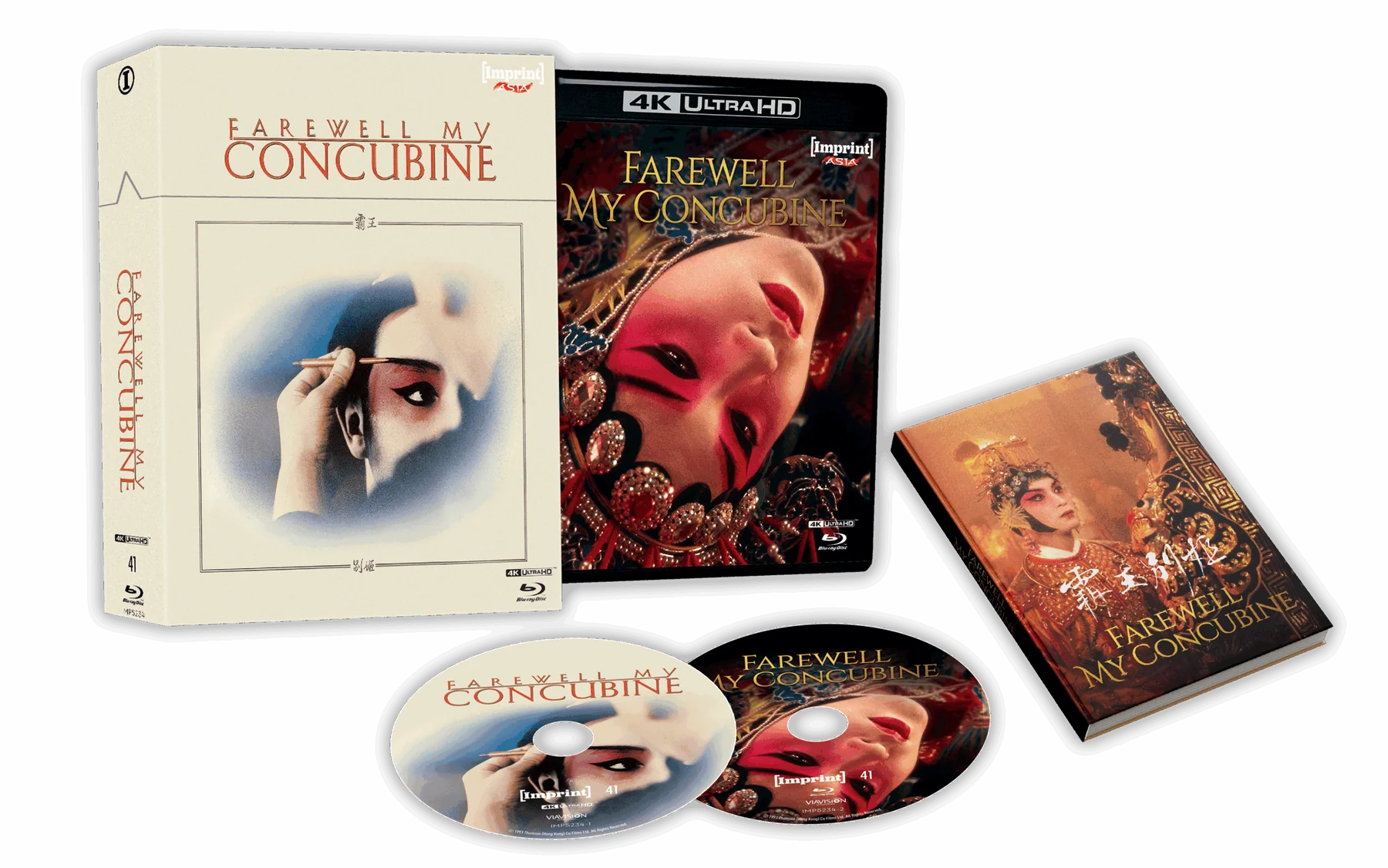
Based on the acclaimed novel by Lilian Lee, Farewell My Concubine (霸王別姬, Bàwáng Bié Jī) masterfully interweaves personal narratives with the tumultuous tapestry of 20th-century Chinese history. The film chronicles the lives of two Peking Opera performers, Douzi (later Cheng Dieyi) and Shitou (later Duan Xiaolou), from 1924 through to 1977, concluding at the end of the Cultural Revolution. Lilian Lee’s novel, published in 1985, garnered significant attention for its poignant exploration of identity, sexuality, and the fate of traditional art forms against a backdrop of radical political change. Chen Kaige, known for his visually stunning and emotionally complex films, was drawn to the novel’s epic scope and its intimate portrayal of human resilience and frailty. The adaptation process was meticulous, aiming to capture the novel’s intricate character dynamics while expanding on its historical context for a global audience. The film’s production was a monumental undertaking, reflecting a burgeoning era of ambitious Chinese filmmaking that sought to engage with the nation’s past in complex and often critical ways.
A Narrative Spanning Decades of Transformation
The narrative commences in 1924, introducing Douzi, a delicate boy raised in a brothel by his prostitute mother. Deemed too old to remain, he is sent to an opera school in Beijing, a harsh environment where Master Guan’s rigorous training pushes students to their physical and emotional limits. It is here that Douzi finds a protector and friend in Shitou, a stronger, more assertive boy. Their bond deepens amidst the grueling discipline, laying the foundation for a relationship that will define their lives.
As they mature into celebrated Peking Opera performers, their stage personas, Yu Ji (Consort Yu) for Douzi and Xiang Yu (Hegemon-King) for Shitou, blur with their identities. Douzi, adopting the stage name Cheng Dieyi, develops an unrequited love for Shitou, now Duan Xiaolou, who struggles to reconcile his friend’s devotion with societal expectations and his own heterosexual desires. Their relationship faces its ultimate test when Xiaolou marries Juxian, a cunning and resilient courtesan played by Gong Li, who becomes a formidable rival for Dieyi’s affection and Xiaolou’s loyalty.
The film meticulously structures its narrative into distinct "acts," a deliberate nod to Peking Opera’s dramatic form, each corresponding to a landmark period in Chinese history. These include the waning years of the warlord era, the Japanese occupation (Second Sino-Japanese War), the Chinese Civil War, the establishment of the People’s Republic of China, and crucially, the Cultural Revolution. Through these turbulent eras, the protagonists’ personal struggles—of identity, love, and artistic integrity—are irrevocably intertwined with the nation’s broader sociopolitical upheavals. The opera house itself serves as a microcosm of Chinese society, its fate reflecting the larger political currents that continuously threaten to engulf and redefine traditional culture.
Thematic Resonance and Sociopolitical Commentary
Chen Kaige employs the intertwined lives of his protagonists to explore a rich tapestry of themes. At its core, Farewell My Concubine delves into the intricate relationship between art and life, and the permeable boundary between performance and reality. For Dieyi, the lines blur completely; he lives and breathes his female stage roles, embracing a feminine identity and a deep, all-consuming love that transcends conventional gender norms. This exploration of identity and implicit homosexuality was groundbreaking for Chinese cinema at the time, offering a nuanced portrayal of non-normative desires within a conservative society.
The film also offers a profound commentary on the sociopolitical conditions of each era. The precariousness of artists under various regimes, the role of patronage, and the constant threat of censorship and political persecution are vividly depicted. Chen Kaige takes a clear and critical stance toward communism, particularly its radical manifestation during the Cultural Revolution (1966-1976). This period saw Peking Opera, along with other traditional art forms, denounced as "feudalistic" and "bourgeois," replaced by a propagandistic model focused on revolutionary themes. The film vividly portrays the destruction of cultural heritage, the public humiliation of intellectuals and artists, and the insidious pressure for individuals to betray loved ones to conform to ideological demands. The eventual downfall of Dieyi and Xiaolou, their public denunciations and forced self-criticisms, directly mirrors the decline of Peking Opera itself, an art form that never fully recovered its pre-revolution grandeur.
Beyond these grand historical narratives, the film delves into intimate human emotions: the complexities of friendship, the pain of unrequited love, the destructive nature of addiction, and the pervasive shadow of discrimination. The characters’ individual moral compromises and acts of resistance against an overwhelming political tide provide a poignant lens through which to understand the human cost of ideological extremism.
Directorial Vision and Aesthetic Craftsmanship
Chen Kaige’s direction is a masterclass in epic storytelling, characterized by a unique blend of grand historical sweep and intimate psychological depth, a hallmark of the Fifth Generation filmmakers. The pacing of Farewell My Concubine is particularly striking; despite its almost three-hour duration, the narrative moves briskly, ensuring sustained engagement without sacrificing the meticulous depiction and exploration of every detail. This avoids the narrative tediousness sometimes associated with other historical epics, maintaining a captivating rhythm that keeps the audience absorbed in the characters’ fates and the unfolding historical drama. Credit for this narrative coherence and dynamic pacing is also due to editor Pei Xiaonan, whose skillful work navigates the numerous shifts in time and circumstance with remarkable fluidity.
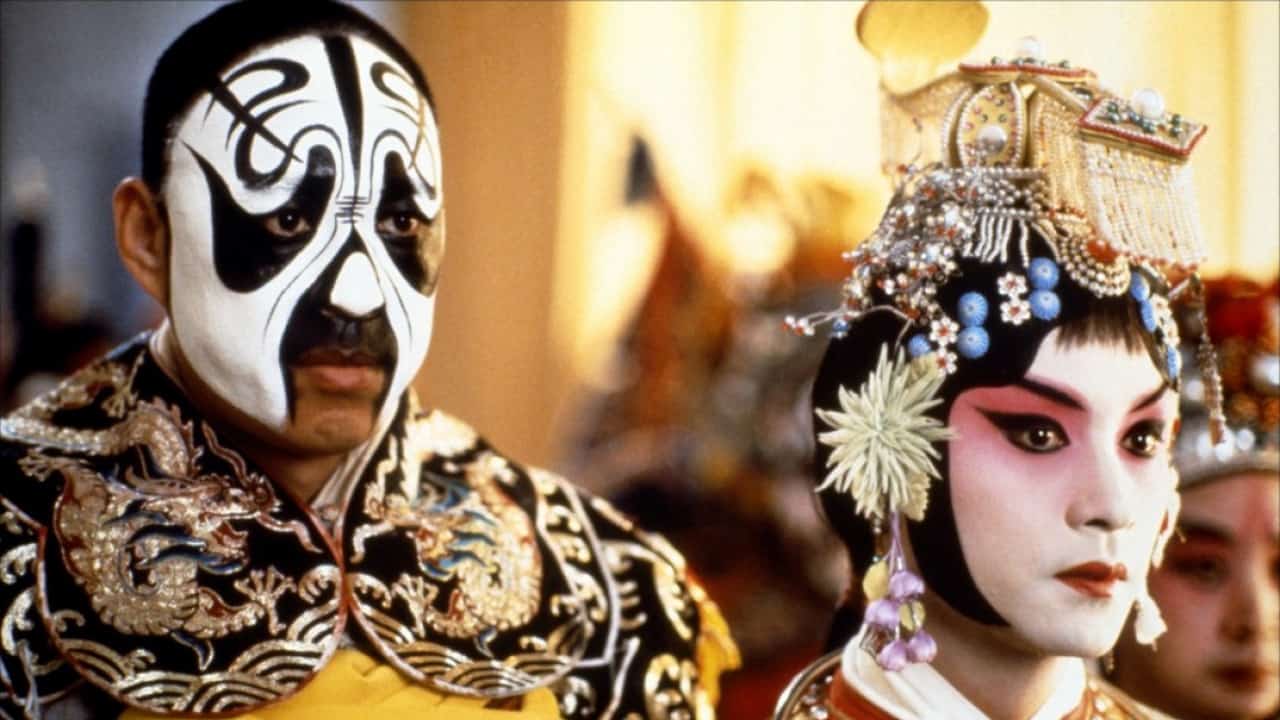
Aesthetically, the film is a triumph of realism and visual splendor. Each historical era is rendered with convincing authenticity, from the austere, brutal conditions of the opera school to the opulent, intricate performances on stage, complete with their distinctive singing, elaborate choreography, richly detailed costumes, and transformative makeup. The visual progression also captures the sweeping sociopolitical transformations, from the grandeur of pre-revolutionary China to the stark, utilitarian aesthetic imposed during the Cultural Revolution. The production benefits immensely from its technical departments: the cinematography captures both the epic scale and the intimate emotional nuances; the sound design immerses the viewer in the world of Peking Opera; and the costumes and makeup contribute significantly to the immersive quality and character development, particularly in depicting the gender fluidity of the opera roles.
Iconic Performances: A Triumvirate of Talent
The emotional core and enduring power of Farewell My Concubine are significantly amplified by its extraordinary ensemble cast.
Leslie Cheung as Cheng Dieyi: Cheung delivers a truly transformative performance as Douzi/Cheng Dieyi. His portrayal of an effeminate character, effectively raised within a framework that assigns him female roles from a young age, brilliantly captures how this upbringing shapes both his identity and his public persona. Cheung masterfully embodies a performer who gradually loses his connection with reality, blurring the lines between his stage character, Yu Ji, and his true self. His performance is exceptional in the way he embodies traits associated with the femme fatale archetype—vanity, vulnerability, and a simmering spite—while simultaneously conveying profound devotion and heartbreak. Dieyi’s intense reactions to Xiaolou’s relationship with Juxian further highlight the emotional intensity and psychological depth of Cheung’s work, cementing it as one of the most memorable and critically acclaimed roles of his illustrious career. His nuanced portrayal was widely lauded for its courage and sensitivity, particularly given the social context surrounding LGBTQ+ themes at the time.
Gong Li as Juxian: Of equal merit is Gong Li’s powerful performance as Juxian. She alternates convincingly between refined elegance and fierce resilience, embodying a woman navigating a patriarchal society and turbulent political landscape with remarkable agency. Whether appearing sophisticated in her mandarin dresses, acting with calculated cunning to secure her position, or later adopting a more subdued, desperate presence under the oppressive grip of changing sociopolitical conditions, Gong Li brings immense complexity to a character caught between survival, desire, and a desperate fight for dignity. Her antagonistic yet ultimately tragic dynamic with Dieyi over Xiaolou’s attention stands out as one of the most engaging and emotionally charged aspects of the narrative, representing a clash of different forms of love and loyalty.
Zhang Fengyi as Duan Xiaolou: Zhang Fengyi provides a robust and compelling performance as Shitou/Duan Xiaolou. He expertly captures the internal conflict of a man torn between his deep-seated loyalty to his childhood friend and his commitment to his wife. Xiaolou’s temper and frustration intensify under external pressures, revealing a character who, while outwardly strong, is ultimately vulnerable to the societal and political forces that seek to control his life and art. His performance provides a crucial anchor, grounding the more flamboyant and tragic figures around him.
The supporting cast, including the child actors who portray the protagonists in their youth, also deliver strong performances. Ma Mingwei, as the young Douzi, features in one of the film’s most shocking and defining scenes: his mother’s desperate act of cutting off his extra finger to ensure his acceptance into the opera school. This moment, visceral and heartbreaking, immediately sets the tone for the profound hardships and sacrifices that will shape the lives of the characters, foreshadowing the pain and transformation to come.
Global Acclaim and Enduring Legacy
Farewell My Concubine‘s impact transcended critical praise and box office success. Its victory at the 1993 Cannes Film Festival, where it shared the Palme d’Or with Jane Campion’s The Piano, was a landmark achievement for Chinese cinema, signaling its arrival on the world stage as a formidable artistic force. This recognition was followed by a Golden Globe Award for Best Foreign Language Film and nominations for two Academy Awards (Best Foreign Language Film and Best Cinematography), further solidifying its international standing.
The film’s critical reception was overwhelmingly positive, with reviewers praising its epic scope, emotional depth, stunning visuals, and the masterful performances, particularly Leslie Cheung’s. It was widely seen as a groundbreaking work that offered a complex, often melancholic, look at Chinese history and the human spirit’s resilience amidst adversity. For many Western audiences, Farewell My Concubine served as a powerful introduction to the nuanced storytelling and visual artistry of Chinese cinema, particularly the "Fifth Generation" directors who had emerged from the Beijing Film Academy after the Cultural Revolution. These filmmakers, including Chen Kaige and Zhang Yimou, were celebrated for their willingness to critically examine China’s past and present, often using allegory and visual metaphor to navigate censorship.
Beyond its artistic merits, Farewell My Concubine sparked important cultural conversations. Its subtle yet profound exploration of homosexual themes, particularly through Dieyi’s unrequited love, resonated deeply with LGBTQ+ audiences globally and contributed to broader discussions about identity and representation in cinema. While initially facing some scrutiny or censorship within mainland China for its sensitive political and social themes, its international success gradually paved the way for its wider acceptance and recognition as a national treasure.
Today, Farewell My Concubine is consistently ranked among the greatest films ever made, a testament to its timeless themes and cinematic brilliance. Its influence can be seen in subsequent generations of Chinese filmmakers and its continued relevance lies in its powerful depiction of art’s struggle against oppression, the complexities of human relationships, and the enduring quest for identity in a rapidly changing world. It remains essential viewing for cinephiles and anyone seeking a deeper understanding of China’s turbulent 20th century through a deeply human and aesthetically stunning lens.